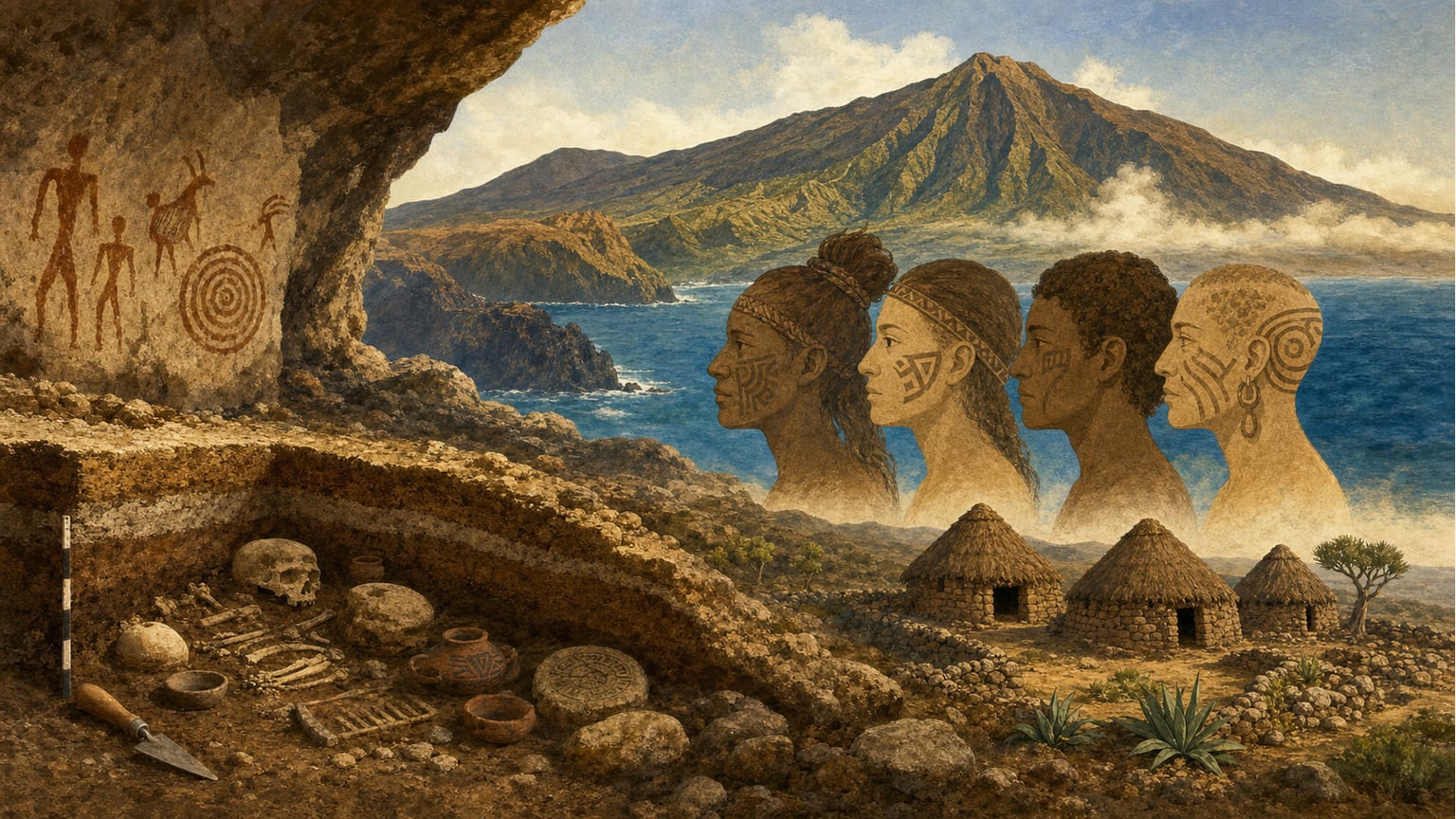
Geographical isolation and internal diversity significantly shaped the physical and cultural variability of the Guanche population in Tenerife, according to recent bioanthropological research.
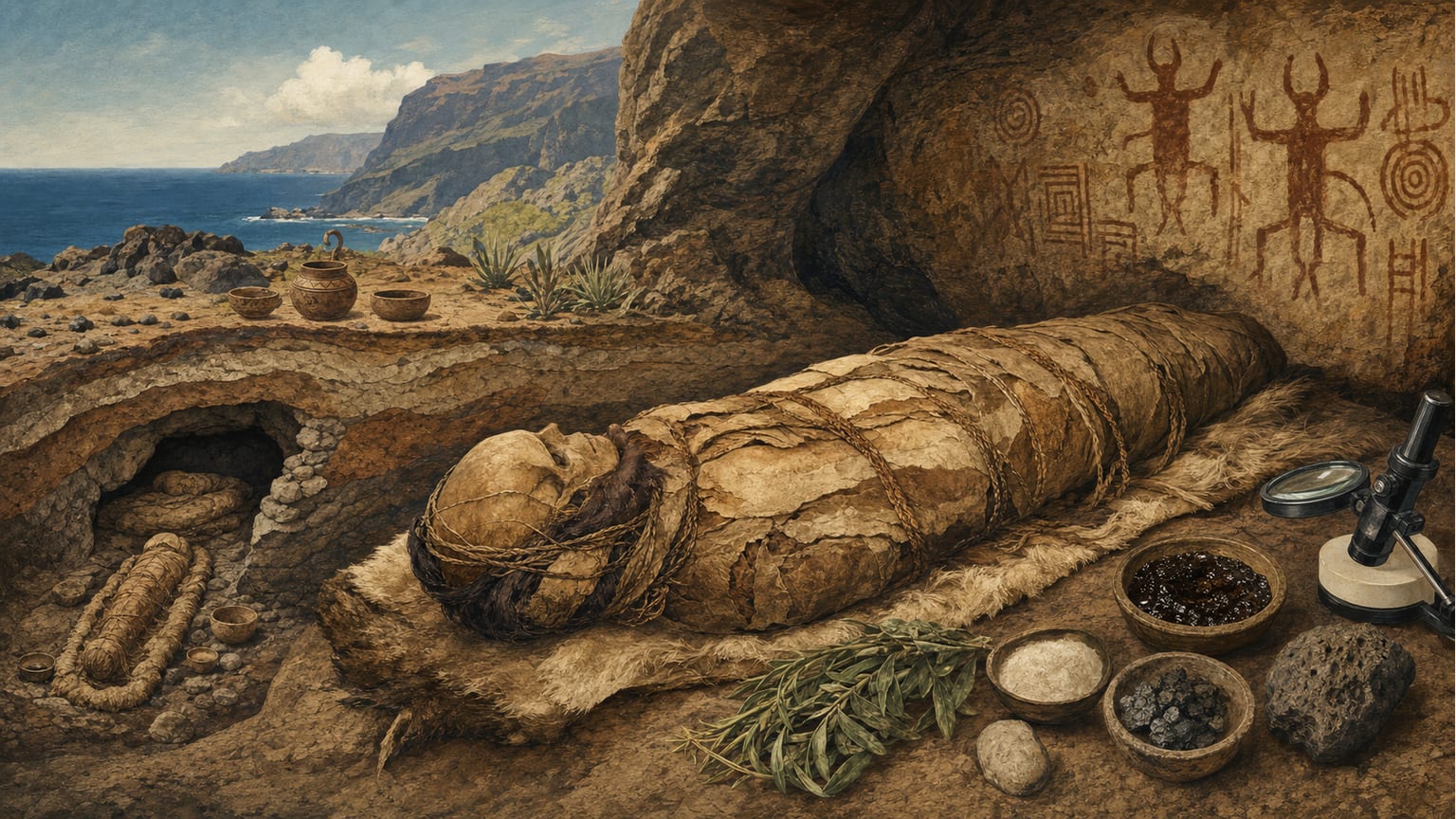
This article examines the mummification methods identified in Guanche mummies from Tenerife, based on analyses at the Archaeological and Ethnographic Museum of Tenerife, highlighting the absence of evisceration and the use of local substances.
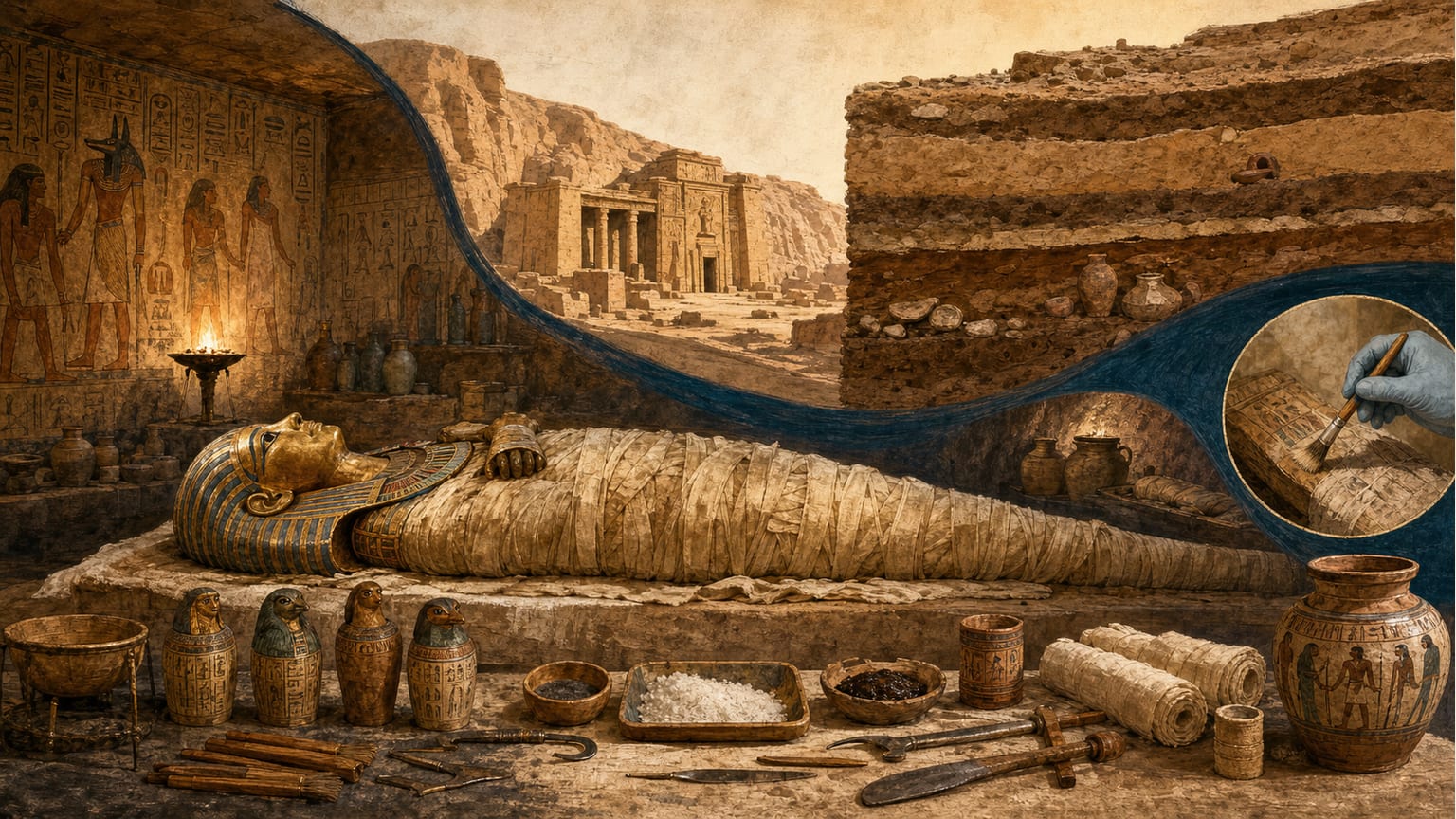
A detailed look at Egyptian mummification techniques, the causes of deterioration, and conservation methods, as presented in Eres (Arqueología), Vol. 1, No. 1.
A review of the earliest historical and archaeological references to indigenous settlement in the Arucas region, based on the sources compiled in the La Cerera study.
Paleopathology in the Canary Islands has evolved significantly since the 19th century, with researchers like Bosch Millares highlighting the importance of skeletal and mummy analysis to understand the health and diseases of indigenous populations.
An overview of the first studies and contributions to paleopathology in the Canary Islands, from chronicles to the work of Gregorio Chil y Naranjo and European scientists.
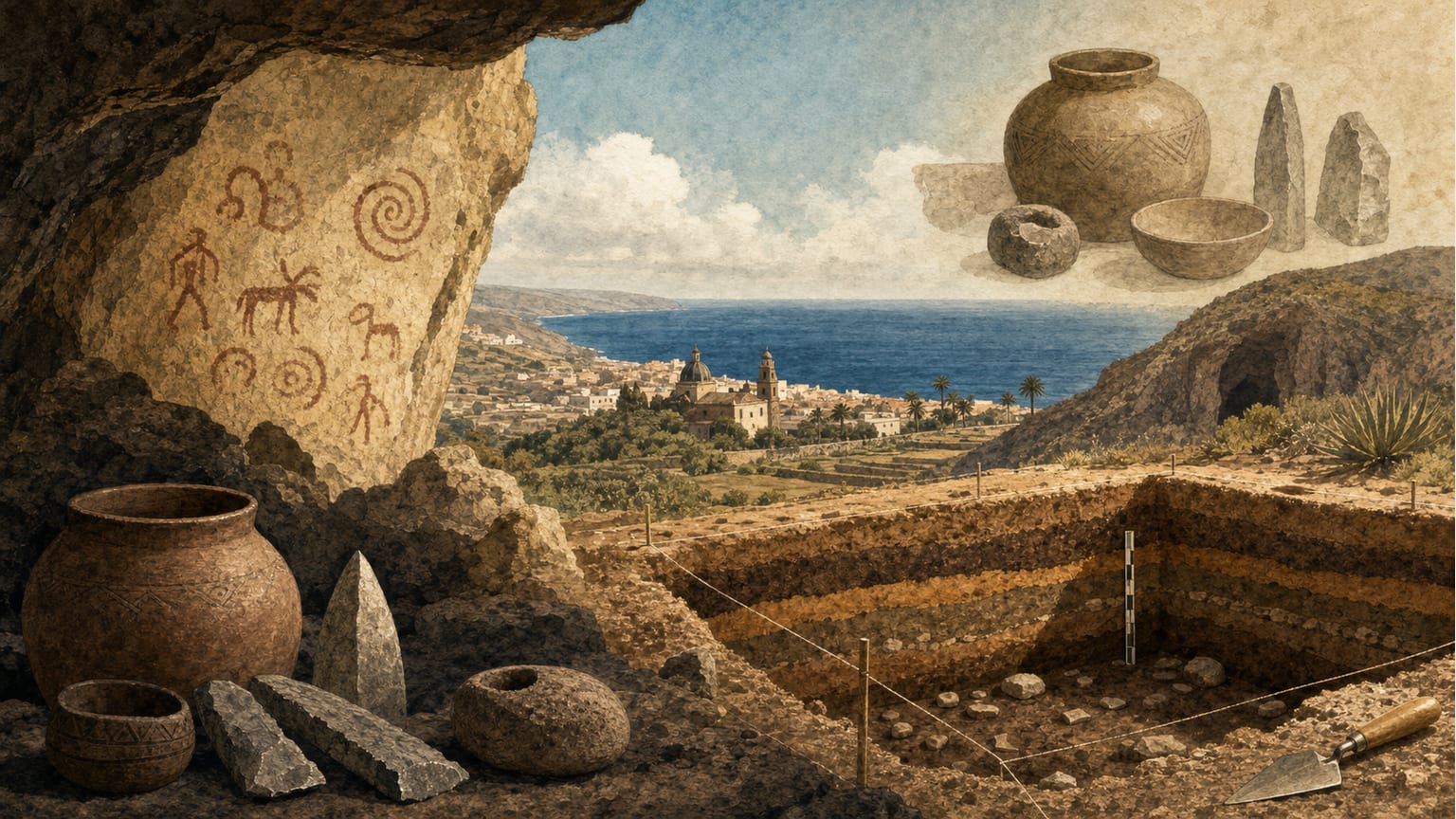
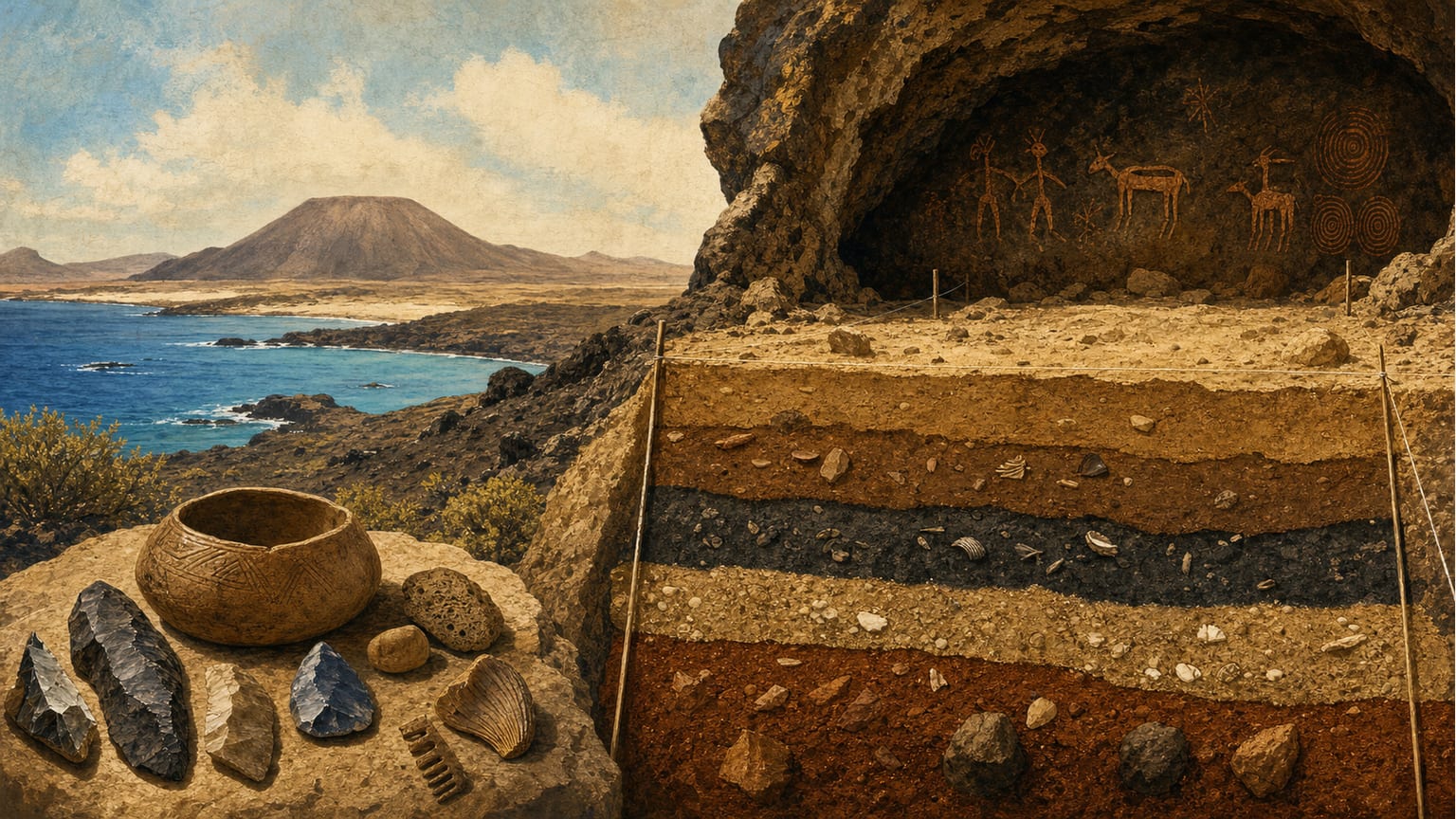
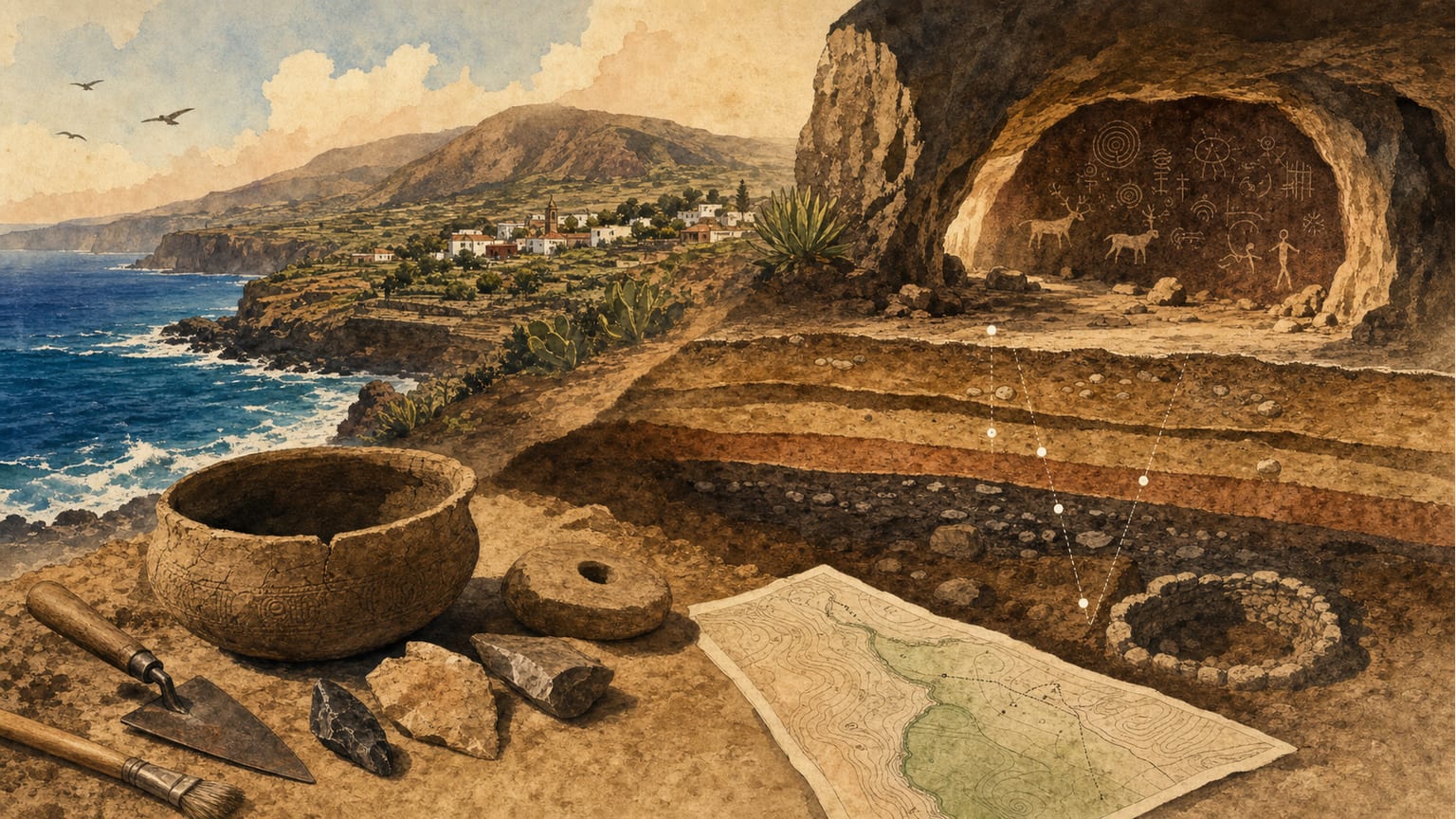
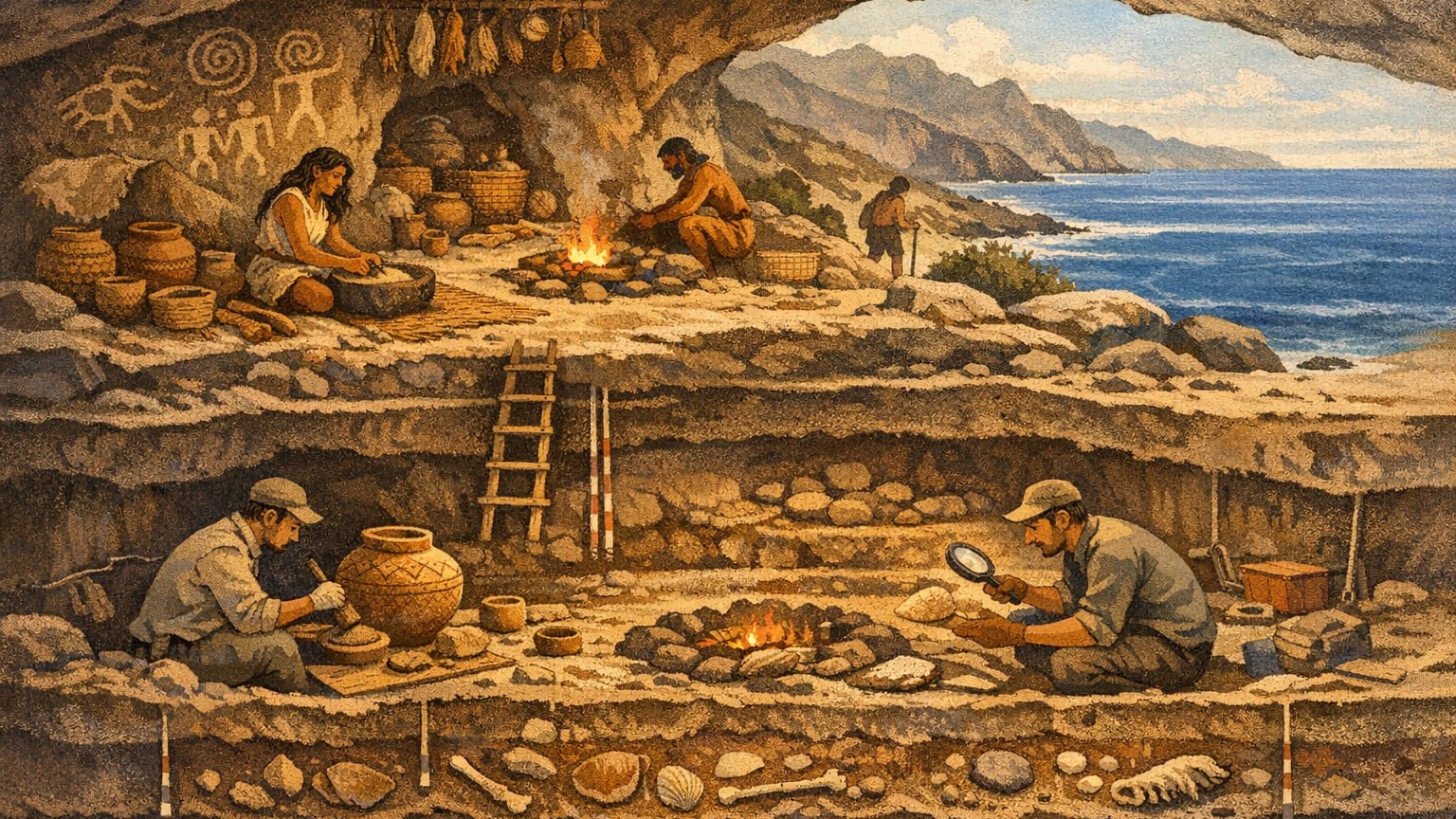
The Cave of La Enladrillada, excavated in 1969 by Diego Cuscoy in Tegueste, stands out for its stratigraphy and the application of new analytical methodologies in the archaeology of Tenerife.
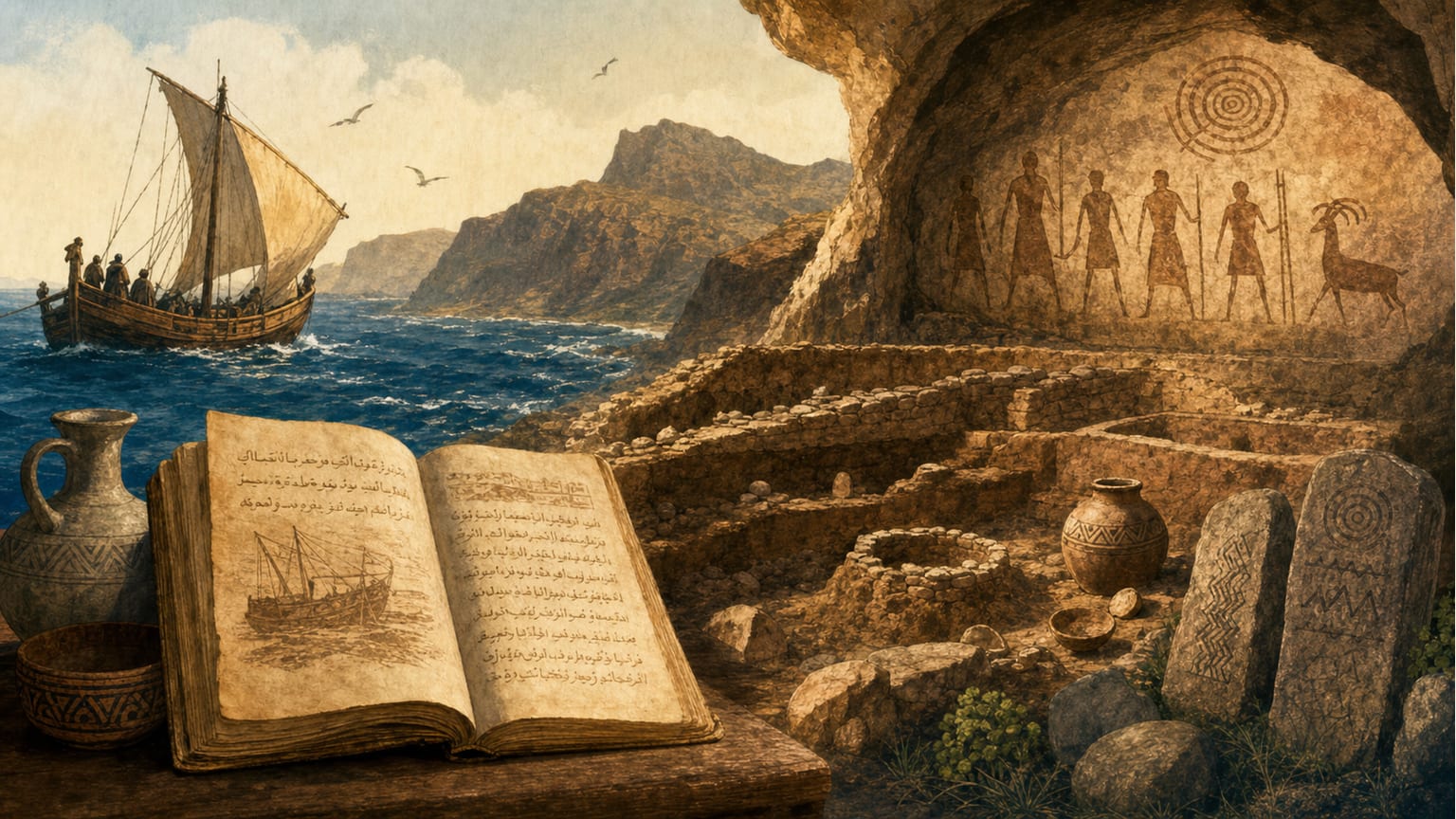
An Arab manuscript cited by Berthelot recounts Ben-Farroukh's expedition to the Canary Islands in 999, describing his encounter with the indigenous inhabitants and the social structure of Gran Canaria.
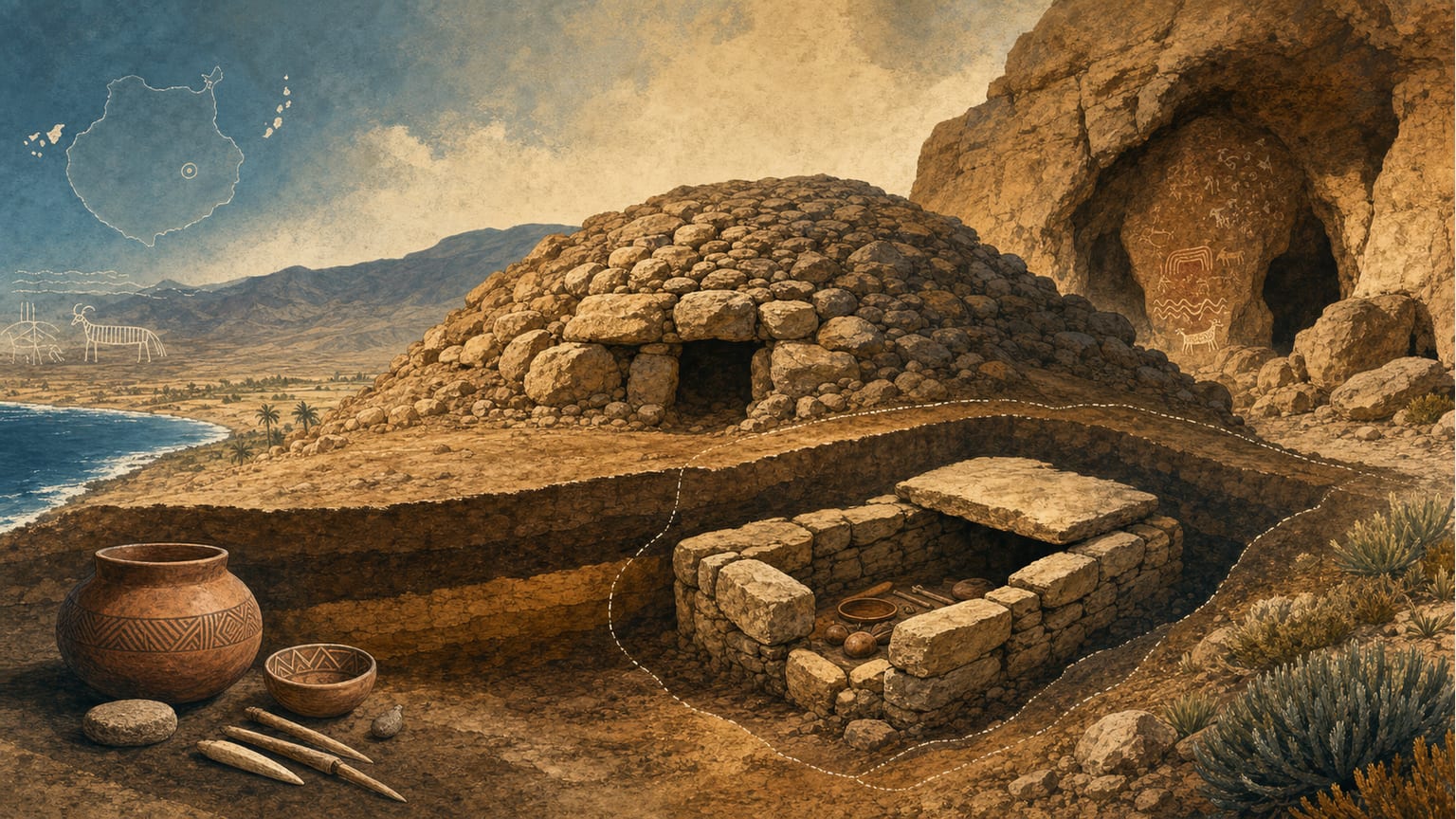
A detailed analysis of the construction and typology of tumuli and cists in the Arteara Necropolis, the largest pre-Hispanic cemetery in the Canary Islands.
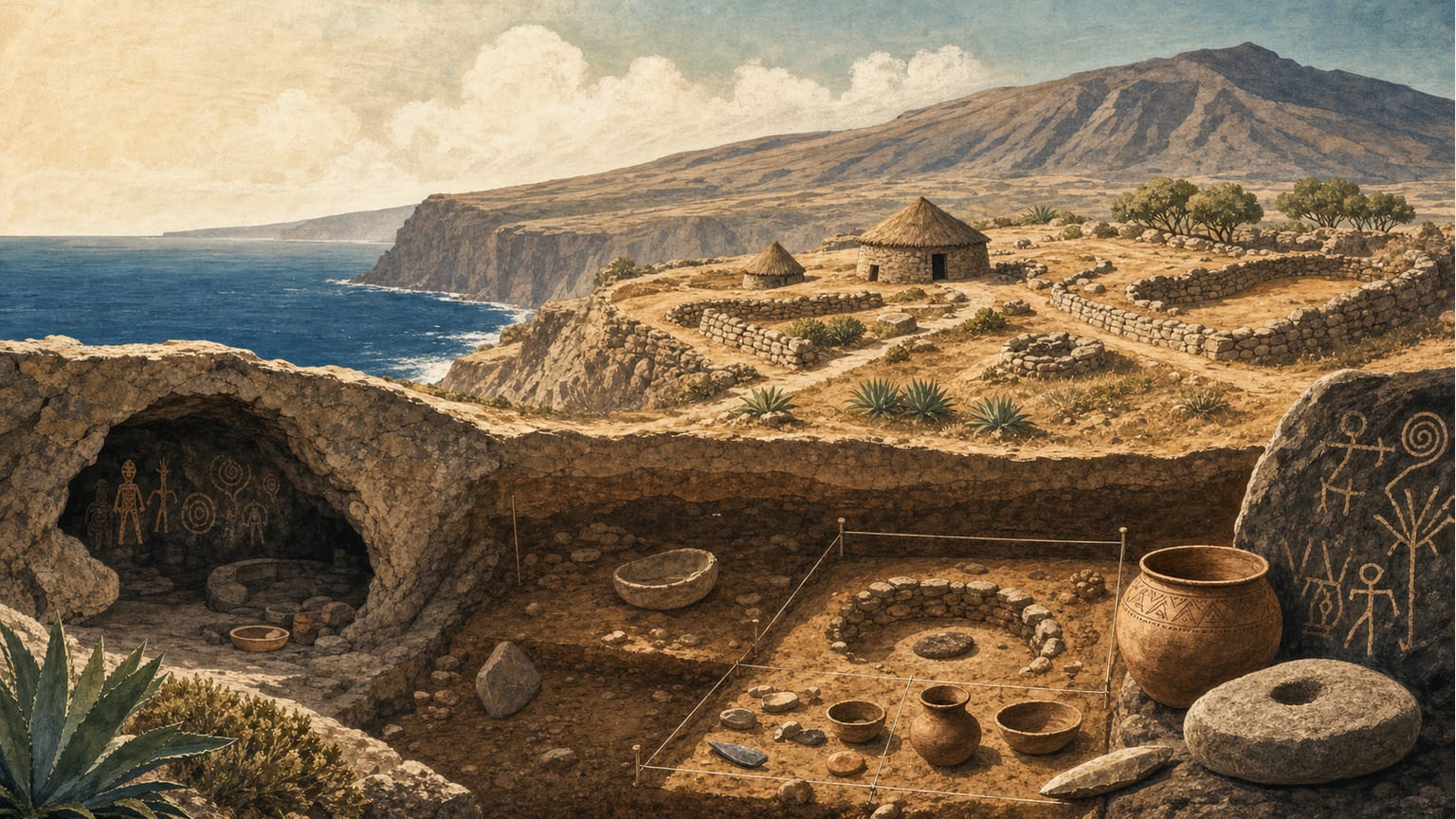
Archaeological research in Guía de Isora has revealed that the Guanches preferred surface settlements over caves, challenging traditional views of their habitation.
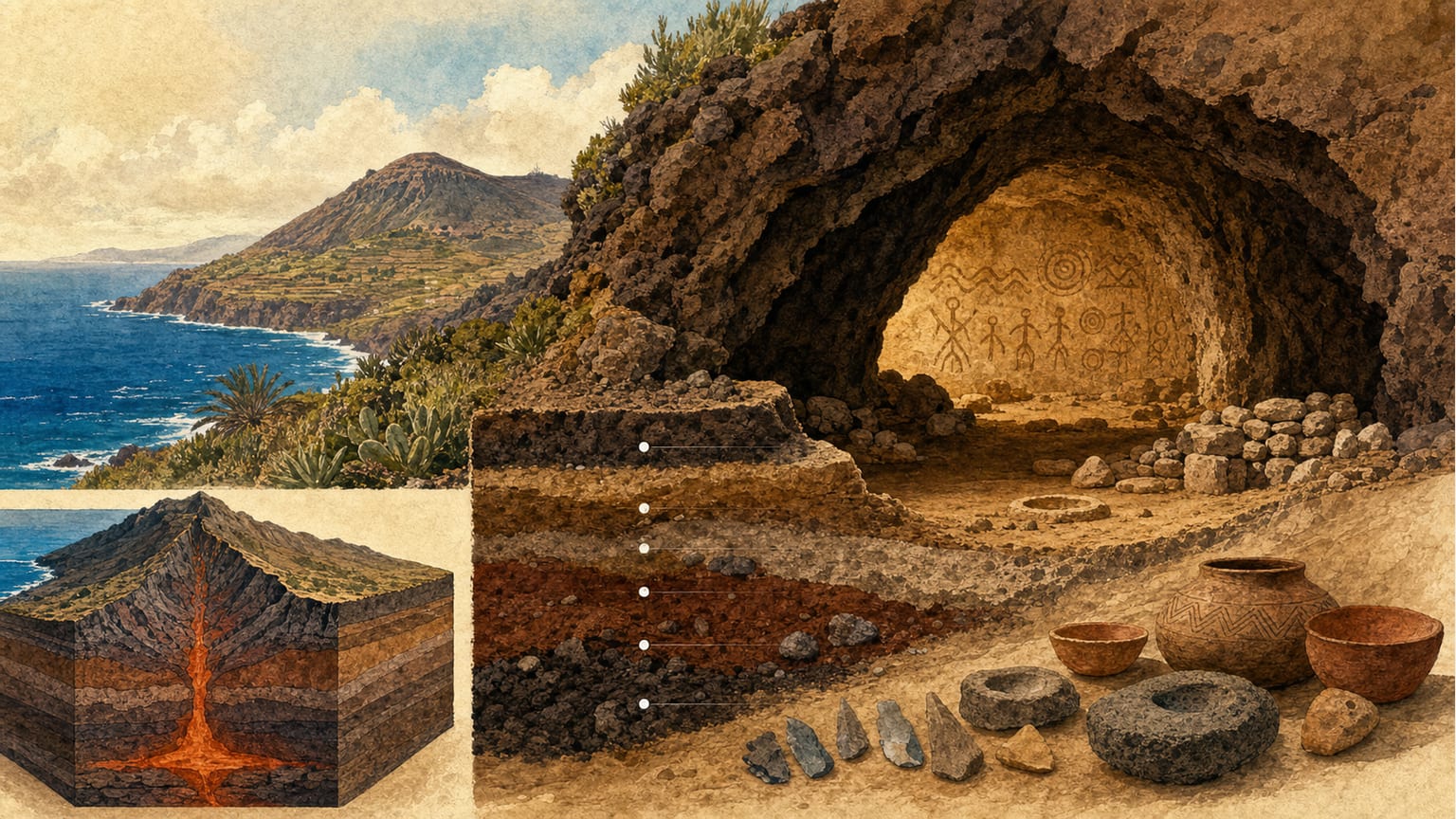
The stratigraphic sequence at El Bebedero reveals five distinct layers, providing key information about the cultural and environmental evolution of aboriginal Lanzarote.
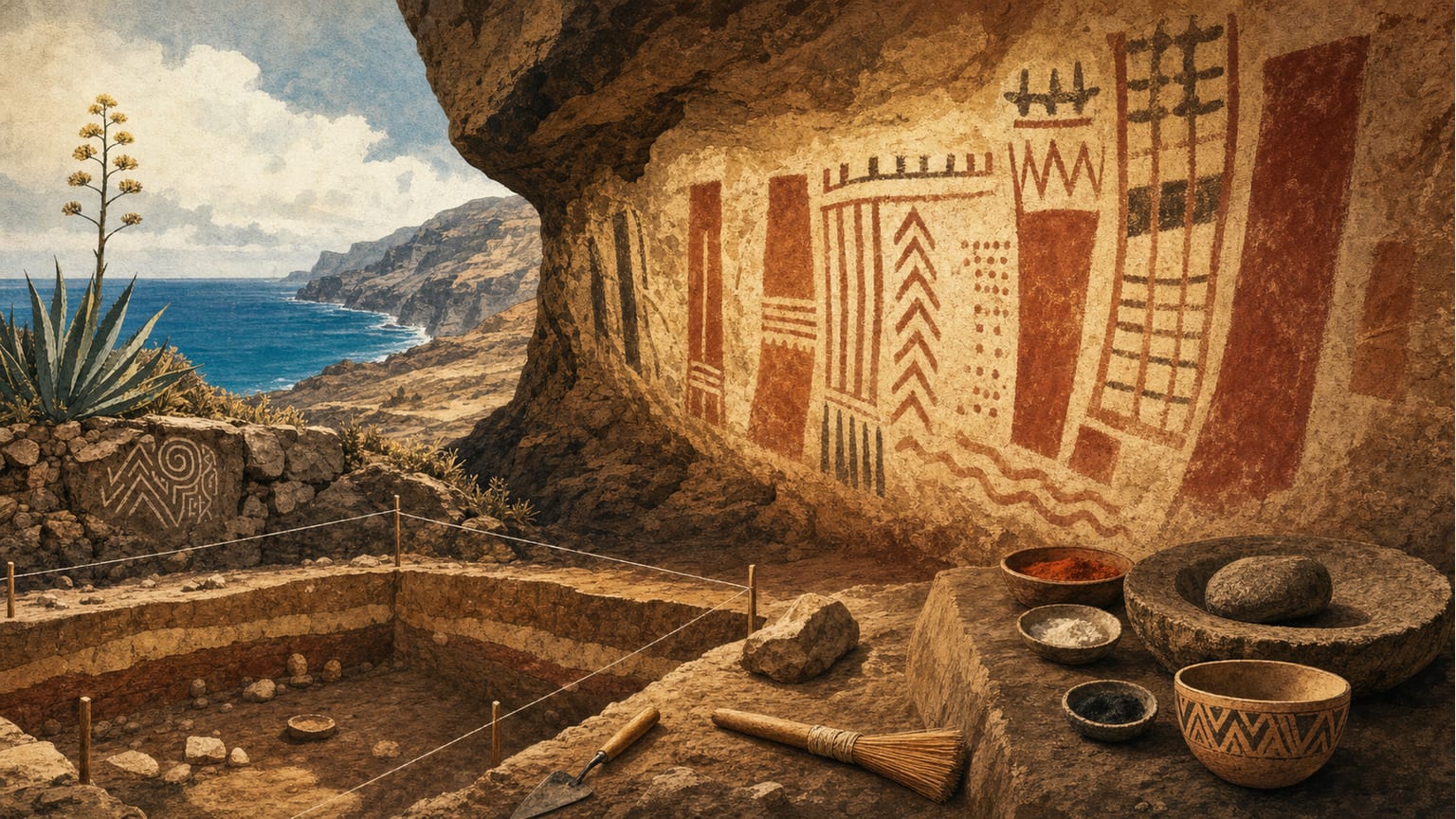
A detailed look at the techniques and meaning behind the polychrome murals of the Painted Cave of Gáldar, the most remarkable example of indigenous mural painting in Gran Canaria.
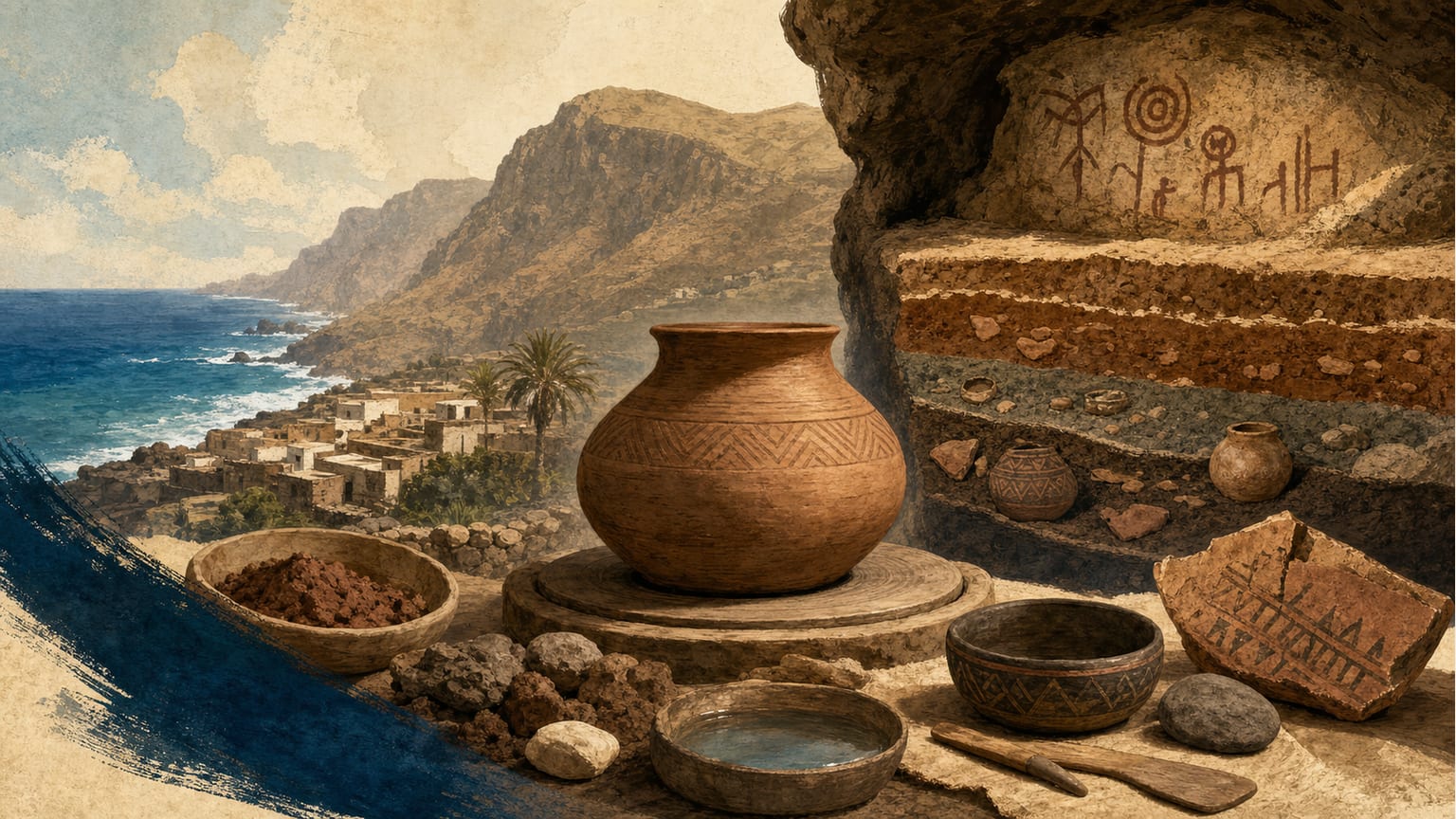
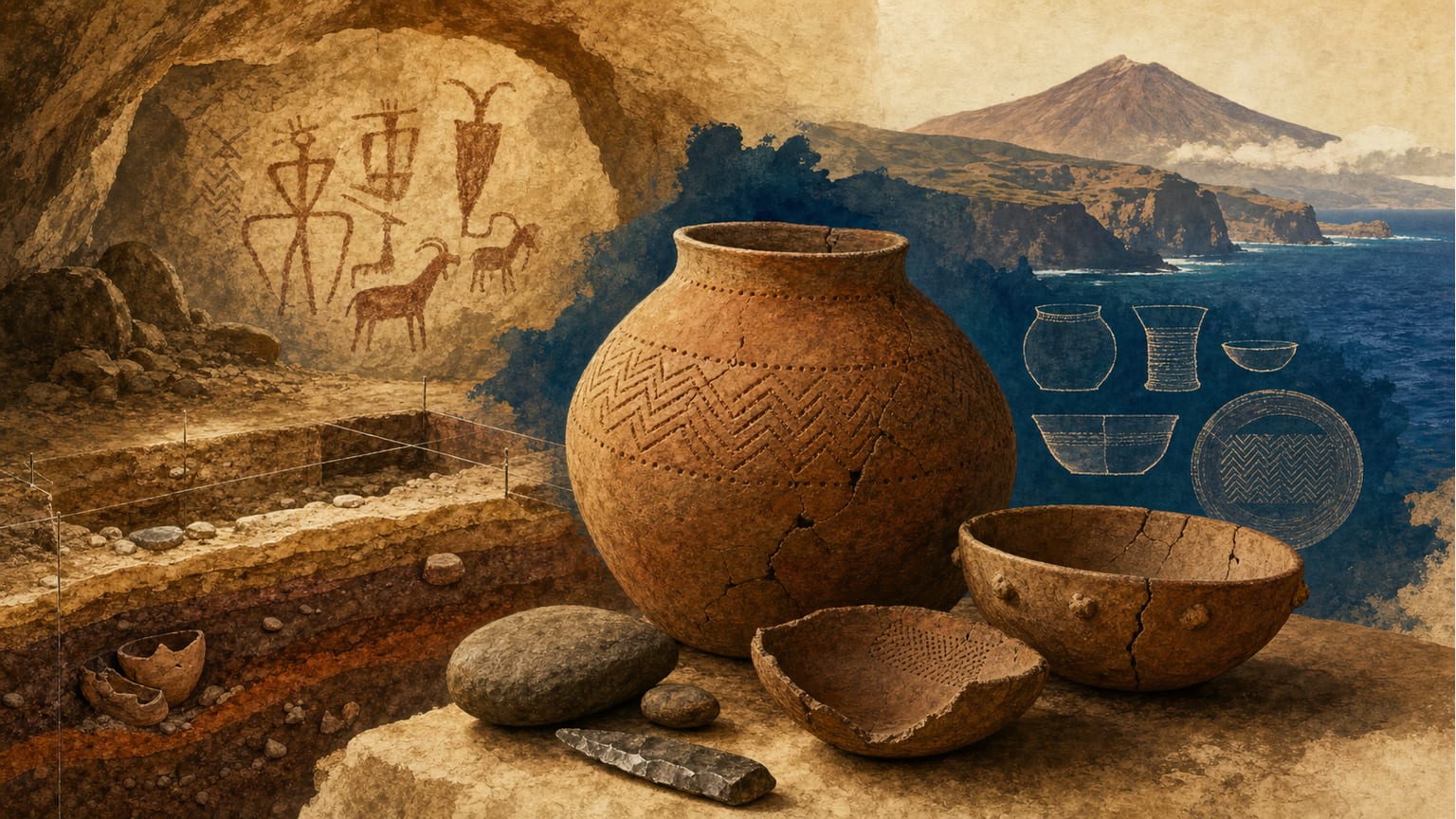
The Hermógenes Afonso collection provides a detailed overview of Guanche pottery from Tenerife, highlighting its manufacturing techniques, materials, and characteristic forms.
The La Cerera cave, located on the southern slope of the Arucas Mountain, is a remarkable example of volcanic cave formation and sedimentary infill processes in Gran Canaria.
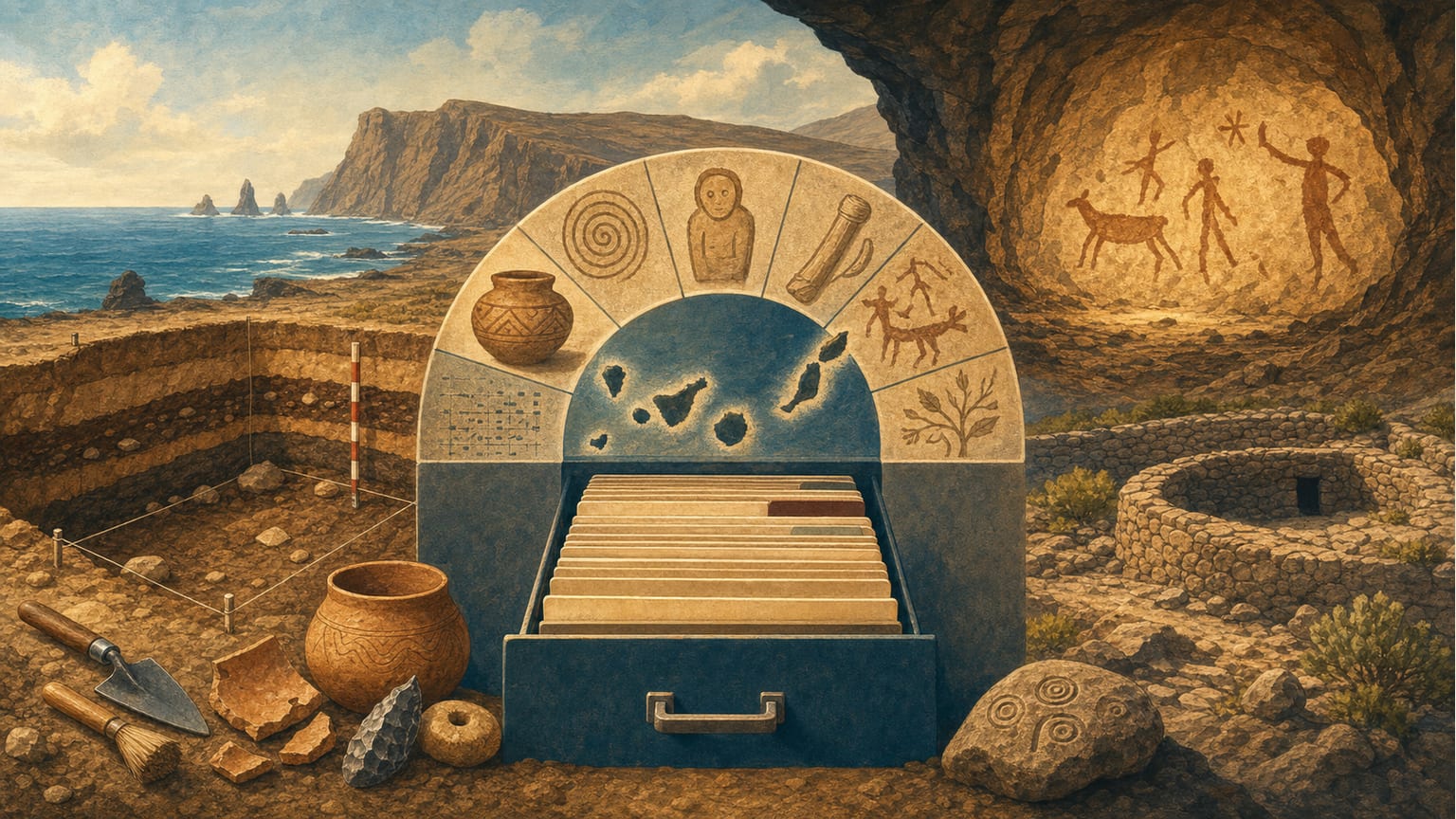
BPAC is the most comprehensive database on Canarian prehistory and anthropology, integrating over 8,500 references and numerous thematic and technical fields, making it a key resource for researchers and the general public.
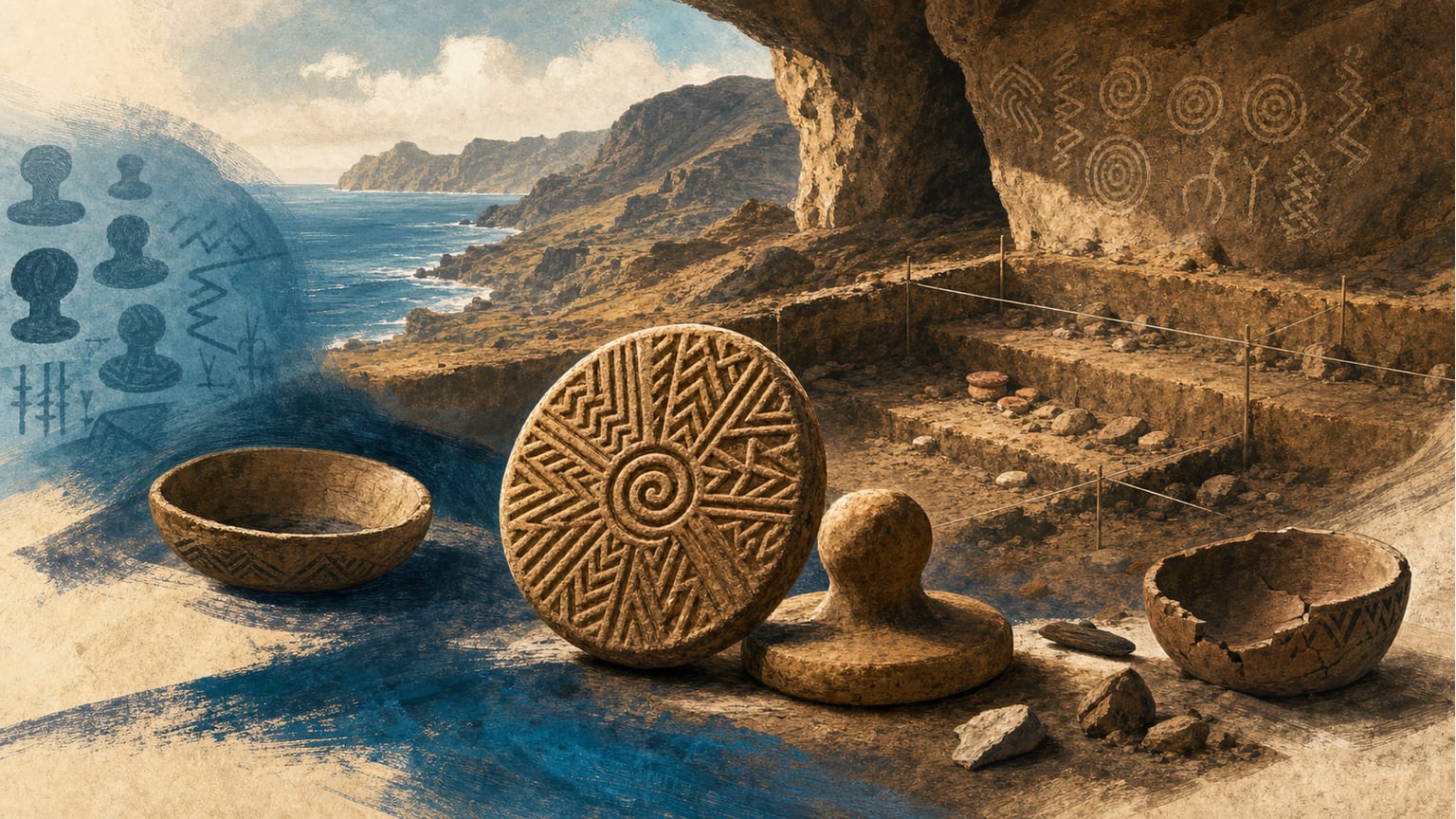
Pintaderas from Gran Canaria captivate archaeologists and the public alike, but their original function remains mysterious. This article explores how modern research focuses on their social context rather than just their use.
Caves were the primary dwellings of the Guanches in Tenerife, chosen for their habitability and proximity to resources. Archaeology uncovers how these spaces reflect daily life and the evolution of aboriginal society.
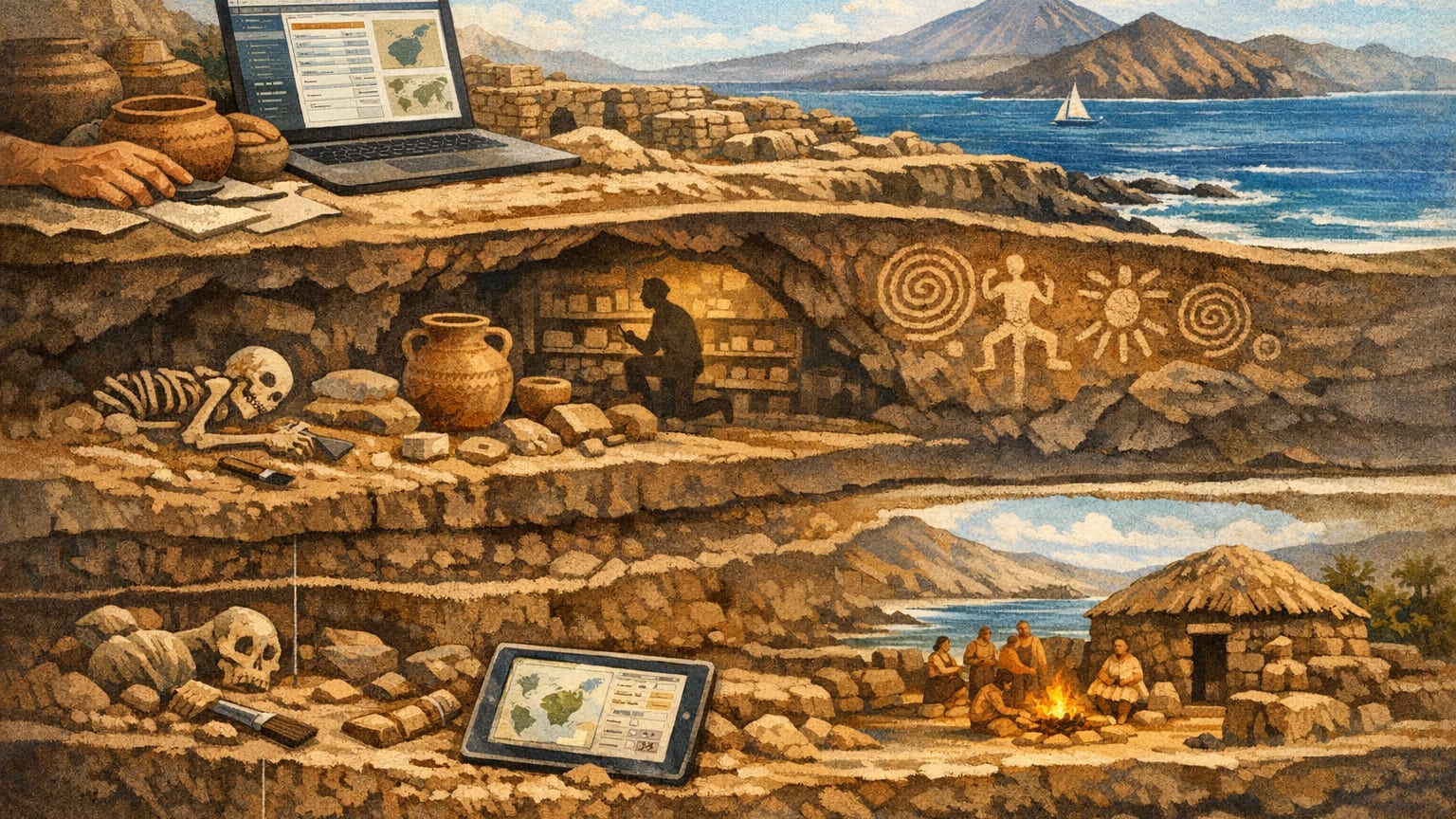
The digitization of scientific bibliography has transformed research in Canary Islands prehistory and anthropology, offering a broader and more up-to-date perspective on the islands' heritage.
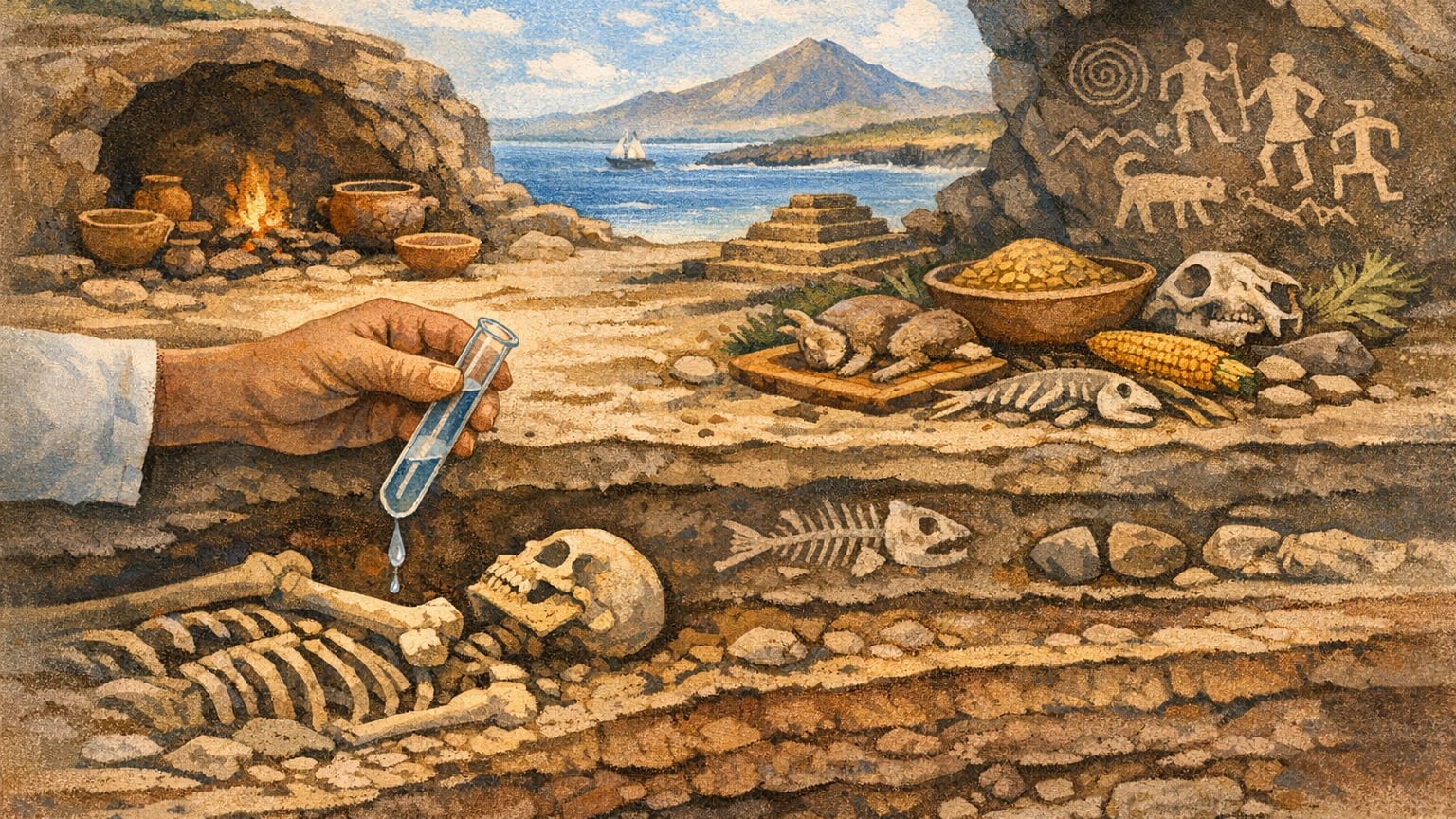
Discover how chemical analysis of bones allows archaeologists to reconstruct ancient diets, offering insights into the lives and adaptations of past populations in the Canary Islands and beyond.
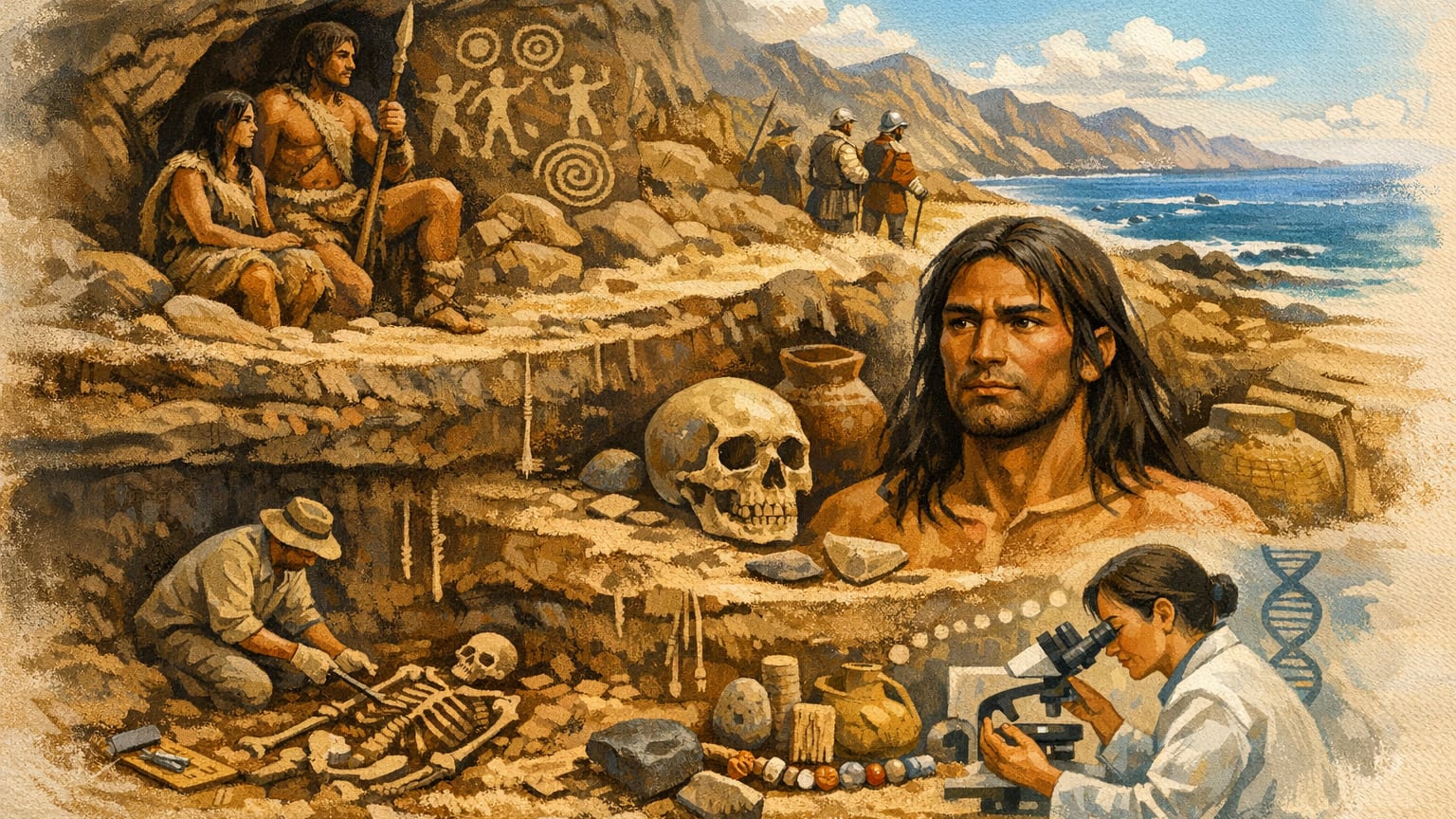
The physical appearance of the Guanches has been a subject of debate and myth for centuries. This article explores how their image evolved from early conquest chronicles to modern scientific studies.
Canarias Historia
Cookies and analytics
We use consent choice to decide whether usage analytics should be enabled. You can accept or reject analytics cookies; strictly necessary technical elements will still operate.