

Guanche Settlements in Guía de Isora: Surface Villages Beyond the Caves
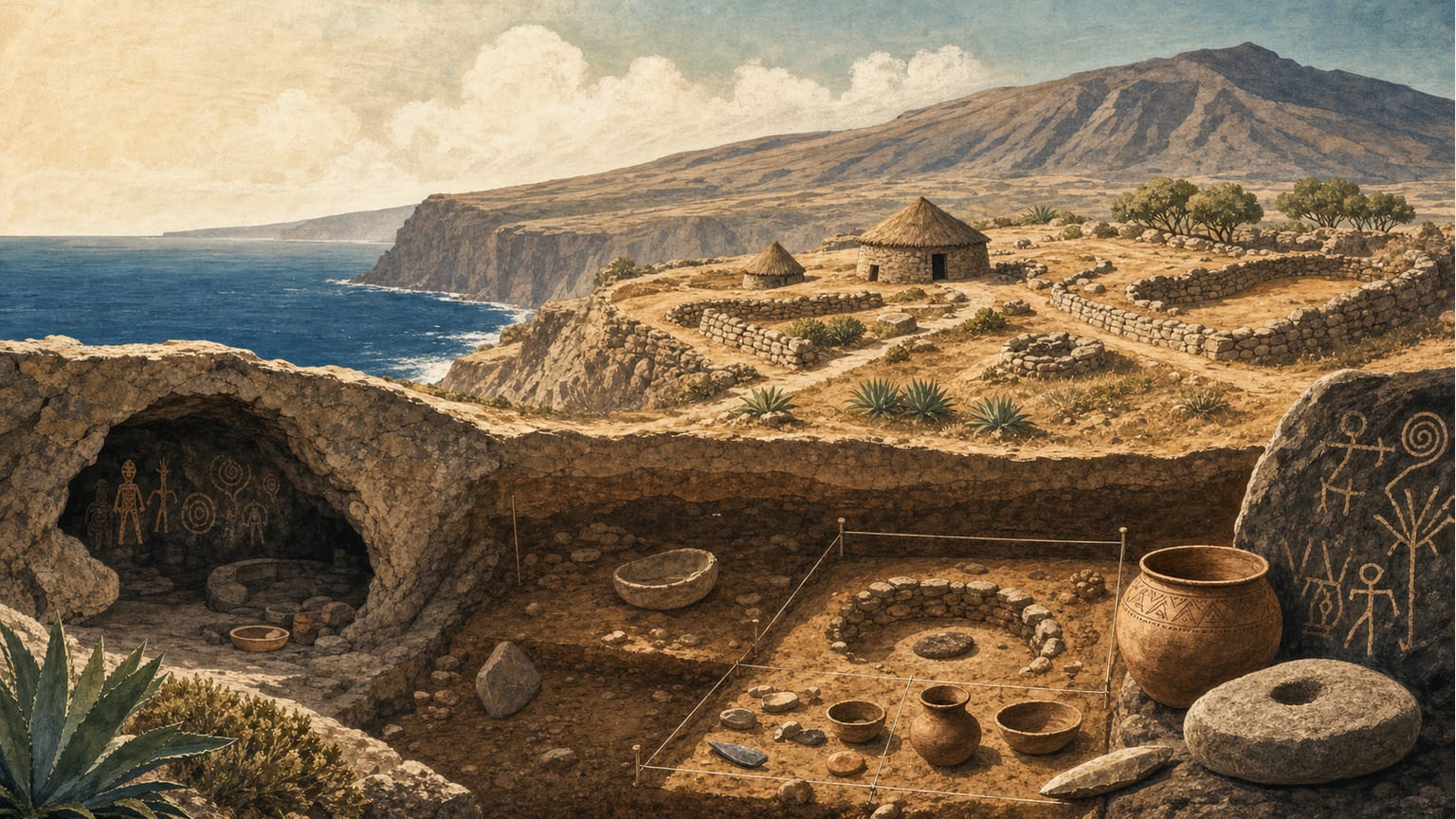
For many years, the prevailing view of Guanche habitation in Tenerife was that its ancient inhabitants primarily lived in caves. However, archaeological surface surveys in Guía de Isora have challenged this notion, revealing a far more complex and diverse pattern of aboriginal settlement in the region[1].
Research in the Isora territory has identified a total of 232 archaeological sites of various types. Among these, surface villages stand out as the preferred habitat of the Guanches in this part of Tenerife[1]. This evidence compels a reconsideration of the traditional archaeological framework, which for a long time focused almost exclusively on caves as the main living space of the island’s early inhabitants[1].
The density and diversity of data from these surface sites demonstrate a more complex organizational structure within Guanche society in Guía de Isora. The identified villages were not only composed of open-air dwellings but were often grouped into small clusters located on broad ridges with wide visual control. These settlements were closely associated with nearby spaces that met basic subsistence needs[1]. These areas also included places for depositing the remains of ancestors, indicating a more sophisticated territorial and social organization than previously thought[1].
Surface archaeological surveys have proven effective for studying large regions like Guía de Isora, as they allow for the identification and characterization of site distribution across extensive geographic areas[1]. However, researchers note the limitations of this method, as it only detects material elements found on the surface, meaning that the evidence is partial compared to the true complexity of Guanche activities[1].
Despite these limitations, the information gathered allows for the differentiation of regularities and the establishment of site typologies that include, in addition to villages, places of occasional use, seasonal settlements, rock art sites, necropolises, burial caves, and other activity areas such as shelters, stone resource extraction sites, and shell middens[1].
In summary, the analysis of Guanche habitation in Guía de Isora shows that caves were neither the only nor the main place of residence for the region’s ancient inhabitants. Surface villages are a key piece of evidence for understanding the social and territorial organization of the Guanches in southern Tenerife, providing a renewed and more accurate view of their way of life[1].