

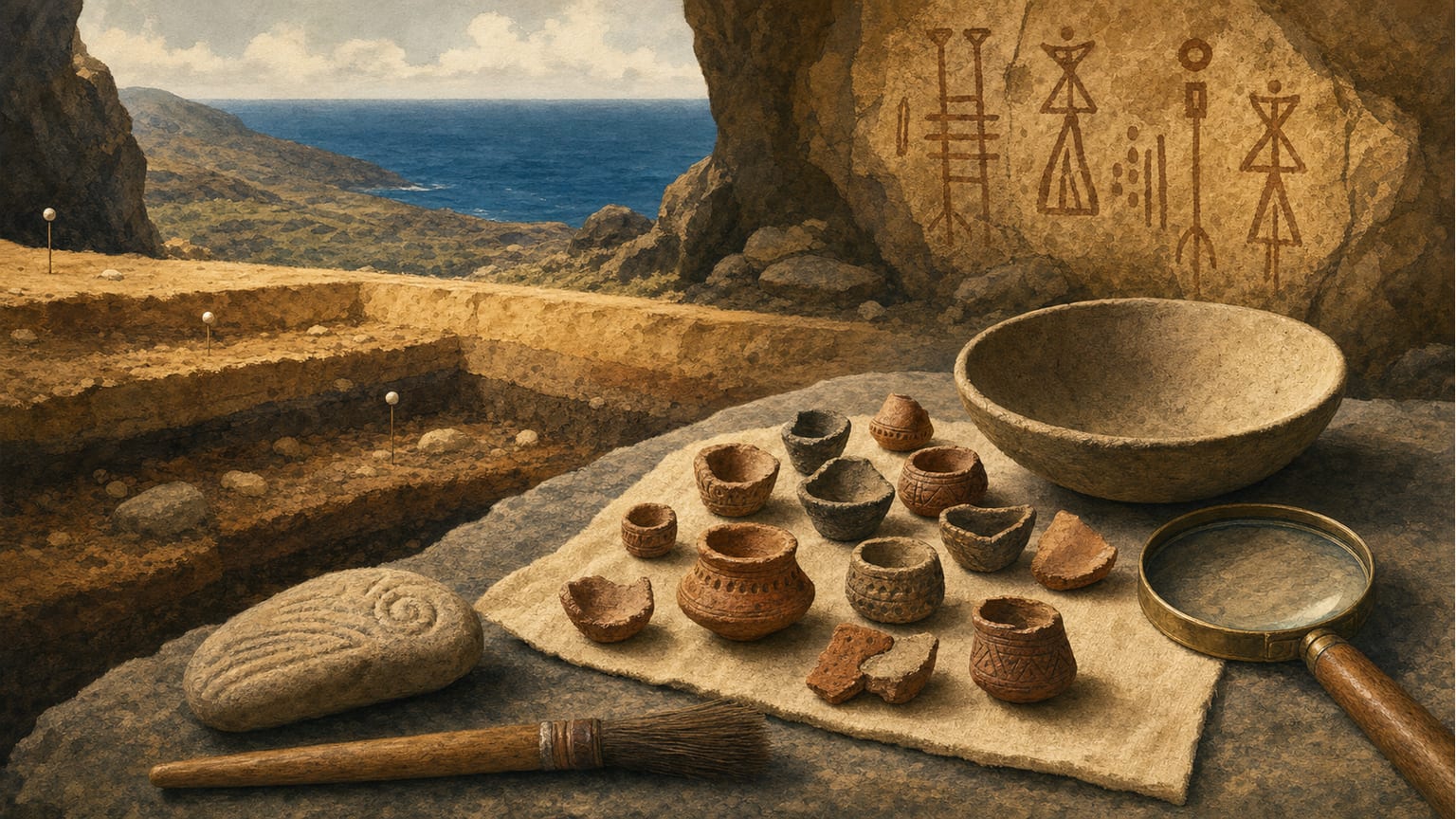
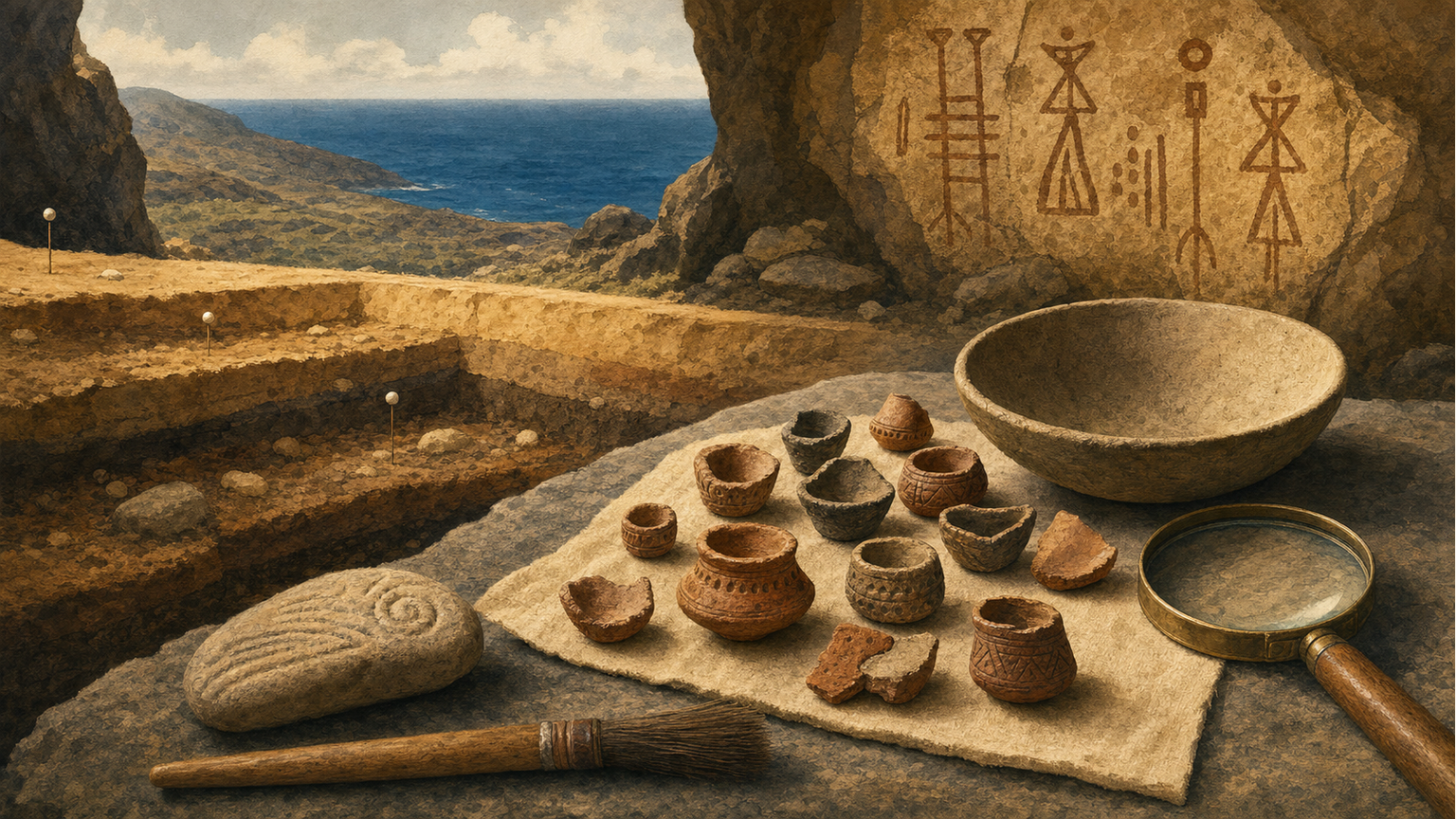
Microceramics, defined as ceramic pieces less than 7 cm in size, are an archaeological phenomenon of interest in Tenerife. According to González Antón, Rafael; Rosario Adrián, Mª Candelaria; Arco Aguilar, Mª Mercedes del, the presence of microceramics is attested in various locations on the island, such as Tegueste, Buenavista, Arico, and Las Cañadas, indicating that their production was a widespread practice among the indigenous populations, despite the small number of finds[1].
The forms and treatments of microceramics exactly match those of larger pieces, meaning they replicate in miniature the techniques and styles of traditional island pottery. Microceramics should not be confused with small-sized ceramics, as they are distinct concepts; microceramics are specifically those under 7 cm, while small ceramics may be larger[1].
Analysis of the Hermógenes Afonso collection shows that microceramics display the same finishes and decorations as larger vessels, including incisions, impressions, and grooves. This similarity suggests that microceramics were not accidental products but the result of intentional practice within the indigenous pottery tradition of Tenerife[1].
Regarding chronology, the authors note that the presence of these small vessels helps place the island’s ceramics in a relatively recent period, after the arrival of the Phoenicians in North Africa. This is based on typological comparison and the distribution of similar finds in African contexts, allowing for cultural and temporal parallels[1].
The function of microceramics is not clearly established in the catalogue. However, their formal and technical similarity to larger ceramics, as well as their distribution in various types of sites, leads the authors to suggest that they may have had symbolic, ritual, or even playful value, though these hypotheses are not developed in detail in the source[1].
In conclusion, the microceramics documented in the Hermógenes Afonso collection represent a unique aspect of the indigenous material culture of Tenerife. Their study provides relevant information about pottery practices and the diversity of ceramic production on the island during the pre-Hispanic era, contributing to our understanding of the cultural complexity of the ancient Canarian populations[1].