

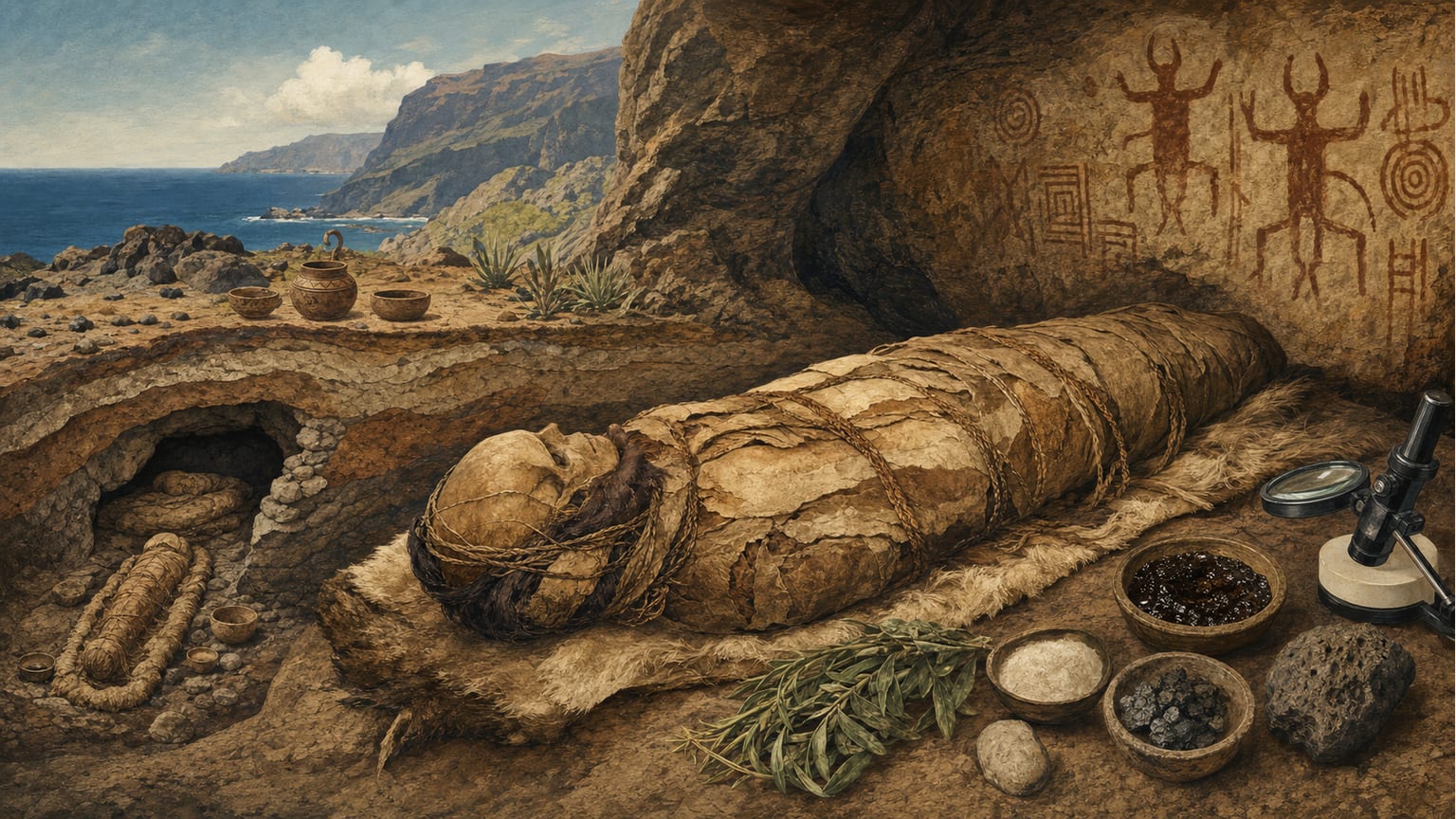
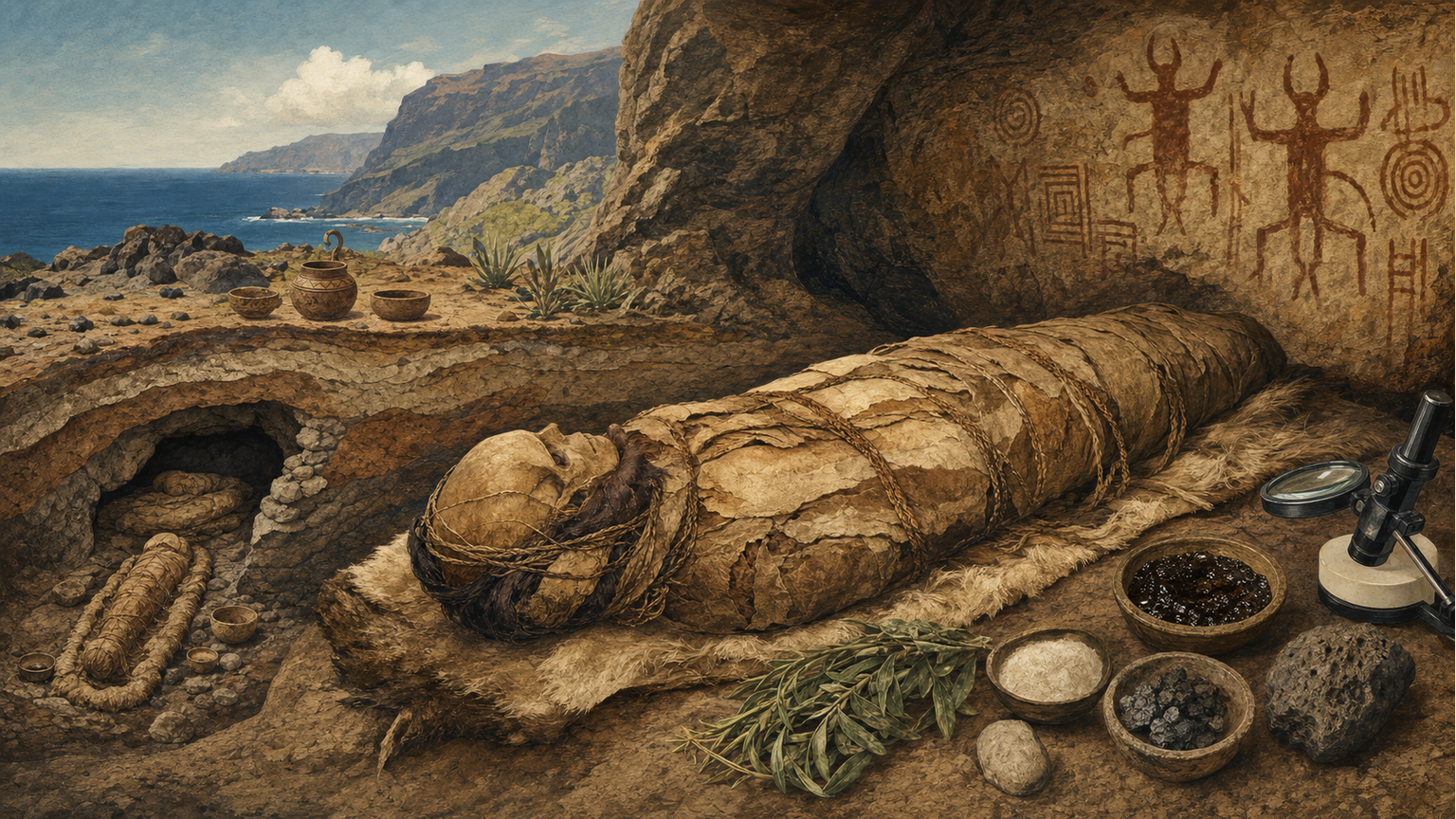
The mummification practices of the indigenous people of Tenerife have been studied in detail as part of the CRONOS Project, initiated by the Archaeological and Ethnographic Museum of Tenerife in 1989[1]. This project aimed to systematically and multidisciplinary investigate Guanche mummies, including the methods used for their preservation.
According to Rafael González Antón, Conrado Rodríguez Martín, and Fernando Estévez González, until the 1980s, knowledge about Guanche funerary rituals and mummification was based almost exclusively on written sources from the 15th to 17th centuries, which mention up to ten different mummification methods attributed to the Guanches[1]. However, the authors emphasize that these historical sources do not always reflect archaeological reality, making direct study of the mummies essential.
Analyses of the mummies preserved at the Archaeological Museum of Tenerife revealed that no incisions were made in the bodies and that the viscera remained “in situ,” ruling out evisceration as part of the mummification process in these specimens[1]. This finding contradicts some historical descriptions and suggests a preservation technique different from that of Egypt, where organ removal was standard.
Additionally, substances associated with the preservation of the bodies were identified, extracted from some mummies and analyzed at the Museum of Natural Sciences of Tenerife. These included red lapilli, solidified goat fat, dragon’s blood residue, and some seeds[1]. These findings suggest the use of local materials with possible desiccating or preservative properties.
A geographical study of the burial sites, conducted in collaboration with the Department of Physical Geography at the University of La Laguna, found that the orientation and environmental conditions of the caves often favored the natural preservation of the bodies[1]. Thus, Guanche mummification appears to combine environmental factors with the application of specific substances.
Experimental mummification was carried out in laboratory rats, following the methodology proposed by Garner, using the same substances identified in the mummies. The results showed that it was possible to mummify certain parts of the rodents’ anatomy, although preservation of the viscera was never achieved[1].
In summary, the mummification methods documented for the Guanches of Tenerife, according to direct analysis of the mummies and laboratory experiments, are characterized by the absence of evisceration, the use of natural substances, and the influence of environmental factors, distinguishing them from other known mummification traditions[1].