

Guanche Mummification: Ancient Funerary Art in Tenerife
The Guanches, Tenerife’s original inhabitants, practiced a remarkable form of mummification that stands out in the prehistory of the Canary Islands. This funerary tradition, described by early chroniclers and modern archaeologists, highlights the sophistication of Guanche society and its spiritual worldview, drawing intriguing parallels with other ancient civilizations such as Egypt[1].
A Specialized Craft
Mummification among the Guanches was entrusted to specialists known as embalmers or “mirladores.” There was a strict gender division: men embalmed men, and women embalmed women. The deceased’s family provided food for the embalmers during the process, which took place in specially designated caves[1].
The Mummification Process
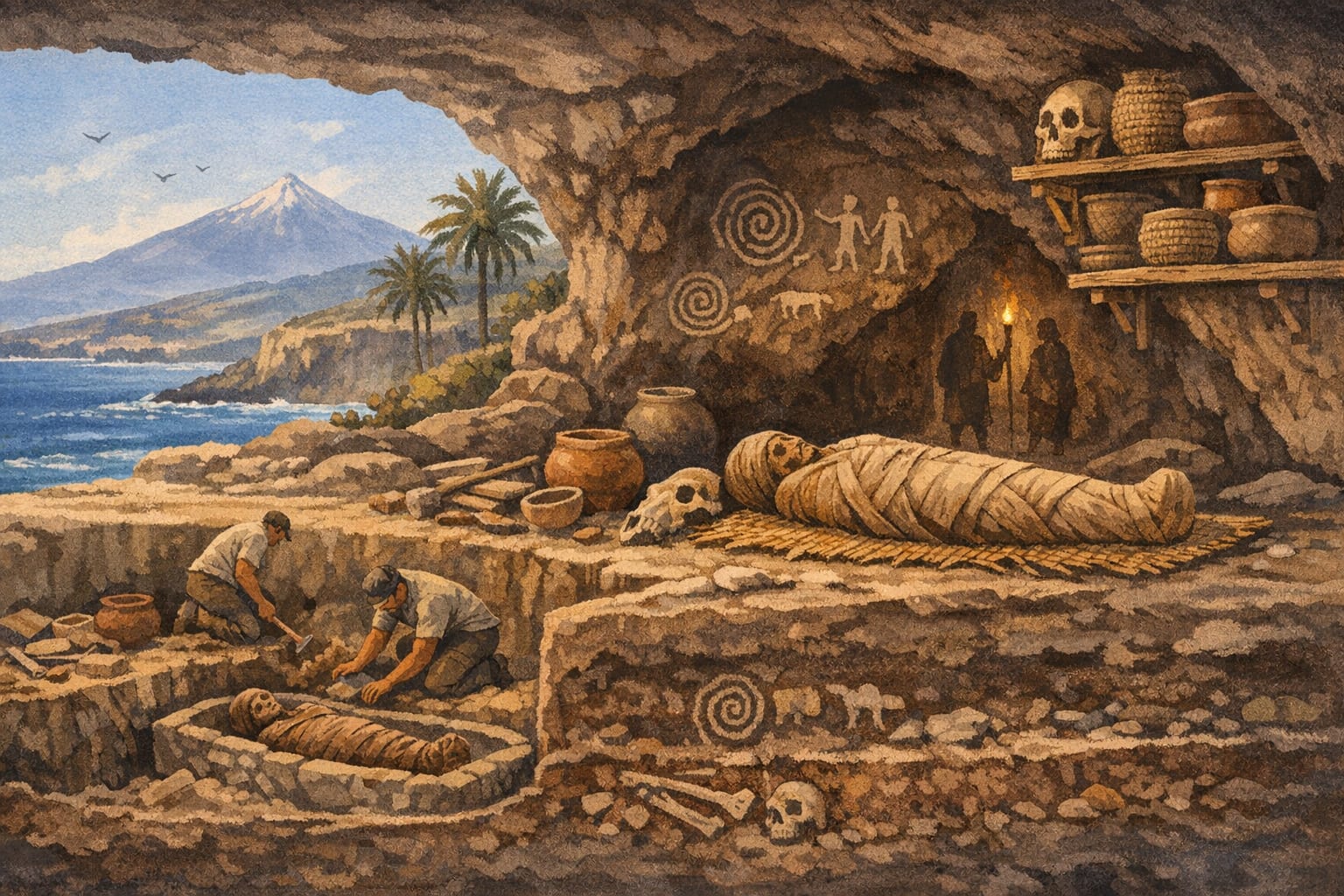
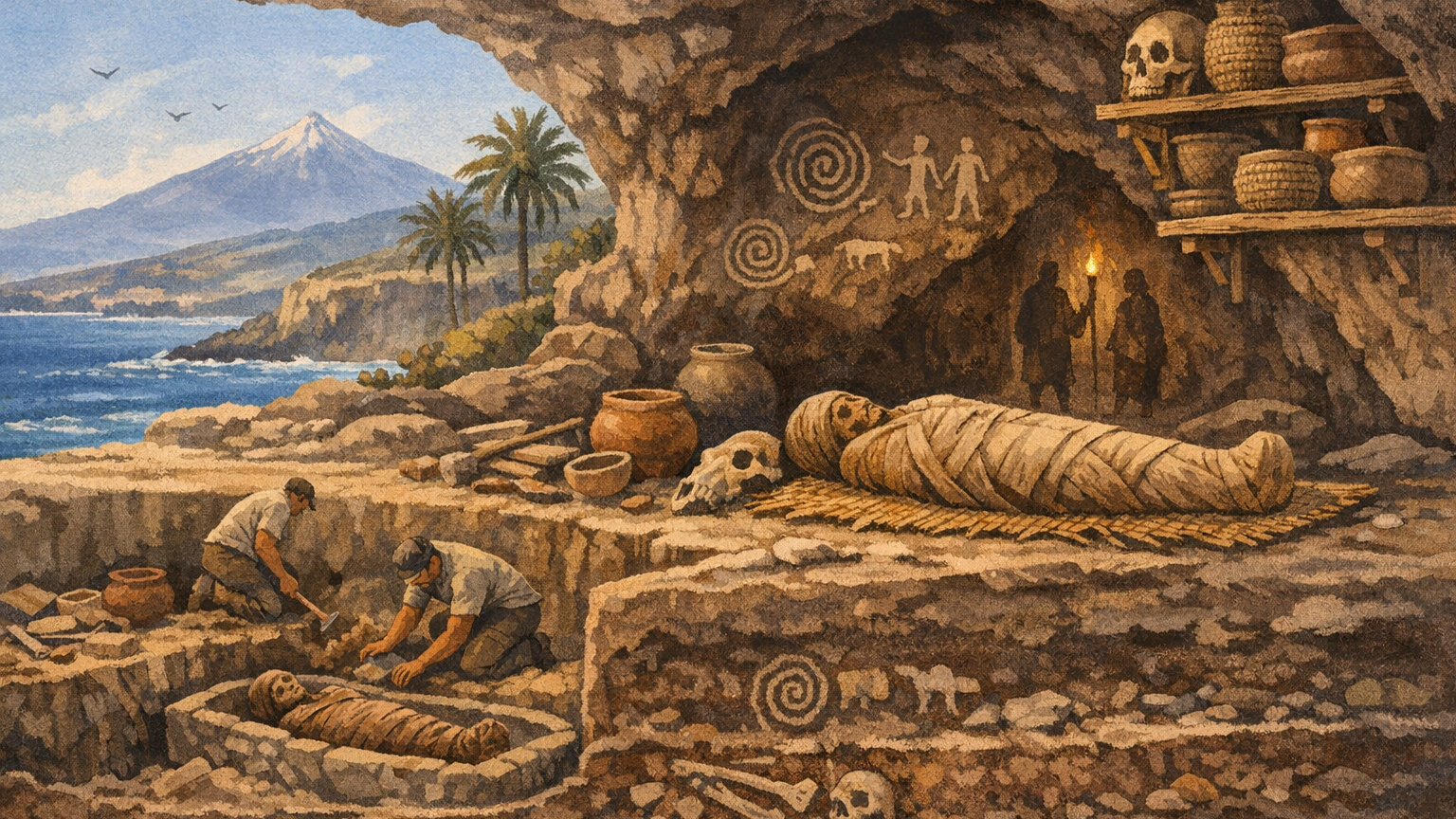
The process began with the removal of the internal organs. The body was then washed twice daily with cold water, focusing on delicate areas such as the armpits, behind the ears, groin, between the fingers, nose, neck, and wrists. After each wash, the body was anointed with ointments, likely made from animal or plant sources, to aid dehydration and preservation. Finally, the body was carefully wrapped and placed in a burial cave, protected from animals and exposed to the dry island climate[1].
Social and Religious Significance
Guanche mummification was not universal; it reflected a clear social hierarchy. Only certain individuals, probably of high status, received this treatment. The careful positioning of the body—arms extended, hands together, head slightly raised—suggests ritual significance and beliefs about the afterlife[1].
Uniqueness and Parallels
While reminiscent of Egyptian mummification, the Guanche practice may have persisted long after it disappeared in Egypt, illustrating the concept of “marginal survivals” in isolated cultures. The Guanches adapted the technique to their environment, using local materials and developing their own methods[1].
Archaeological Discoveries
Archaeological finds of Guanche mummies have confirmed the existence of this complex ritual. Bodies have been found in excellent condition, with preserved skin, hair, and soft tissues, as well as remains of both children and adults in high-mountain burial caves. These discoveries provide a unique window into Guanche society and its view of death[1].
A Cultural Legacy
Guanche mummification stands as a testament to the cultural richness of Tenerife’s ancient people and their ability to develop sophisticated funerary practices in an insular context. Studying this tradition brings us closer to their spiritual world and invites reflection on the diverse ways humans confront the mystery of death.