

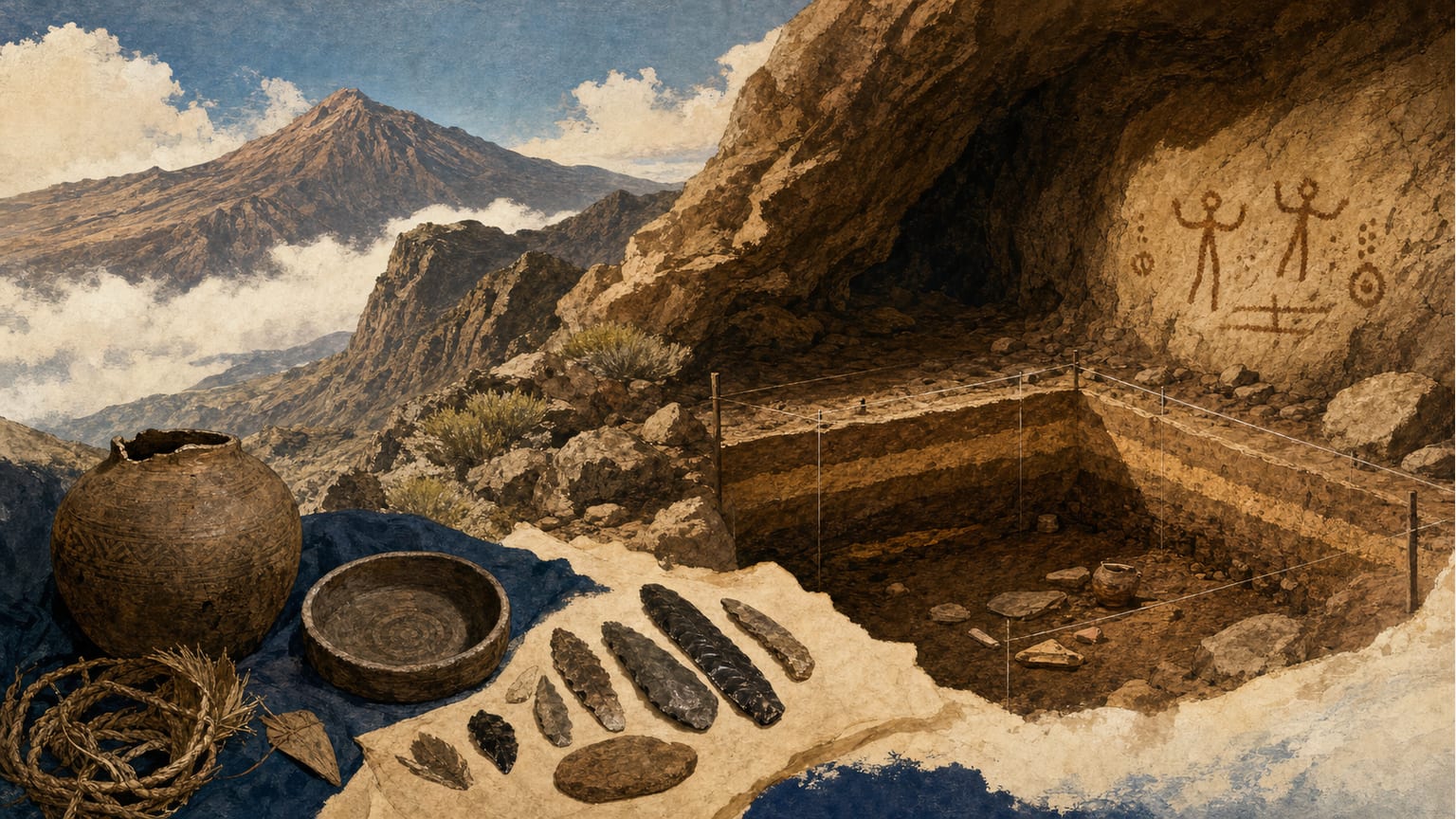
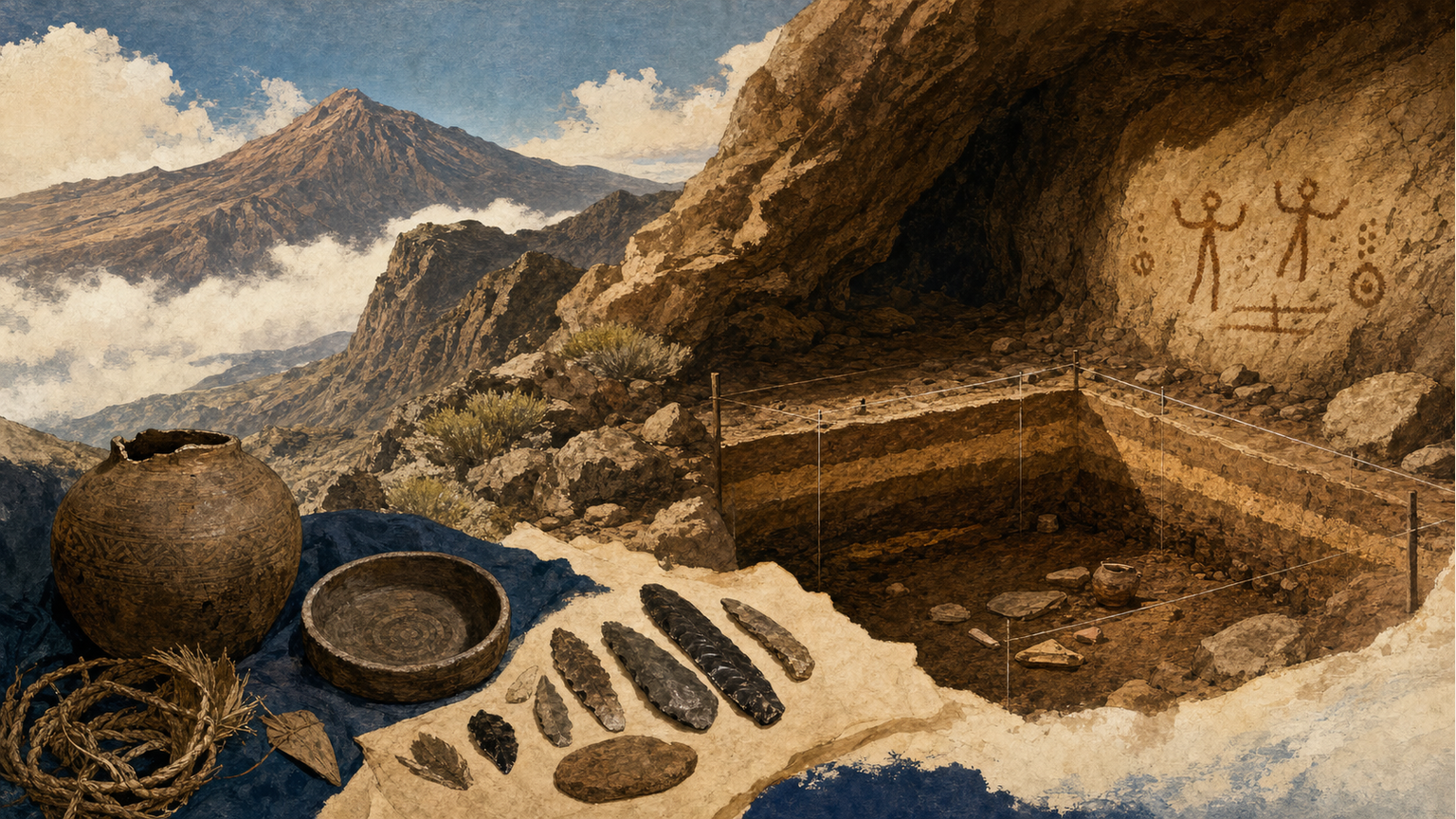
A notable feature in the archaeology of Tenerife is the presence of caches in high mountain areas, particularly in Las Cañadas del Teide and surrounding regions. According to González Antón, Rafael; Rosario Adrián, Mª Candelaria; Arco Aguilar, Mª Mercedes del, most of the complete, semi-complete, and significant ceramic remains preserved in museums and private collections, such as that of Hermógenes Afonso, originate from these peculiar archaeological contexts called ‘caches’[1].
The main hypothesis, presented by Diego Cuscoy and included in the catalogue, suggests that these caches were created when indigenous shepherds, moving with their belongings, hid objects in mountain crevices and hollows for use in the next season. If the shepherd did not return, the objects remained hidden and forgotten, allowing their preservation until their archaeological discovery[1].
The materials found in these caches are typically everyday ceramics, such as vessels for milk and water, reflecting the pastoral life of Tenerife’s indigenous populations. The Hermógenes Afonso Collection includes numerous examples of such pieces, many reconstructed from fragments found in these contexts[1].
The catalogue notes that vessels with mamelons and those with cylindrical handles have never been found together in the same cache, which, according to the authors, may indicate a functional or chronological distinction between the types of ceramics deposited[1]. Additionally, the absence of flat bases in these ceramics is highlighted, with conical or hemispherical bottoms predominating, facilitating placement on the uneven mountain terrain[1].
Regarding the interpretation of these deposits, the catalogue also references an alternative hypothesis by Tejera Gaspar, suggesting that some caches may have had a ritual character, similar to practices among Berber peoples, and not solely a domestic function[1]. However, the most widely accepted explanation at the time of publication remains that of abandoned pastoral belongings.
The Hermógenes Afonso Collection documents the variety and state of preservation of the pieces found in these caches, providing valuable information about ceramic technology, everyday uses, and the concealment practices of Tenerife’s indigenous populations[1].