

The Painted Cave of Gáldar: Techniques and Meaning of Indigenous Mural Art
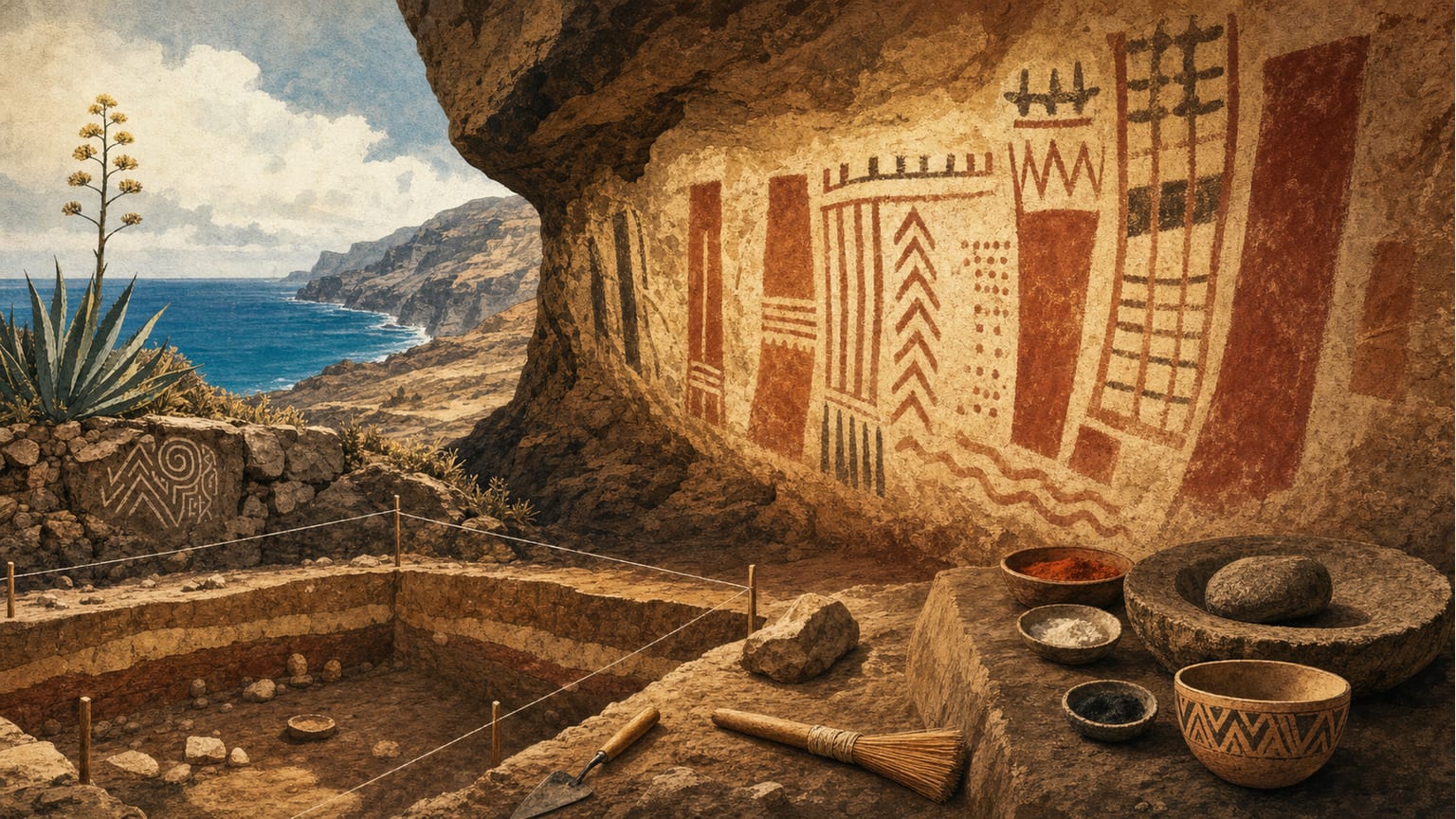
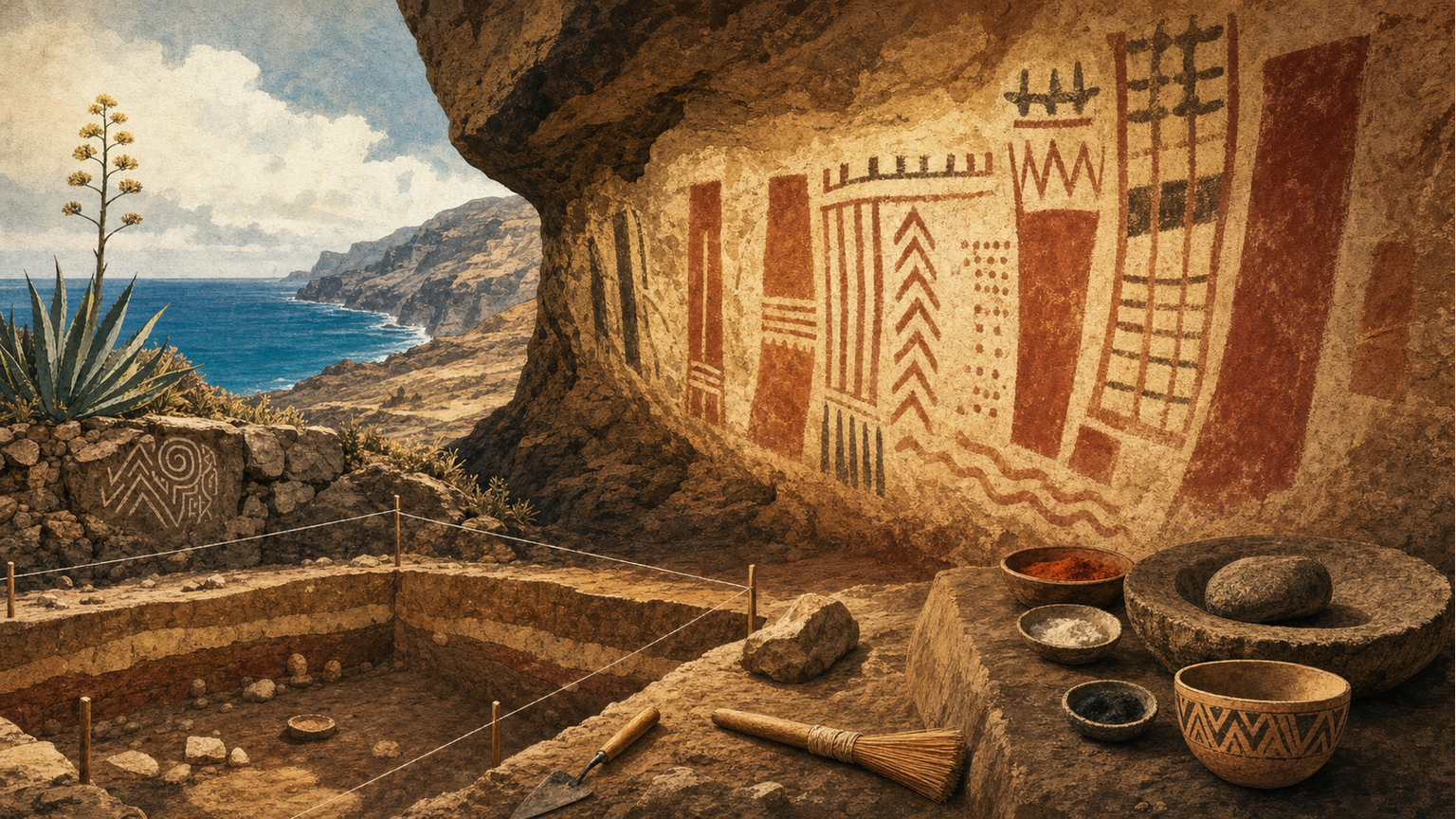
The Painted Cave of Gáldar, located in the historic center of the city, contains the most outstanding polychrome friezes of indigenous mural painting in Gran Canaria. These murals, found in the so-called polychrome chamber, are an exceptional artistic and symbolic expression of the island’s pre-Hispanic society[1].
Creation of the Murals: Technique and Materials
The production of these wall paintings required a refined technique. The first step was to prepare the wall to achieve a smooth surface. This involved filling and smoothing the gaps between layers of volcanic tuff with a mortar coating. Afterwards, the surface was polished with a clay preparation[1].
Once the wall was ready, a general sketch of the design was drawn, onto which the different colors were later applied. Before applying the pigments, the wall was lightly dampened to improve absorption and adherence. The paints were applied directly with the fingers or with brushes, probably made from goat hair or reeds[1].
The coloring agents were mineral in origin: ochres (oxidized clays) for red and fine whitened clays for white, mixed with water for application. The black seen on the panels is not a pigment but a natural darkening of the tuff[1].
Motifs and Composition
The decorative motifs of the Painted Cave are geometric and display a careful composition, with unique symmetry and rhythm. Notable elements include triangles, interlocking angles, circles, and motifs reminiscent of an ear of grain. In some triangles, the layering of cream over white is clearly visible, demonstrating the complexity of the technique[1].
Interpretation and Function
Beyond their aesthetic value, the polychrome panel of the Painted Cave reveals an exceptional character that suggests the presence of authentic ideograms. The ritual atmosphere associated with this space leads to the hypothesis that it may represent a system for measuring and calculating time, possibly a lunar and solar calendar based on series organized around the number twelve and the alternation of red, white, and unpainted spaces[1].
This knowledge was controlled by the most important members of the island nobility (foyzogues), who justified their social preeminence through the monopoly of knowledge, beliefs, and indigenous rituals. The ceremonial nature of the space is reinforced by archaeological finds inside the cave, such as mummies, vessels, and other household items, as documented in reports from the time of its discovery[1].