

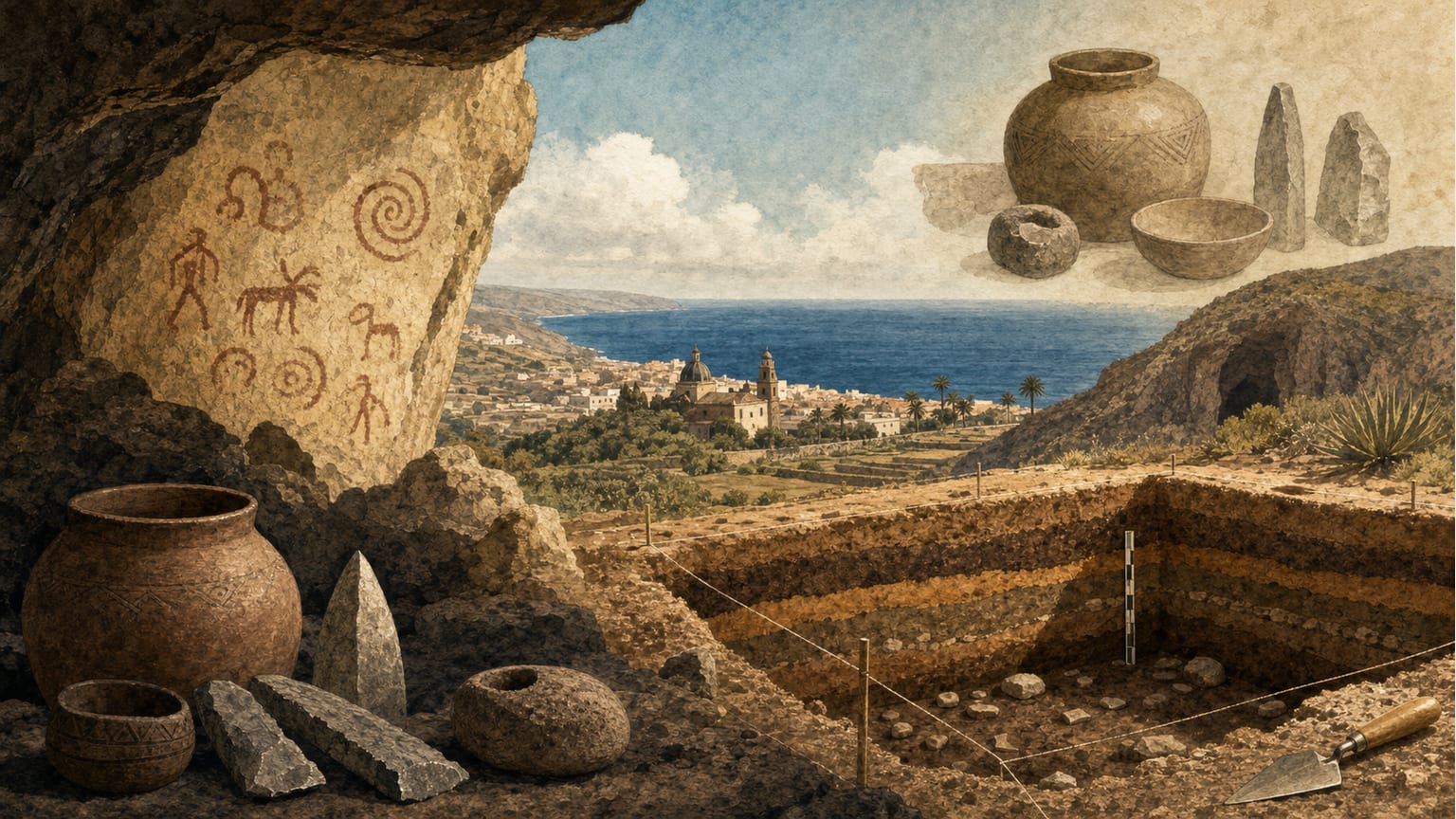
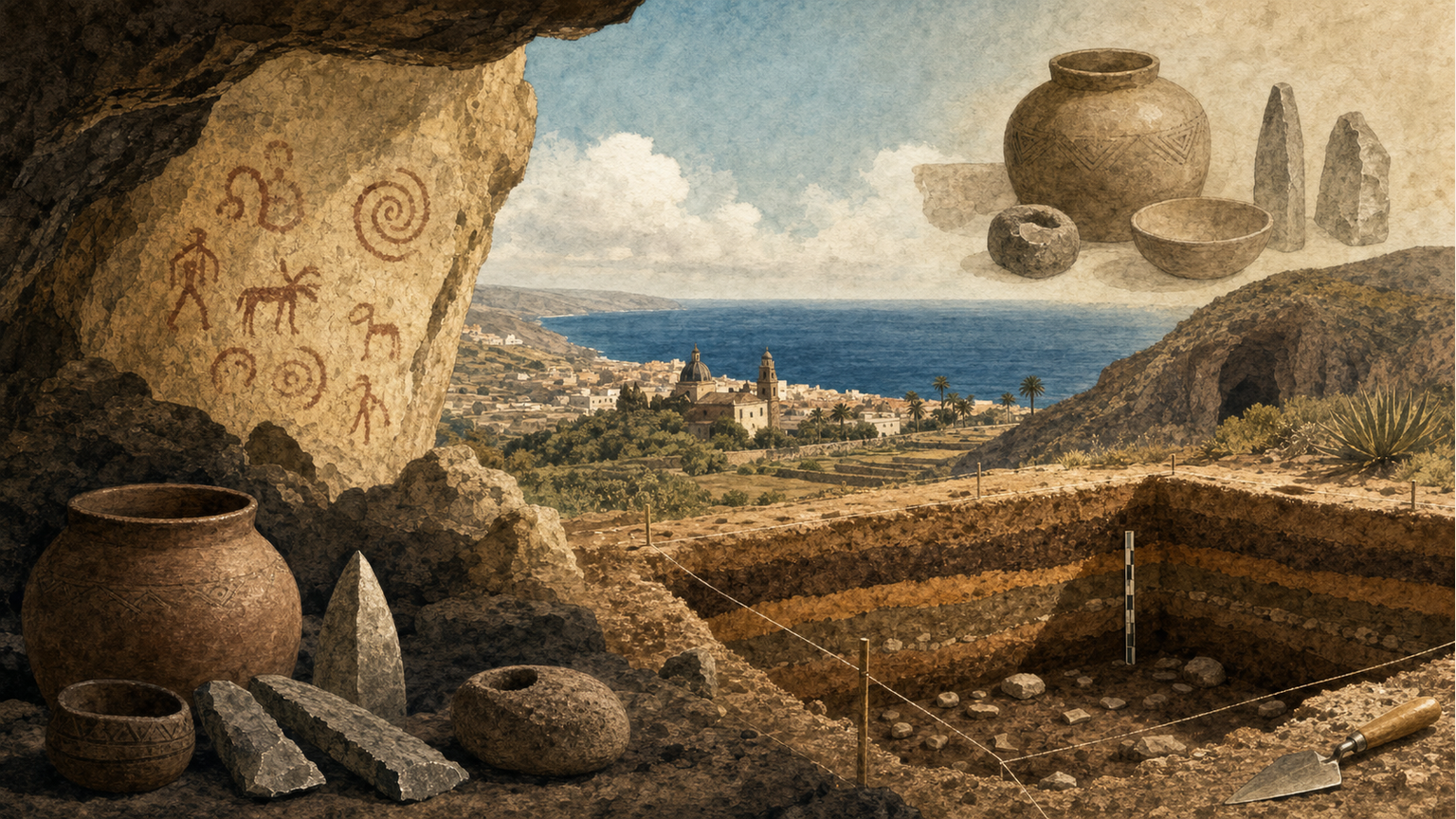
The study of indigenous settlement in the Arucas region has relied on the collection and analysis of historical and archaeological sources from the time of the conquest to the present. The earliest documented references to indigenous presence in the area appear in 16th-century chronicles and official documents, such as land distribution records and conquest chronicles, which mention a settlement called Arehucas and episodes like the Battle of Arucas and the death of the leader Doramas[1].
During the conquest and colonization process, religious figures played a key role in gathering ethnographic information about the indigenous people, as their evangelizing work allowed direct contact with the local population. However, the interpretation of this data was influenced by the Eurocentric perspective of the narrators and the need to adapt the new reality to European cultural tradition, even resorting to the biblical Genesis to explain the origin of the ancient Canarians[1].
Authors such as Fray Abreu Galindo and Leonardo Torriani initiated the genre of “General Histories,” which include key episodes for the history of Arucas, such as the capture of Princess Tenesoya and the presentation of Canarian envoys to Diego de Herrera. Early archaeological finds, such as graves, pottery, and other objects discovered during agricultural or construction work, are also documented, highlighting the material richness of the area in pre-Hispanic times[1].
In the 17th and 18th centuries, concern for identity and the indigenous past intensified, as reflected in the works of Fray José de Sosa and Tomás Arias Marín de Cubas, who collected data on antiquities and sites in the region. José Viera y Clavijo, a prominent figure of the Canarian Enlightenment, critically analyzed the sources and argued for the aborigines’ descent from the ancient Atlantean lineage, although he did not provide direct archaeological information about Arucas[1].
The 19th century marked a significant change with the creation of El Museo Canario and the arrival of foreign researchers such as Sabino Berthelot and René Verneau, who introduced more systematic archaeological and anthropological methods. Berthelot, for example, documented the discovery of ceramic material in Arucas during the construction of a well, while Verneau conducted excavations and bioanthropological studies linking the ancient island inhabitants with Cro-Magnon man[1].
Throughout the 20th century, archaeological research in Arucas continued with the work of local chroniclers and the institutionalization of archaeology, highlighted by the publication of inventories and archaeological maps identifying sites such as Hoya de San Juan and Montaña de Arucas. These efforts have made it possible to reconstruct, from historical and material sources, the complex history of indigenous settlement in the region, laying the groundwork for more recent investigations such as those at the La Cerera site[1].