

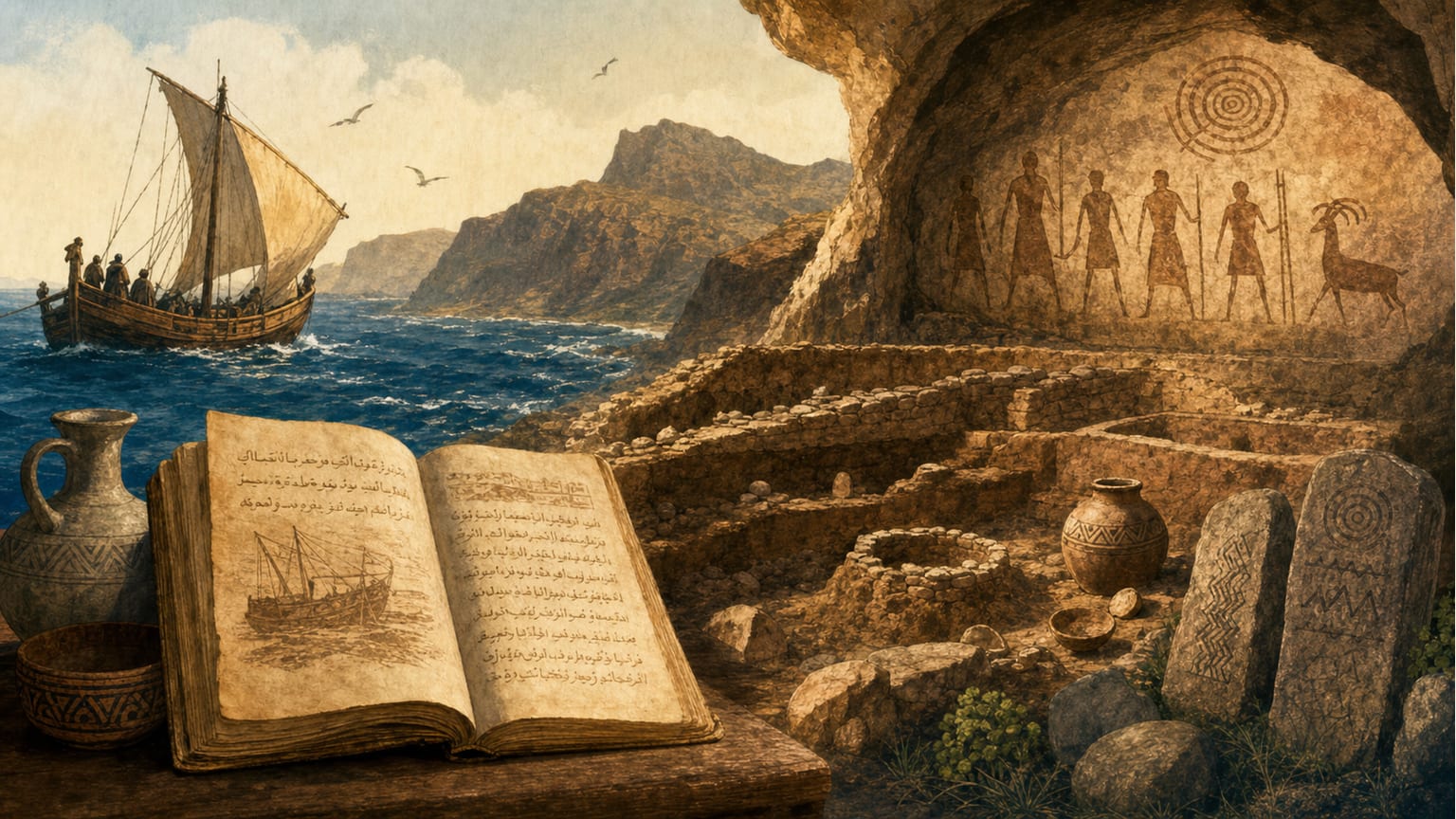
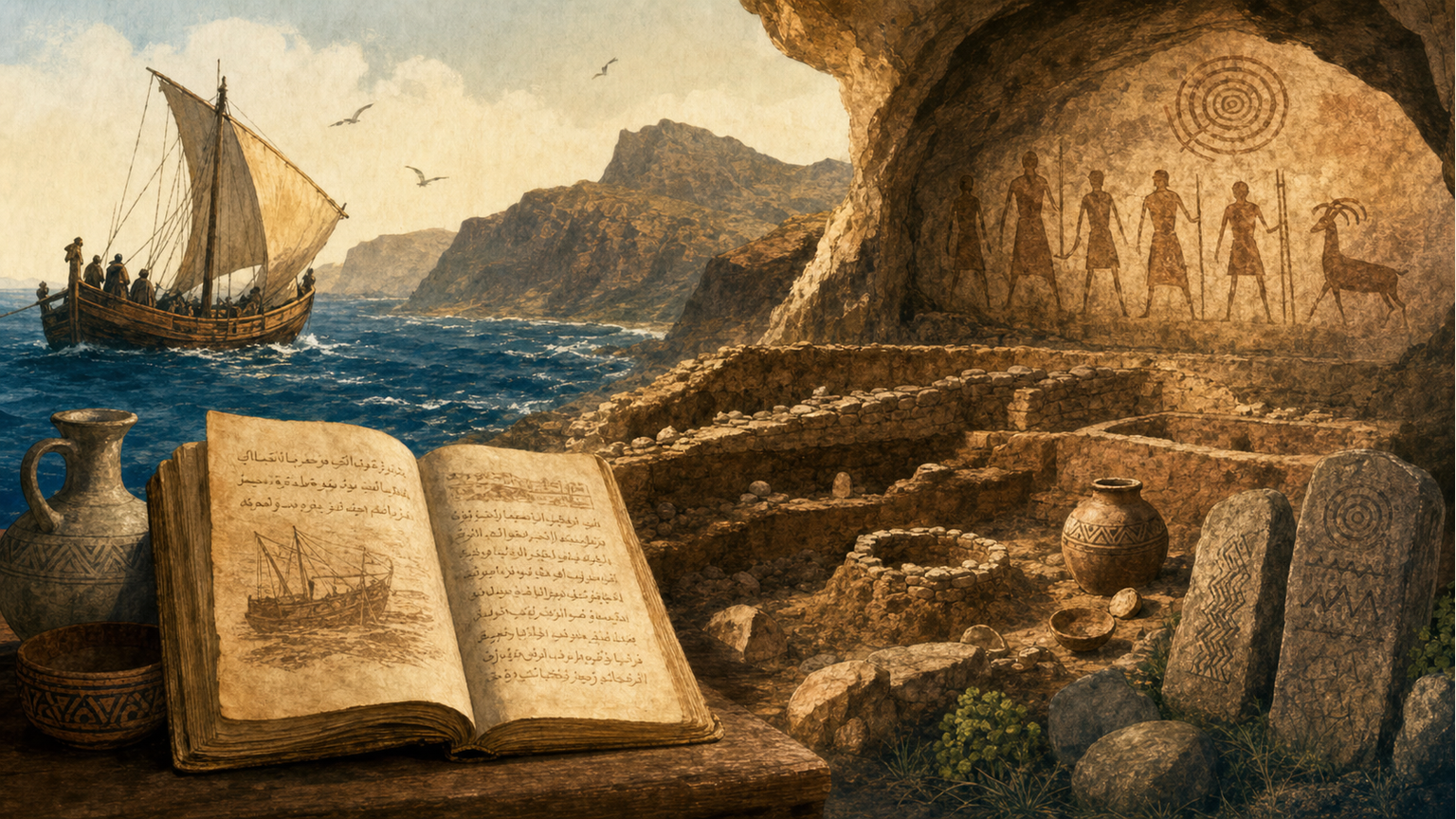
The Voyage of Ben-Farroukh to the Canary Islands in the 10th Century: An Arab Source
In his 1879 work, Sabin Berthelot presents a little-known episode in Canarian history: the journey of the Arab captain Ben-Farroukh to Gran Canaria in the year 999, as described in an Arabic manuscript attributed to Ibn-el-Kouthiáh and cited by the Canarian author Manuel Osuna Saviñón[1]. Berthelot regards this account as authentic and highlights its importance for understanding early Arab contact with the Canary Islands prior to European conquest, as well as the social organization of the indigenous population.
According to the source, Ben-Farroukh, who was in charge of patrolling the Portuguese coast, was inspired by stories from Lusitanian sailors about the Fortunate Isles and decided to embark on an expedition. He landed at Gando on Gran Canaria with 130 men, where he was welcomed by Arabs already living on the island, descendants of earlier expeditions, who coexisted peacefully with the indigenous people[1].
The manuscript details how Ben-Farroukh was taken to Gáldar, where he was received by the guanarteme Guanariga and his councilors. Ben-Farroukh pretended to be an envoy of Caliph Abd-el-Meluk, seeking an alliance and friendship with the island’s prince. Guanariga expressed his satisfaction by decorating his residence with palms and flowers and offering the newcomers abundant supplies of livestock, fruit, and gofio (toasted barley)[1].
After his stay in Gran Canaria, Ben-Farroukh reportedly sailed west to visit other islands, identified as Ningaria (likely Tenerife), Irmonia, Aprositos, and Hero, and then east to Capraria and Pluitana. However, the most detailed information concerns Gran Canaria and the interactions with both the indigenous people and the resident Arabs[1].
Berthelot emphasizes that, according to the manuscript, Gran Canaria’s indigenous society in the 10th century already displayed advanced social organization, with hospitality and provisioning customs similar to those observed by later European conquerors. The prince’s name, Guanariga, is noted as genuinely indigenous. The source also suggests that the island was divided into tribes led by chiefs or magnates, and that agriculture and certain primitive industries were more developed in Gran Canaria than on other islands[1].
Berthelot defends the authenticity of Osuna Saviñón’s account and uses it as evidence of Arab contact with the Canary Islands before European conquest, as well as the continuity of certain indigenous customs over the centuries[1]. He regrets the lack of the complete manuscript but maintains the credibility of the testimony despite doubts from some contemporary researchers.
In summary, the voyage of Ben-Farroukh, as recorded in the Arabic source cited by Berthelot, stands as one of the earliest references to interaction between Arab navigators and the indigenous populations of the Canary Islands, providing details on social organization, hospitality, and the customs of Gran Canaria’s inhabitants in the 10th century[1].