

The Almogarenes of Telde: Aboriginal Ritual Sites in Gran Canaria
In Telde, the ritual sites of the ancient Canarians, known as almogarenes, are among the most distinctive and well-documented elements of the island’s archaeological heritage. Historical chronicles describe these sites as places for rituals and offerings, and their study sheds light on the religious life of Gran Canaria’s aboriginal population[1].
The Almogaren of Cuatro Puertas
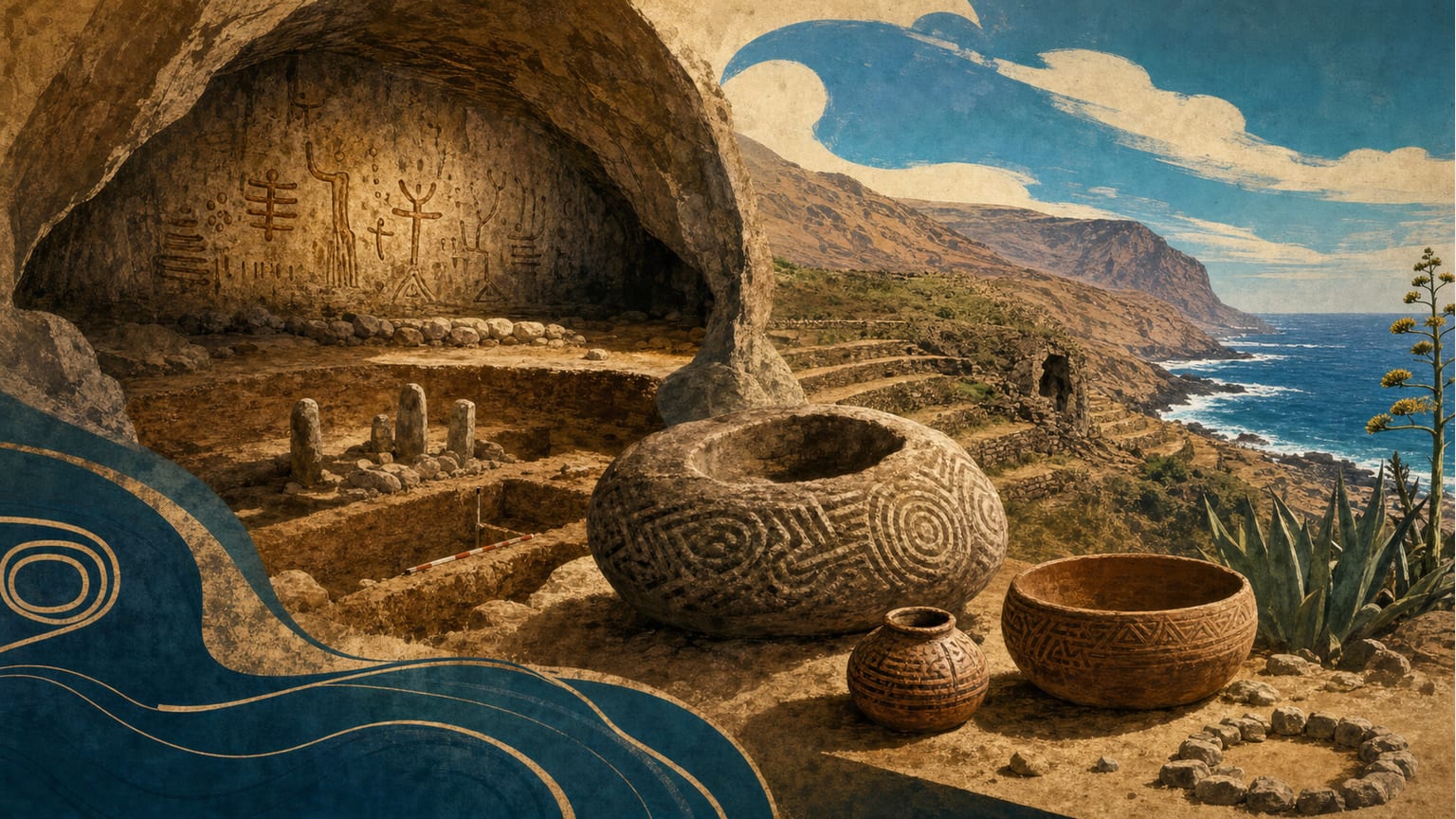
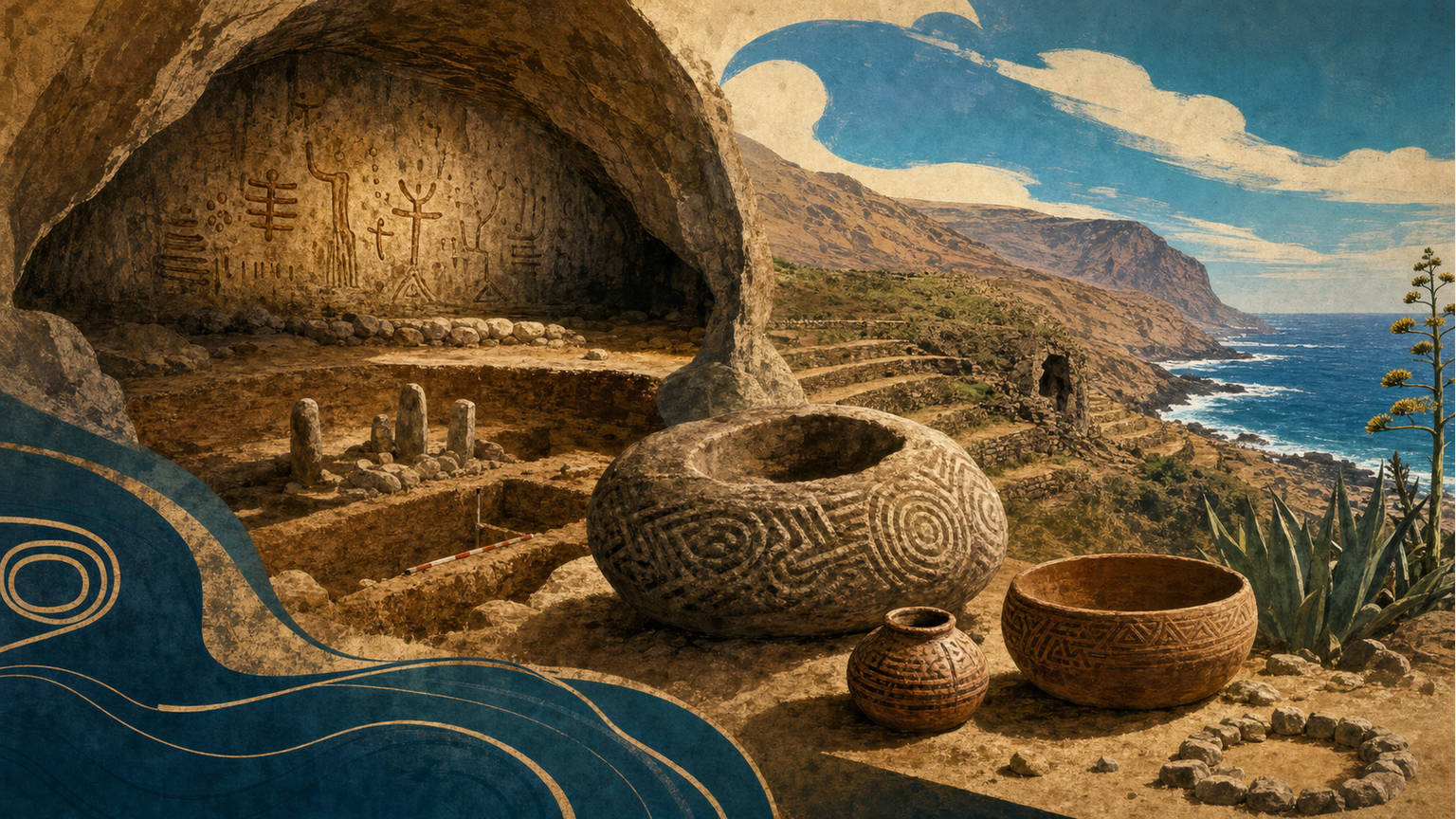
Located near the summit of Montaña de Cuatro Puertas, this sanctuary features a large artificial cave measuring 17 by 7 meters, carved into volcanic tuff. The cave has four large openings or doors that lead to a plaza where about twenty cup-marks were carved. Nearby, to the east, there is a platform of about 50 square meters where the ancient Canarians carved channels and cup-marks, likely used for offerings such as the pouring of milk described by chroniclers[1].
This almogaren also contains alphabetiform inscriptions that remain untranslated. The Cuatro Puertas site is one of the most representative examples of aboriginal ritual architecture on the island[1].
The Almogaren of Barranco de Silva
In the middle course of Barranco de Silva is another sanctuary, consisting of several artificial caves—some with engravings—and at least two tuff platforms with channels and cup-marks connected by small grooves. The main almogaren is located on a tuff platform, with several cup-marks linked by a complex system of grooves that allowed liquids to flow from one to another[1].
Nearby is another almogaren with channels arranged like small aqueducts. One of these channels features alphabetic inscriptions known as the “Krauss Inscriptions.” Additionally, a small artificial cave in the area contains geometric engravings related to fertility cults[1].
The Almogaren of El Baladero
Similar in character to the previous sites, the almogaren of El Baladero is located in the urban center of Telde, in the San Francisco neighborhood. Here, a significant stone betyl idol was discovered. The site features cup-marks and channels carved in tuff, as well as triangular engravings representing female vulvas, elements associated with fertility worship[1].
Archaeological Significance
The existence and preservation of these almogarenes in Telde document the importance of ritual and religious beliefs in the aboriginal society of Gran Canaria. Material remains such as cup-marks, channels, inscriptions, and engravings provide direct evidence of ritual practices and the cultural complexity of the island’s ancient inhabitants[1].