

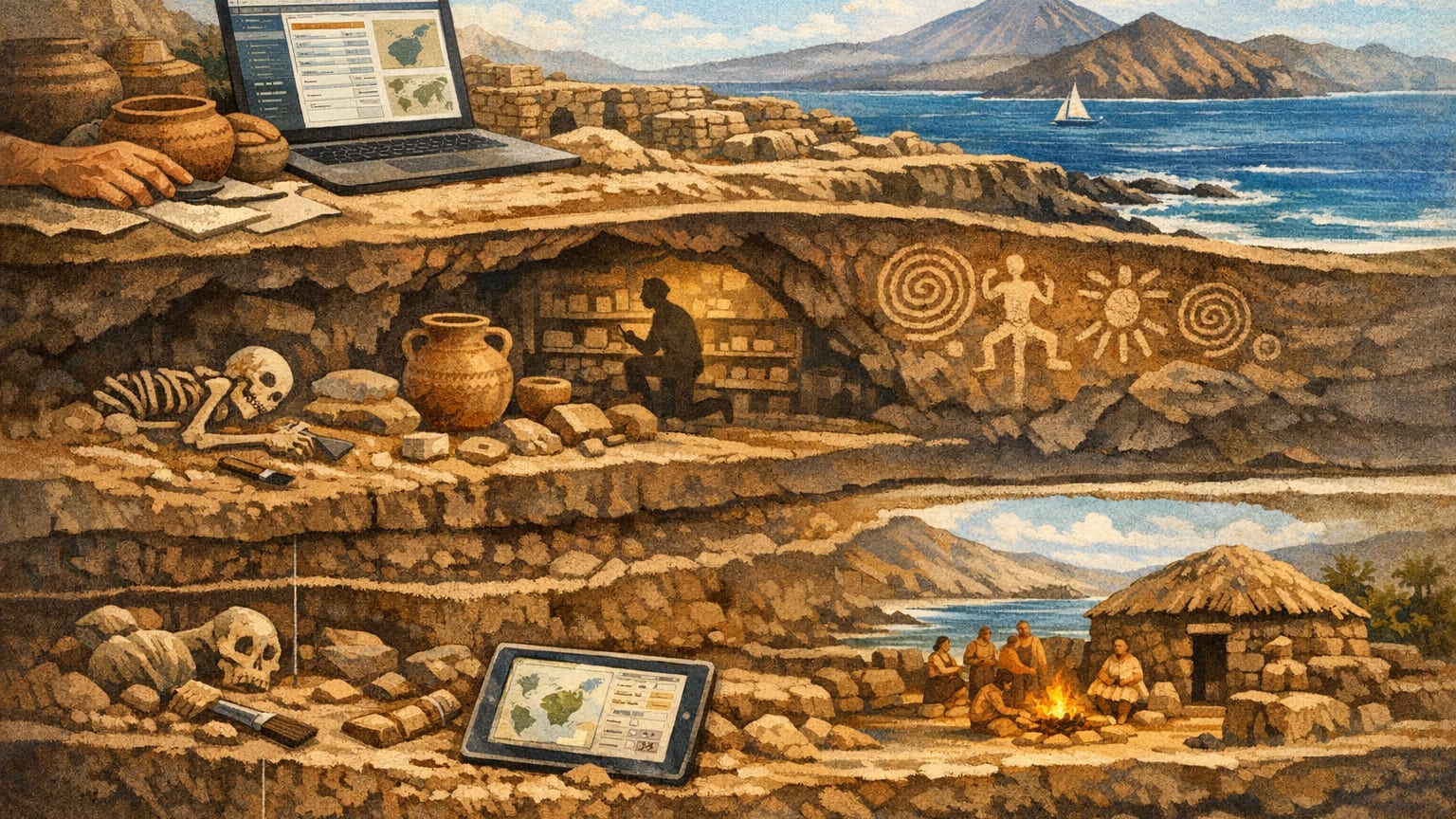
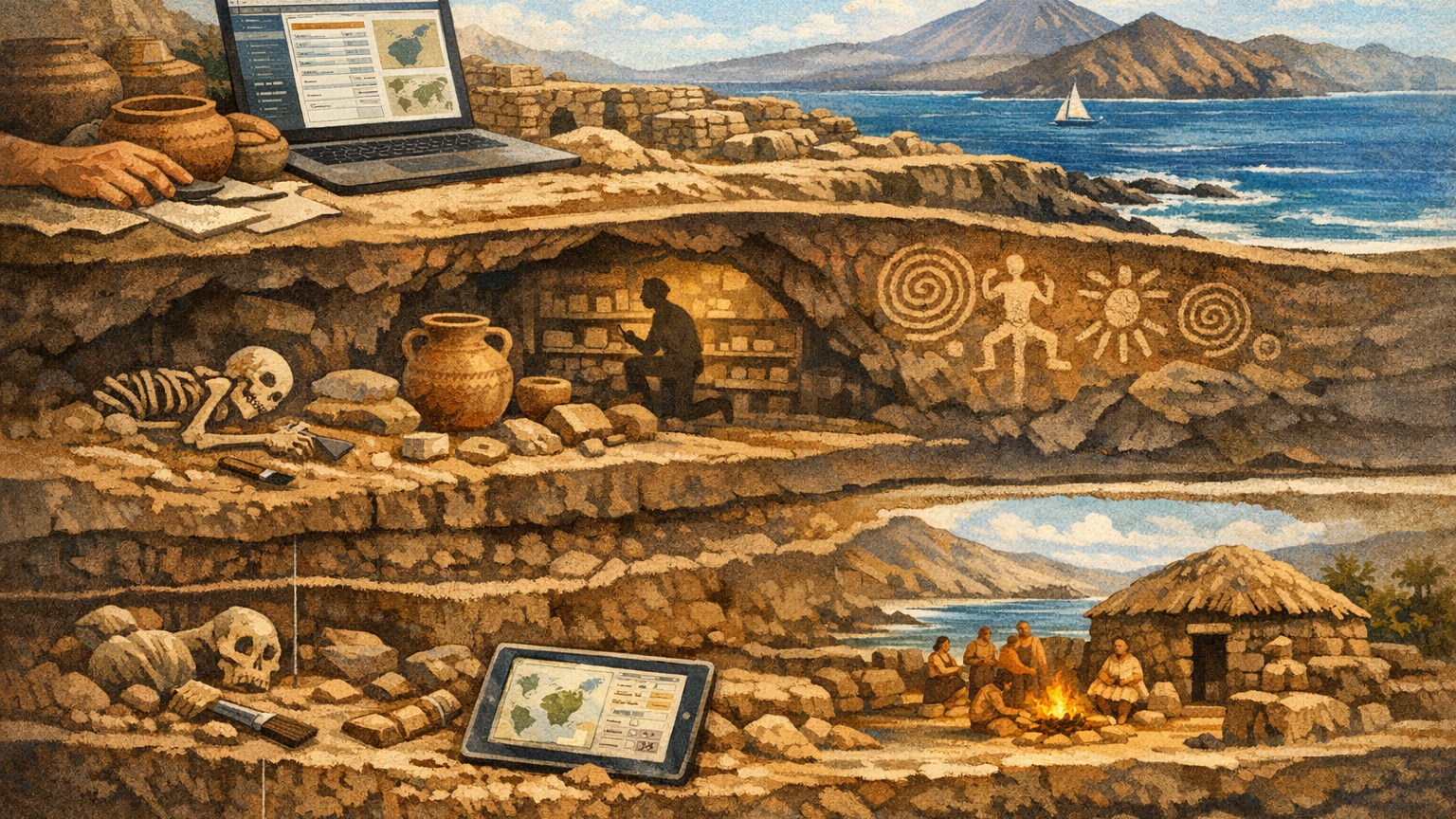
The Database Revolution in Canary Islands Archaeology and Anthropology
In recent decades, research into the prehistory and anthropology of the Canary Islands has undergone a profound transformation: the digitization and systematization of scientific bibliography. This shift, more than a technological upgrade, has revolutionized the way cultural heritage is preserved, catalogued, and analyzed [1].
Before the late 20th century, information on the islands’ archaeology, ethnohistory, and anthropology was scattered across books, journals, conference proceedings, and hard-to-access documents. The creation of the “Bibliography of Prehistory and Anthropology of the Canary Islands” (BPAC) marked a turning point. Thanks to the efforts of the Tenerife Museum of Anthropology and the support of public and private institutions, a computerized database was developed. By 1996, it contained over 30,000 records, with 8,500 dedicated specifically to Canary Islands prehistory and anthropology [1].
This database not only gathered bibliographic references but also classified them by scientific area, thematic descriptors, and international standards such as UNESCO classifications. This level of detail enabled precise information retrieval and the creation of bibliometric analyses, making it possible to identify research trends, the most cited authors, and the impact of publications within the scientific community [1].
Digitization also allowed the database to be continuously updated and expanded, incorporating not only academic literature but also popular publications, grey literature, and even historical references from before the 19th century. This broad approach has been crucial for understanding the evolution of these disciplines in the Canaries and their interaction with international currents.
However, the BPAC also highlighted challenges: the limited international dissemination of Canarian scientific output and the difficulty of accessing works published outside the archipelago. Nevertheless, the database became an essential tool for researchers and the general public, opening new avenues for the study and preservation of Canarian cultural heritage [1].
In summary, the database revolution in Canary Islands archaeology and anthropology has not only improved knowledge management but also fostered a more global, critical, and up-to-date vision of insular identity. It stands as an example of how technology can be a key ally in preserving and understanding history.