

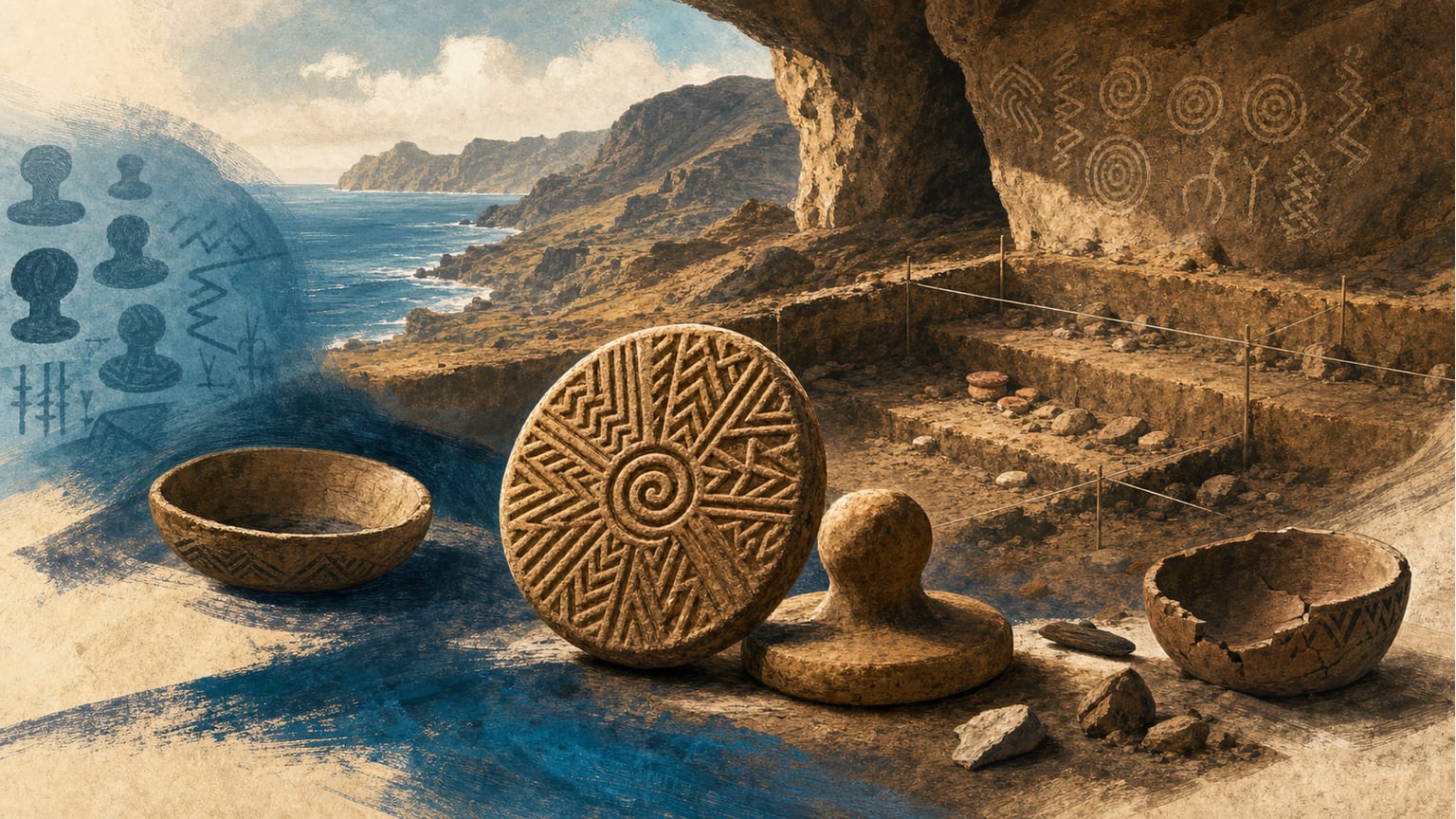
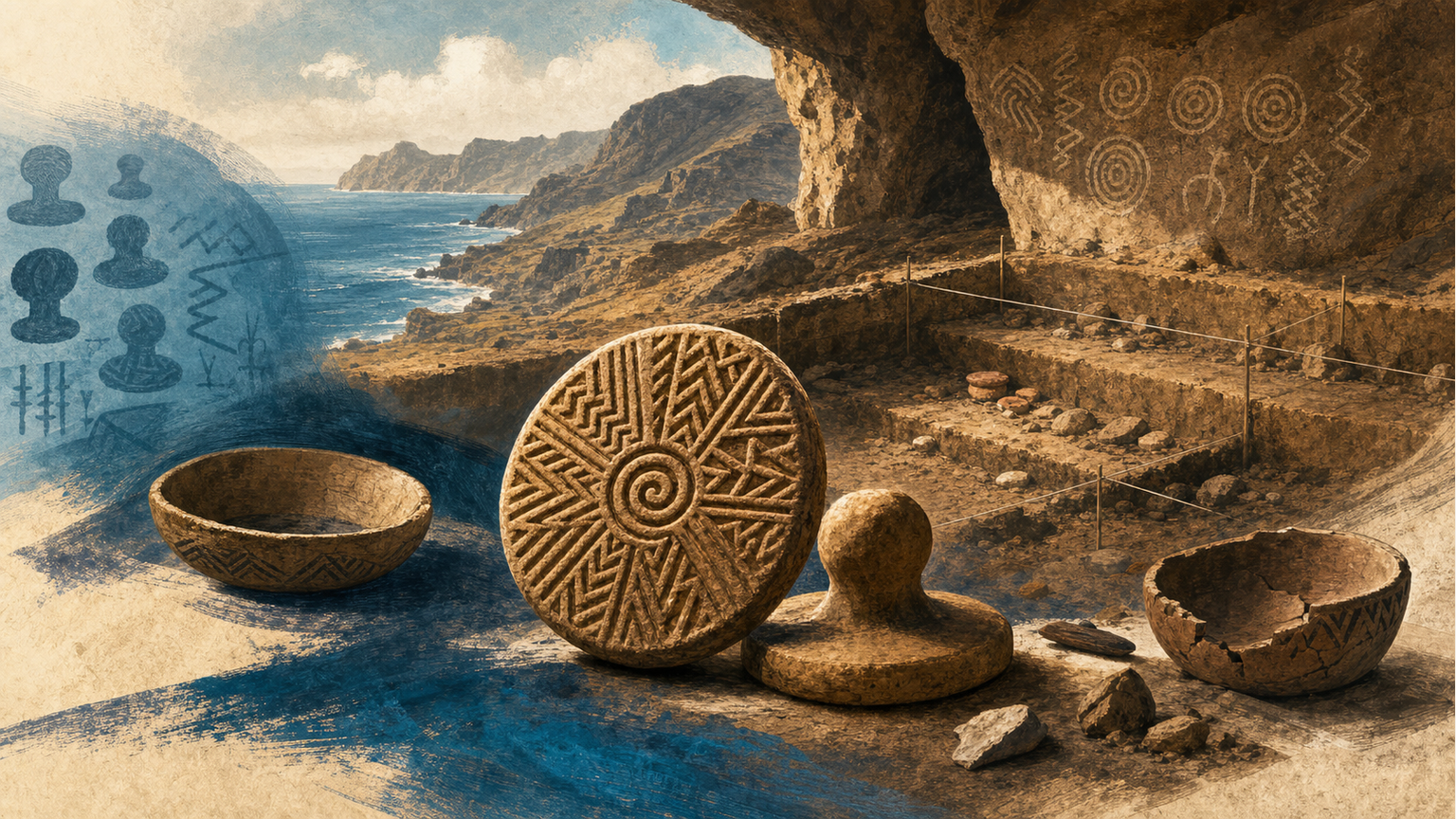
The Enigma of Pintaderas: Beyond the Stamp, Toward Social Meaning
The pintaderas of Gran Canaria are among the most iconic and mysterious archaeological objects from the island. Since the late 19th century, scholars and the public have repeatedly asked: what were these clay pieces with geometric designs actually used for?[1]
From Archaeological Find to Cultural Symbol
Over time, pintaderas have become a symbol of Canarian identity, used to evoke the island’s pre-Hispanic past. Their image is now part of the collective imagination, even though their original meaning is often unknown. This cultural appropriation has shifted the focus away from their function, but archaeology continues to seek answers.[1]
Shifting the Focus: Social Context Matters
For decades, research focused on deciphering the pintaderas’ use: were they stamps for skin, pottery, bread, or textiles? Did they serve ritual, administrative, or decorative purposes? Recent studies, however, have shifted the focus. Today, the key to understanding pintaderas lies not only in their isolated function but in the social and cultural context of the communities that created them.[1]
This new perspective means viewing pintaderas not as mere objects but as part of a broader social fabric. Their study is now linked to understanding the relationships, activities, and beliefs of pre-Hispanic Gran Canarian society. The central question is no longer just “what were they for?” but “what kind of society gave meaning to these objects for centuries?”[1]
The Challenge of Interpretation
Determining the exact function of pintaderas is difficult, partly due to the lack of contextual information in early museum records, which often only noted the locality. Years of handling, restoration, and experimentation have also altered some original traces.[1]
Despite these challenges, the Museo Canario’s collection offers a unique opportunity for comparative study, thanks to the diversity and number of pieces. Technical and typological analysis, combined with research into their social context, is gradually deepening our understanding.[1]
Conclusion: An Ongoing Story
The mystery of pintaderas’ function remains unsolved, but current research places them at the heart of ancient Canarian social life. More than just stamps, pintaderas are witnesses to a complex society whose secrets we are still uncovering. Their study encourages us to look beyond the object and ask about the people and stories behind each piece.[1]