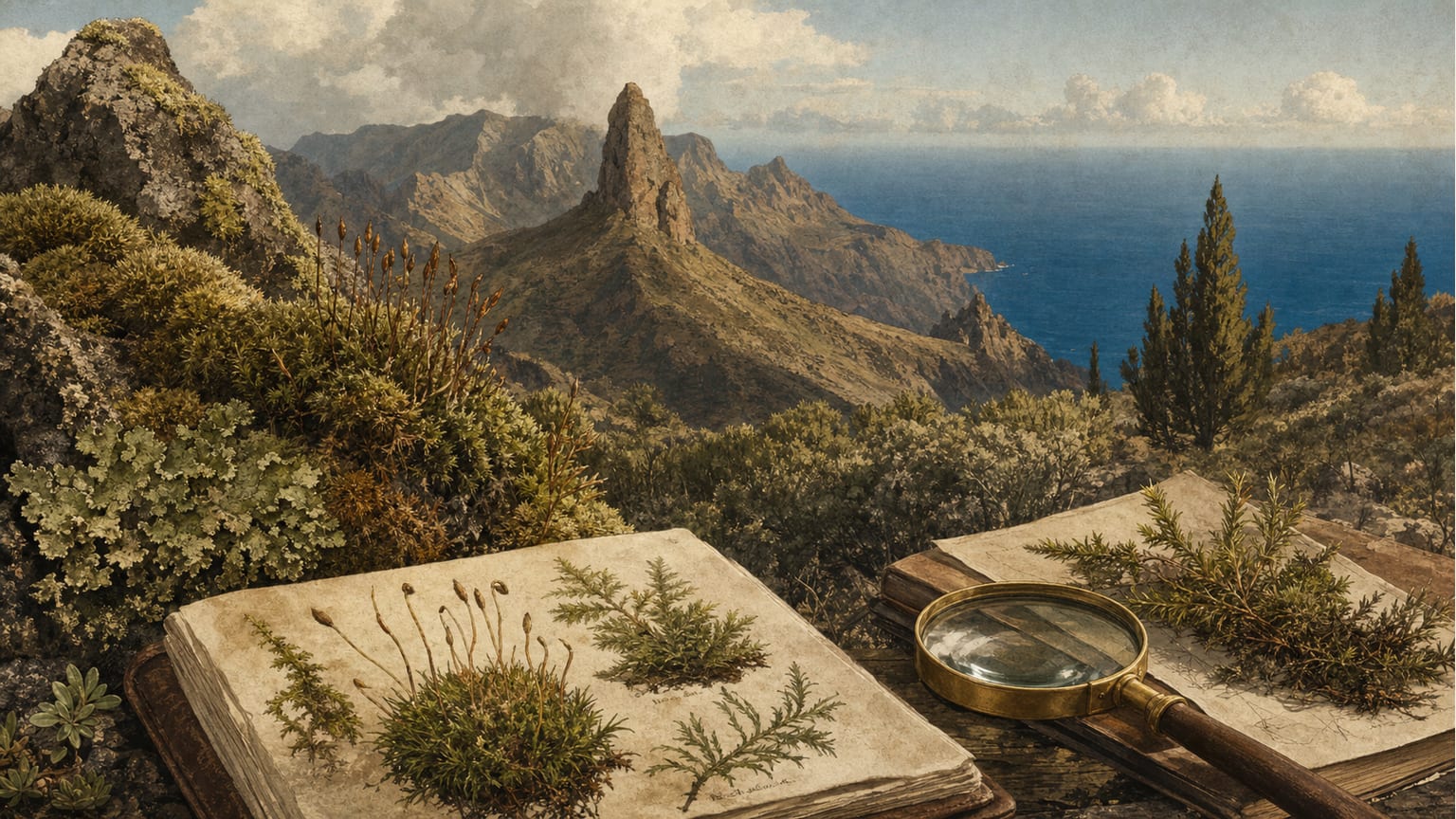
Webb and Berthelot's 19th-century study documents the richness and distribution of mosses in the Canary Islands, highlighting their affinity with European and Mediterranean flora.
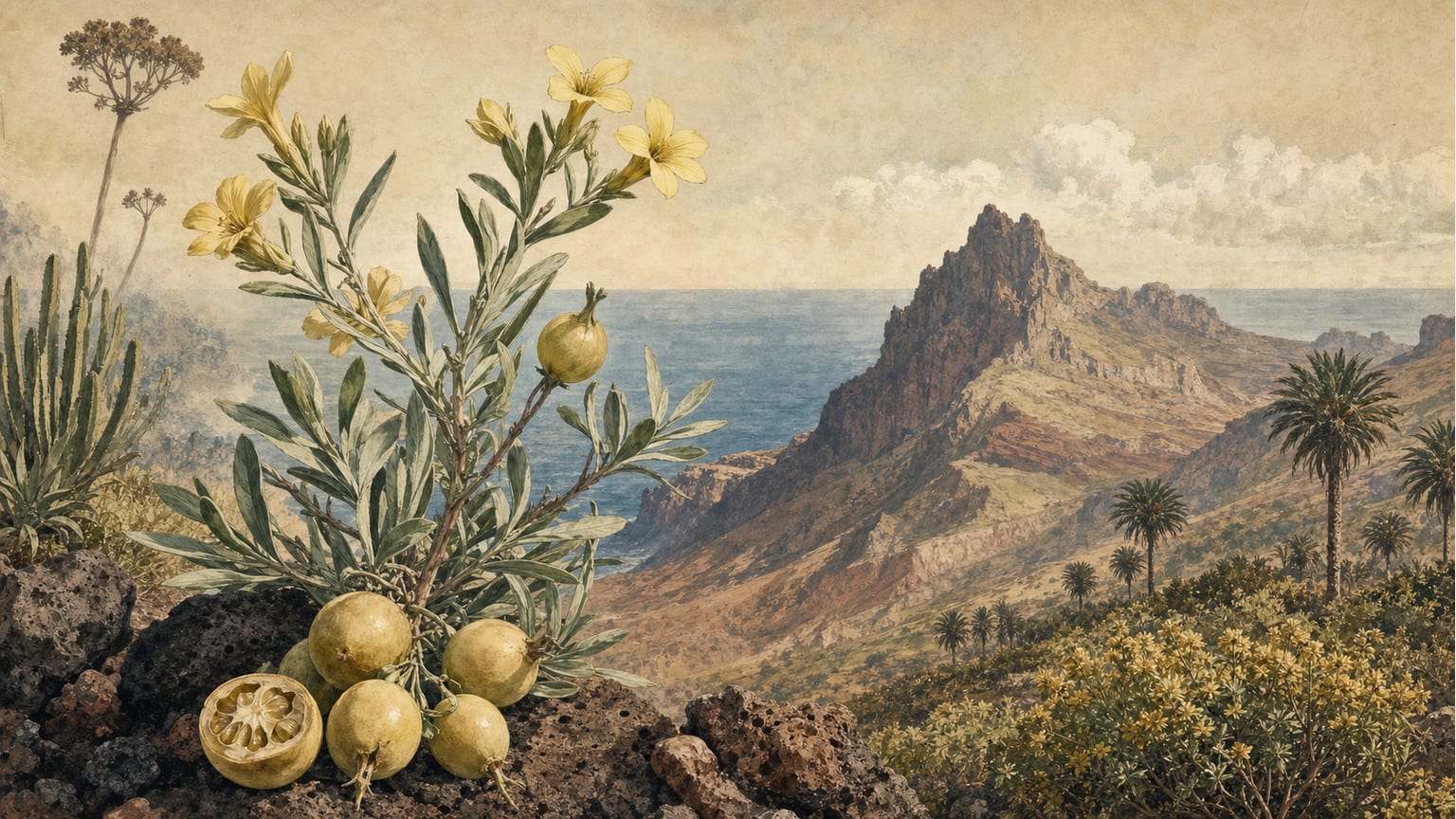
Canarina canariensis is an endemic plant of the Canary Islands, described in detail by Webb and Berthelot in the 19th century, notable for its edible fruit and its role in local culture.
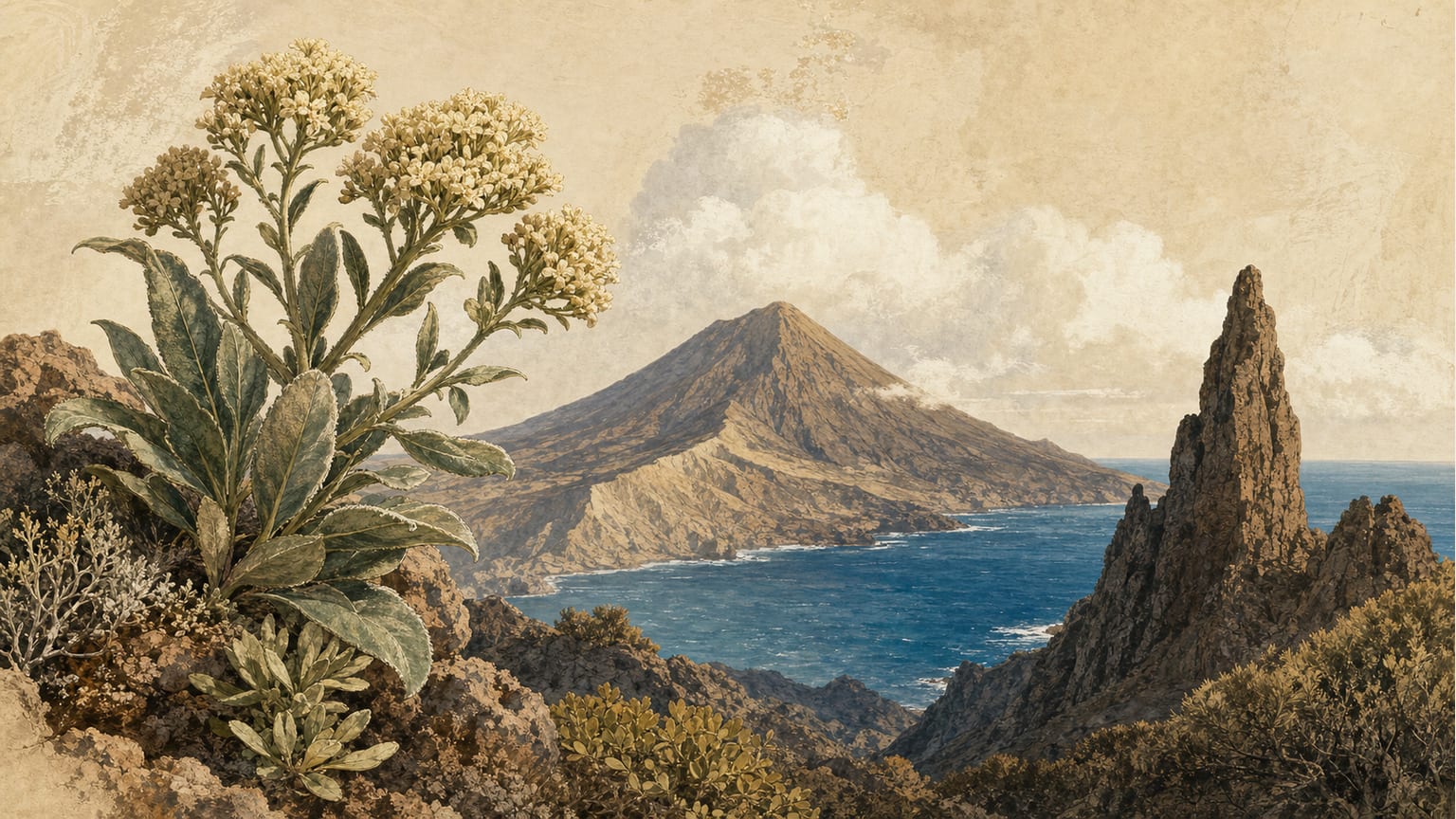
The genus Bencomia, described by Webb and Berthelot in the 19th century, commemorates Bencomo, the last indigenous king of Tenerife. This article explores its botanical features and the historical context of its naming.
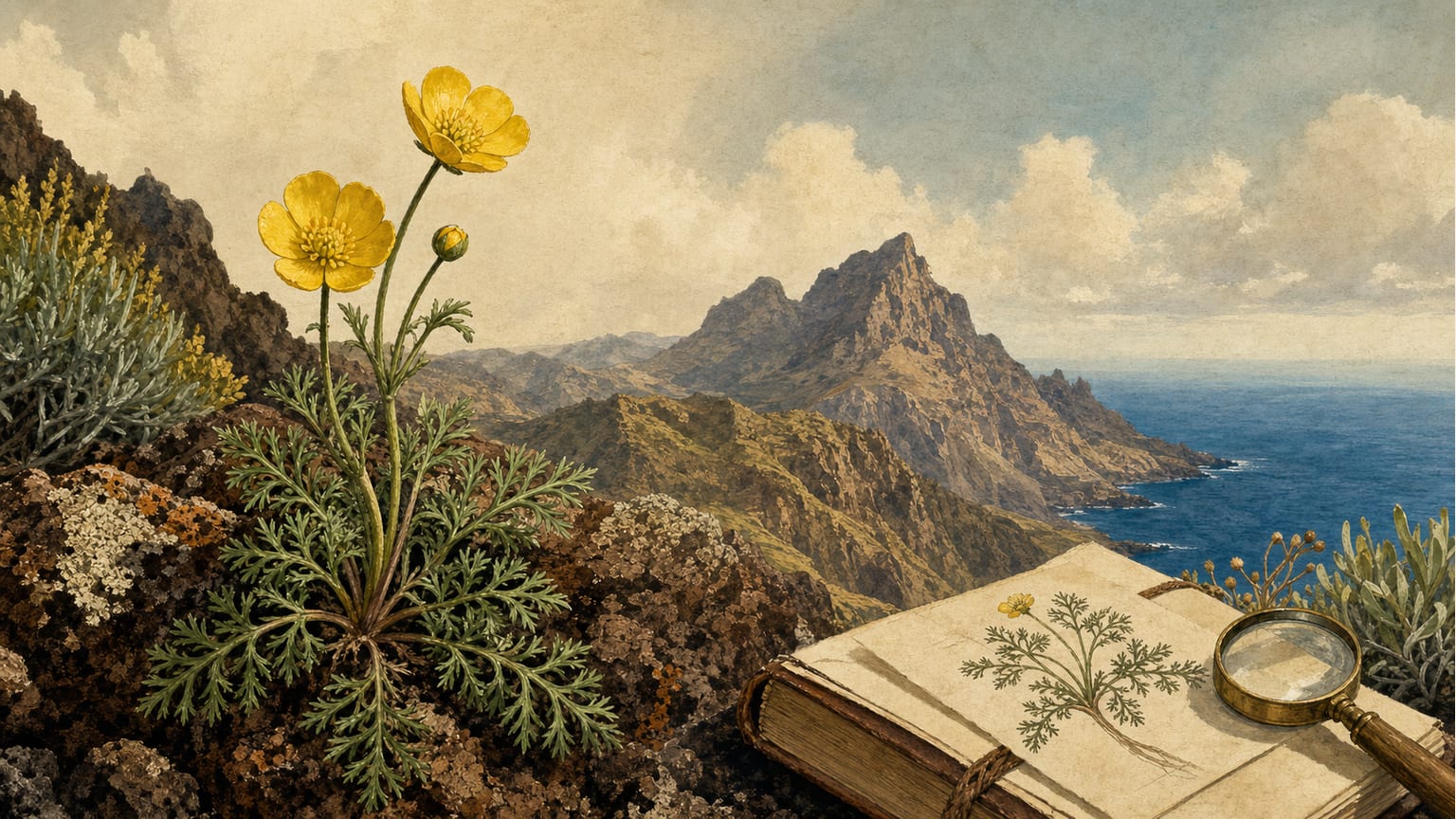
Webb and Berthelot described Ranunculus cortusæfolius as a characteristic species of the Canary Islands, providing detailed morphological and distributional information.
Graciosa Island's flora, as documented by Webb and Berthelot in 1829, is notable for its limited and distinctive composition, including several rare and localized species.
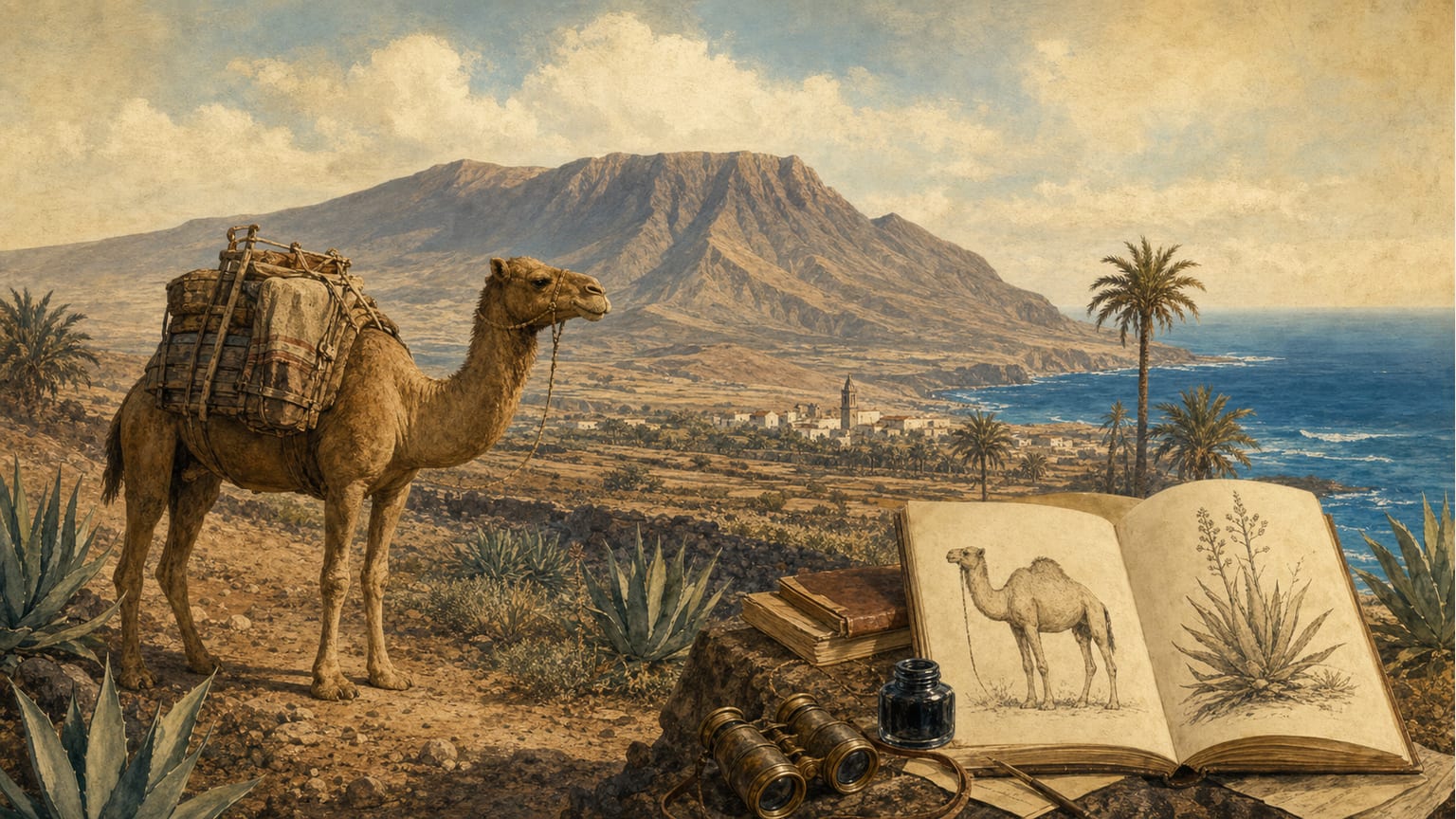
Webb and Berthelot described the introduction and adaptation of the camel in the Canary Islands, detailing its breeding, habits, and uses in the 19th century.
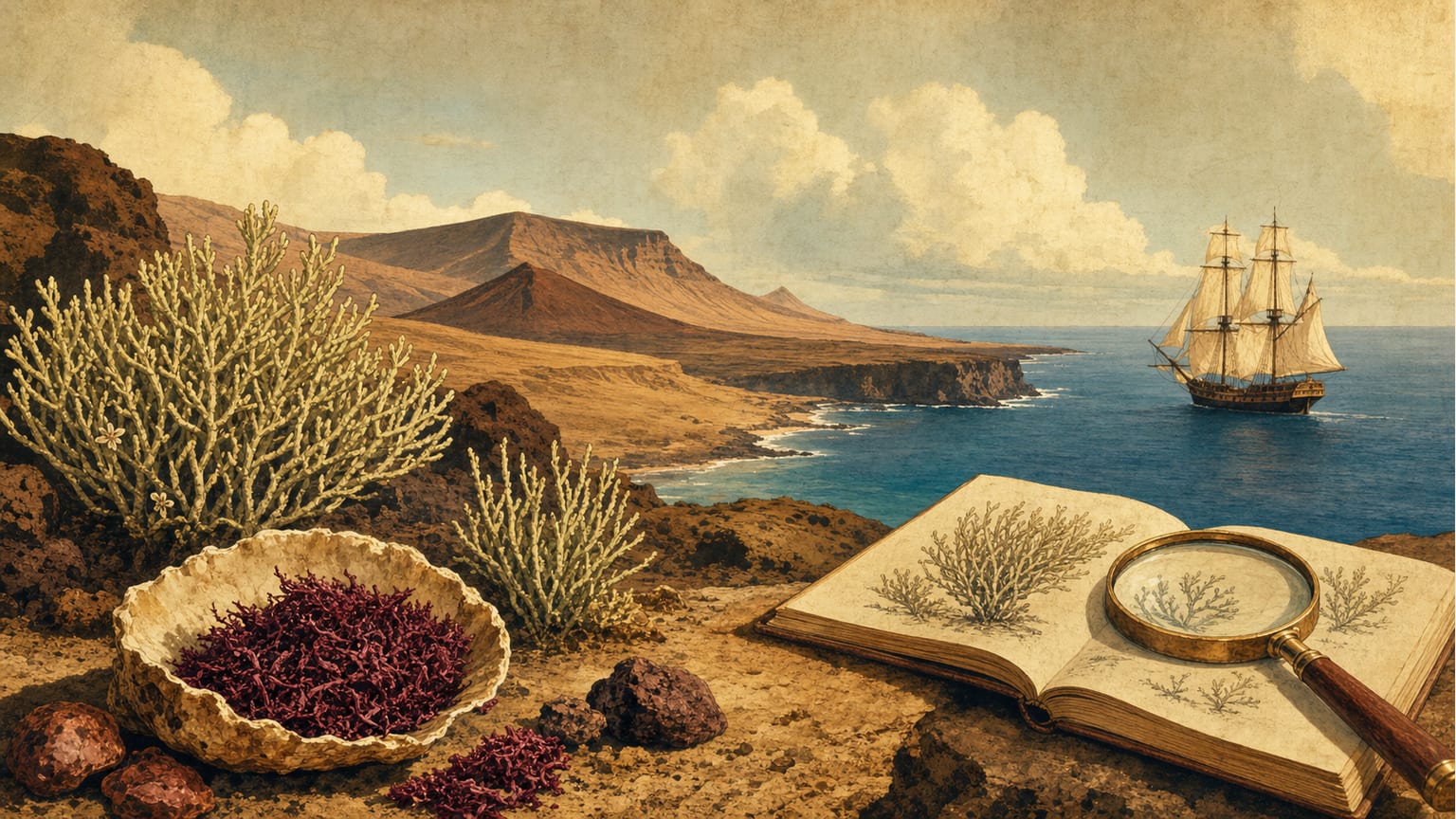
In the nineteenth century, Webb and Berthelot proposed identifying Lanzarote and Fuerteventura with the ancient Purpurariae Islands. Modern classical and archaeological research places those islands off Mogador (Essaouira, Morocco), not in the Canaries.
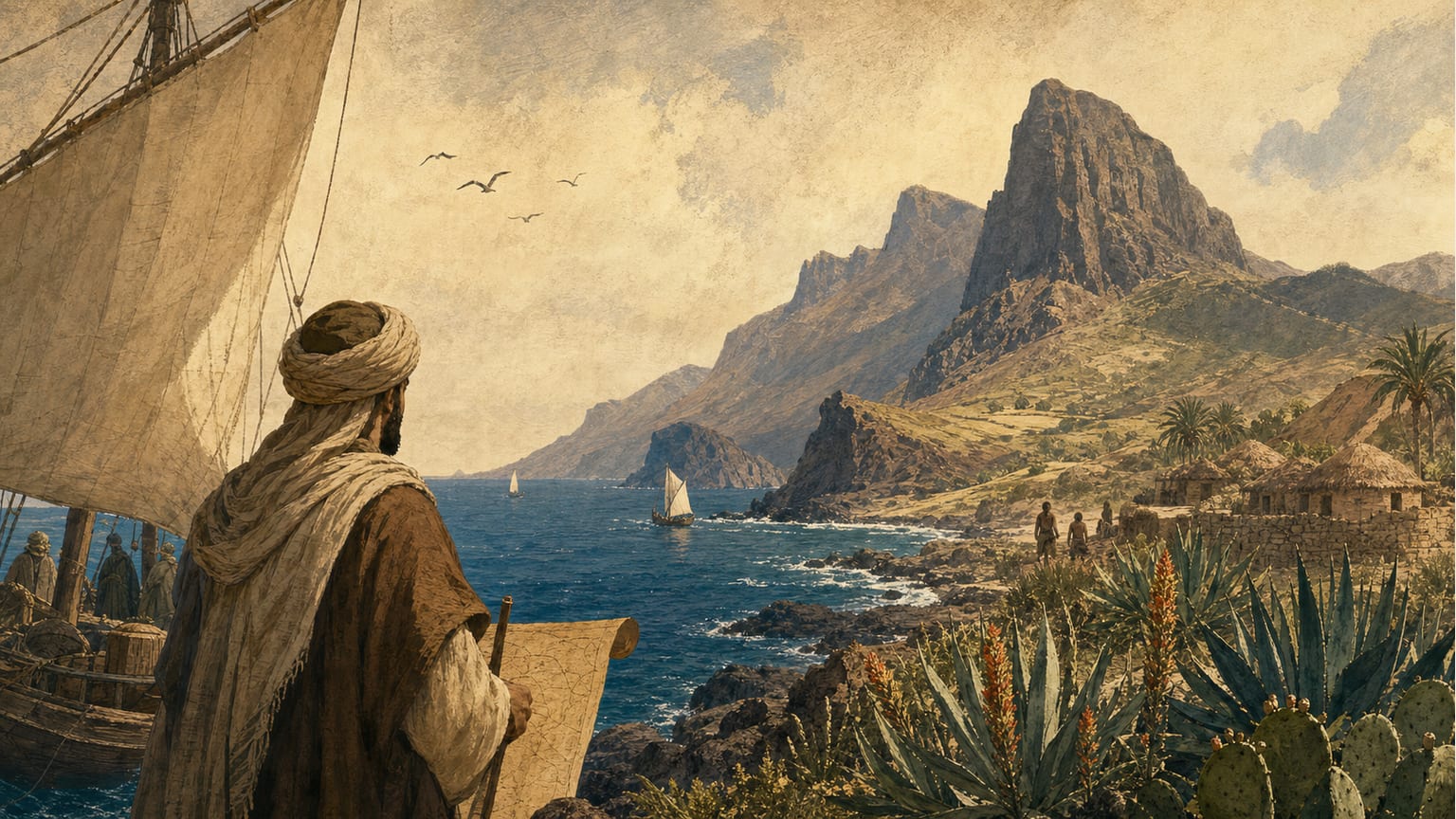
The journey of the Maghrourins, as narrated by Edrisi and cited by Webb and Berthelot, provides one of the earliest external accounts of the indigenous populations of the Canary Islands.
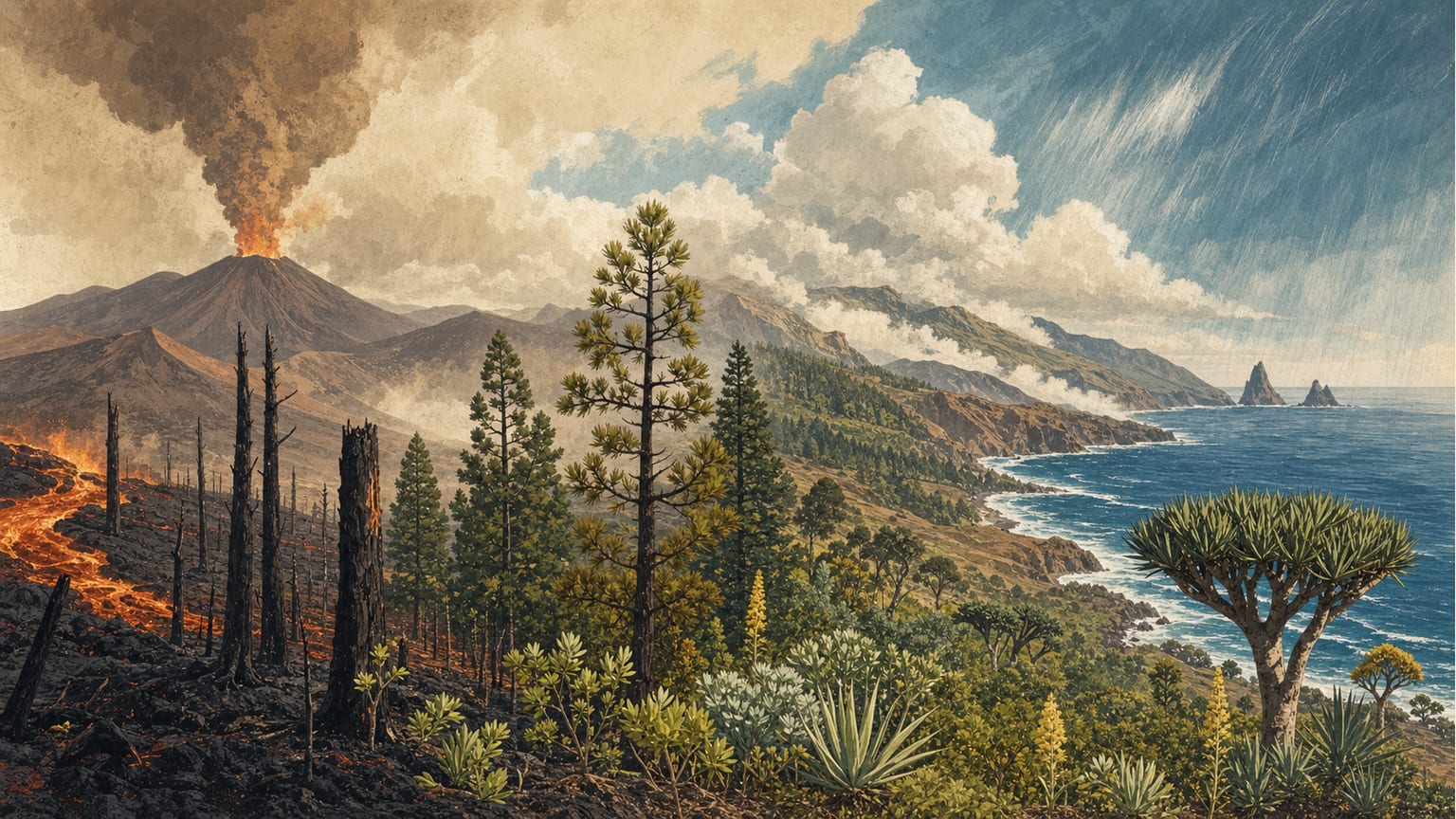
Volcanic eruptions and extreme weather have profoundly shaped the history and distribution of forests in the Canary Islands, according to the analysis by Fernando Pardo Navarro, Ángel Velasco Sánchez, and Luis Gil Sánchez.
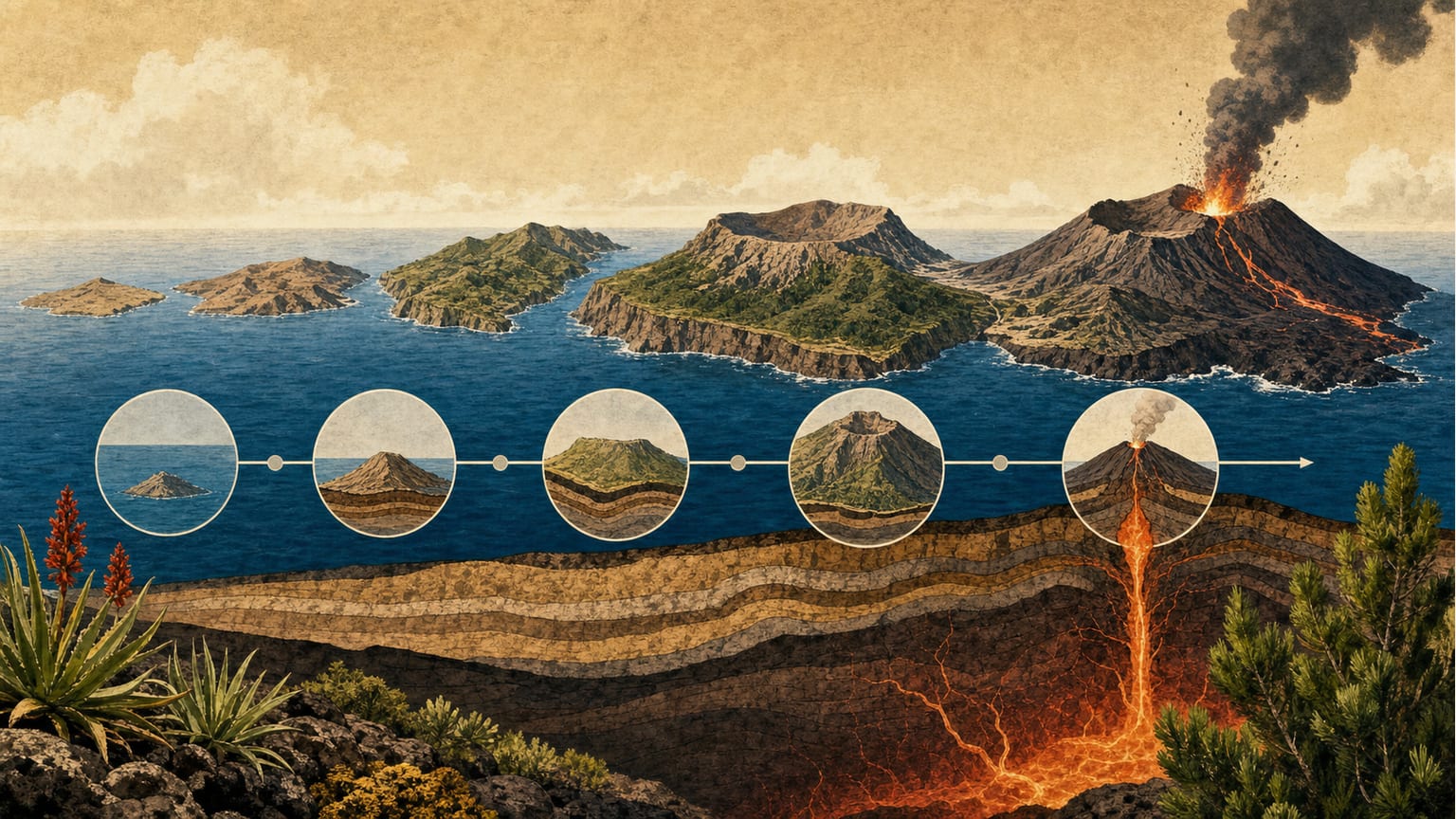
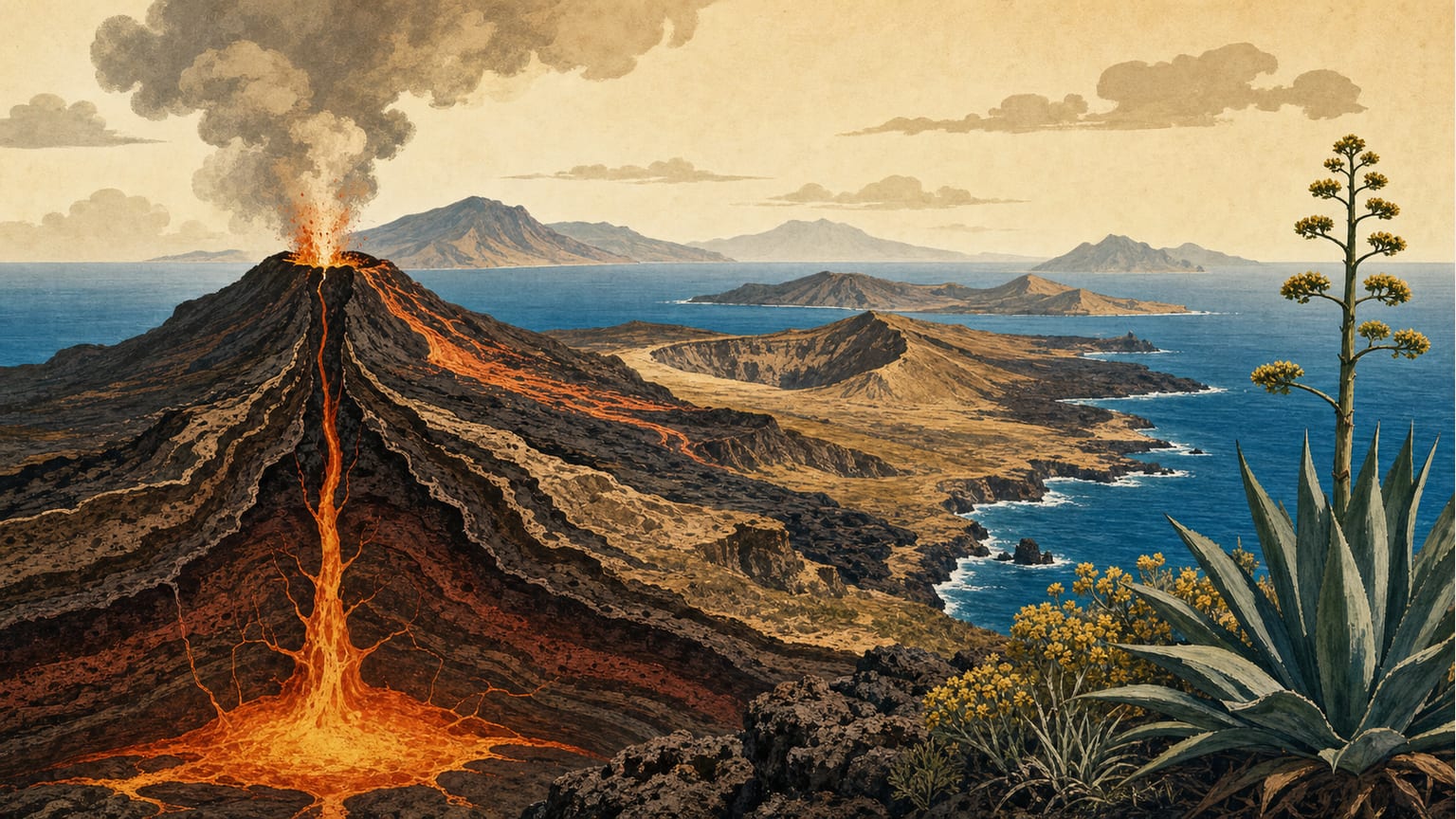
The temporal evolution of volcanism in the Canary Islands reveals a clear progression of ages and stages, fundamental for understanding the archipelago's formation and current volcanic risk.
The Libro Vivo de la Educación Ambiental en Canarias gave the dragon tree its opening chapter and turned it into classroom material: how it was picked from the archipelago's symbols, and what pupils were asked to do with it in the field, in gardens, and in front of a painting by Bosch.
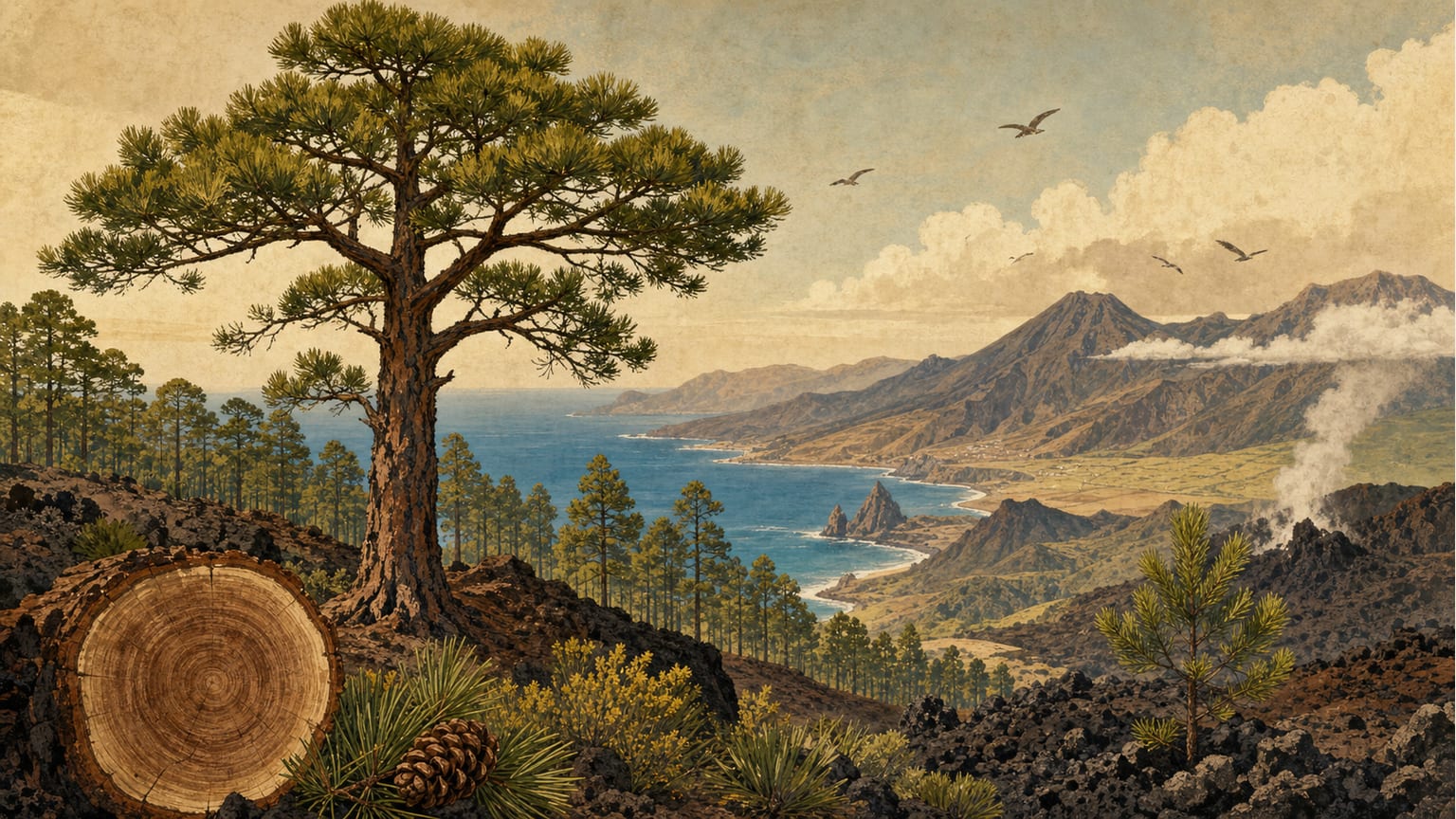
The Canary Island pine has played a key role in the forest history of the Canary Islands, adapting to volcanic conditions and human intervention from pre-Hispanic times to the present.
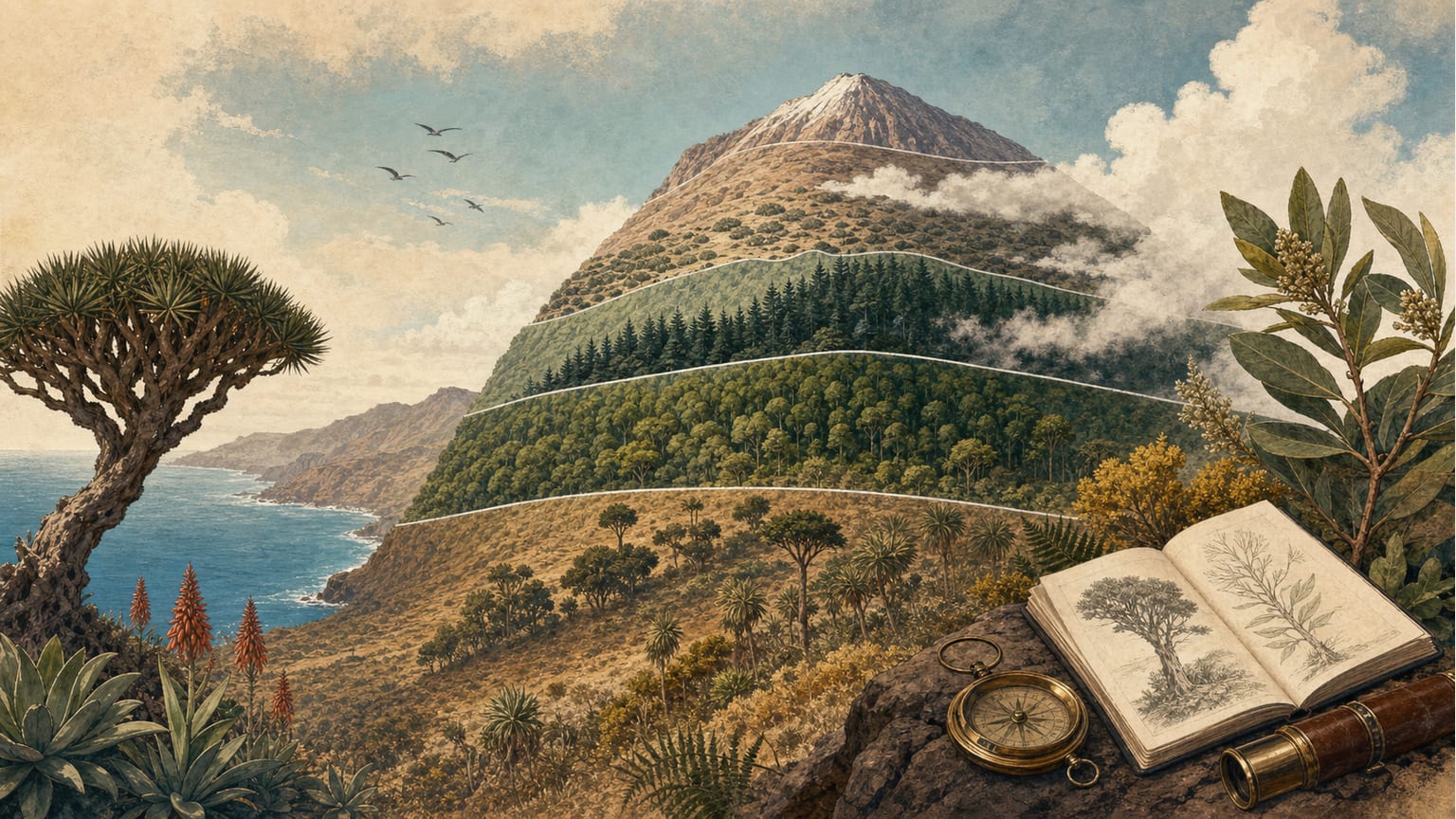
Humboldt’s altitudinal zonation model for Tenerife shaped scientific understanding of Canarian forests, but later research revealed a more complex and dynamic ecological reality.
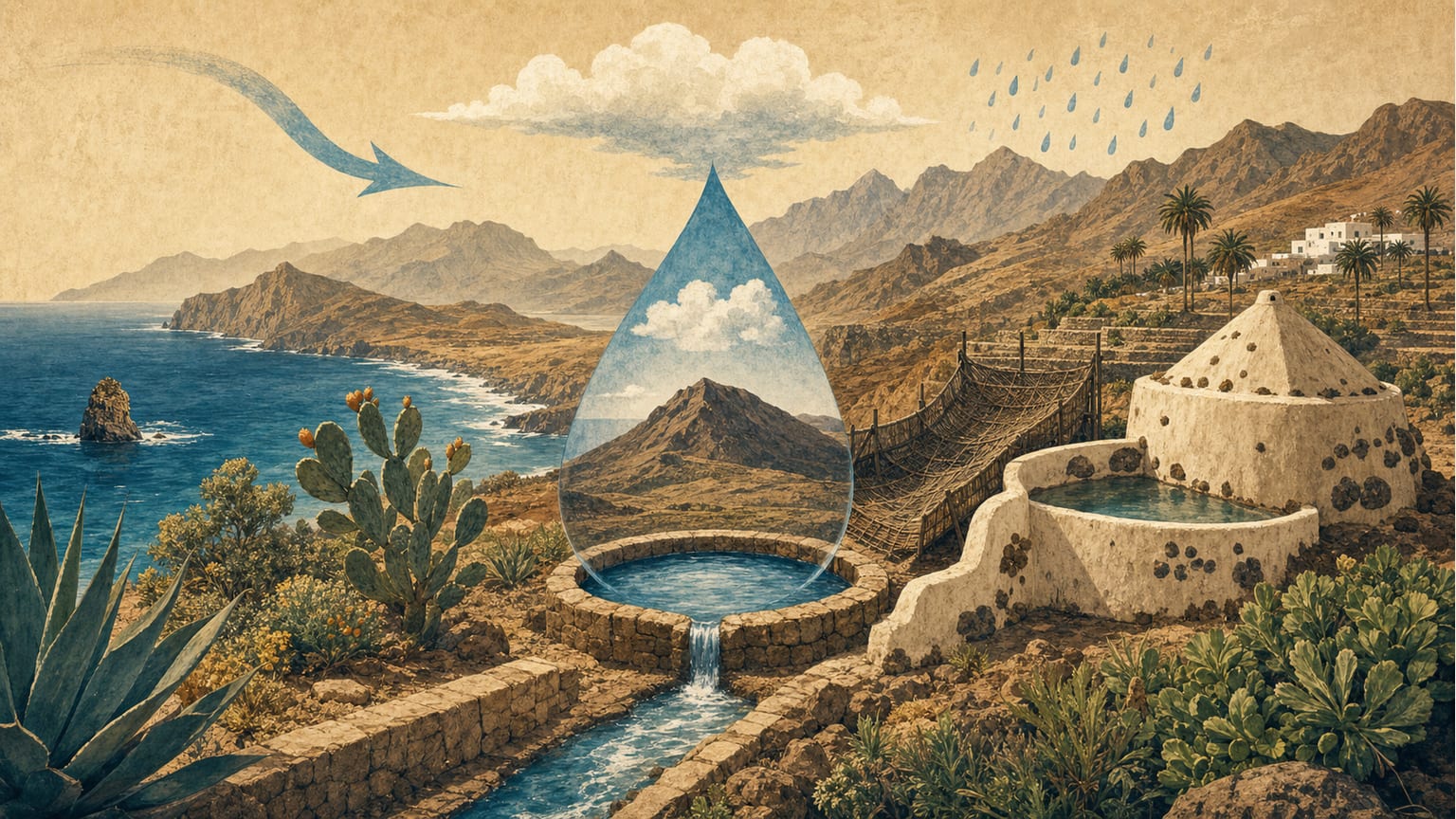
Water is a limited and essential resource in the Canary Islands. This article examines its origins, management strategies, and the challenges of its use.
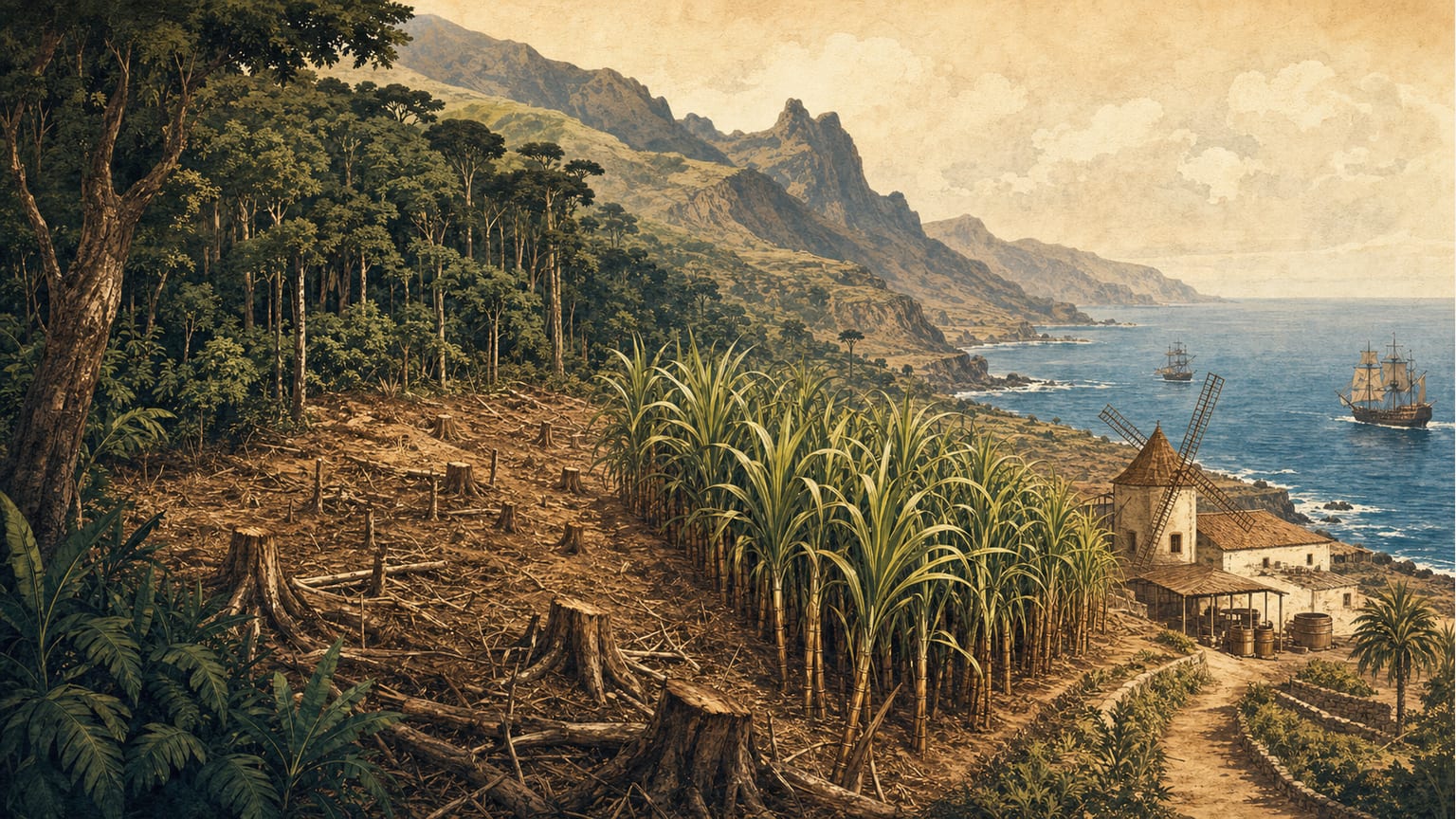
The introduction and expansion of sugarcane cultivation in the Canary Islands during the 16th and 17th centuries led to intense deforestation, especially in low and humid areas, irreversibly altering the islands' forest landscape.
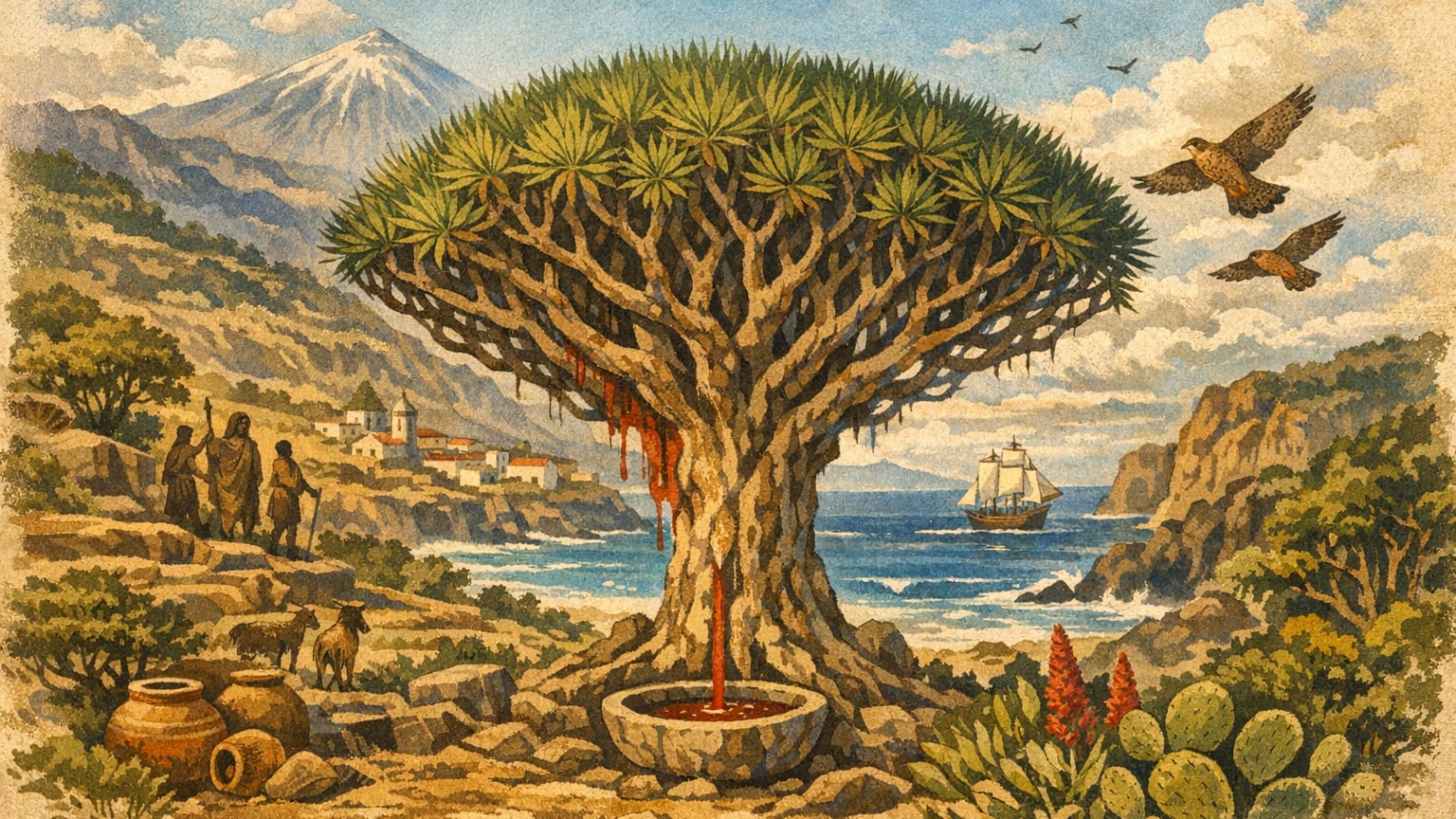
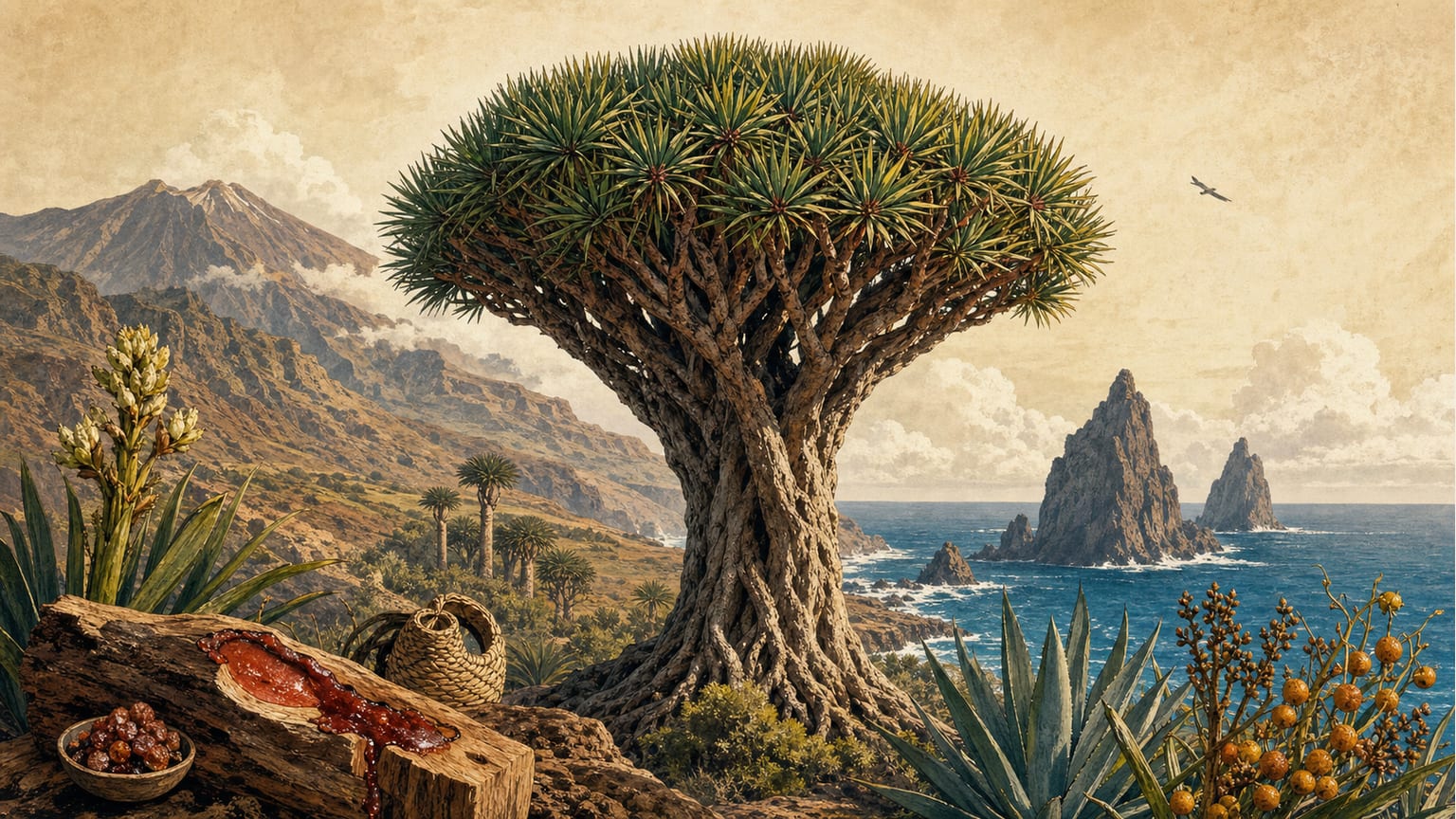
The Dragon Tree is a botanical symbol of Tenerife and one of the Canary Islands' most iconic plants, with historical and medicinal uses. This article explores its biology, role in aboriginal culture, and presence across the archipelago.
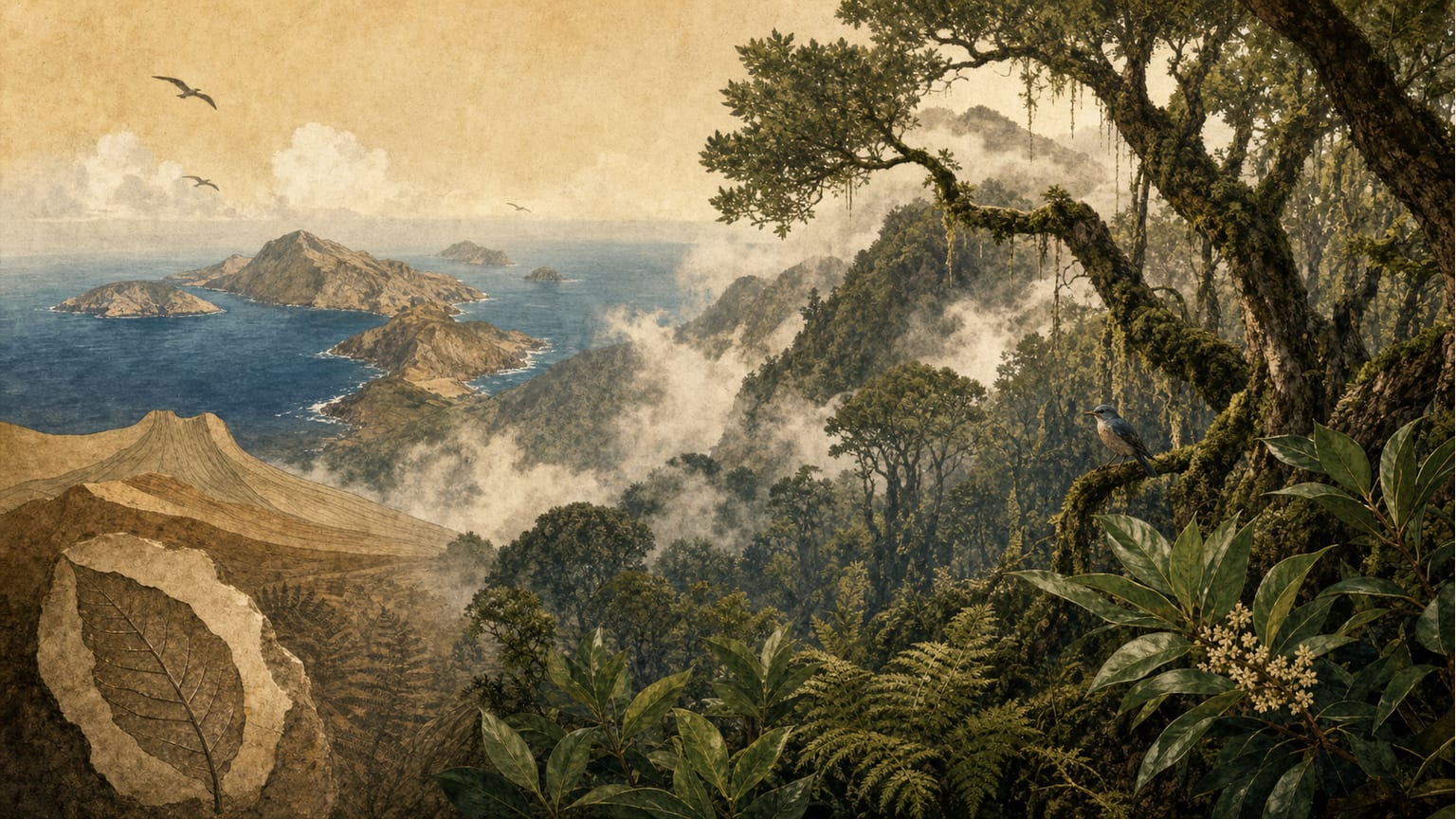
The laurisilva of the Canary Islands is a relict forest from the Tertiary period, preserved thanks to the islands' unique conditions and now mainly found in northern misty areas. This ecosystem hosts great biodiversity and has suffered a drastic reduction in its original area.
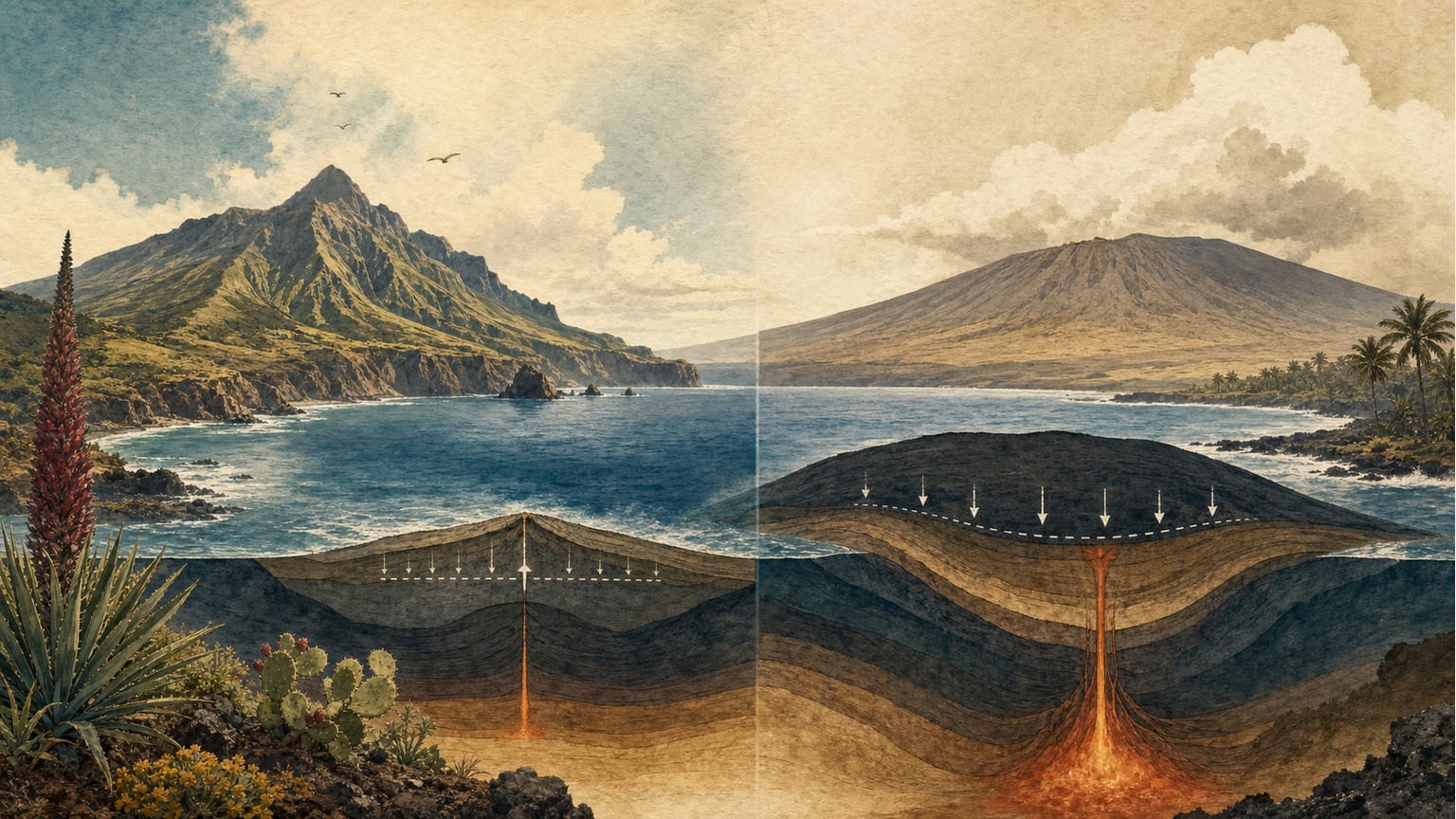
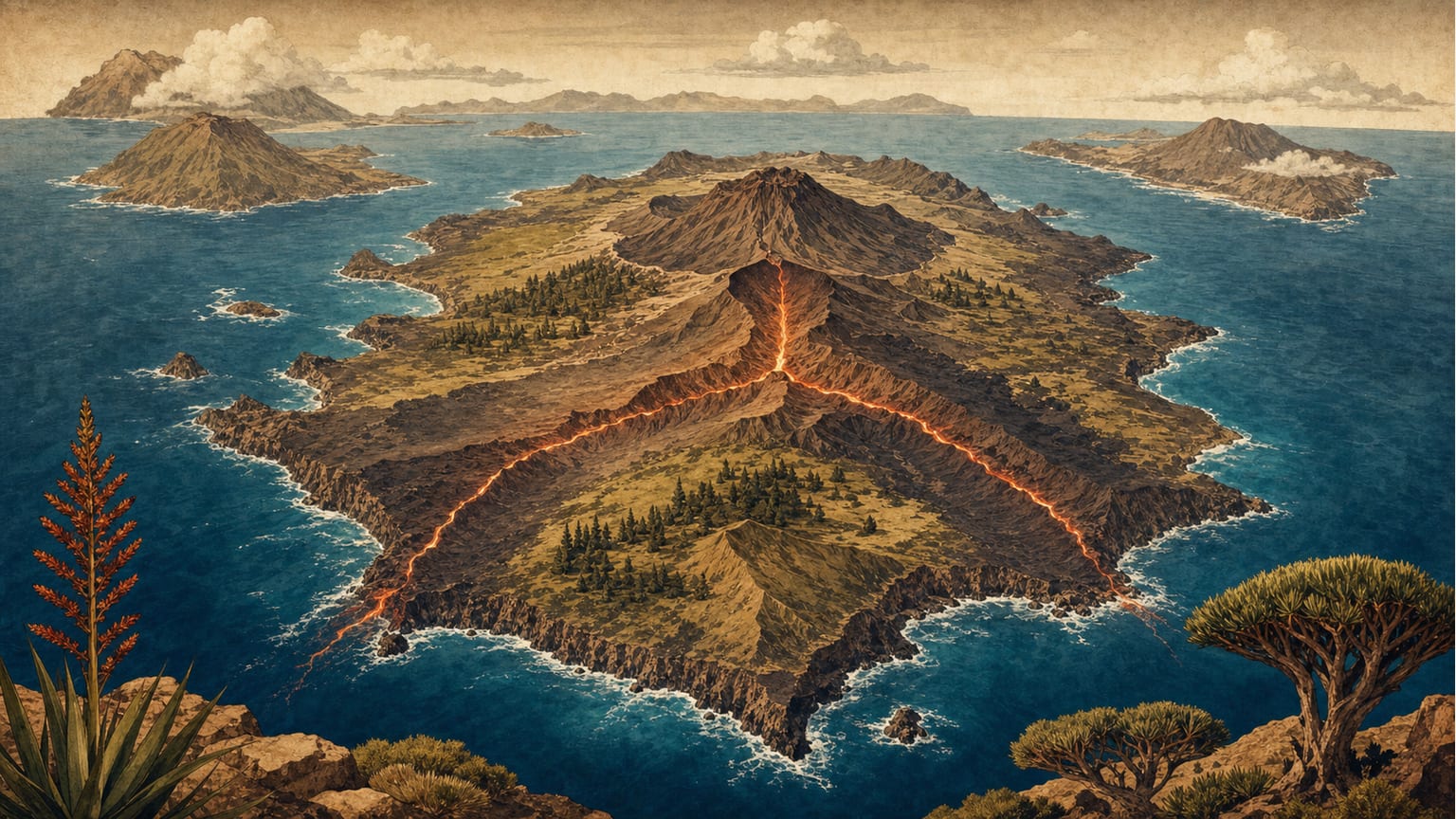
Triple rifts, star-shaped geological structures, control the growth and volcanic activity of the Canary Islands and explain many of their natural hazards.
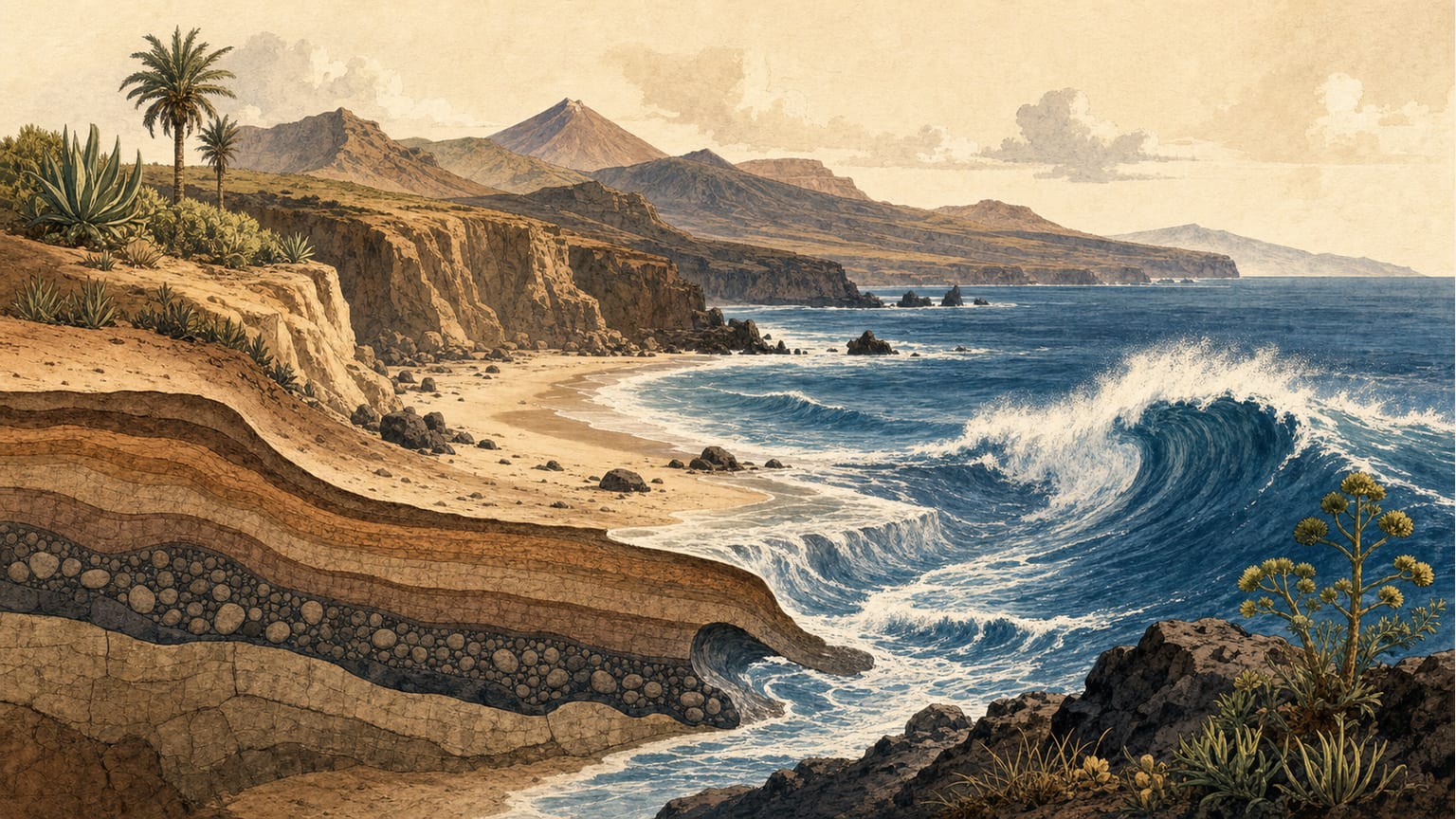
The sea is the main force shaping the Canary Islands' coasts, responsible for both erosion and the creation of beaches and cliffs. Discover how waves and currents have sculpted the archipelago's unique shorelines.
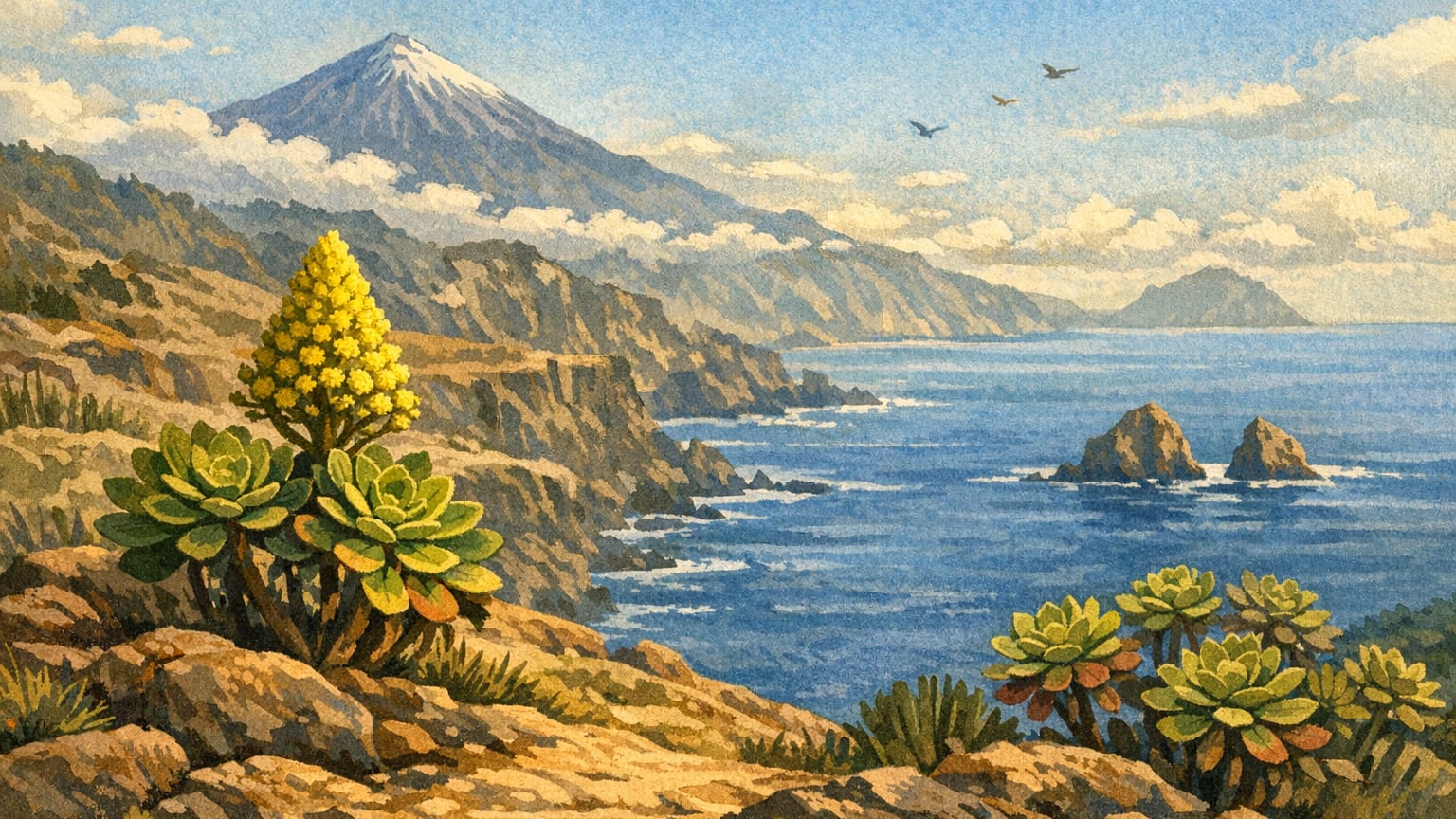
The Aeonium genus, locally known as veroles, showcases how the unique environment of the Canary Islands has driven extraordinary plant diversification through adaptive radiation.
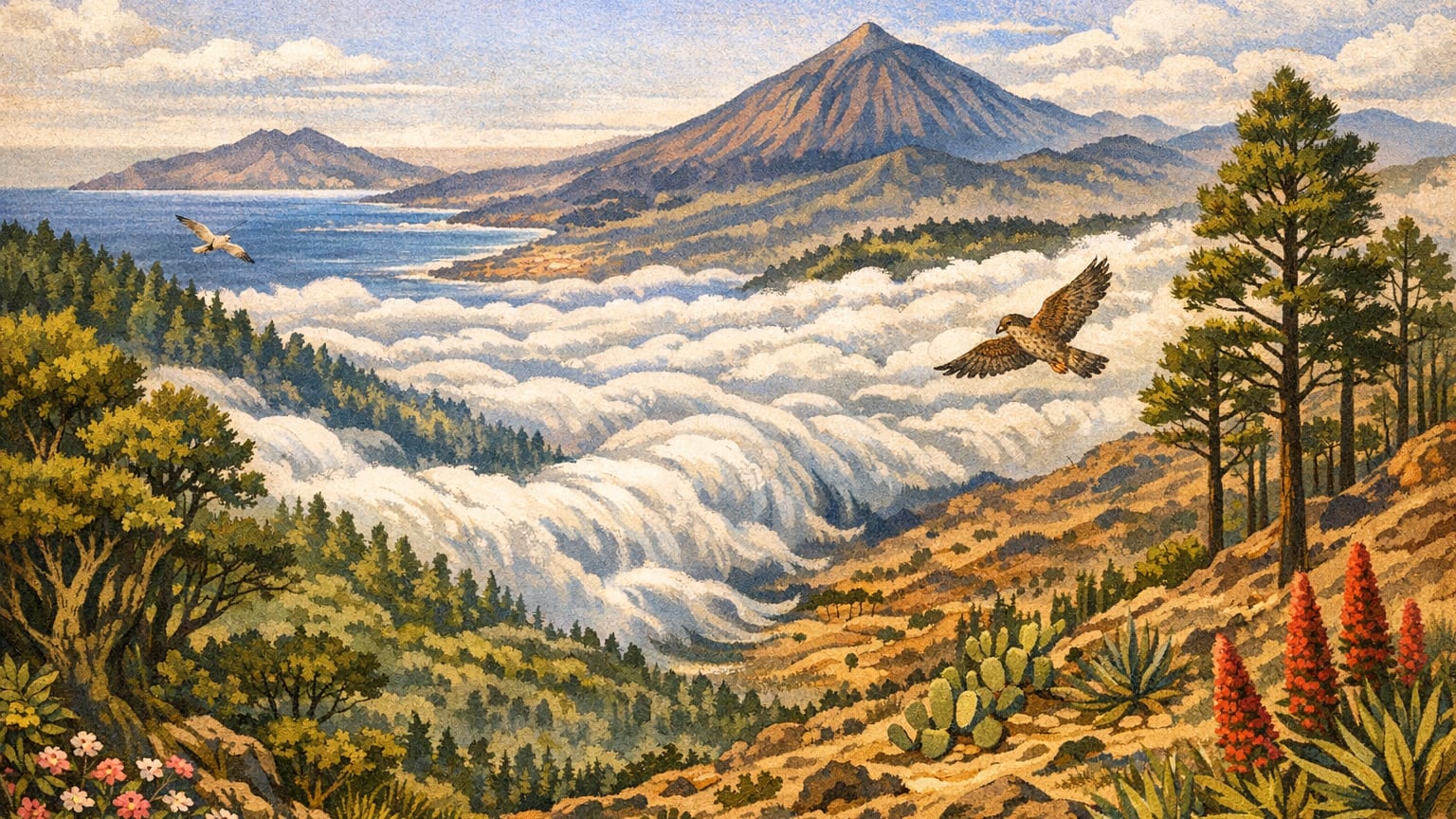
The sea of clouds is a key phenomenon that shapes the distribution and richness of ecosystems in the Canary Islands, influencing both flora and fauna.
Canarias Historia
Cookies and analytics
We use consent choice to decide whether usage analytics should be enabled. You can accept or reject analytics cookies; strictly necessary technical elements will still operate.