
Triple rifts: the hidden key to volcanic evolution in the Canary Islands
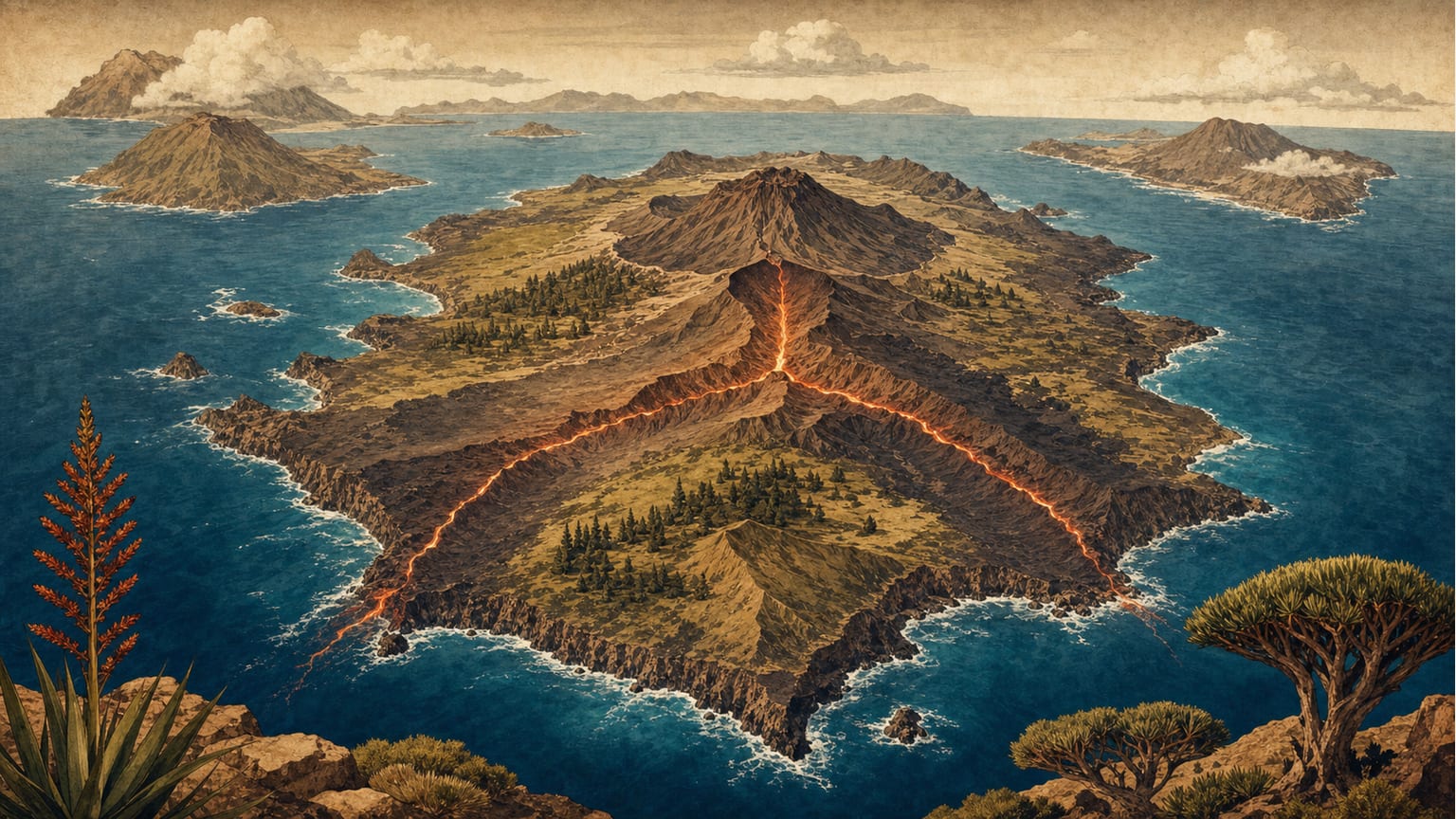
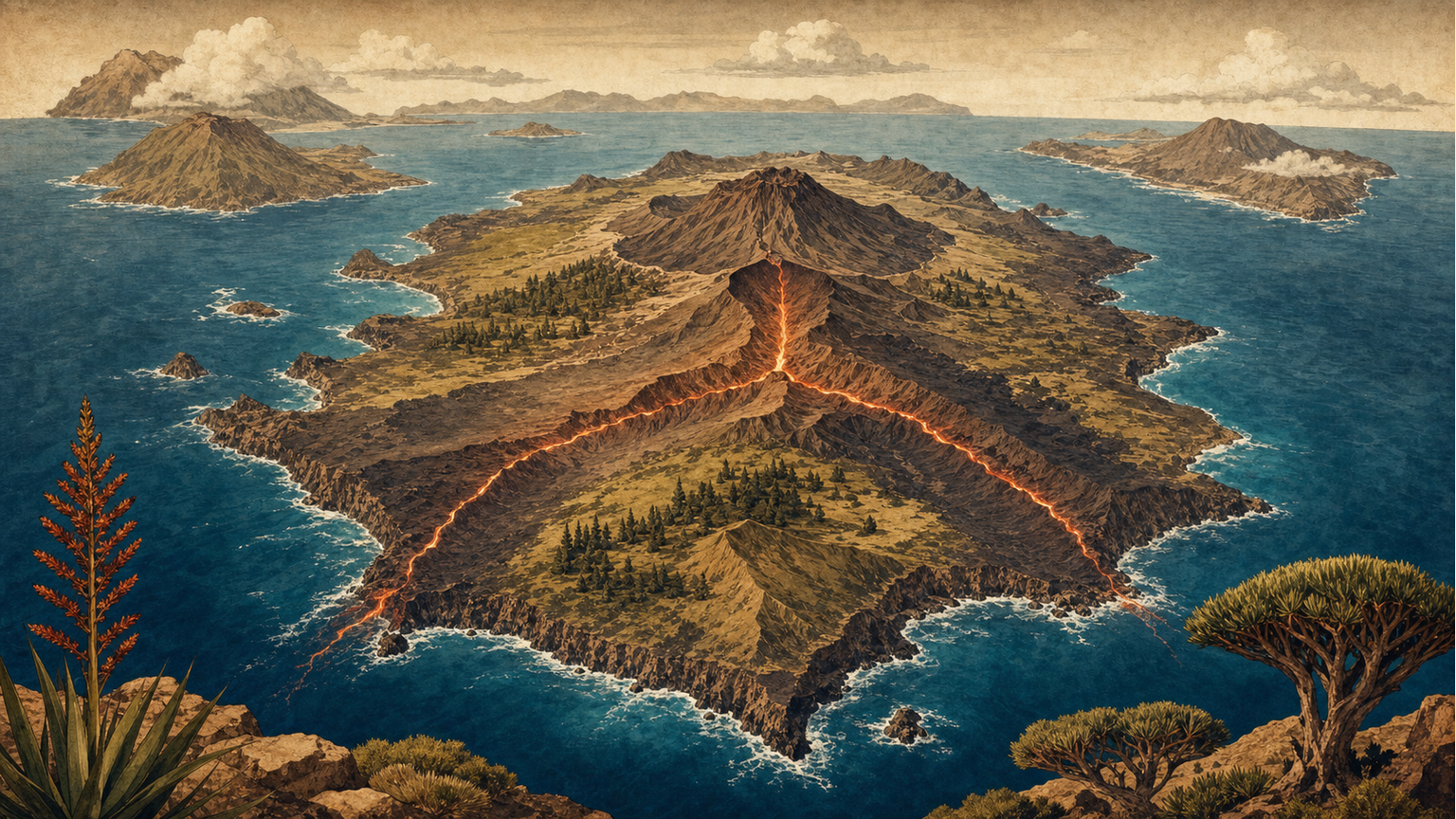
Beneath the dramatic volcanic landscapes of the Canary Islands lies a geometric secret: triple rifts. These star-shaped structures, with three arms radiating at 120° angles, are fundamental in controlling both the growth of the islands and the distribution of volcanic activity and associated risks[1].
What is a triple rift?
A triple rift is a tectonic structure formed by three main fractures extending from a central point, each separated by about 120°. This configuration, reminiscent of the “Mercedes-Benz” logo, results from the minimum-effort fracturing of the oceanic crust caused by the upward push of magma from the mantle. As magma rises, it deforms and fractures the crust, creating preferred pathways for eruptions[1].
Their role in the Canary Islands
On La Palma, El Hierro, and Tenerife, triple rifts are clearly identifiable and have been studied in detail thanks to the dense network of underground tunnels dug for water extraction. These tunnels have allowed direct observation of volcanic dike concentrations (solidified magma channels) within the rifts—something rarely seen elsewhere[1].
Triple rifts not only dictate where and how volcanoes grow, but also explain the triangular shape of many islands and the location of most historical eruptions. Furthermore, these structures promote giant landslides, which have created major valleys and calderas such as the Caldera de Taburiente on La Palma and the Orotava Valley on Tenerife[1].
Hazards and evolution
The continuous injection of magma and dikes into the rifts generates stresses that, combined with the weight of the volcanic edifices, can trigger catastrophic flank collapses. These landslides reshape the landscape and can cause massive tsunamis. Thus, triple rifts are engines of both creation and destruction in the Canary Islands’ geological dynamics[1].
A model for the world
Studying triple rifts in the Canary Islands has helped geologists better understand the evolution of other oceanic volcanic islands, such as Hawaii and Réunion, where similar structures occur. The regularity and central role of triple rifts in the Canary Islands’ volcanic history make the archipelago a world-class natural laboratory.
In summary, triple rifts are the hidden key to much of the Canary Islands’ volcanic past, present, and future, and understanding them is crucial for appreciating both the islands’ spectacular geography and their natural hazards[1].