

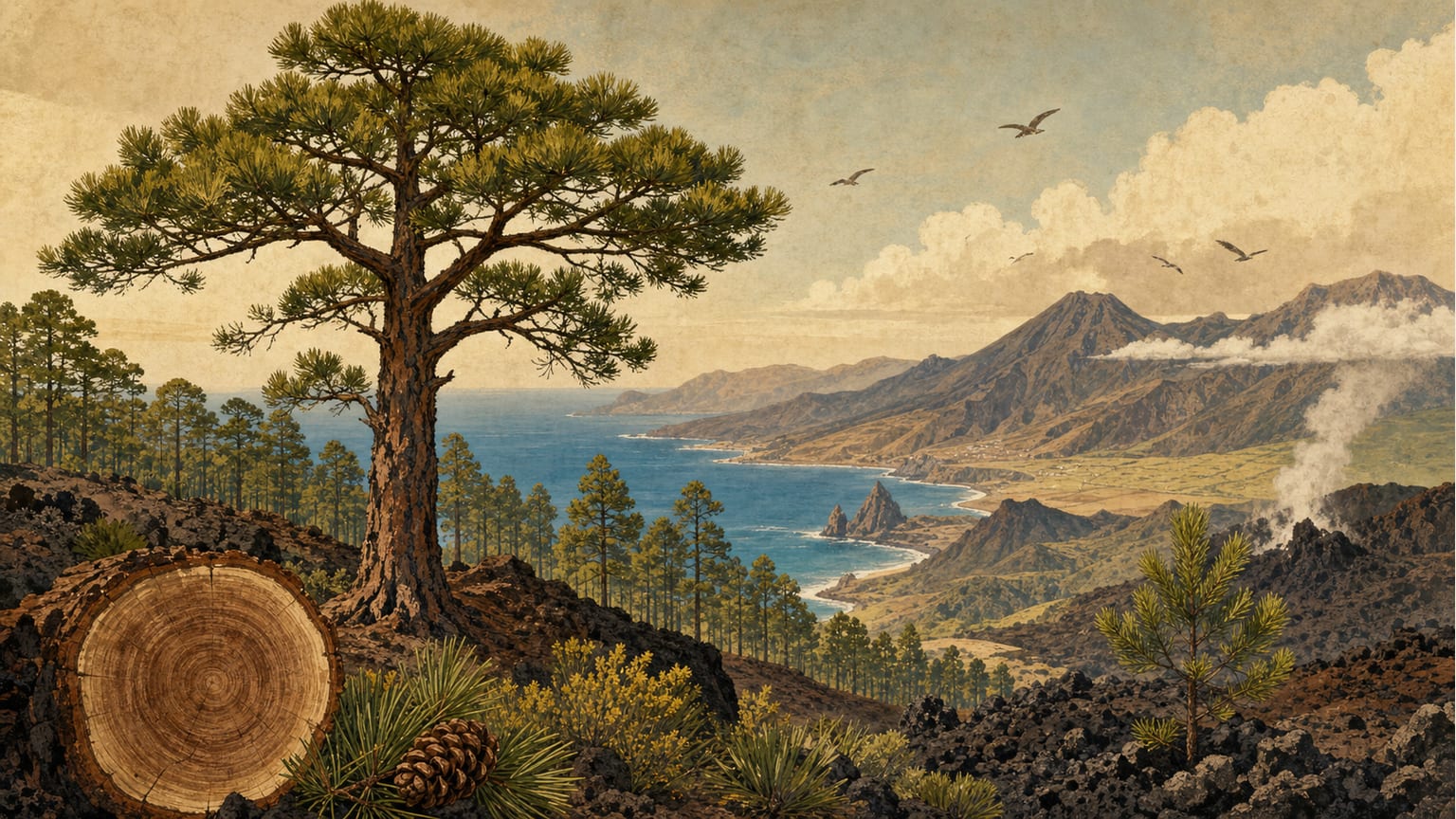
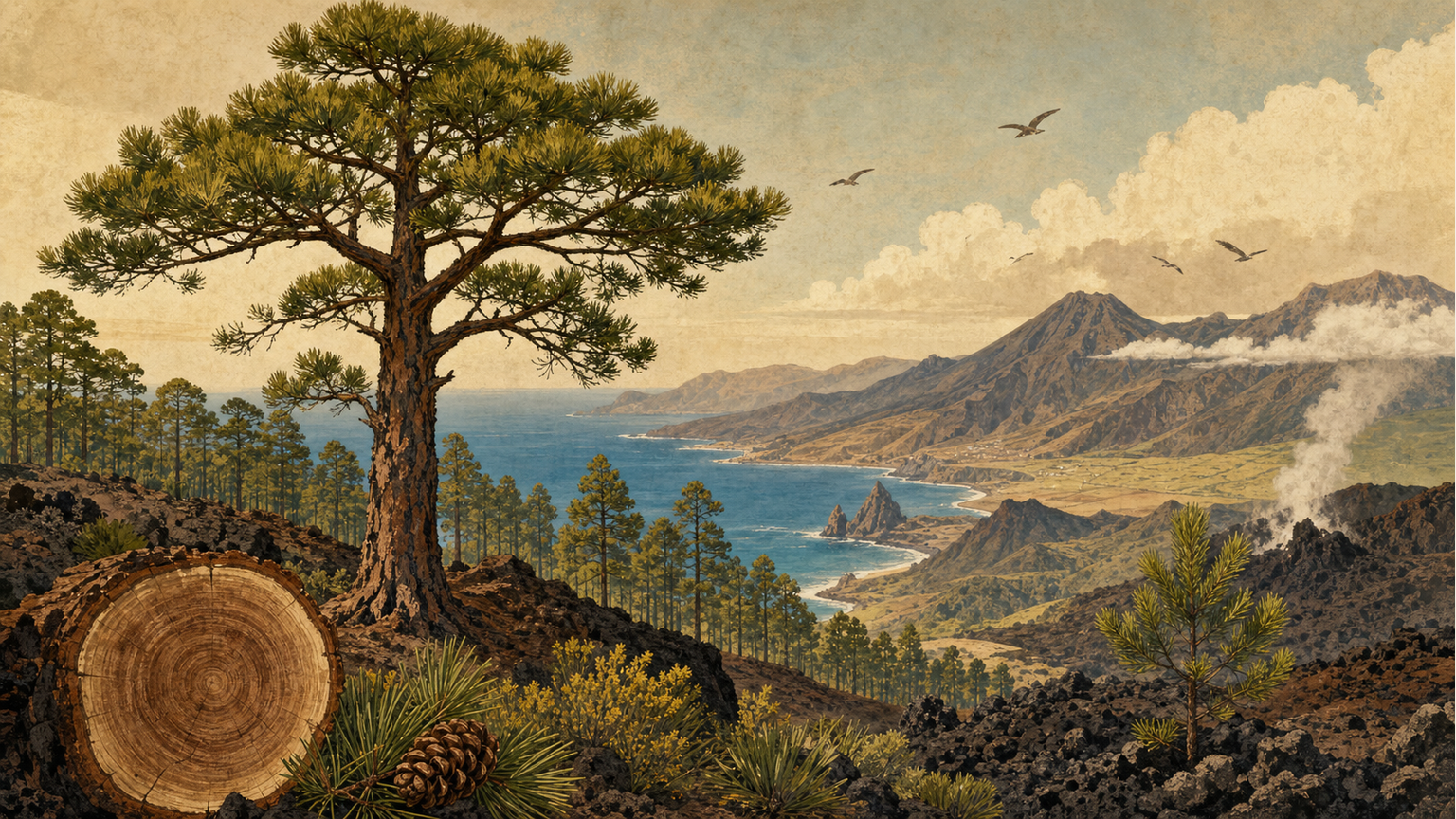
The Canary Island pine (Pinus canariensis) has been fundamental in shaping the forest landscape of the Canary Islands, both for its ecological adaptation and its relationship with human activities since pre-Hispanic times[1].
Before the arrival of the first settlers, the pine was restricted to poorly developed soils on steep ravines, from where it colonized recent volcanic flows, covering barren ground and taking advantage of drought to expand and compete with laurel and thermophilous forests[1]. Thanks to its ability to resprout and its resistance to fire, the pine dominated large areas, especially in regions affected by summer aridity[1].
With the arrival of aboriginal peoples, the forest landscape began to change. These populations, lacking native wild herbivores, introduced livestock such as goats and sheep, and used fire to clear forests and promote grazing, making natural regeneration of the pine more difficult[1]. The impact was especially significant in pine areas, where grazing pressure and selective burning limited forest expansion and led to vegetation degradation[1].
After European conquest and colonization, exploitation of the Canary Island pine intensified. Its wood and resin were essential resources for construction, shipbuilding, and tar production for caulking ships[1]. Additionally, land clearing for agriculture and the demand for firewood for sugar mills caused a drastic reduction of pine forests, especially in low and accessible areas[1].
The importance of the Canary Island pine is also reflected in the islands’ toponymy. In Gran Canaria, for example, there are 227 place names related to the pine, making it the most significant tree on the island, followed by the palm[1]. Names such as “pinillos”, “pinaletes”, or “Pino Seco” show the process of forest degradation and reduction, especially on southern slopes and at lower altitudes[1].
The etymology of certain places, such as Taidía in Gran Canaria, is linked to the Berber term “tayda” meaning pine, and the highest mountain in Tenerife, Teide, appears in old documents as “Sierra de Teyda”, suggesting an ancient connection between the pine and these place names[1].
In the 20th century, forest recovery included reforestation with Canary Island pine and other species, although pressure on pine forests decreased with the decline of the agricultural economy and the rise of tourism[1]. Recent forest inventories show an increase in pine forest area, although natural regeneration remains limited in arid zones and where grazing pressure persists[1].
Due to its history, adaptability, and presence in both culture and landscape, the Canary Island pine remains central to understanding the forest evolution of the Canary Islands[1].