

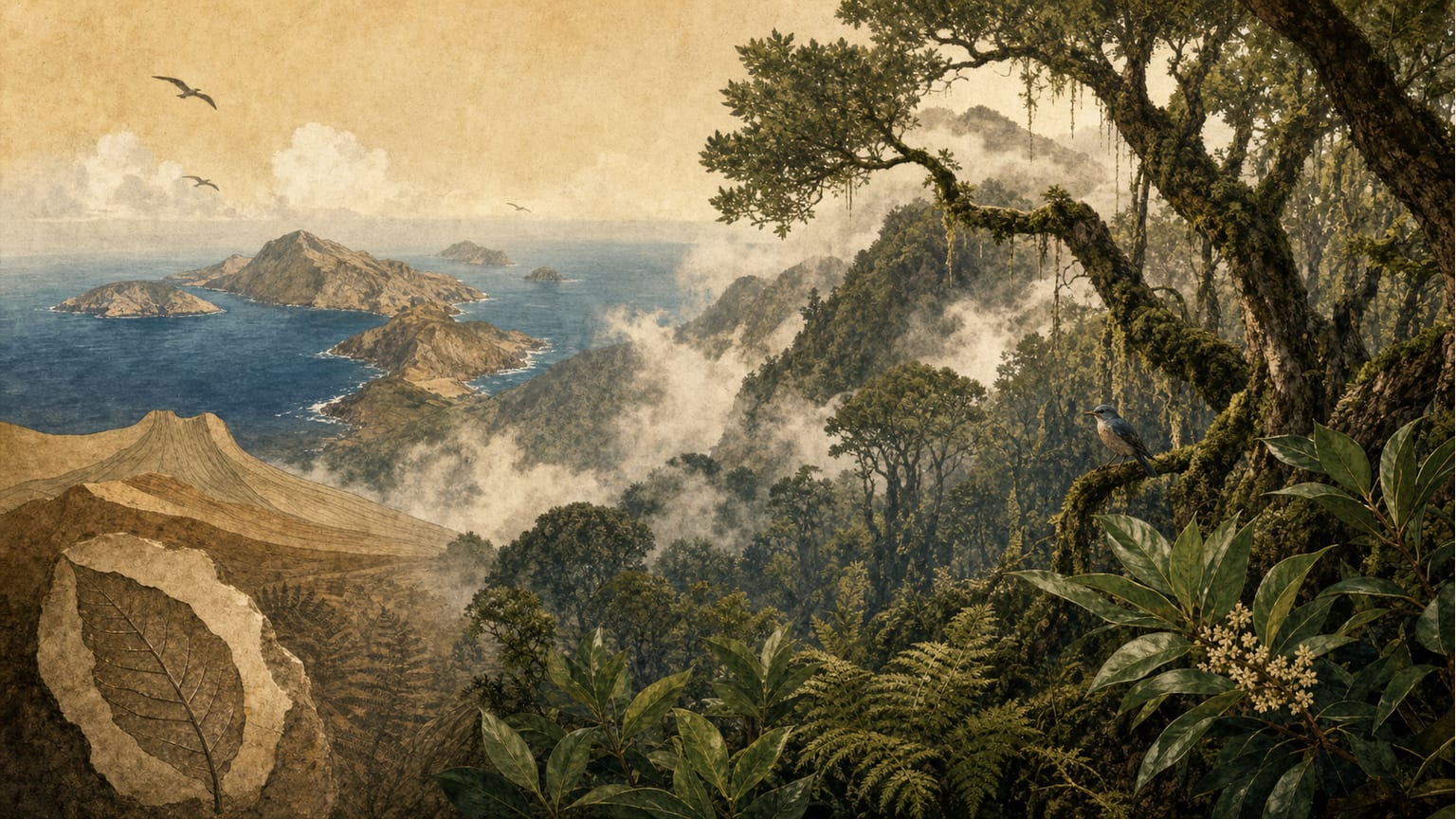
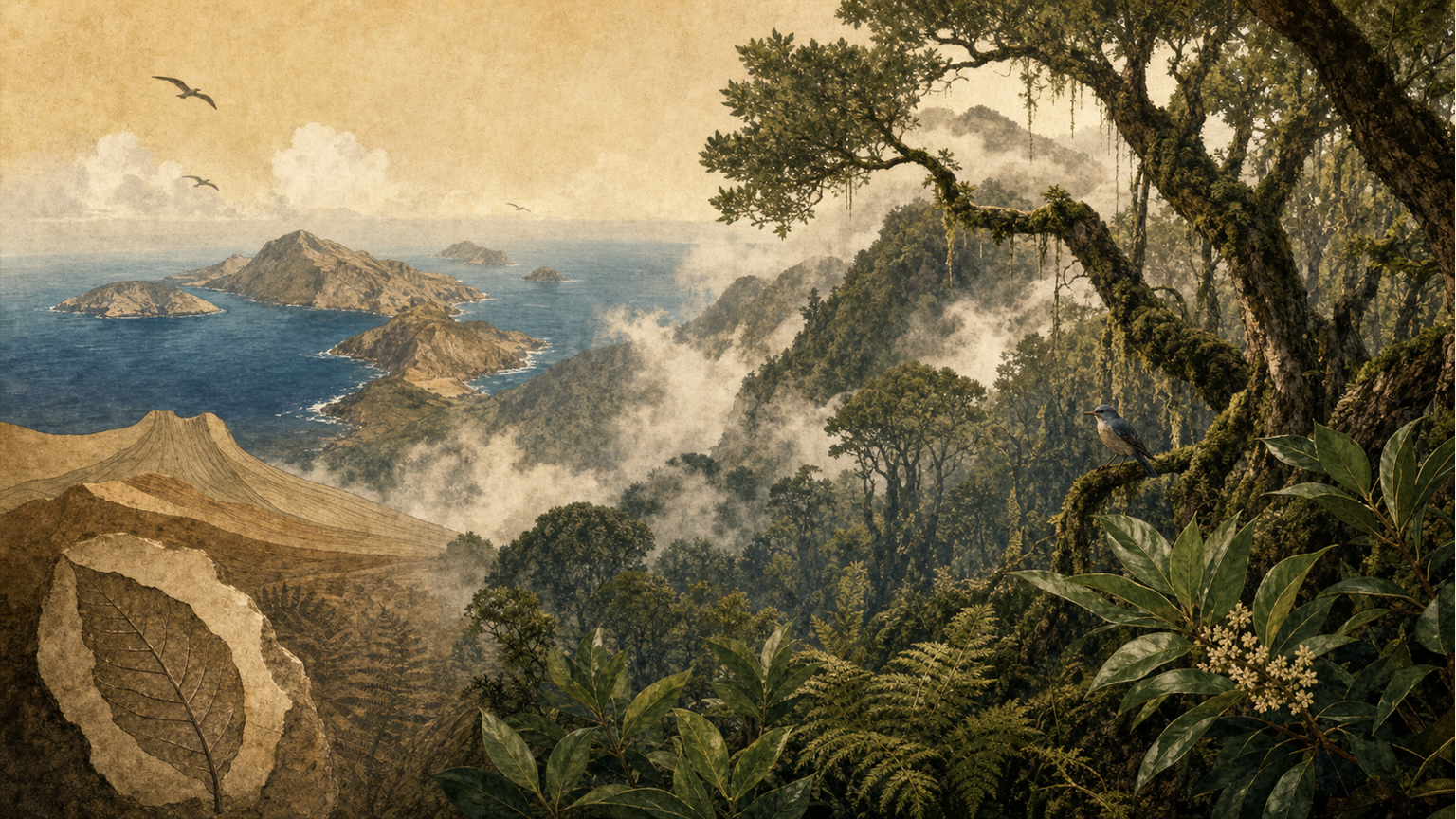
Laurisilva is one of the most unique and valuable ecosystems in the Canary Islands, considered a living fossil of the Mediterranean forests from the Tertiary period[1]. These forests survived the ice ages and the desertification of the Sahara by taking refuge in Macaronesia, a region that includes the Canary archipelago[1].
For millions of years, the oceanic influence and the high altitude of the islands allowed laurisilva plants to migrate vertically, always seeking the microclimate best suited to their biological needs[1]. Today, the northern mist zones of the highest islands, such as Garajonay National Park in La Gomera (a UNESCO World Heritage Site), preserve the best examples of this forest[1].
Laurisilva is characterized by the abundant fall of leaves to the ground, a phenomenon known as “horizontal rain,” which, together with the humidity from the mists, enriches the soil, similar to what happens in the fayal-brezal[1]. However, the original area of laurisilva has been drastically reduced. In Gran Canaria, only about 1% of its original surface remains, and in Tenerife and La Palma, the reduction has also been significant[1].
This forest is composed of a great variety of trees and plants adapted to different environments: some to the valley bottoms with streams, others to slopes, rocky areas, peaks, sunny or shaded spots[1]. Notable species include the til (Ocotea foetens), viñátigo, laurel, acebiño, and mocán. The associated fauna includes endemic birds such as the paloma rabiche and the turqué, which feed on laurisilva fruits[1].
The ecological importance of laurisilva lies in its role as a biodiversity reservoir and a water regulator. The capture of water from mists by the trees’ leaves is essential for maintaining aquifers and life on the islands[1]. Laurisilva also exemplifies the adaptation and survival of plant species in insular and isolated conditions.
The conservation of laurisilva is a major challenge, as its fragility and human pressure have endangered this unique ecosystem. Knowledge and appreciation of laurisilva are essential to ensure its protection and to pass on the natural wealth of the Canary Islands to future generations[1].