

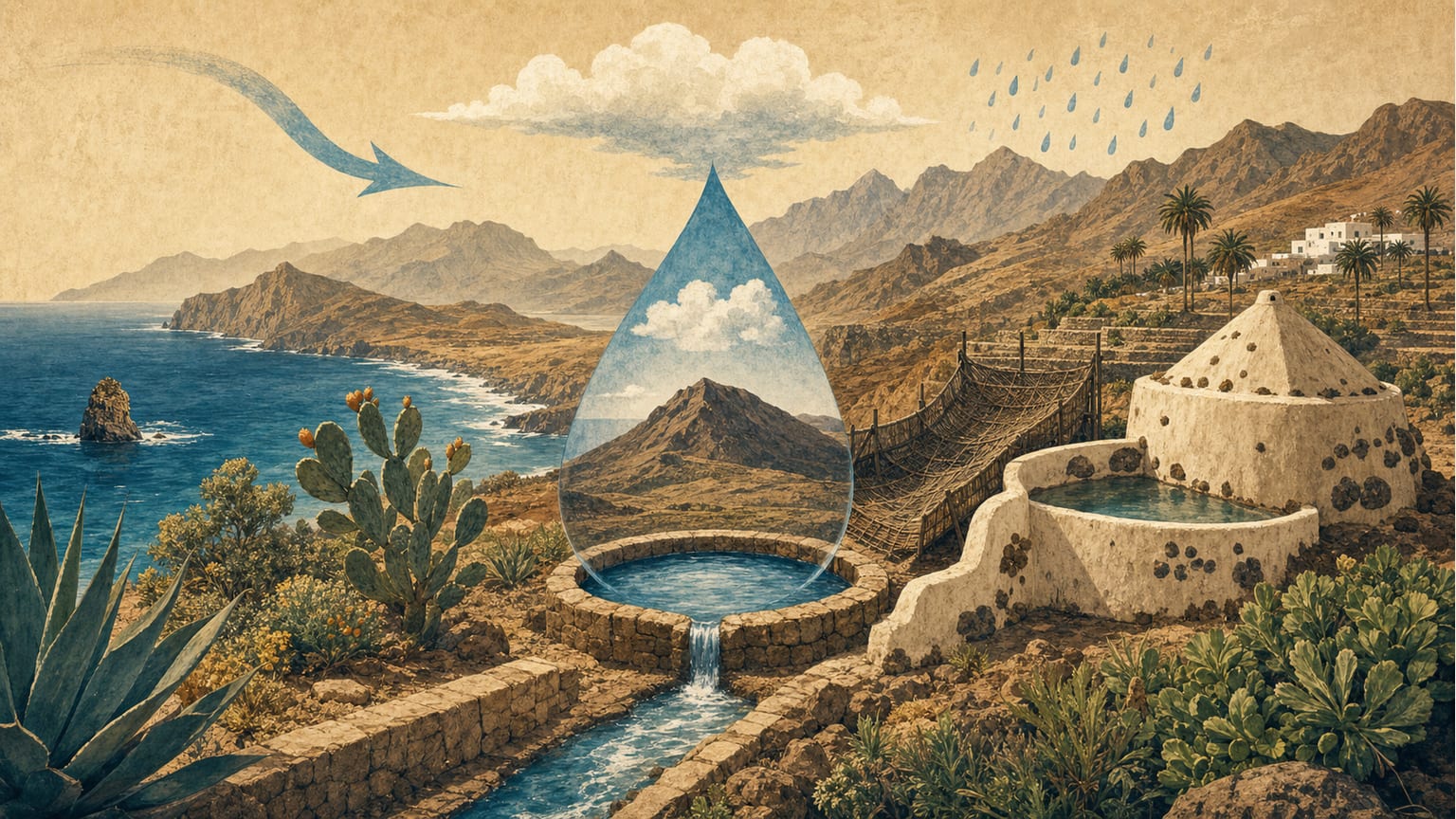
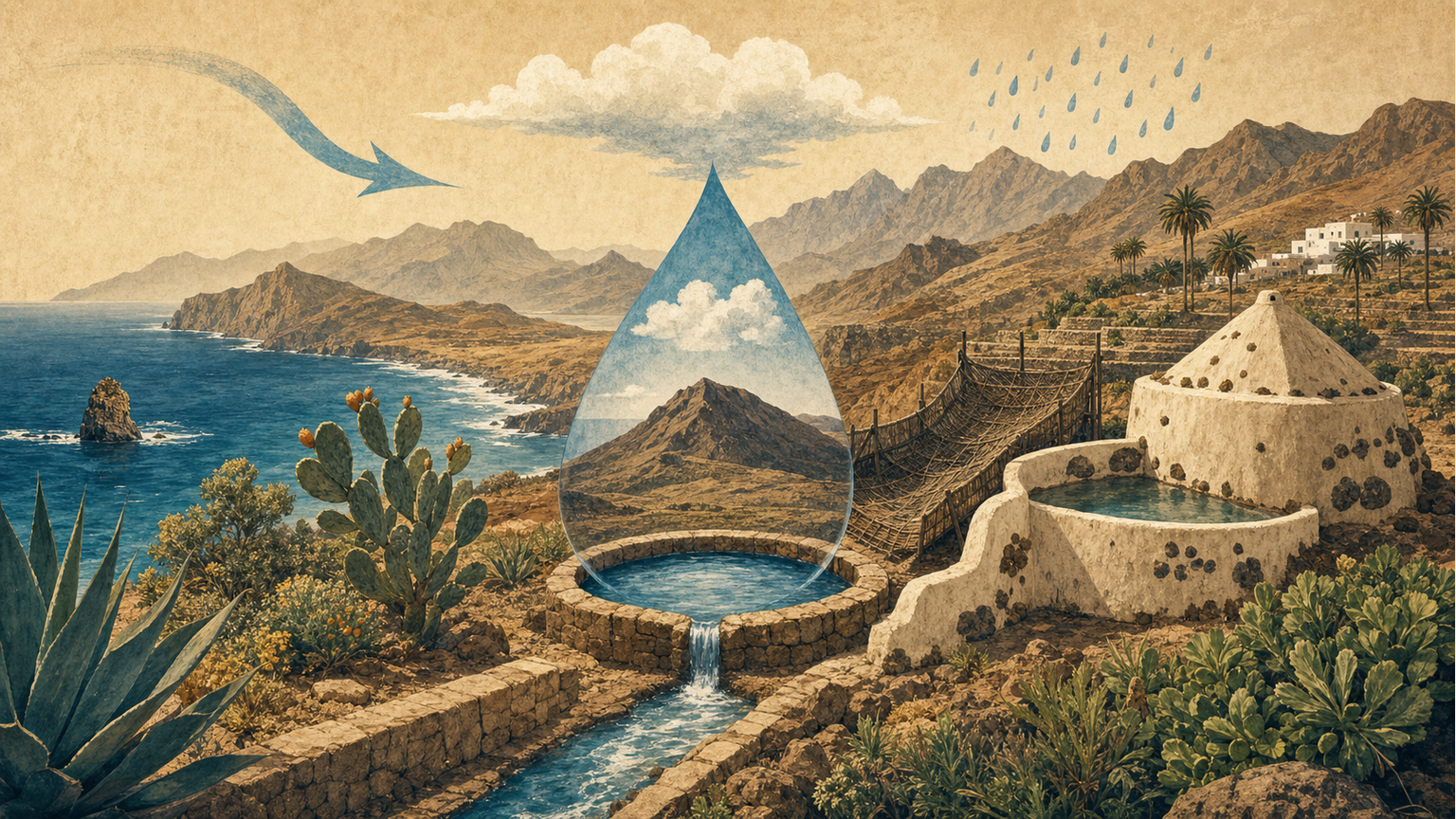
Water is one of the most valuable and limited resources in the Canary Islands, shaping both the development of its ecosystems and human activities[1]. The origin of water in the archipelago is determined by meteorological, geological, and morphological factors, which vary significantly between islands[1].
The study of water in the Canaries is approached globally, analyzing its origin, the mechanisms that produce precipitation, the methods of use on each island, as well as distribution networks and the treatment of wastewater[1]. This comprehensive perspective reinforces the idea that water is a limited resource in constant movement, forming part of the hydrological cycle[1].
Water collection and use in the Canary Islands depend on the geological characteristics and vegetation cover of each island. Both surface water, which flows through ravines and is stored in reservoirs, and groundwater, extracted via wells and galleries, are utilized[1]. Vegetation plays a fundamental role in retaining water and preventing erosion and soil loss, especially in areas with steep slopes[1].
Surface water is collected in reservoirs and cisterns, while groundwater is obtained through wells and galleries—systems developed to adapt to scarcity and irregular rainfall[1]. The distribution network transports water from collection points to places of consumption, and subsequently, wastewater is treated in purification plants before being reused or discharged into the sea[1].
On some islands, the scarcity of water resources has made it necessary to resort to seawater desalination to supply the population and agriculture, as in Las Palmas de Gran Canaria, Puerto del Rosario, and Lanzarote, where numerous desalination plants exist[1]. This process, along with water-saving techniques such as drip irrigation and the reuse of wastewater, is essential to ensure supply in an island environment with limited resources[1].
Rational water use is a key aspect of environmental management in the Canary Islands. Planning and control of water resources are essential to avoid indiscriminate exploitation that could lead to environmental degradation and loss of biodiversity[1]. Education and awareness about the importance of saving and properly managing water are therefore crucial for the islands’ sustainable future[1].