

The Dragon Tree: Botany, Uses, and Significance in the Canary Islands
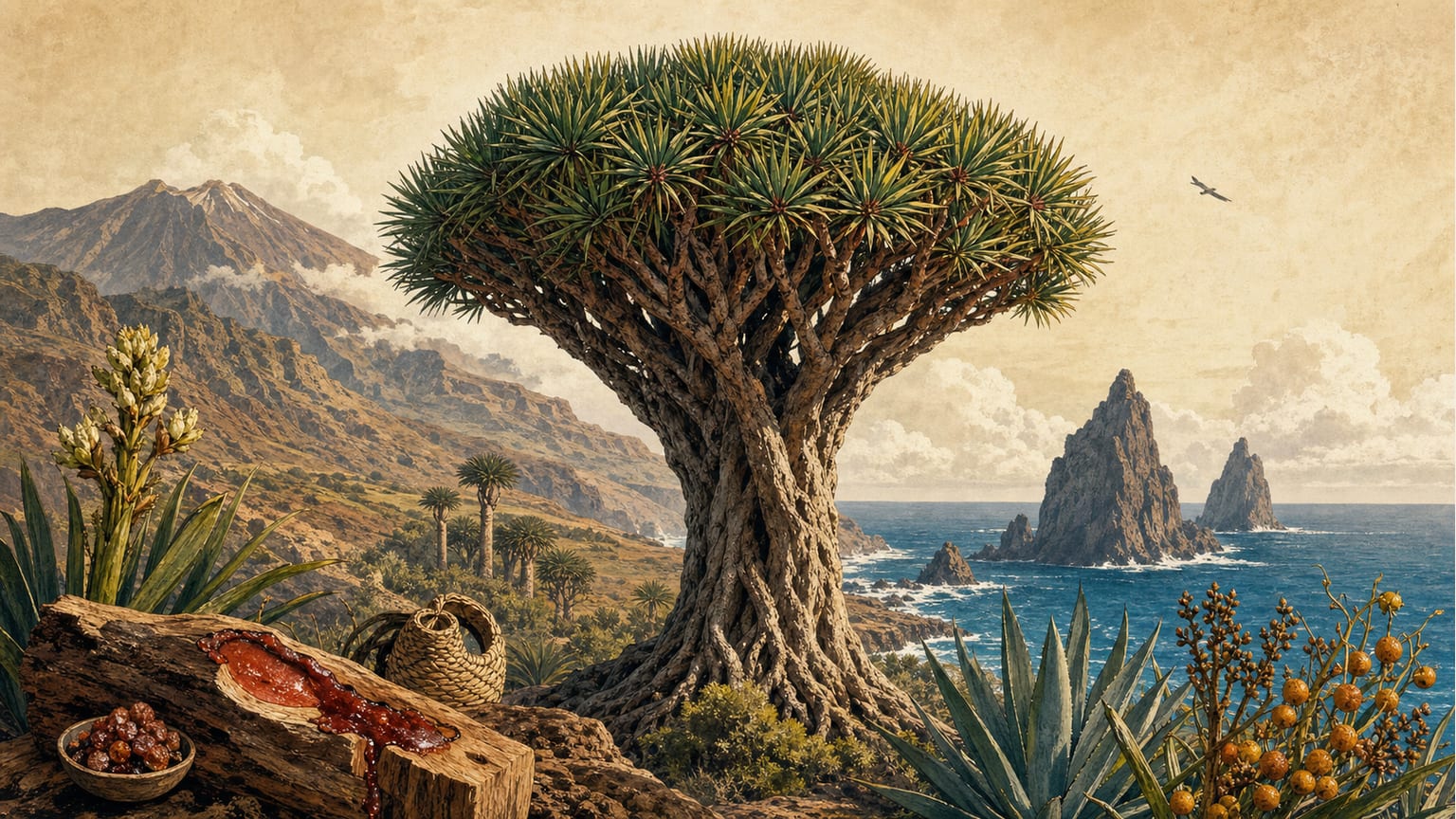
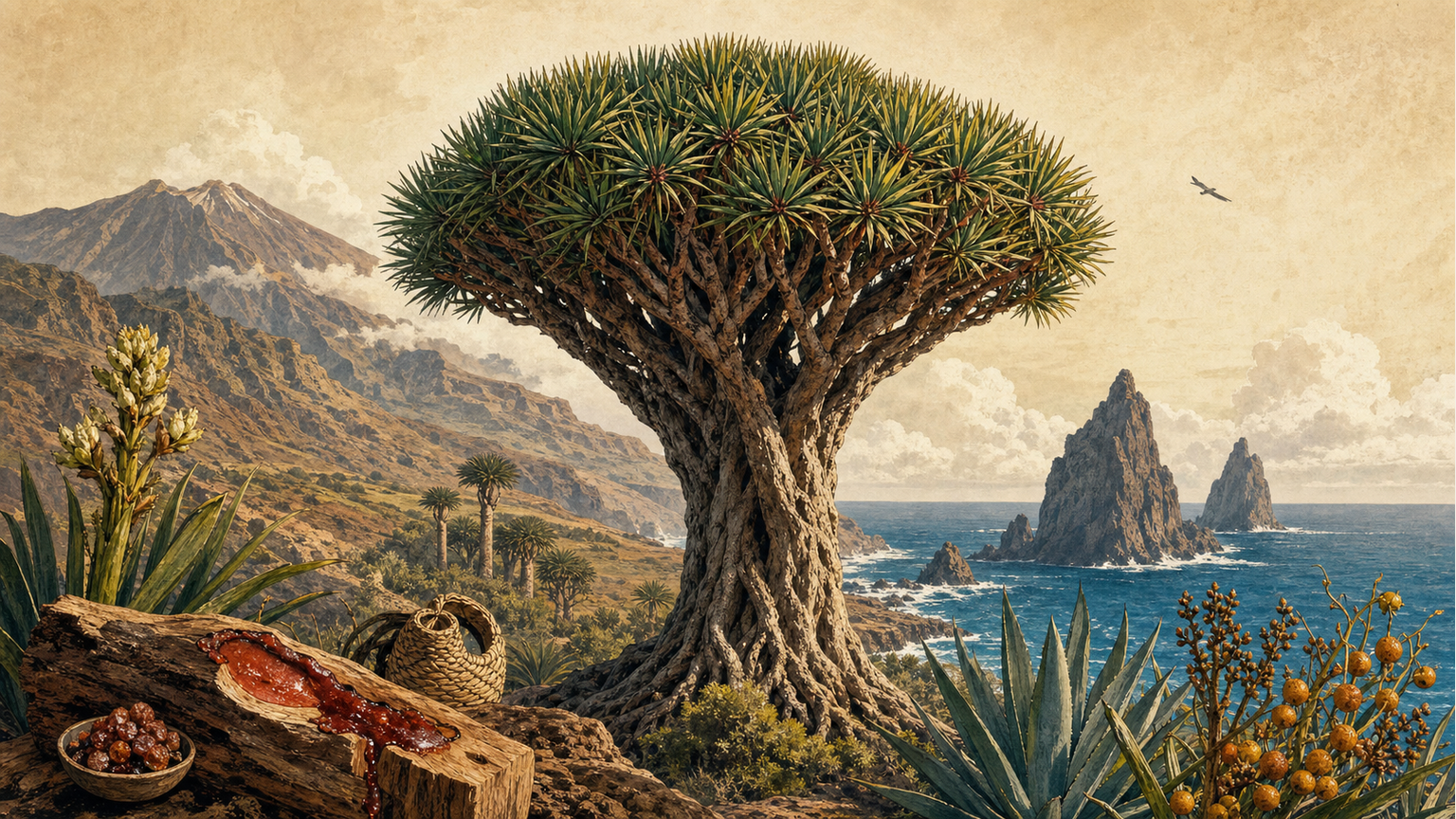
The Dragon Tree (Dracaena draco) stands as one of the most emblematic plant species of the Canary Islands and is the botanical symbol of Tenerife[1]. This tree, known for its tree-like form and reddish sap, has been the subject of myths, traditional uses, and botanical studies throughout the islands’ history.
Myths and Historical References
In ancient times, it was believed that the Garden of the Hesperides was guarded by a dragon and that the dragon’s blood was the red sap of the Dragon Tree, which was thought to be located in the Canary Islands[1]. Historical accounts mention that Phoenicians, Carthaginians, and Romans visited the islands to trade with the aboriginal people, possibly dealing in tuna products, orchilla (lichen), and Dragon Tree sap[1].
Aboriginal and Traditional Uses
The Guanches of Tenerife used the Dragon Tree to make shields, dye their hair red, and, after the conquest, for making beehives and ferret boxes[1]. The sap, known as “dragon’s blood,” was used internally to treat gum disease, dysentery, and stomach hemorrhages, and externally for ulcers and to dry wounds[1]. Its fruit is edible[1].
Distribution and Notable Specimens
In La Orotava, there was a huge Dragon Tree until the 19th century; today, the one in Icod is especially famous. Other notable specimens include those in Pino Santo (Gran Canaria) and Tetir (Fuerteventura)[1]. The Dragon Tree, once possibly common on all islands, is the botanical symbol of Tenerife, where it is still well represented in natural habitats, especially in humid areas. In the southwest of Gran Canaria, it is better adapted to drought[1].
Botanical Aspects
The Dragon Tree is a long-lived, slow-growing plant that can reach several meters in height. Its appearance resembles a dragon, which has contributed to its mythological associations[1]. Its simple lines make it easily recognizable, even for young students.
Educational Activities and Conservation
The book recommends visiting areas with wild Dragon Trees or places whose names are associated with the tree, as well as growing the plant from seed to replanting[1]. It suggests investigating the age at which garden specimens branch, quantifying the fruits, and checking their edibility[1]. Mapping their distribution and inventorying gardens that host them, as well as analyzing their proximity to buildings and the impact of their roots, are also proposed activities[1].
Recommended Bibliography
The text provides a comprehensive bibliography on the Dragon Tree, highlighting works by Bramwell, Kunkel, Oliva, Viera, and others, as well as guides to the flora and fauna of the Canary Islands[1].