

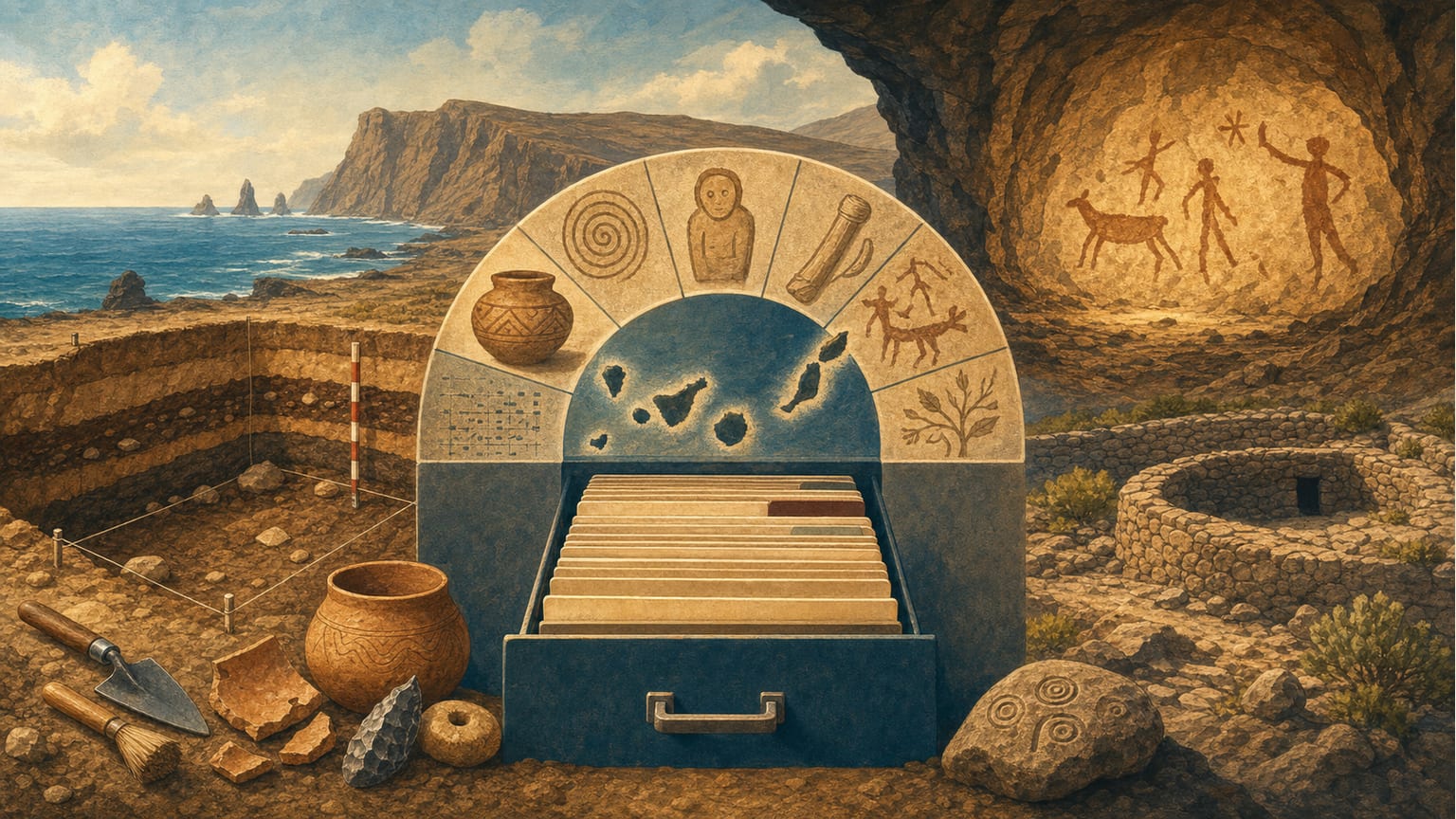
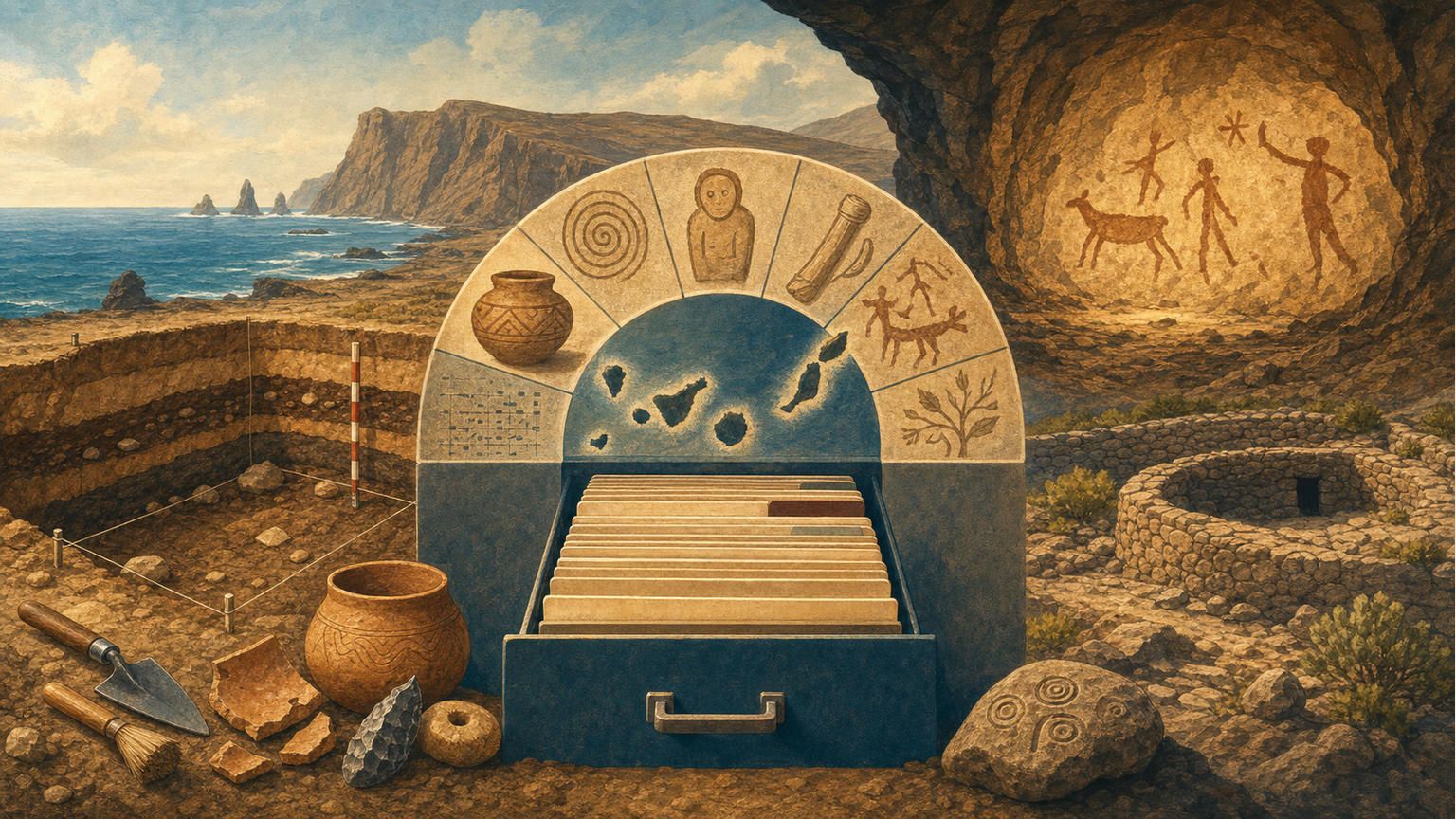
The Bibliografía de Prehistoria y Antropología de Canarias (BPAC) stands as a milestone in the systematization and accessibility of scientific production on the prehistory and anthropology of the Canary Islands[1]. Developed by Fernando Estévez González, M. Teresa Henríquez Sánchez, and Pedro A. Díaz Rodríguez, the BPAC was made possible through the collaboration of institutions such as the Museo de Antropología de Tenerife and the Dirección General de Patrimonio Histórico of the Canary Islands Government[1].
BPAC was created to organize the previously scattered literature in these fields, integrating both academic and popular publications, and covering works from the 19th century to the present[1]. The database currently stores over 30,000 records, with more than 8,500 specifically related to Canarian prehistory and anthropology, available in the CD-ROM version of the bibliography[1].
The bibliographic database design is based on the adaptation of international formats, incorporating over 150 fields of information, including basic, calculated, and coded data[1]. These fields include UNESCO scientific classifications, a thesaurus based on UNESCO’s “List of Anthropology Descriptors,” and ISO standards for coding author nationality, language, and document origin[1].
BPAC’s coverage is broad, including not only serial publications and monographs but also grey literature such as reports and memoranda, as well as press articles and popular magazines when relevant[1]. The bibliography is not limited to Canarian authors or literature produced in the islands, but also attempts to include works by foreign authors or those published outside the archipelago[1].
The library management module of the GBIC application, on which BPAC is based, allows for efficient storage, maintenance, and retrieval of bibliographic records, book orders, reader tracking, directories, periodicals, and biographies, among other functions[1].
BPAC also incorporates bibliometric indicators that facilitate understanding of the evolution of scientific production, research trends, and the relative impact of authors and publications[1]. Notably, all cited references from journal articles published between 1970 and 1995 are included, enabling detailed analysis of citation patterns and the influence of various journals and authors in the field[1].
In summary, BPAC is an essential tool for both researchers and the general public interested in the history, archaeology, and anthropology of the Canary Islands, providing systematic, updated, and comprehensive access to the scientific and popular literature in these disciplines[1].