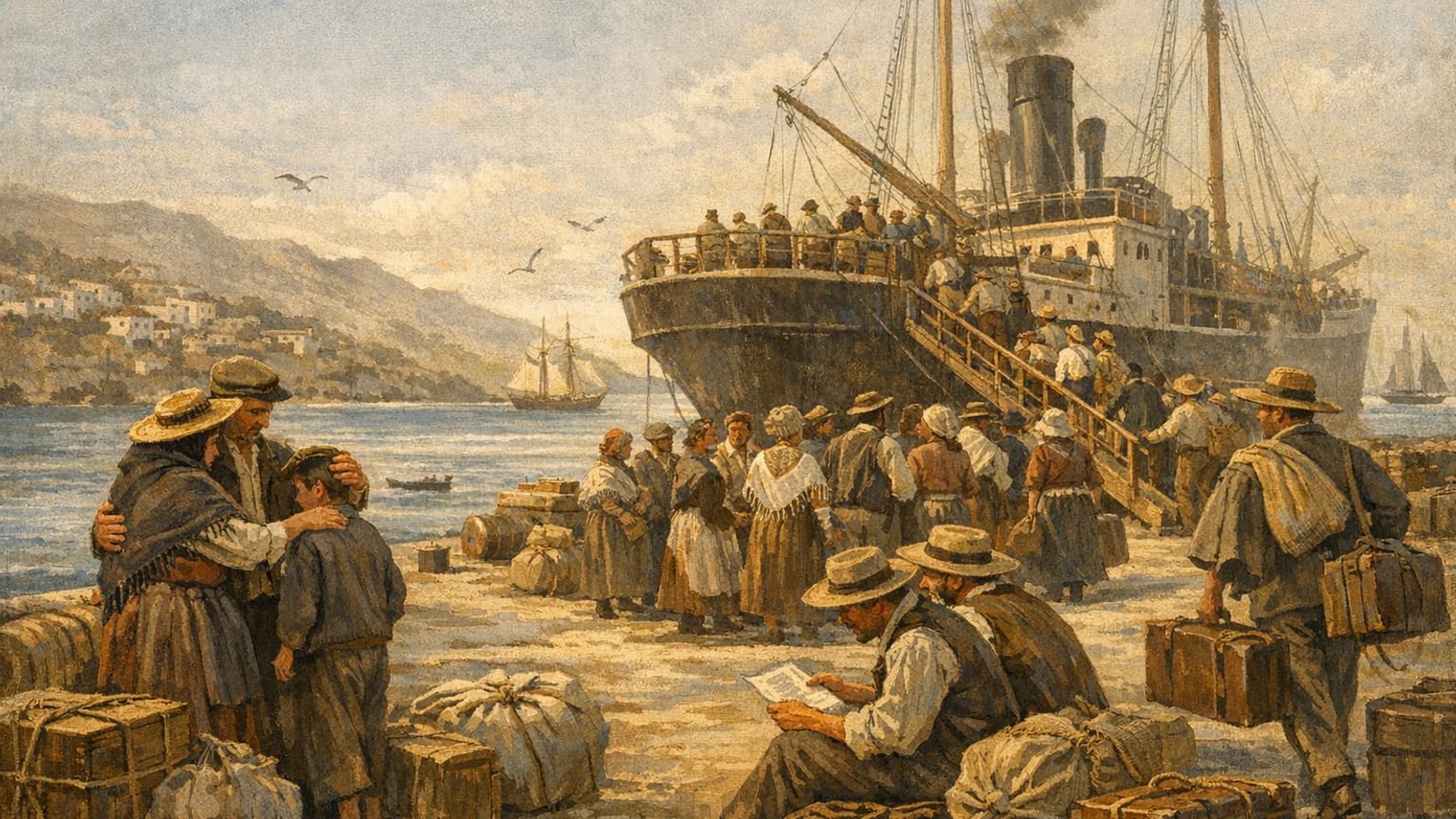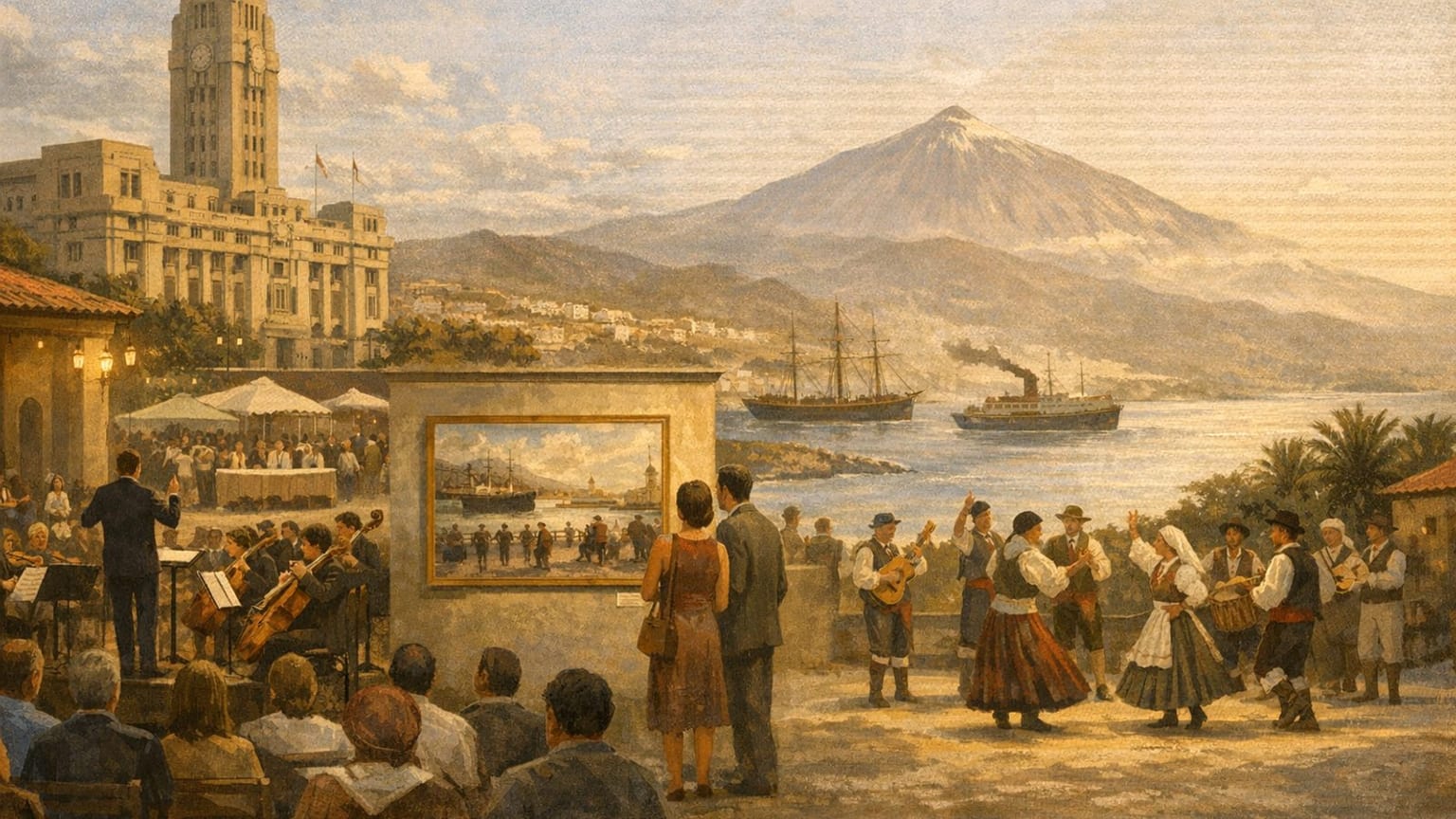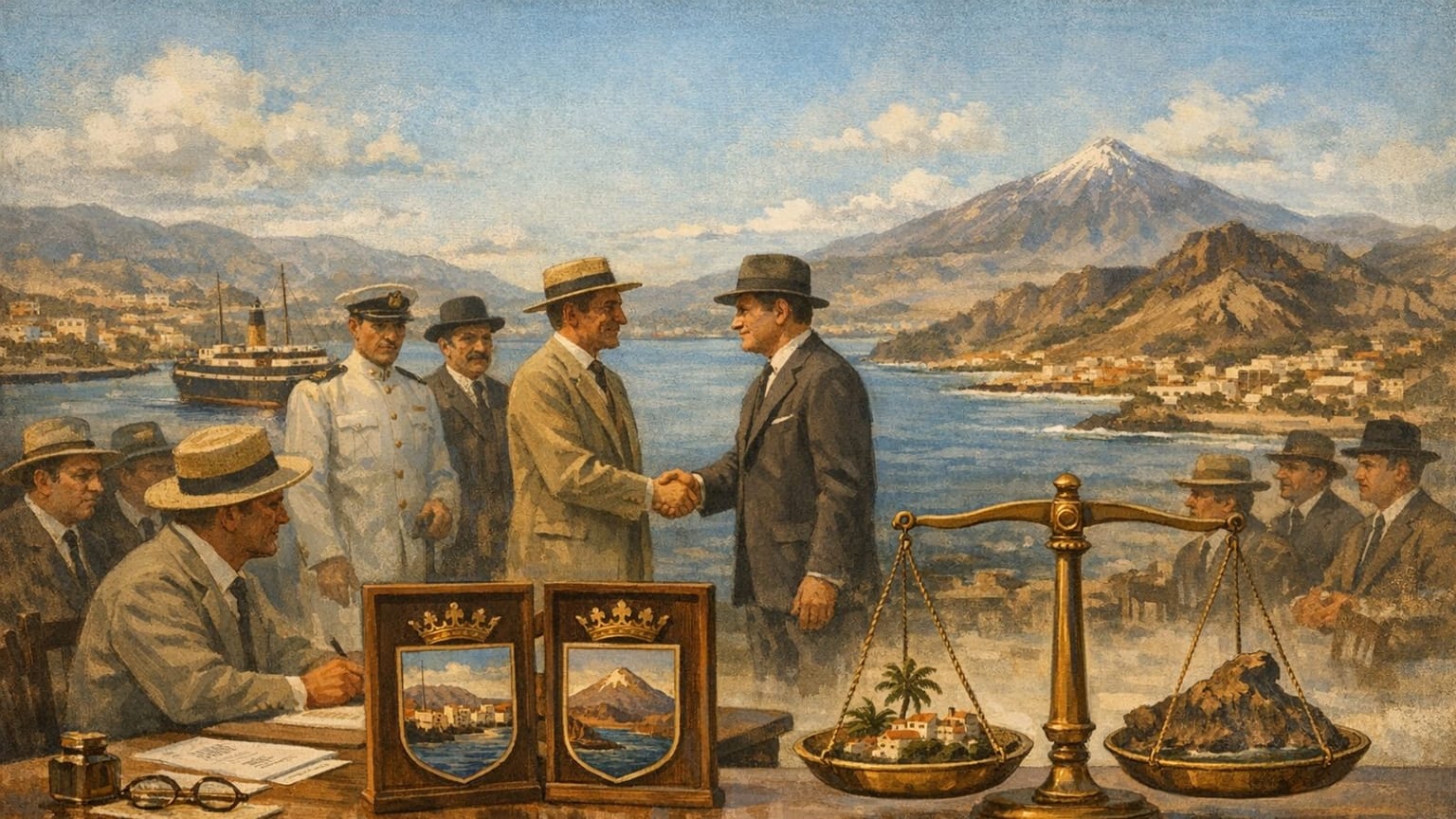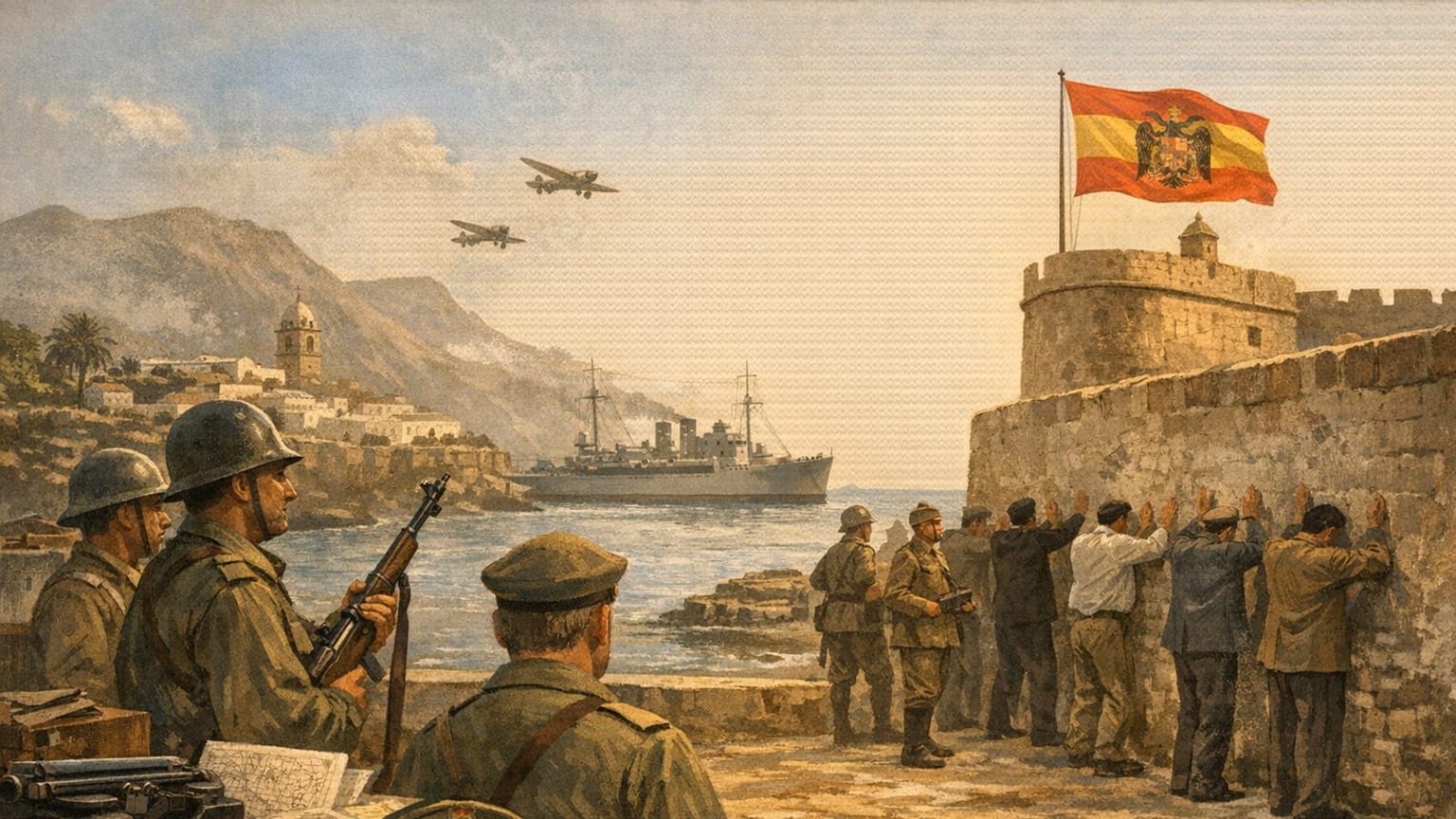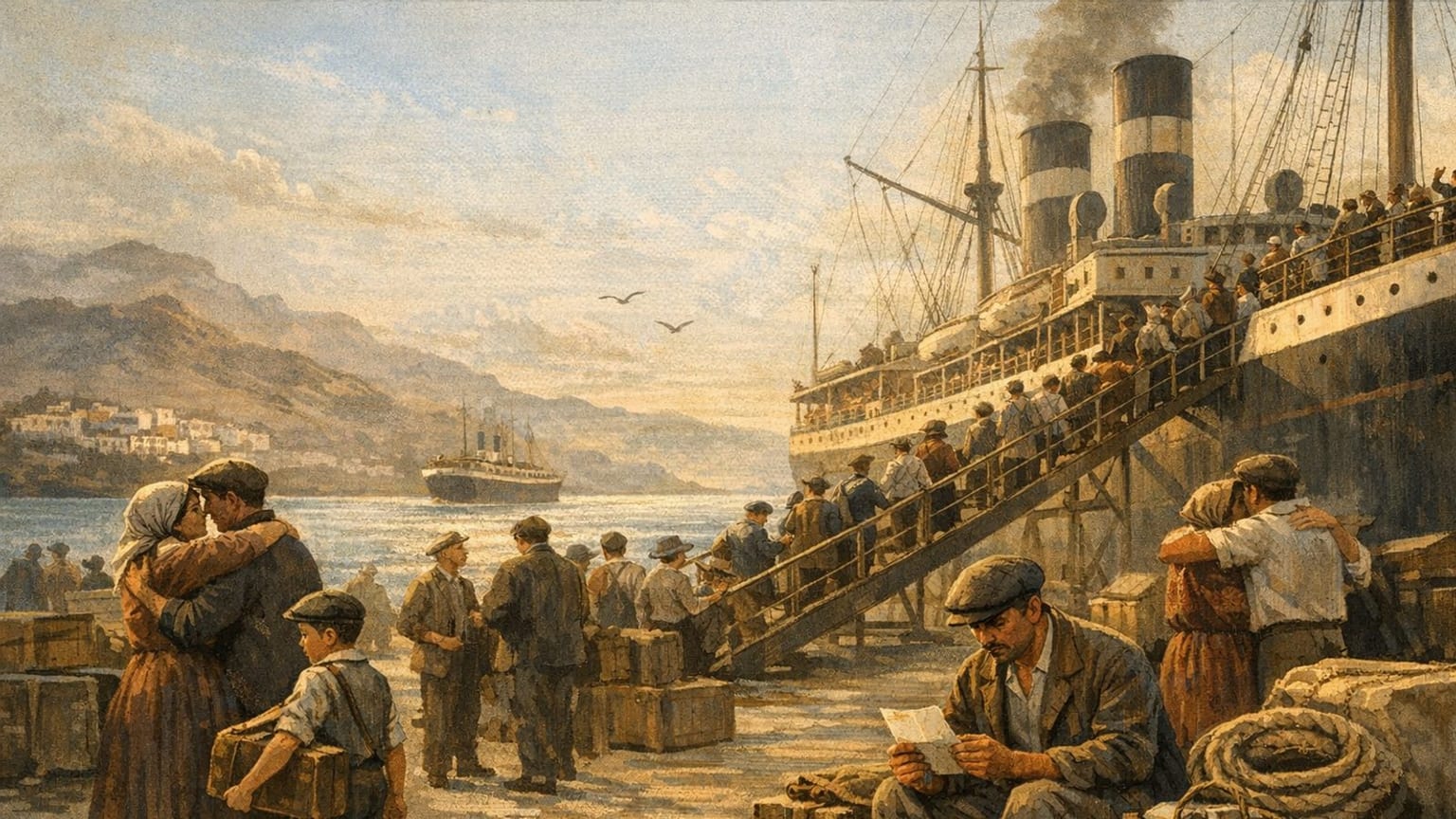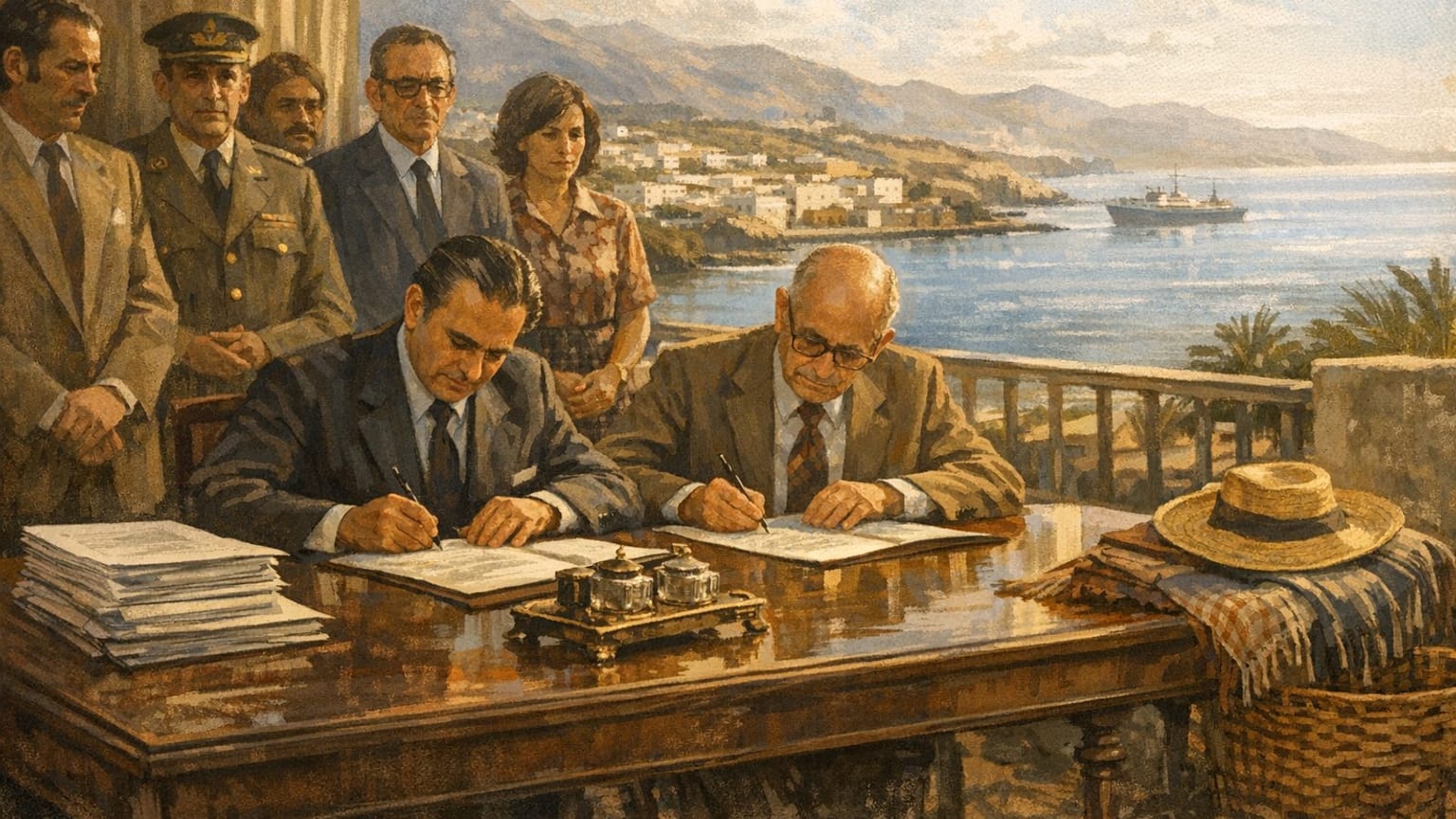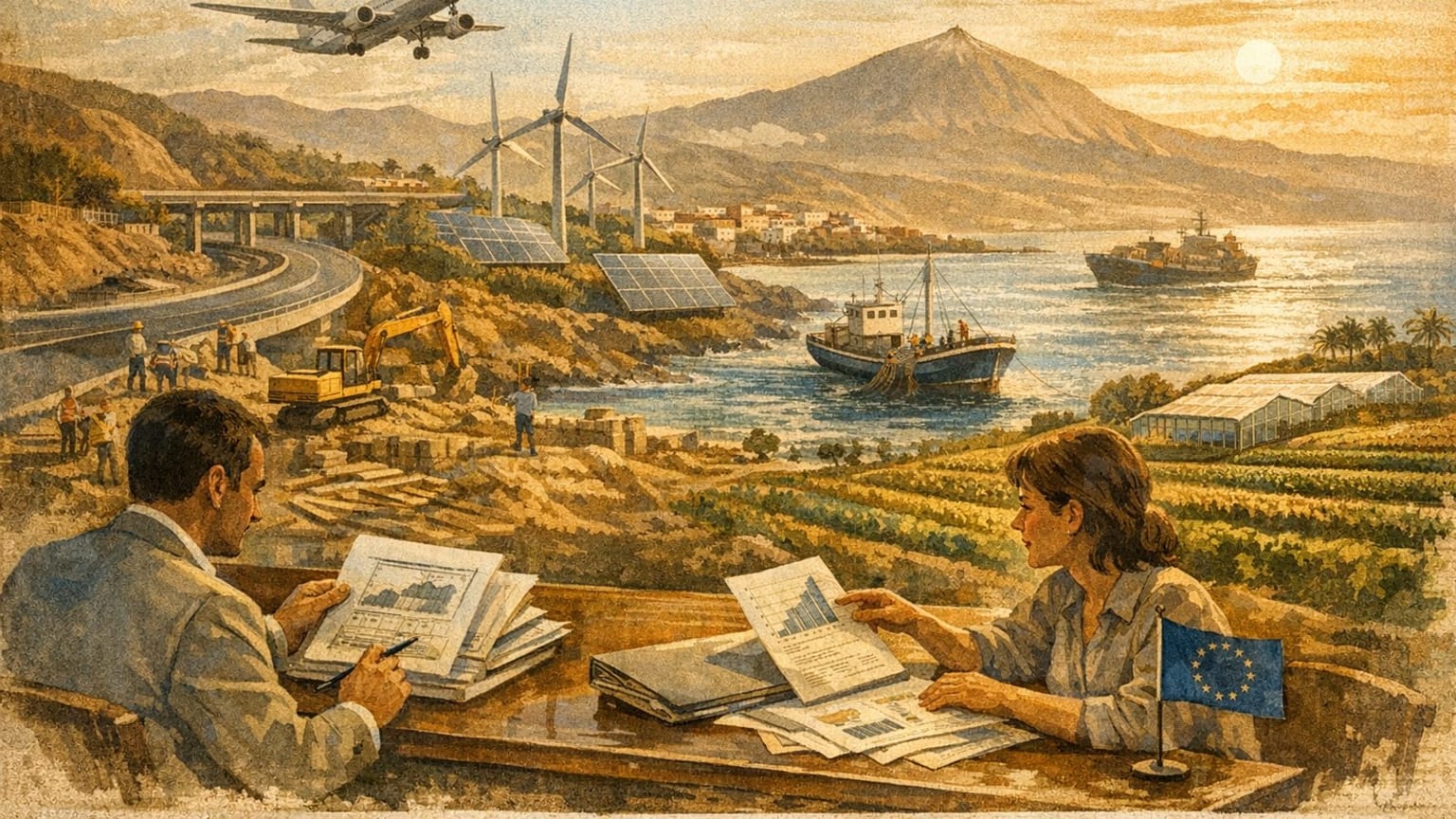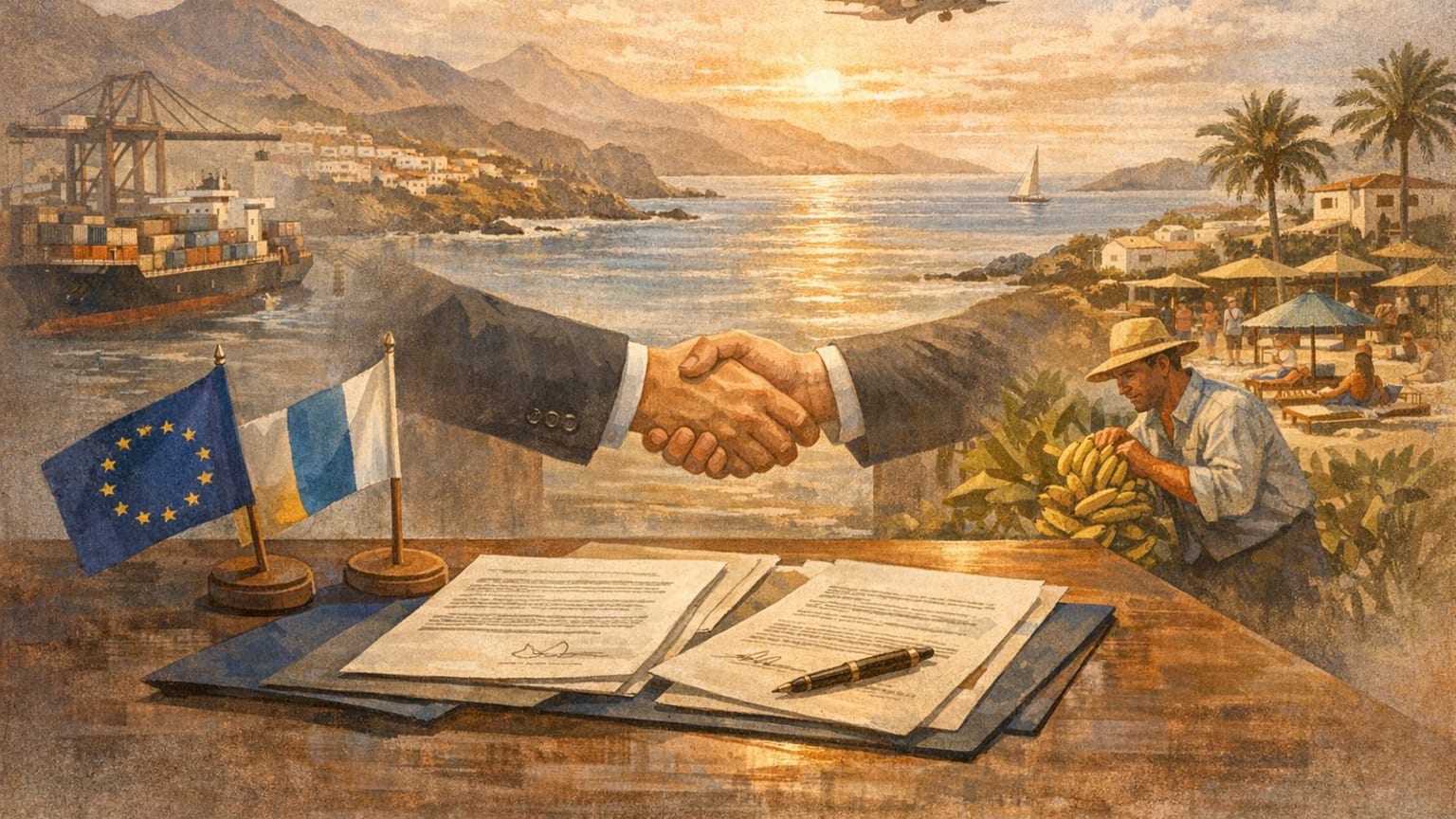

La cronologia herreña enlaza poblamiento indigena, conquista, meridiano, emigracion, volcan submarino e innovacion energetica.
Key points
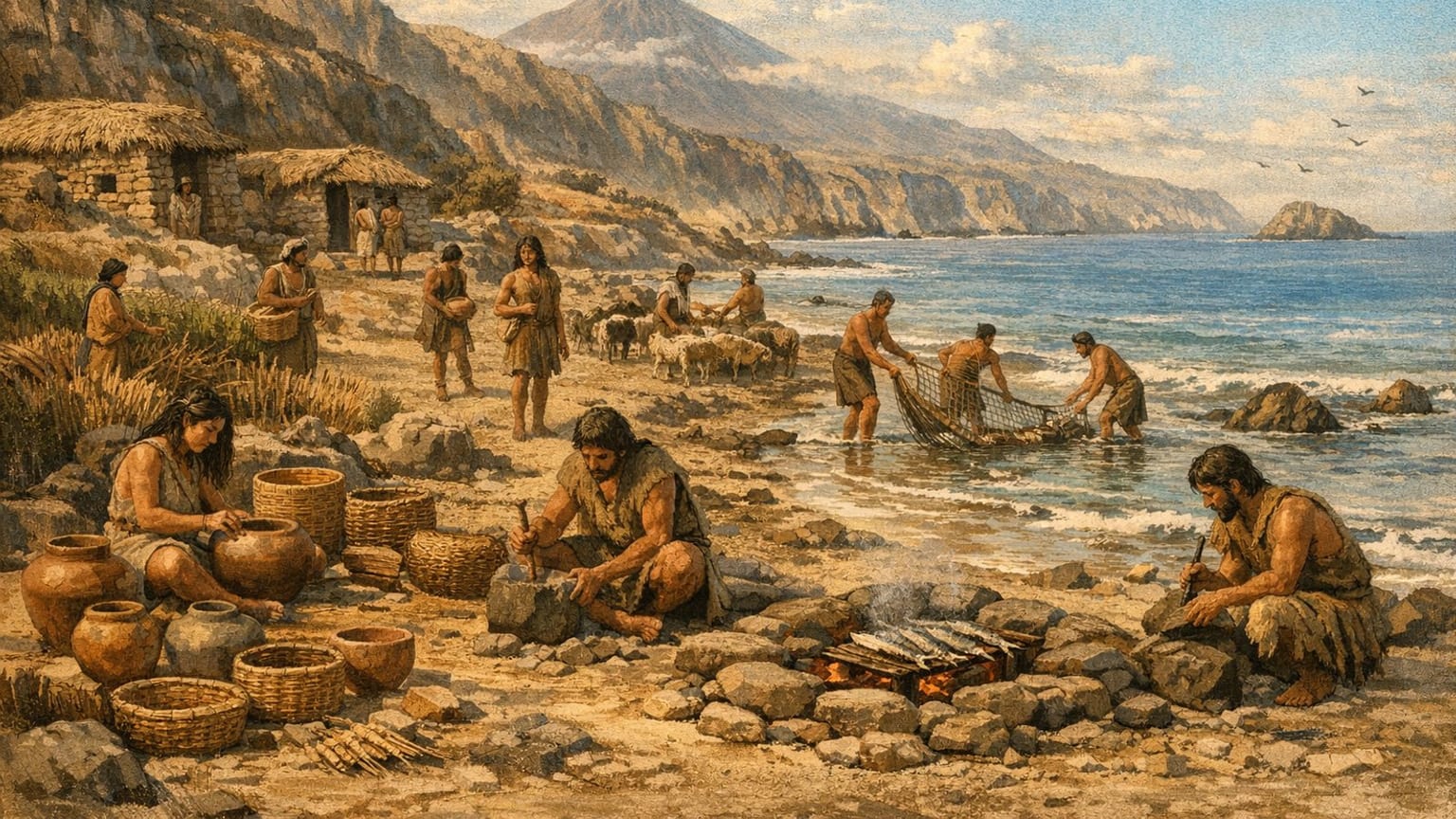
Poblamiento bimbache (s. I-XIV)
Los primeros habitantes de El Hierro llegaron posiblemente desde las otras islas; su cultura pastoril, con gran dependencia del Garoé, es el periodo menos documentado de la prehistoria canaria.
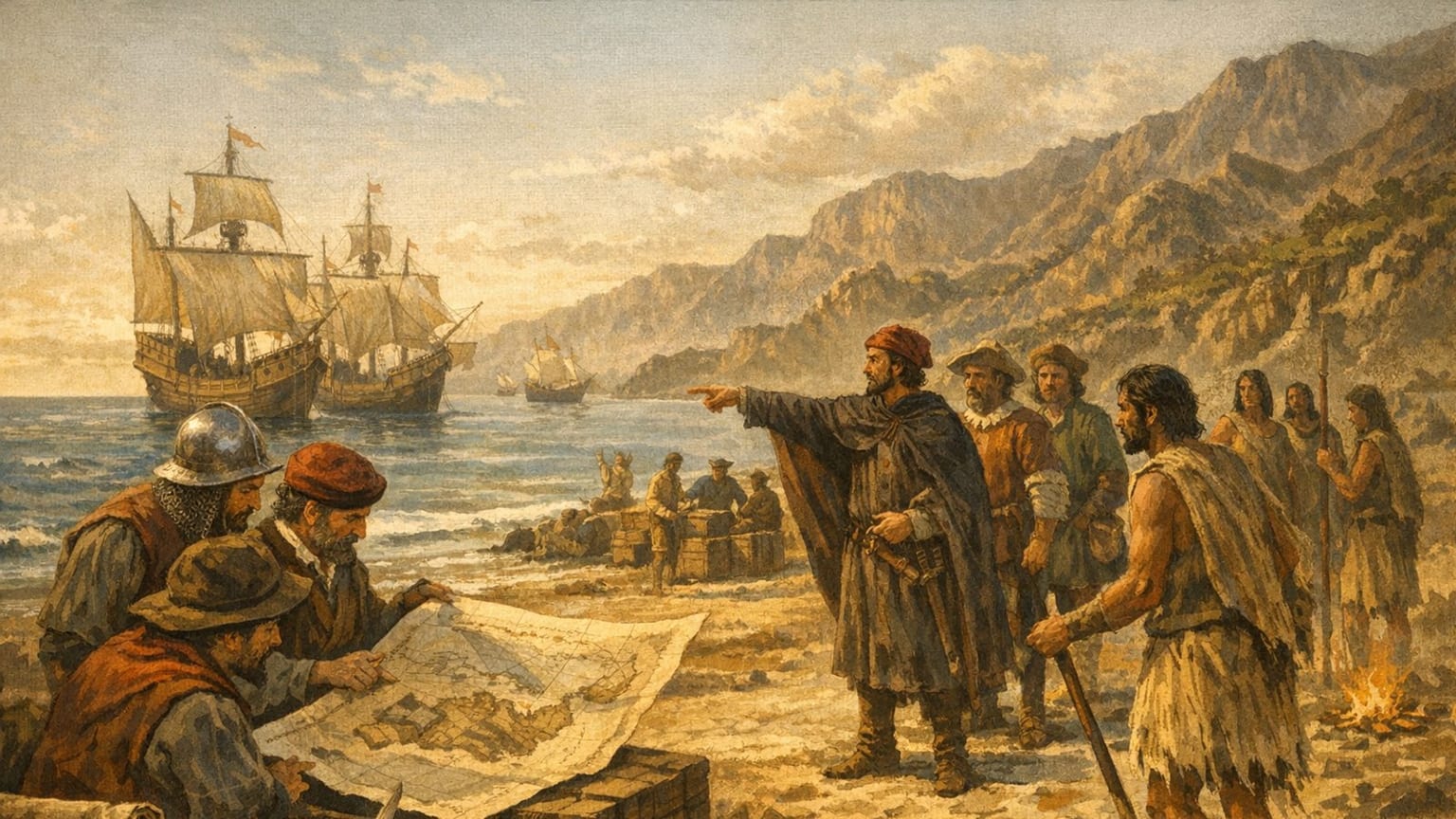
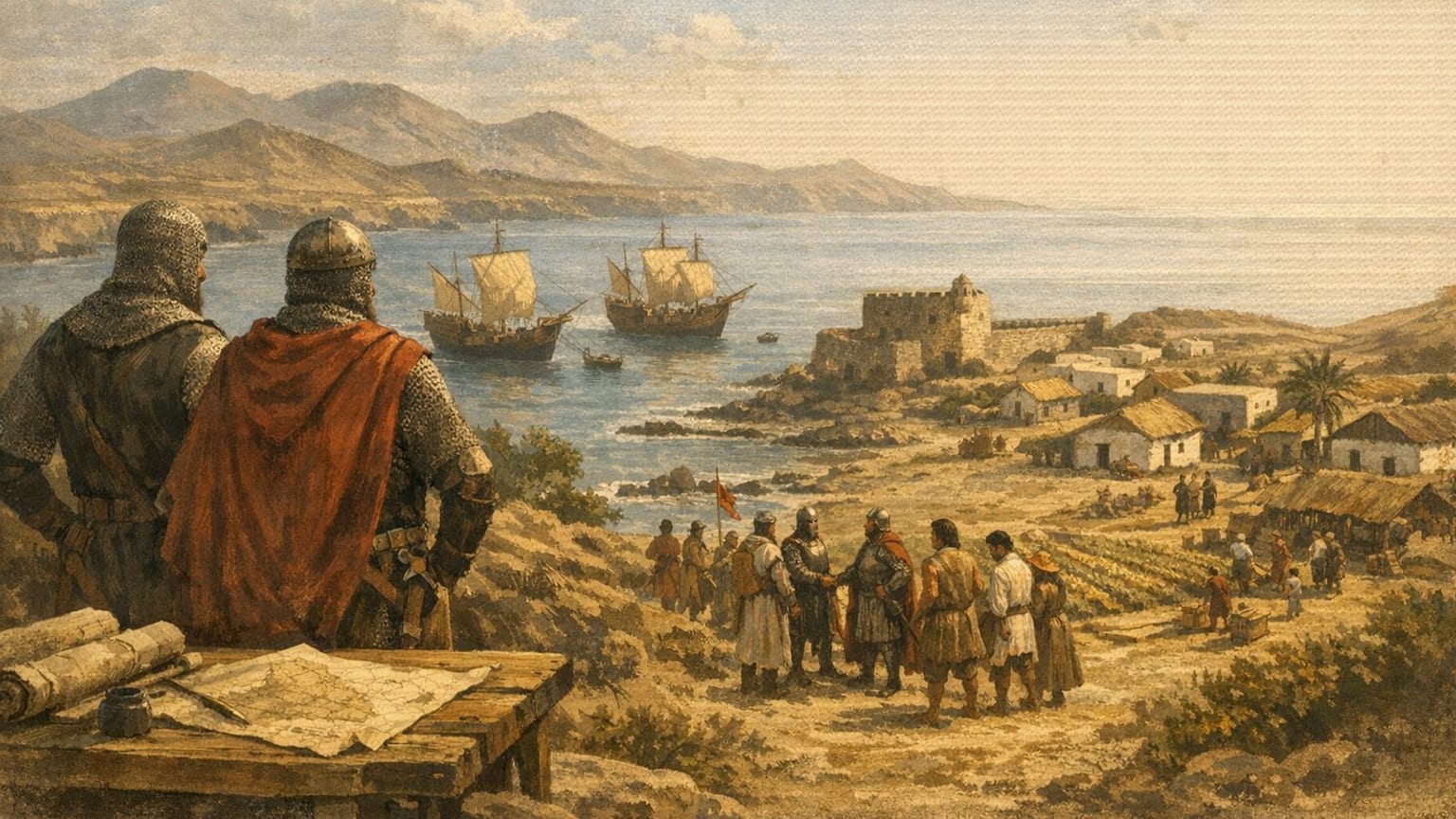
Conquista señorial (1405)
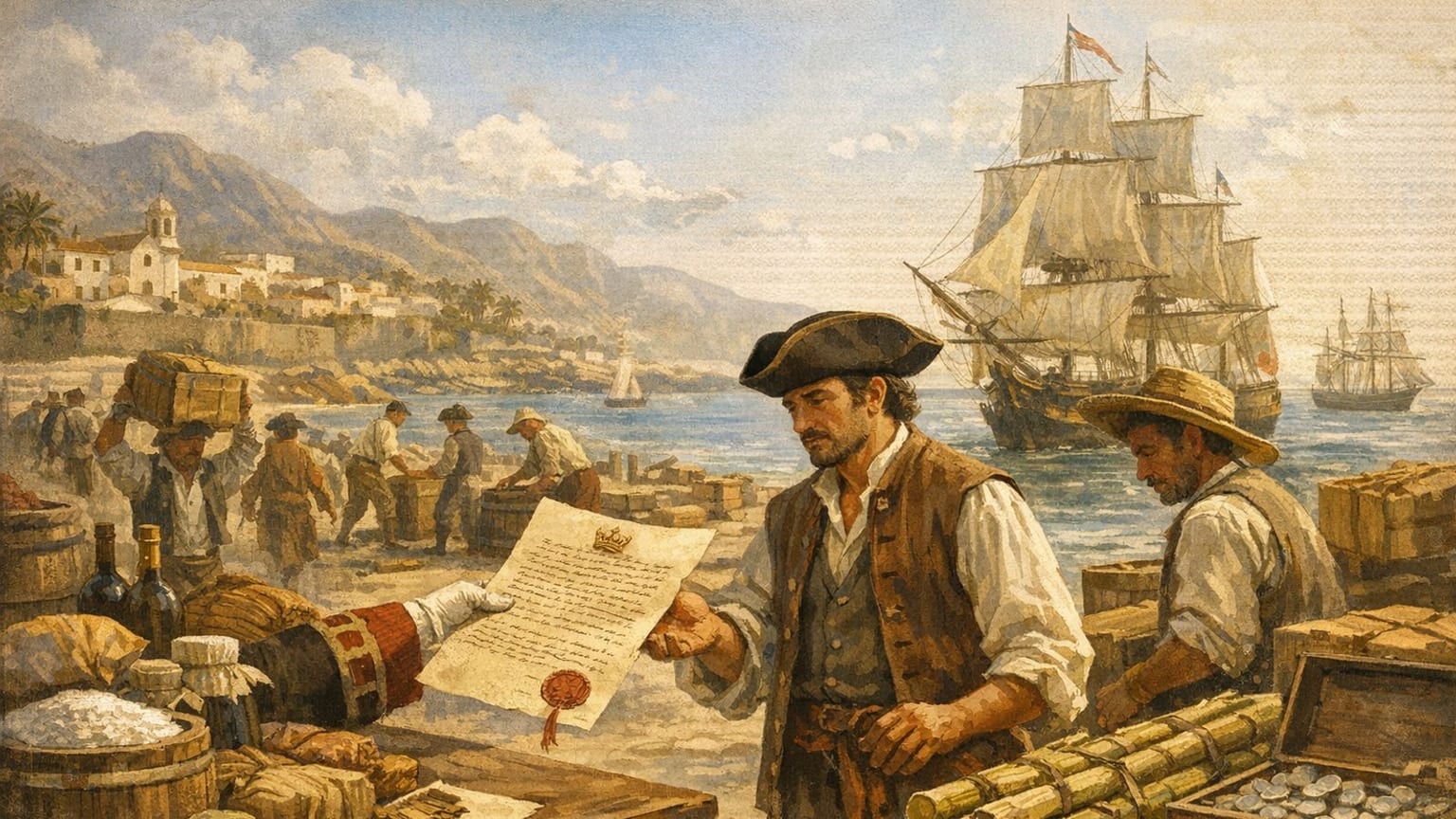
Gadifer de La Salle y Jean de Bethencourt tomaron El Hierro sin resistencia; la isla se integro en el señorio de Bethencourt junto a Lanzarote y Fuerteventura.
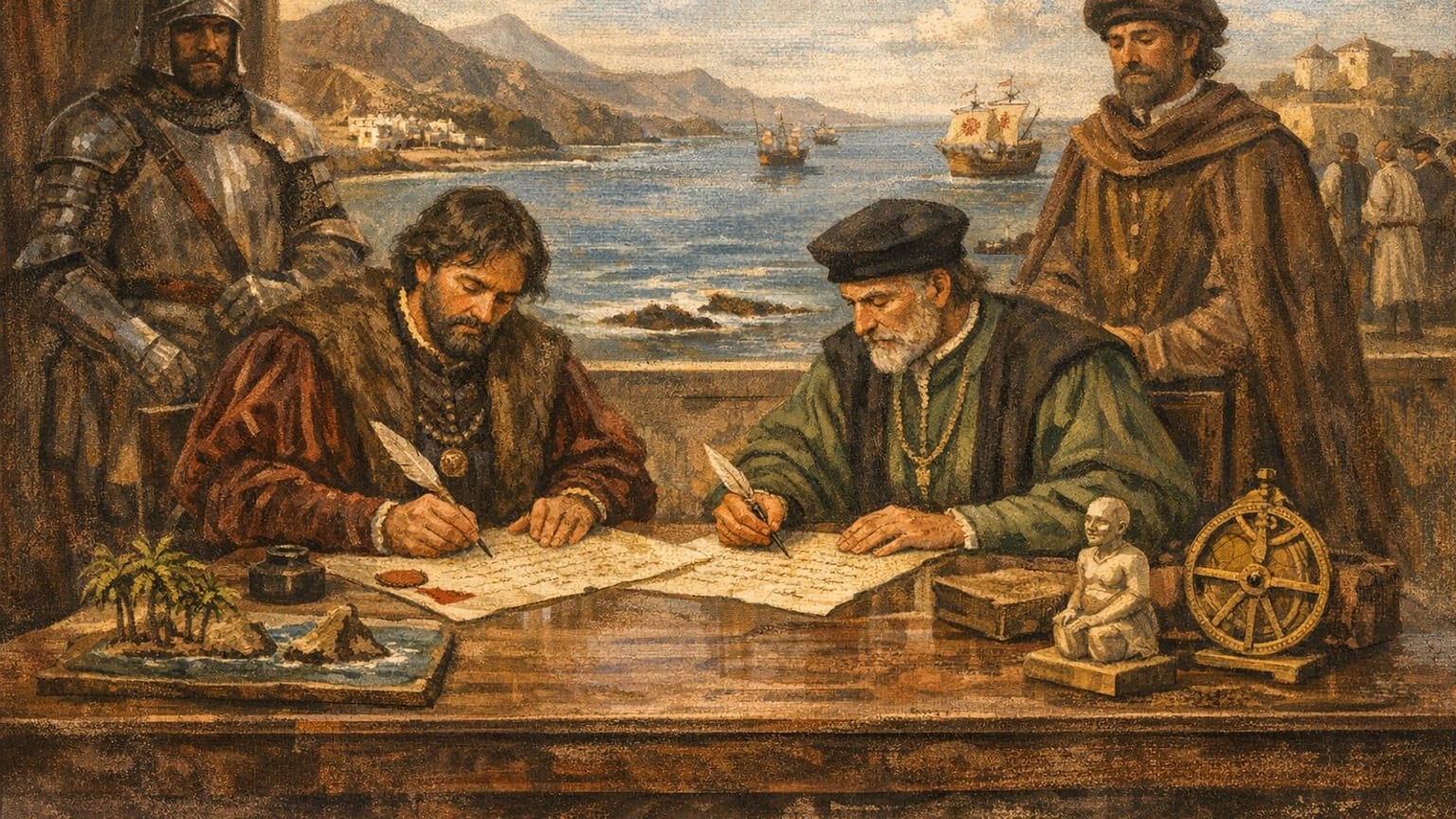
El Hierro como meridiano (1634-1884)
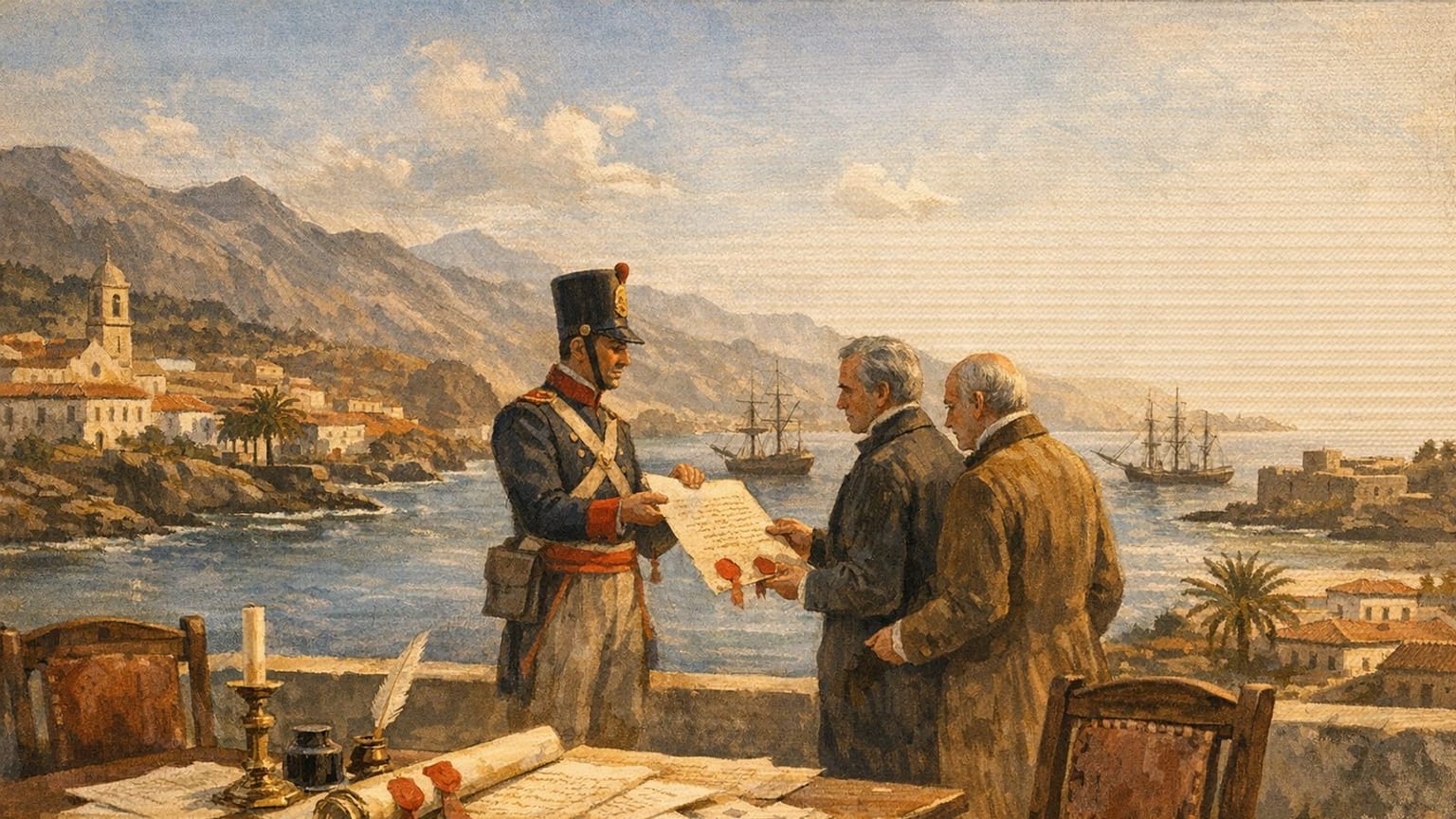
El Tratado de Paris de 1884 fijo el meridiano de Greenwich como referencia universal; hasta entonces, El Hierro habia servido como origen de los mapas europeos desde el siglo XVII.
Volcan submarino de Tagoro (2011-2012)
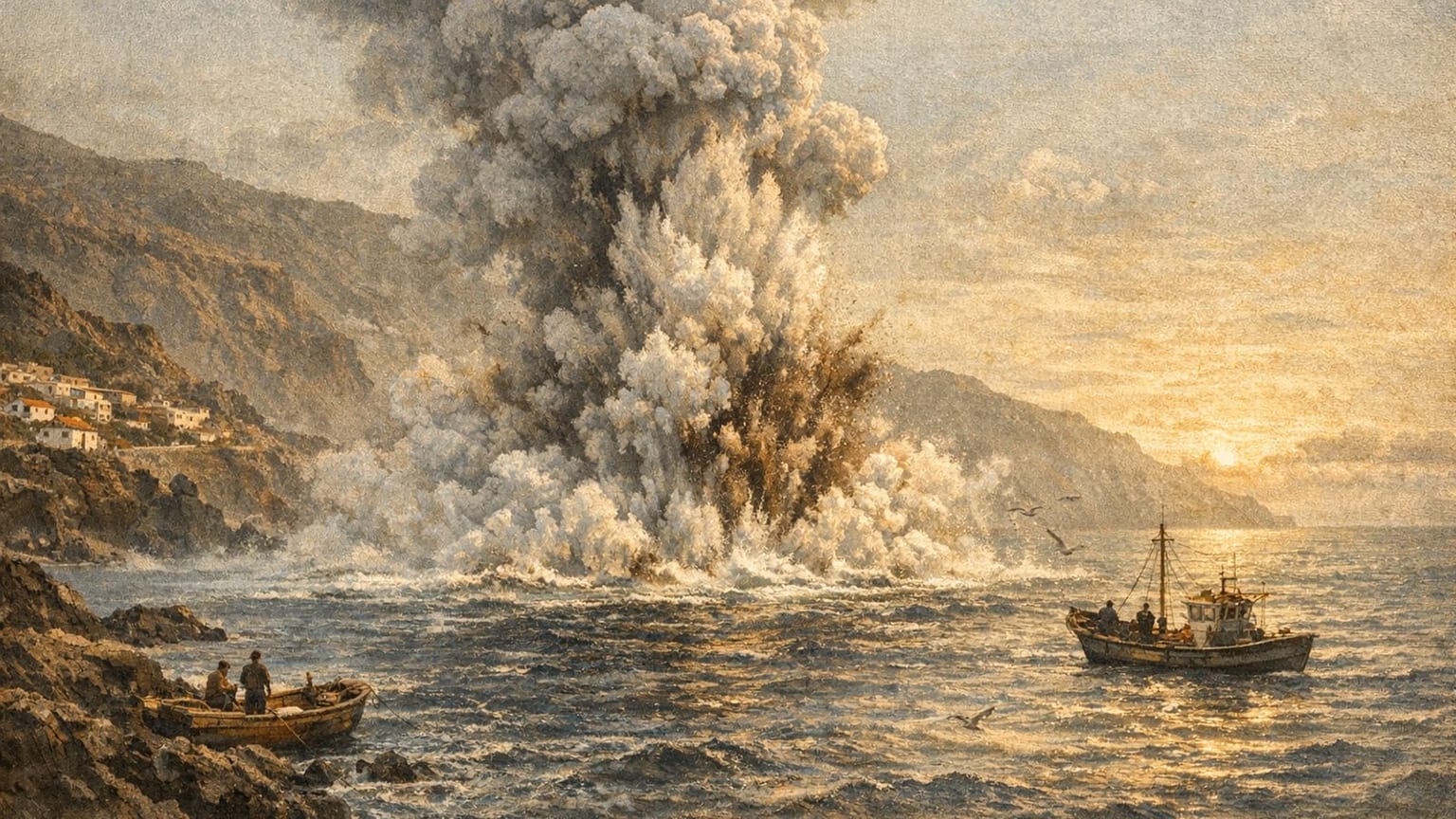
La erupcion submarina frente a La Restinga fue la primera registrada en tiempo real en el archipielago; el nuevo edificio volcanico submarino fue bautizado Tagoro por los cientificos.
Milestones of El Hierro