

Ancestral traditions
Beliefs, funerary practices and the symbolic world of the archipelago’s ancient inhabitants.
Before the conquest, the islands already had their own symbolic, ritual and funerary systems. That legacy survives not only in archaeological remains, but also in names, mountains, stories and ways of interpreting territory.
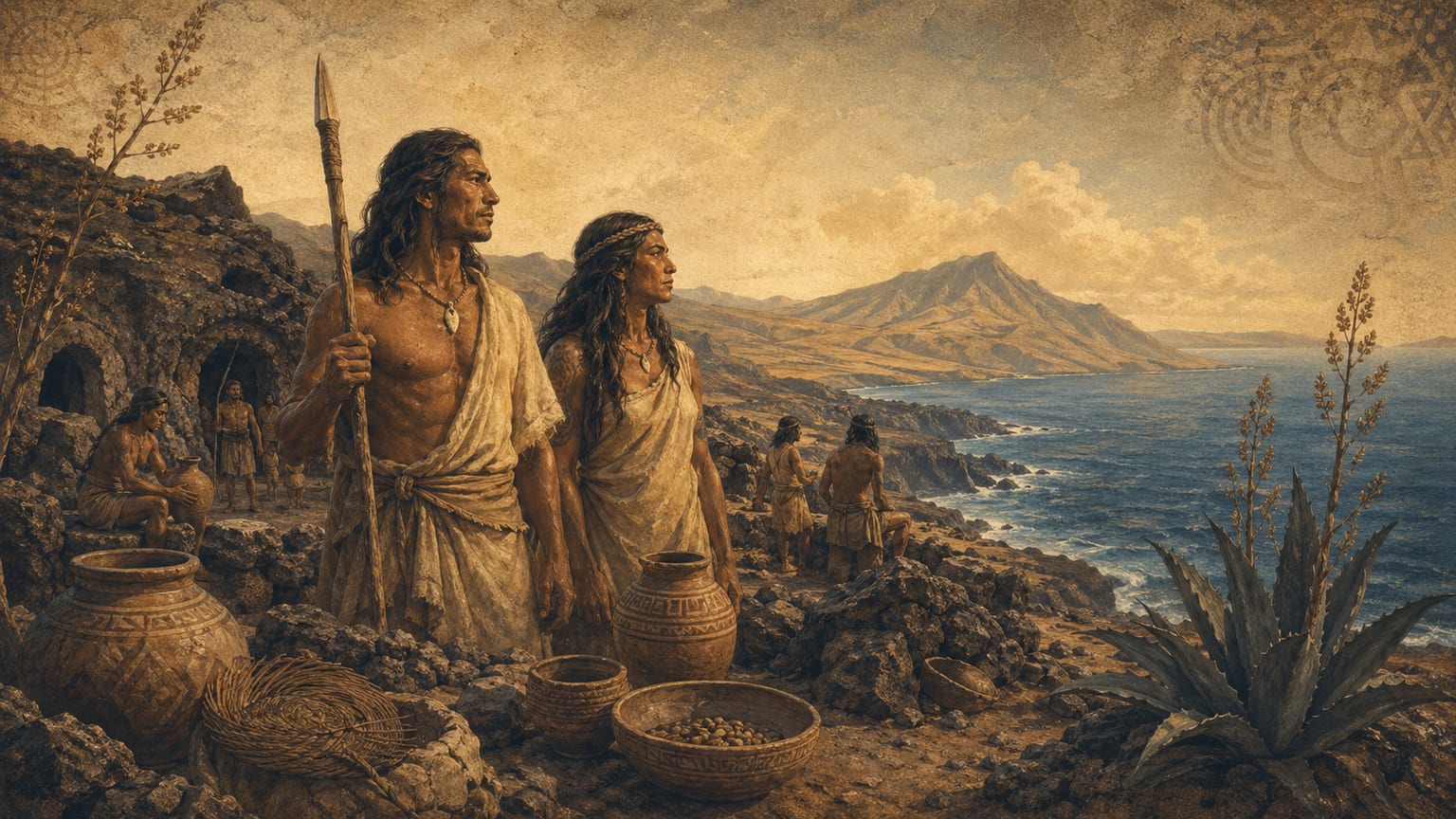
Symbolic world
Deities and sacred spaces organised a worldview in which volcanoes, caves, mountains and coasts had religious and political meaning. Achaman, Guayota, Magec and Chaxiraxi are not mere names: they are axes of a religiosity tied to territory.
Funerary practices
Mummification and the deposition of the dead in caves, silos or natural spaces define a particular relationship with death and landscape. These practices left a material record that is still studied at sites across the archipelago.
Related reading
Indigenous Canarians: The First Inhabitants of the Canary Islands
An overview of the origins, social organization and culture of the Indigenous Canarians, the first settlers of the Canary Islands, who arrived from North Africa.
Read more
The Guanche as a Mirror: Invention, Identity, and Raciology in the Canary Islands
The image of the Guanche was historically constructed as a mirror for Canarian identity, shaped by raciology and European ideologies. This article explores how science and politics created this foundational myth.
Read moreExplore in depth
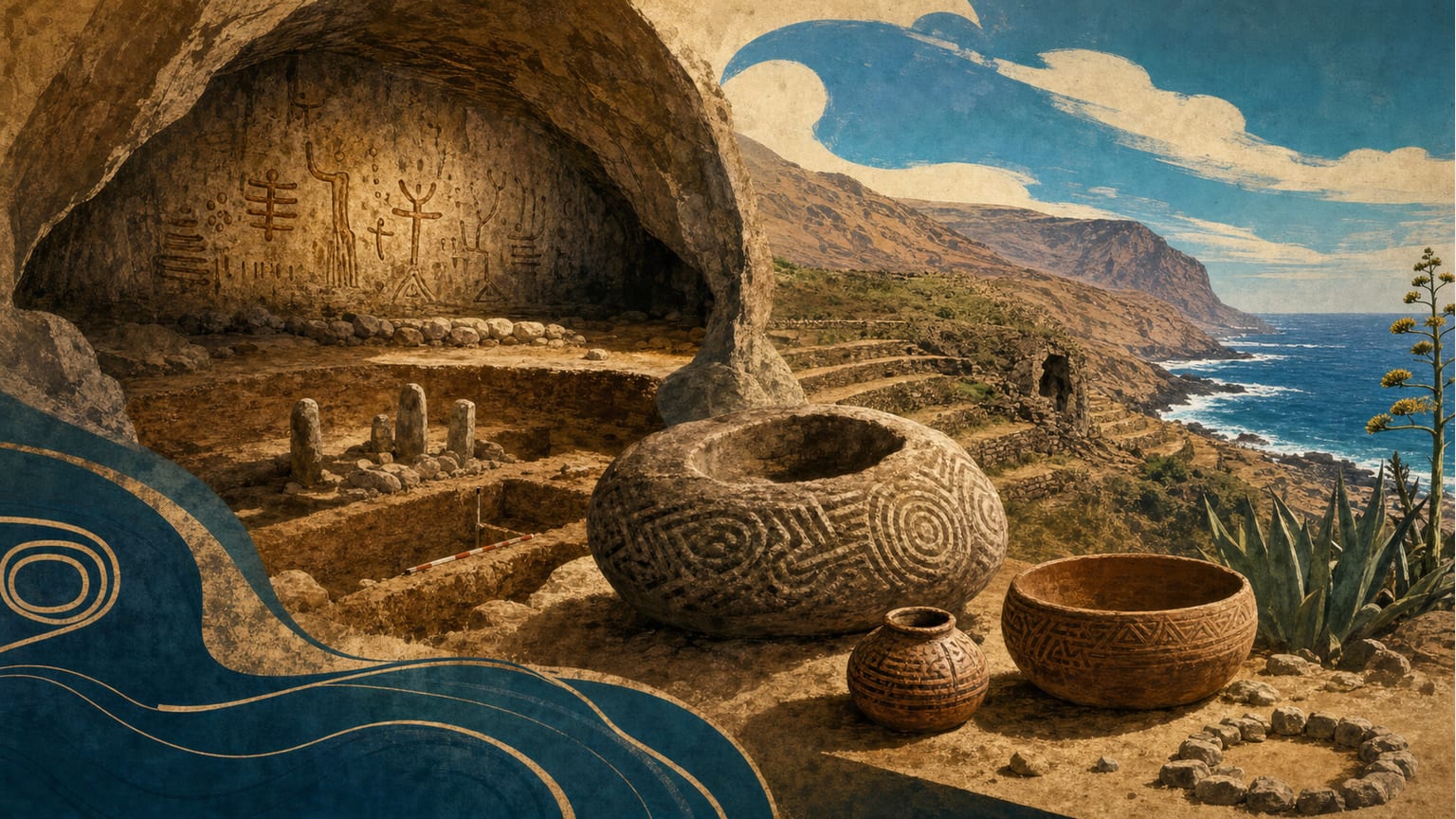
Aboriginal religion
Deities, sacred spaces and ritual practices of the ancient inhabitants of the Canary Islands before the European conquest.
Read more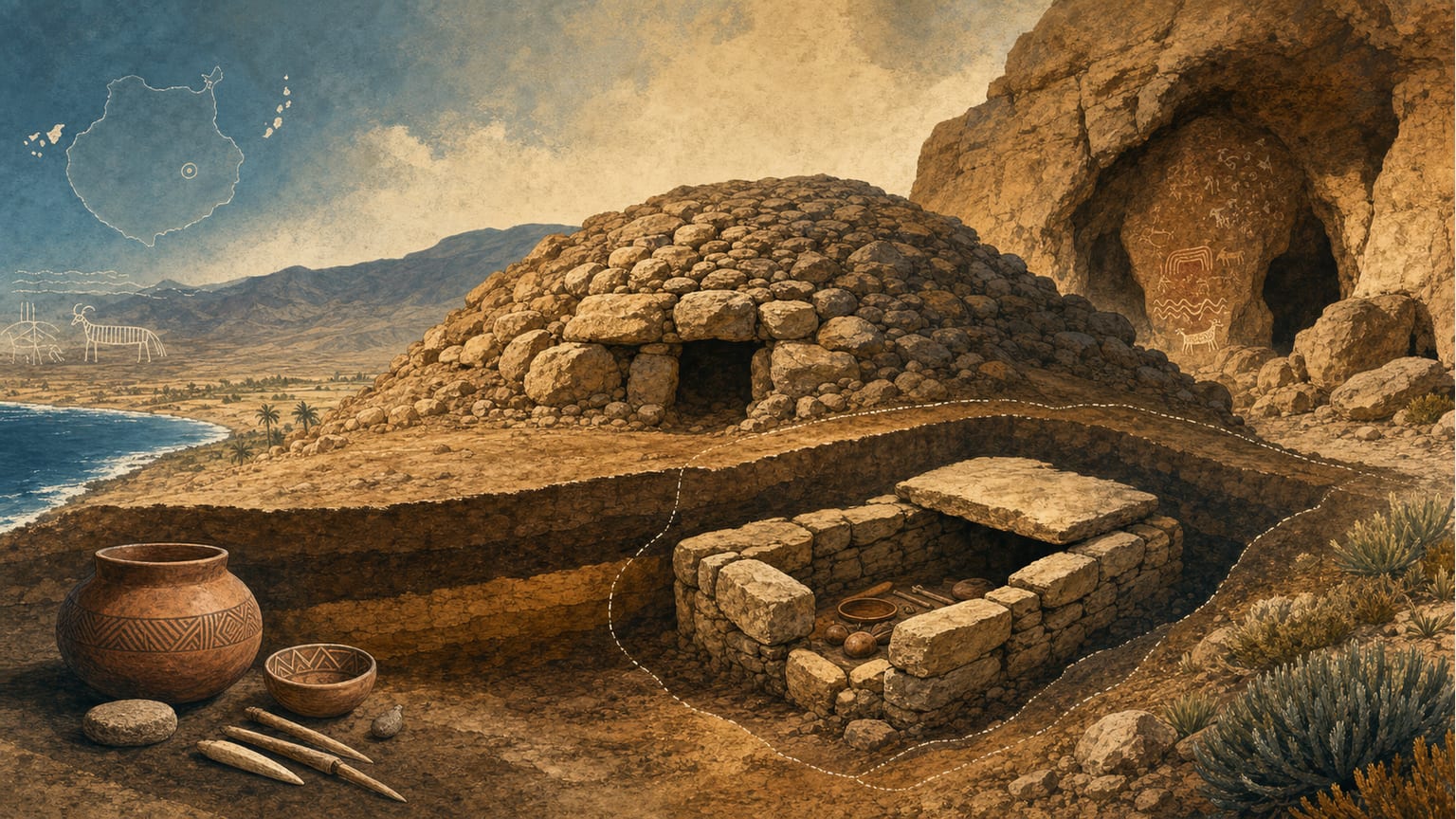
Funerary practices
Mummification, burial and death rites in the aboriginal societies of the Canary Islands, especially in Tenerife and Gran Canaria.
Read moreSources used
- Maximiano Trapero — Estudios sobre el guanche. La lengua de los primeros habitantes de las Islas Canarias (2007) Dialnet (Universidad de La Rioja)View reference
- Luis Diego Cuscoy — Los Guanches: Vida y cultura del primitivo habitante de Tenerife (1968), pp. 319 Memoria Digital de Canarias — ULPGCView reference
- Francisco Pérez Caamaño; Javier Soler Segura; Carlos J. Perdomo Pérez; Tomás Rodríguez Rodríguez — Tegueste en tiempos de guanches: la dimensión territorial de sus prácticas sociales (2014), pp. 250 p. Memoria Digital de Canarias — ULPGCView reference
- Rodríguez Santana, Carmen Gloria — Cueva Pintada. Gáldar, Gran Canaria. Museo y Parque arqueológico: visitors guide (2008), pp. 49 p. Memoria Digital de Canarias — ULPGCView reference
- Rafael González Antón, Conrado Rodríguez Martín, Fernando Estévez González — Bioantropología de las Momias Guanches (1992), pp. 51-61 Dialnet (Universidad de La Rioja)View reference
- Schlueter Caballero, Rosa — La necrópolis de Arteara. Síntesis imposible (2009), pp. 80 p. Memoria Digital de Canarias — ULPGCView reference