

Living traditions
Celebrations, food, music, vernacular architecture and trades that continue to shape community.
The archipelago’s living culture still reads territory through sound, celebration, food, sport and vernacular architecture. These are not frozen pieces, but practices that adapt and continue to shape community life.

Silbo Gomero
Silbo Gomero is one of the best-known whistled languages in the world. Recognised as Intangible Cultural Heritage of Humanity, it allows communication across the ravines of La Gomera and links language, territory and memory.
Food and trades
Gofio, mojo, wrinkled potatoes, pottery or looms are practices that maintain a dialogue between agriculture, island trade and family. Many of them now have their own space at fairs, romerías and ethnographic recovery projects.
Related reading
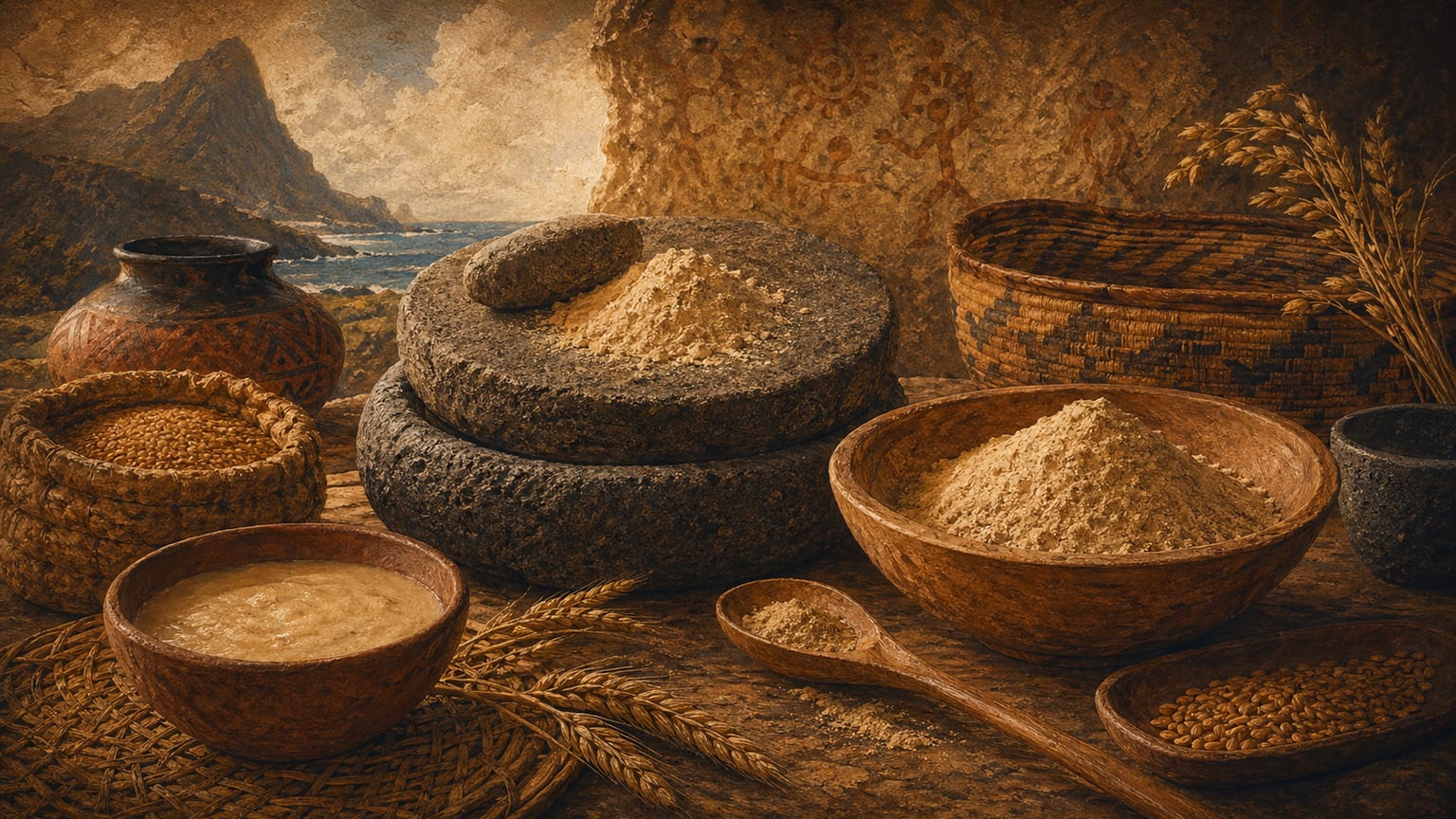
Gofio: Ancestral Food of the Canary Islands
Gofio, a toasted cereal flour of pre-Hispanic origin, is much more than a food: it is a symbol of Canarian identity that has endured for centuries.
Read more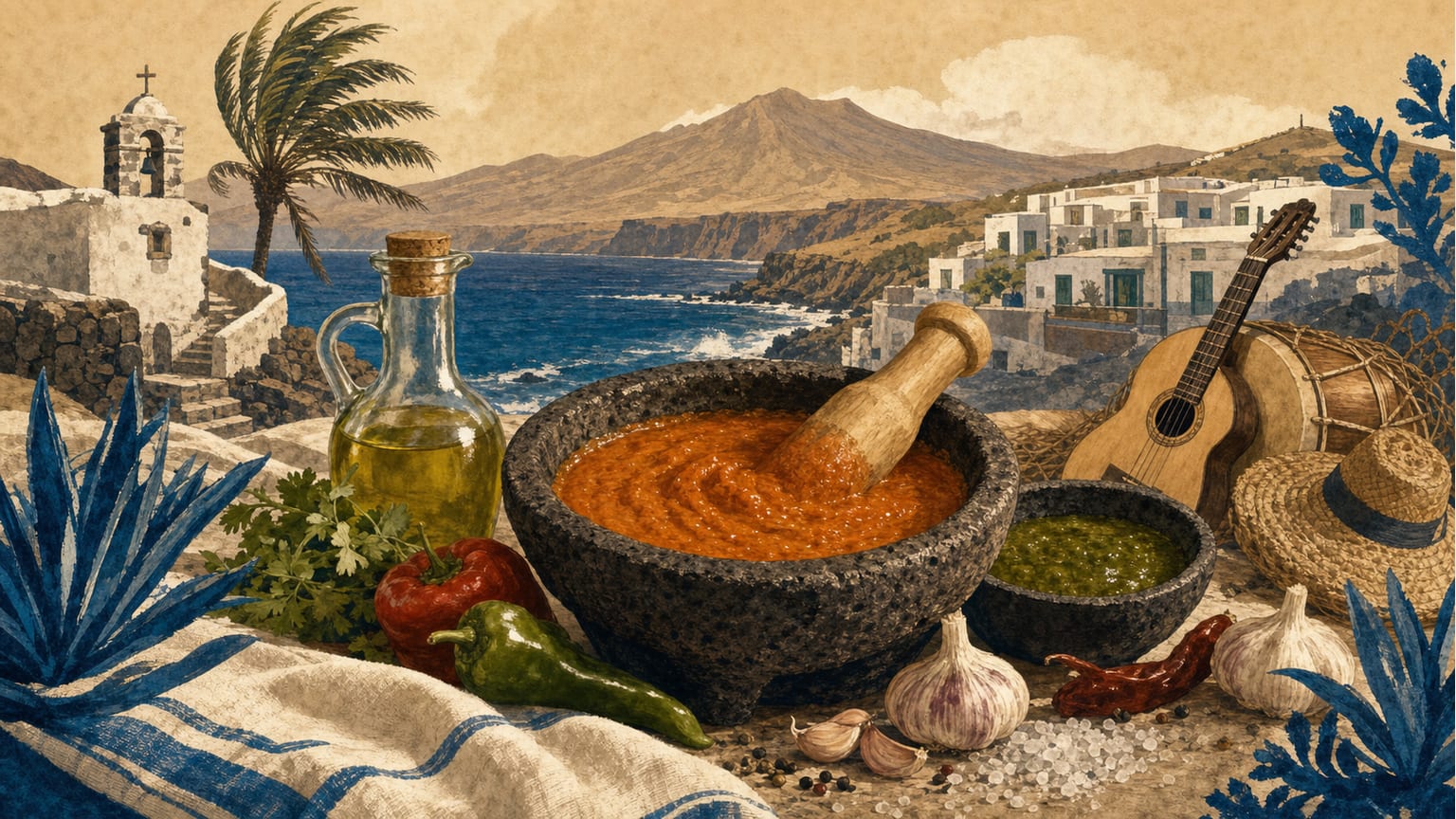
Canarian Mojo: Traditional Recipes and Variations
Canarian mojo is one of the most iconic sauces of the Canary Islands' cuisine. This article examines its traditional recipes and variations as presented in the 1974 cookbook.
Read more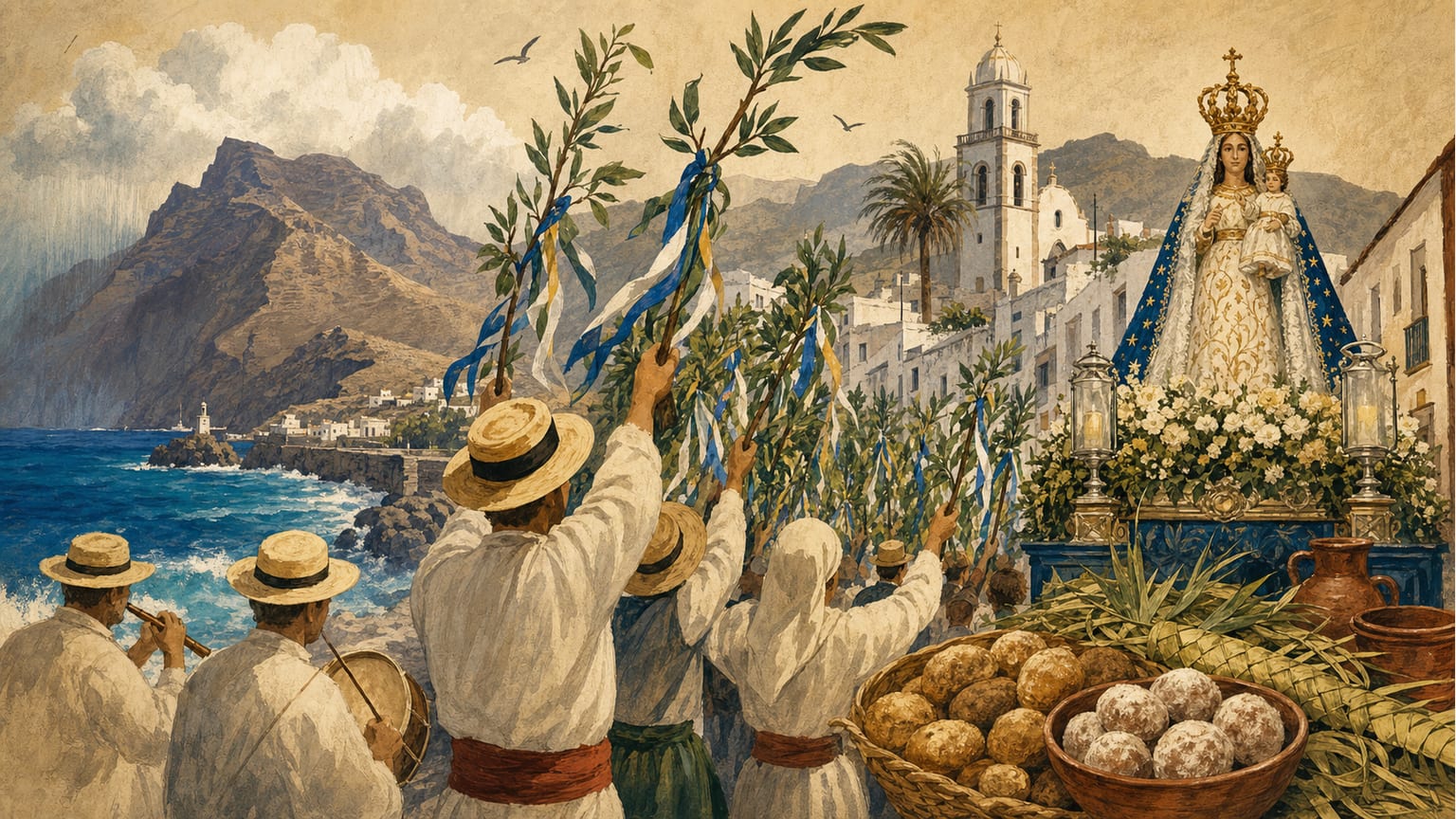
La Rama of Agaete: the town that dances to ask for rain
Every 4 August, thousands of people dance through Agaete carrying branches in a festival that brings together Indigenous imagery and devotion to Our Lady of the Snows.
Read moreExplore in depth
El Silbo Gomero
Whistled language of La Gomera, declared Intangible Cultural Heritage of Humanity by UNESCO. It allows communication across ravines and great distances.
Read moreGofio
Toasted cereal flour, a direct legacy of the pre-Hispanic population of the Canary Islands and the basis of the archipelago’s traditional diet.
Read moreCanarian mojo
Characteristic sauce of Canarian cuisine, with red, green and coriander variants, inseparable from papas arrugadas.
Read more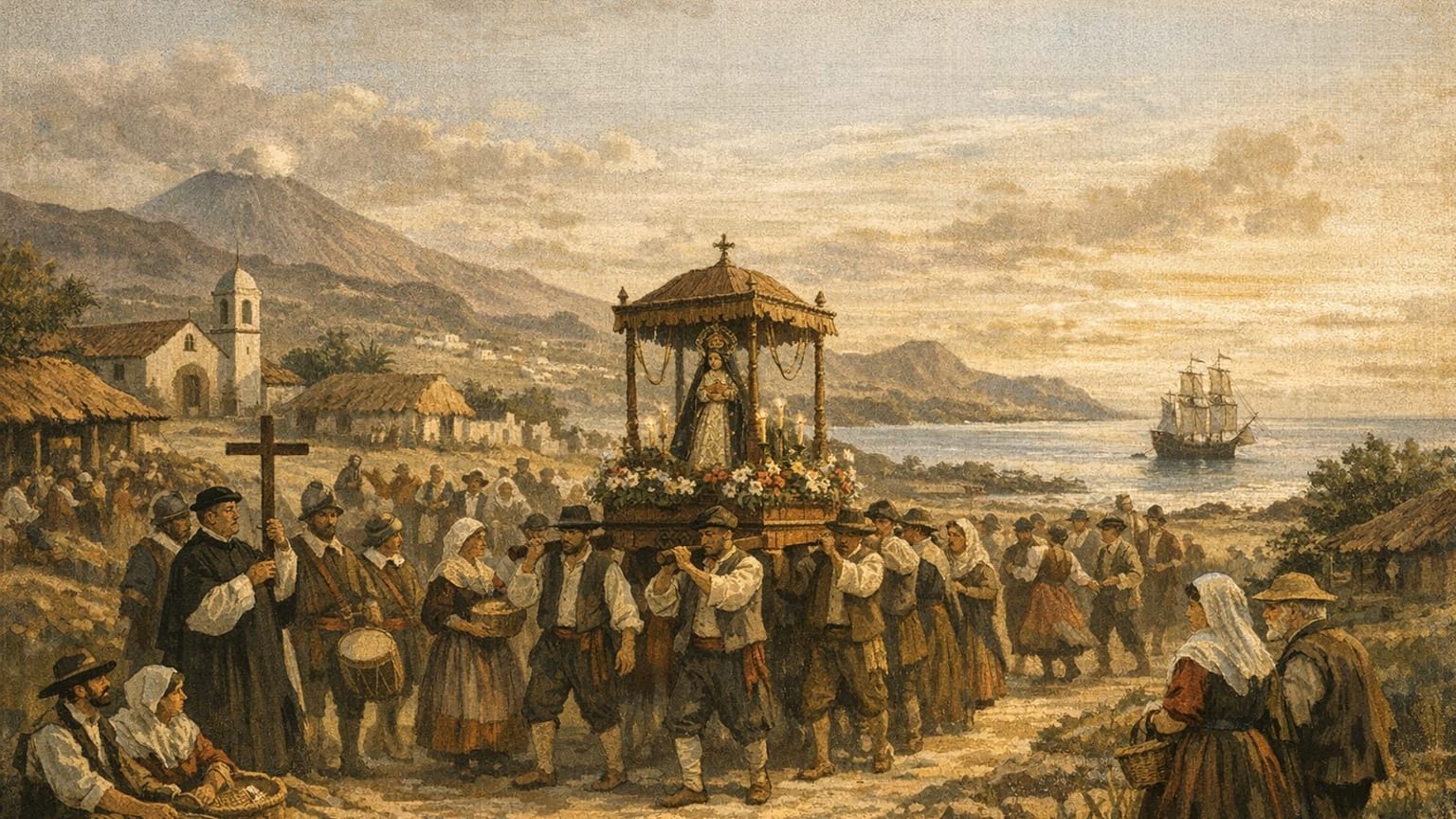
Las Romerías
Festive pilgrimages in which locals, traditional costumes, ox-drawn carts and farm produce honour the patron saint of each municipality.
Read more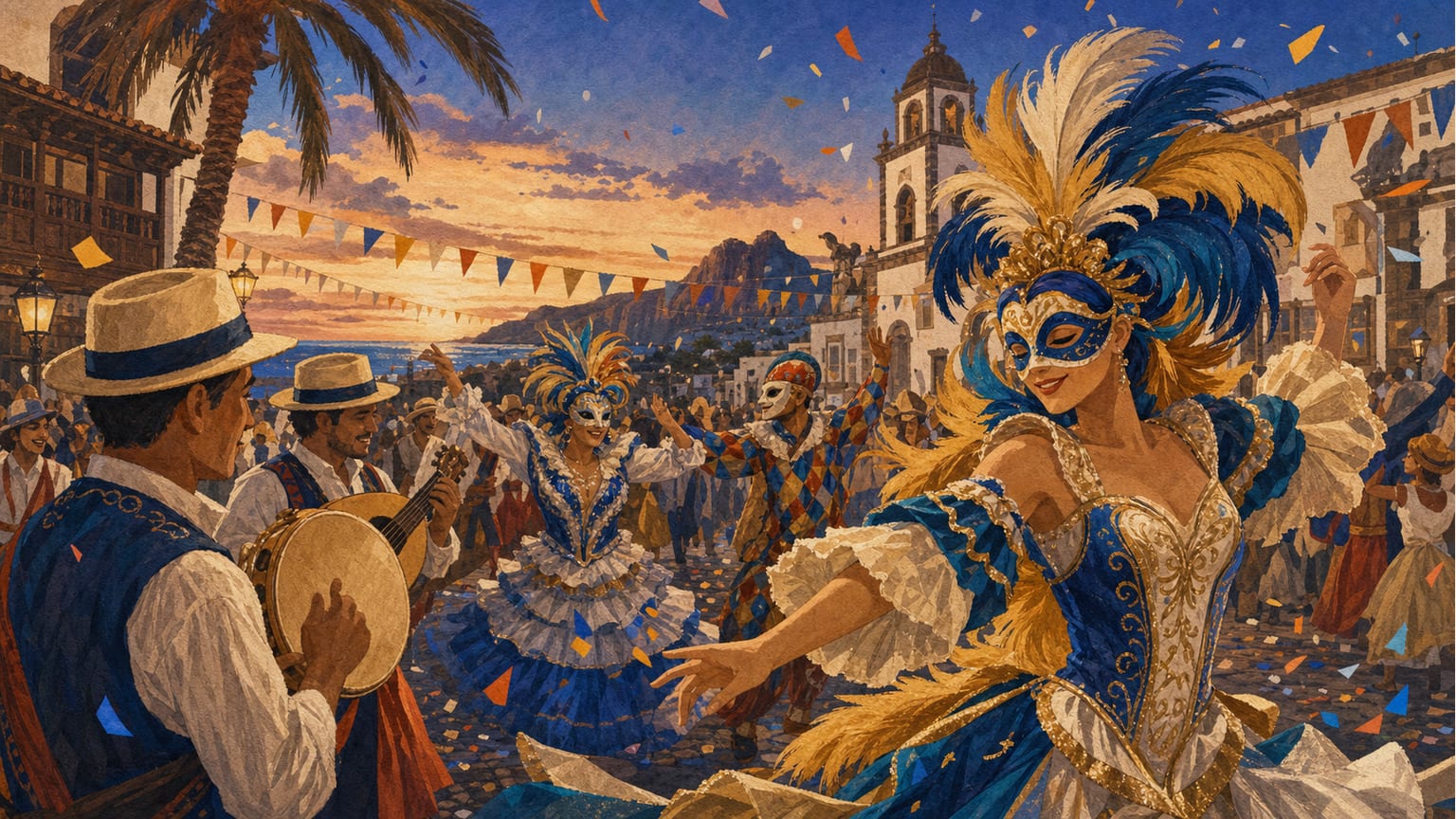
Carnivals
Canarian carnival celebrations that combine European, American and African traditions in a spectacle of costumes, murgas and comparsas.
Read more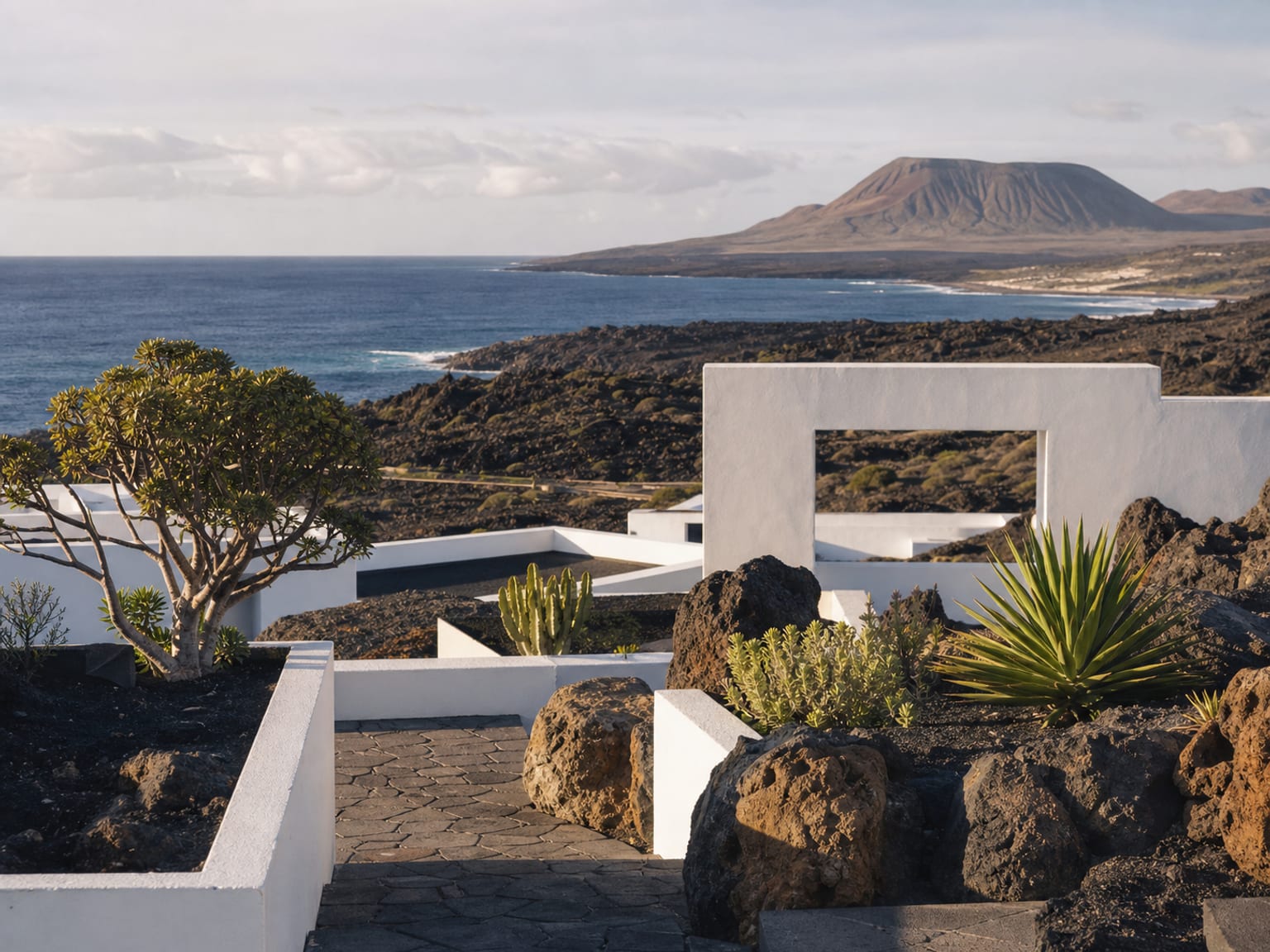
Vernacular architecture
Traditional houses with tea-wood balconies, central courtyards and flat roofs that reflect adaptation to the climate and the blend of Mediterranean and American influences.
Read moreSources used
- Arianna Ancarani — El silbo gomero. Medio de comunicación (2008)View reference
- José M. Esteban — Vocabulario canario guanche (2003)View reference
- Power de López, Elizabeth — A la carta. Recetario de cocina canaria, nacional e internacional (1974), pp. 101 p. Memoria Digital de Canarias — ULPGCView reference
- Revista Española de Nutrición Comunitaria — Platos olvidados de Canarias. Parte 1 (2022) Revista Española de Nutrición ComunitariaView reference
- Revista Española de Nutrición Comunitaria — Platos olvidados de Canarias. Parte 2 (2022) Revista Española de Nutrición ComunitariaView reference
- Grecy Pérez Amores; Raquel de la Cruz Modino; José Jaime Pascual Fernández; Agustín Santana Talavera; José Antonio Batista Medina; Héctor Moreno Mendoza (eds.) — Entre olas. Recetas tradicionales de La Gomera, El Hierro y Tenerife (2023), pp. 202 p. PASOS. Revista de Turismo y Patrimonio CulturalView reference
- View reference
- Turespaña (Ministerio de Industria y Turismo) — Islas Canarias (2018)View reference
- View reference
- Artiles, Pablo — Estampas de los pueblos de Gran Canaria. Isla azul (1937), pp. 220 p. Memoria Digital de Canarias — ULPGCView reference
- López García, Juan Sebastián; Calero Ruiz, Clementina — Arte, sociedad y arquitectura en el siglo XVII: la cultura del barroco en Canarias (2008), pp. 220 p. Memoria Digital de Canarias — ULPGCView reference
- Romero Roque, Francisco — Moya, alfarería popular de tradición aborigen (2010), pp. 53 p. Memoria Digital de Canarias — ULPGCView reference