

Indigenous sports
Lucha canaria, juego del palo, salto del pastor and other bodily practices that combine sport, identity and historical memory.
Canarian indigenous sports are not merely folkloric displays: they are bodily practices with history, rules and a social function that has shifted from rural society to the contemporary sporting scene. Lucha canaria, juego del palo and salto del pastor are three of their most studied expressions.[1][2][3]
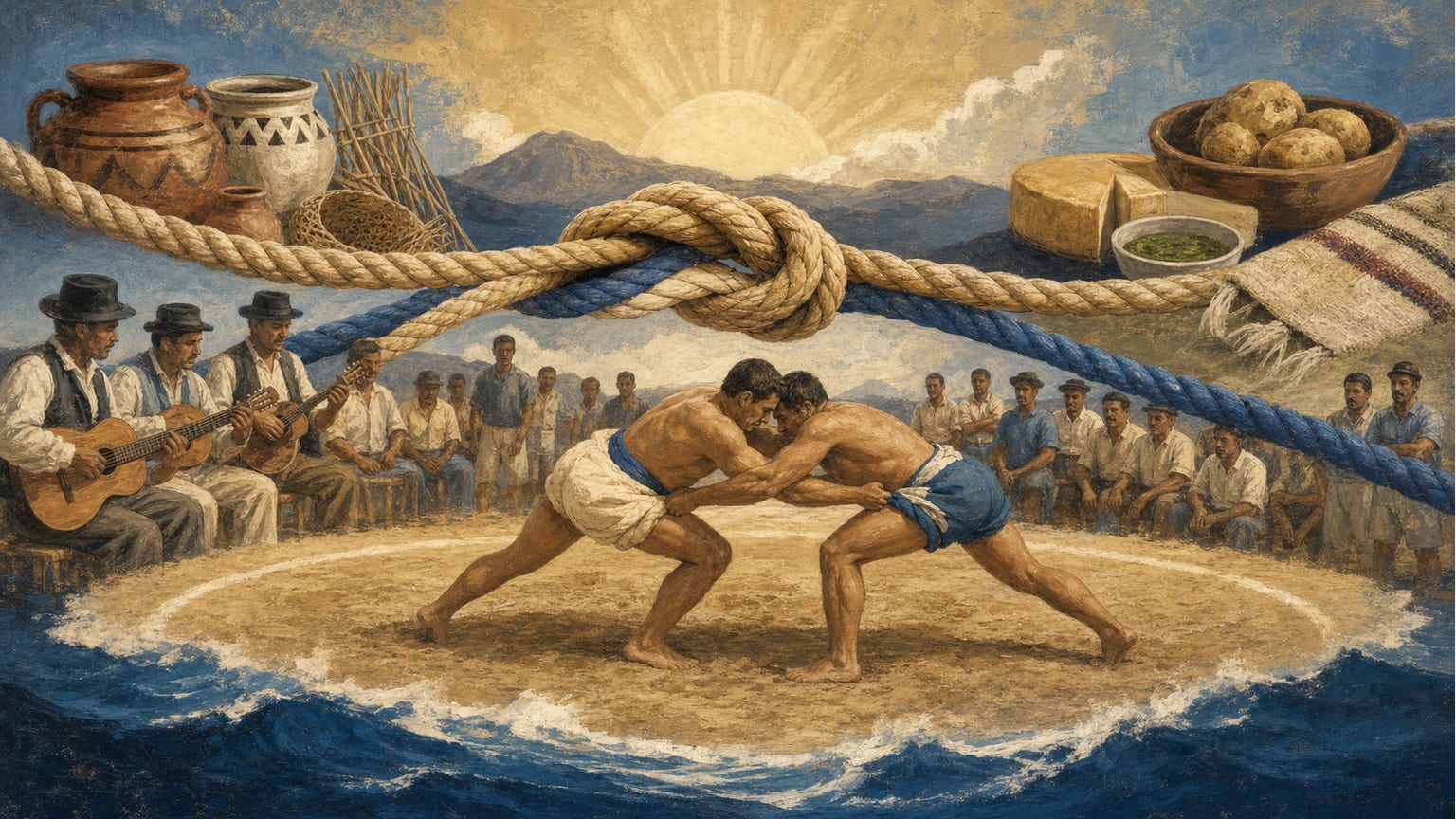
Lucha canaria
Lucha canaria is a grappling sport with deep popular roots and strong identity value. Its history runs through rural society in Gran Canaria and Tenerife, attempts at inter-island unification and the shaping of rules that balance tradition and modern competition.[1]
The studies of Antonio Ayala (1977) and the chronicles of Marrero Hernández (1948) offer a historical view of the championships, figures and federative tensions that marked the development of this practice during the twentieth century.[1][2]
Juego del palo
Juego del palo is a traditional stick-fencing practice linked to the pastoral and rural world. Its study combines the analysis of techniques, the recovery of technical vocabulary and the relationship with other stick games in the Atlantic and Mediterranean sphere.[1][2]
Salto del pastor and other practices
Salto del pastor is a technique for moving through steep terrain using a lance or pole. Together with lucha del garrote or bola canaria, it forms part of a set of bodily practices that reflect ways of life adapted to island orography.[1]
Related reading
The Inter-Island League: Attempts at Unification in Canarian Wrestling (1946-1959)
The Inter-Island League was a key effort to unify Canarian wrestling between islands, facing organizational challenges and insular rivalries according to Ayala, Antonio (1977).
Read more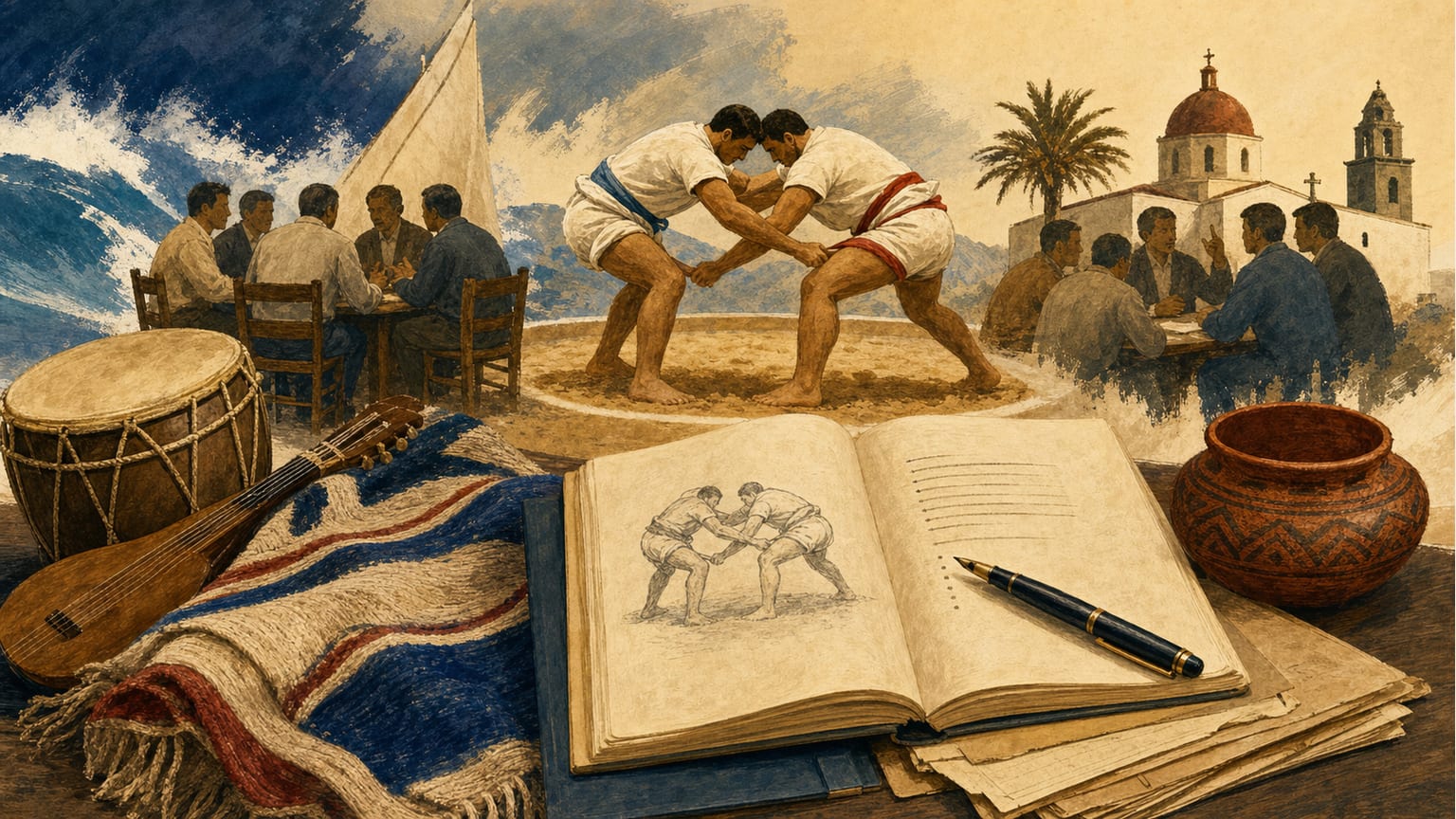
The First Technical Regulations of Canarian Wrestling: Origins and Disputes (1957–1960)
The first Technical Regulations for Canarian wrestling emerged after years of debate and disagreement between island federations, finally being approved in 1960 after complex negotiations over the unification of rules.
Read more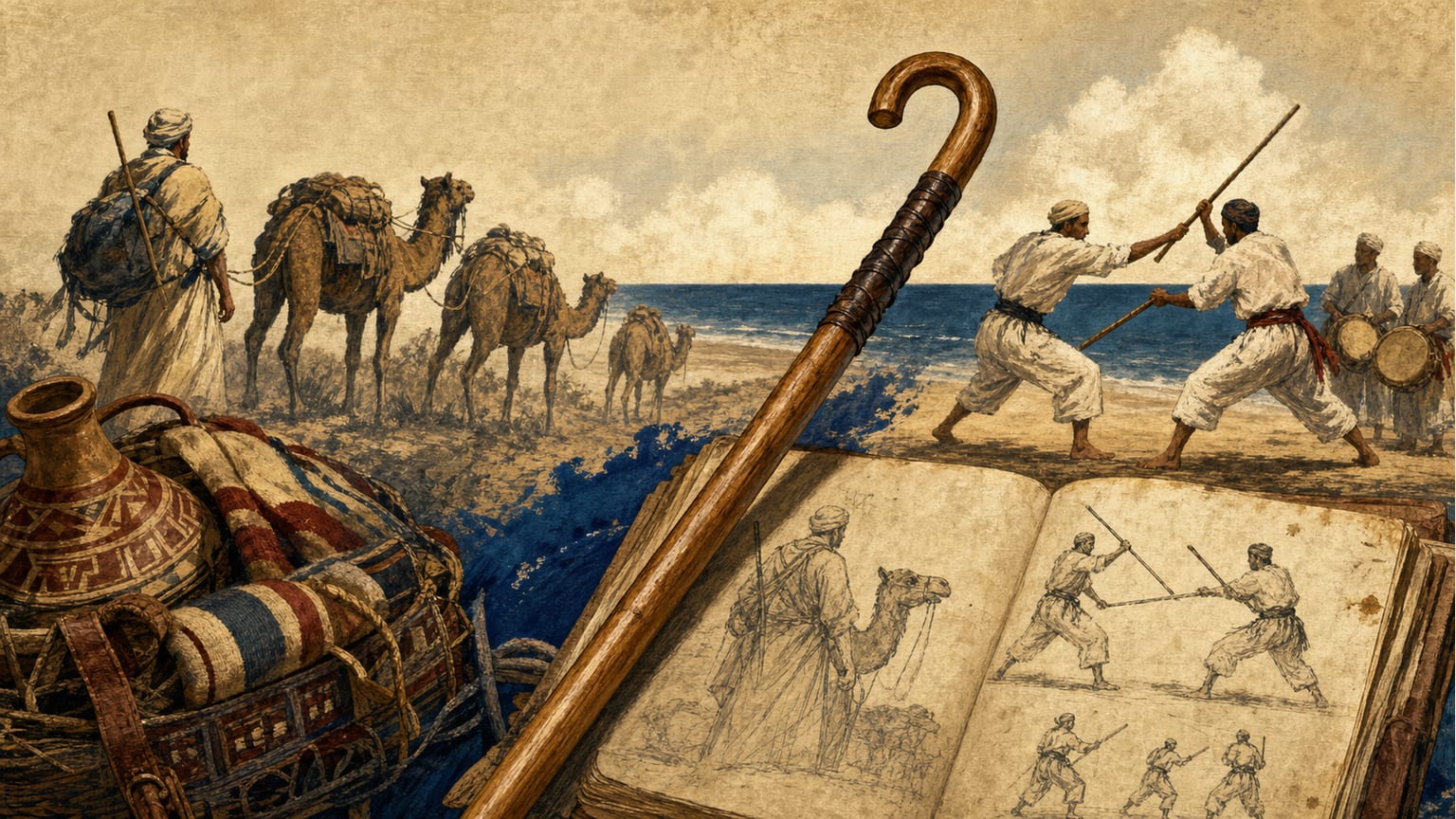
The Camel Driver's Stick and Its Alleged Link to Juego del Palo: A Critical Analysis
A detailed examination of the theory connecting the camel driver's stick to the origin of Juego del Palo, with Morales Magyín arguing that this link lacks documentary support.
Read moreExplore in depth
Lucha canaria
Grappling sport with deep popular roots, strong identity value and a history running through rural society in Gran Canaria and Tenerife.
Read moreJuego del palo
Traditional stick-fencing practice linked to the pastoral and rural world of the islands.
Read more
Salto del pastor
Technique for moving through steep terrain using a lance or pole, adapted to island orography.
Read more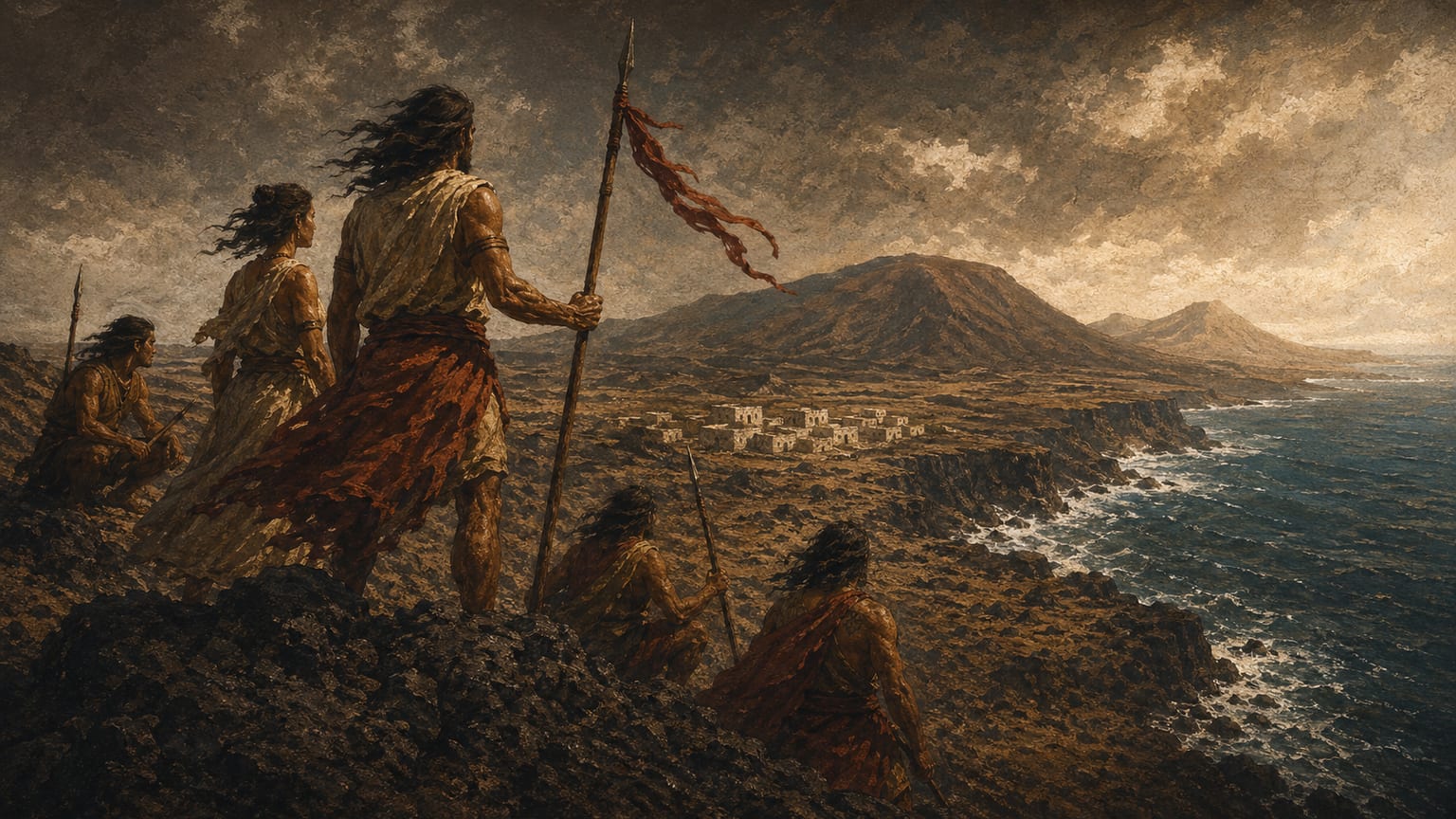
Lucha del garrote
Stick or club fighting practice, documented especially in Fuerteventura and linked to defence and play.
Read moreSources used
- View reference
- Morales Magyín, José Víctor — Historia del juego del palo. Aportación al estudio de su origen: el palo camellero (1996), pp. 39-59 Memoria Digital de Canarias — ULPGCView reference
- Centro Universitario del Palo Canario (C. U. P. C.) — El juego del palo canario: el respeto a la tradición (1995), pp. 246-293 Memoria Digital de Canarias — ULPGCView reference
- Marrero Hernández, Luis — De la lucha canaria. Comentarios, impresiones y recuerdos (1948), pp. 101 p. Memoria Digital de Canarias — ULPGCView reference
- Padilla Quintana, Pedro M. — Léxico de la lucha canaria (Gran Canaria) (1991), pp. 161 p. Memoria Digital de Canarias — ULPGCView reference
- Falcón Falcón, José Roque — Decano: los Guanches de Arucas y la lucha canaria (2004), pp. 203 p. Memoria Digital de Canarias — ULPGCView reference
- Falcón Falcón, José Roque — Mandarria. Prototipo del luchador canario (2009), pp. 72 p. Memoria Digital de Canarias — ULPGCView reference
- González Marrero, Pedro — Iniciación a la lucha canaria (1990), pp. 188 p. Memoria Digital de Canarias — ULPGCView reference
- Emmerichs, Ludger — La lucha canaria. Análisis del mercado y potencial del marketing (2009), pp. 85 p. Memoria Digital de Canarias — ULPGCView reference