

The Camel Driver’s Stick and Its Alleged Link to Juego del Palo: A Critical Analysis
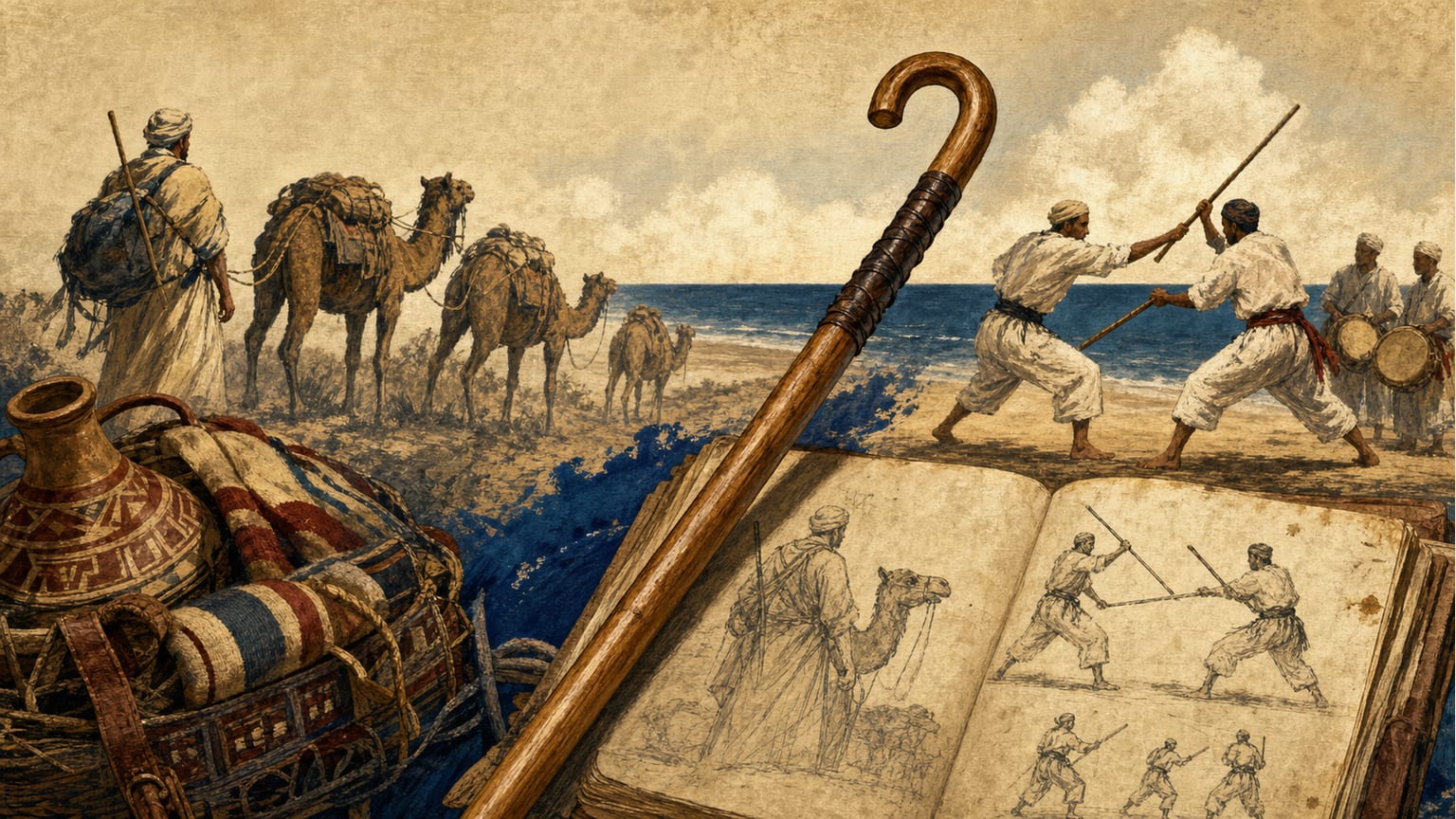
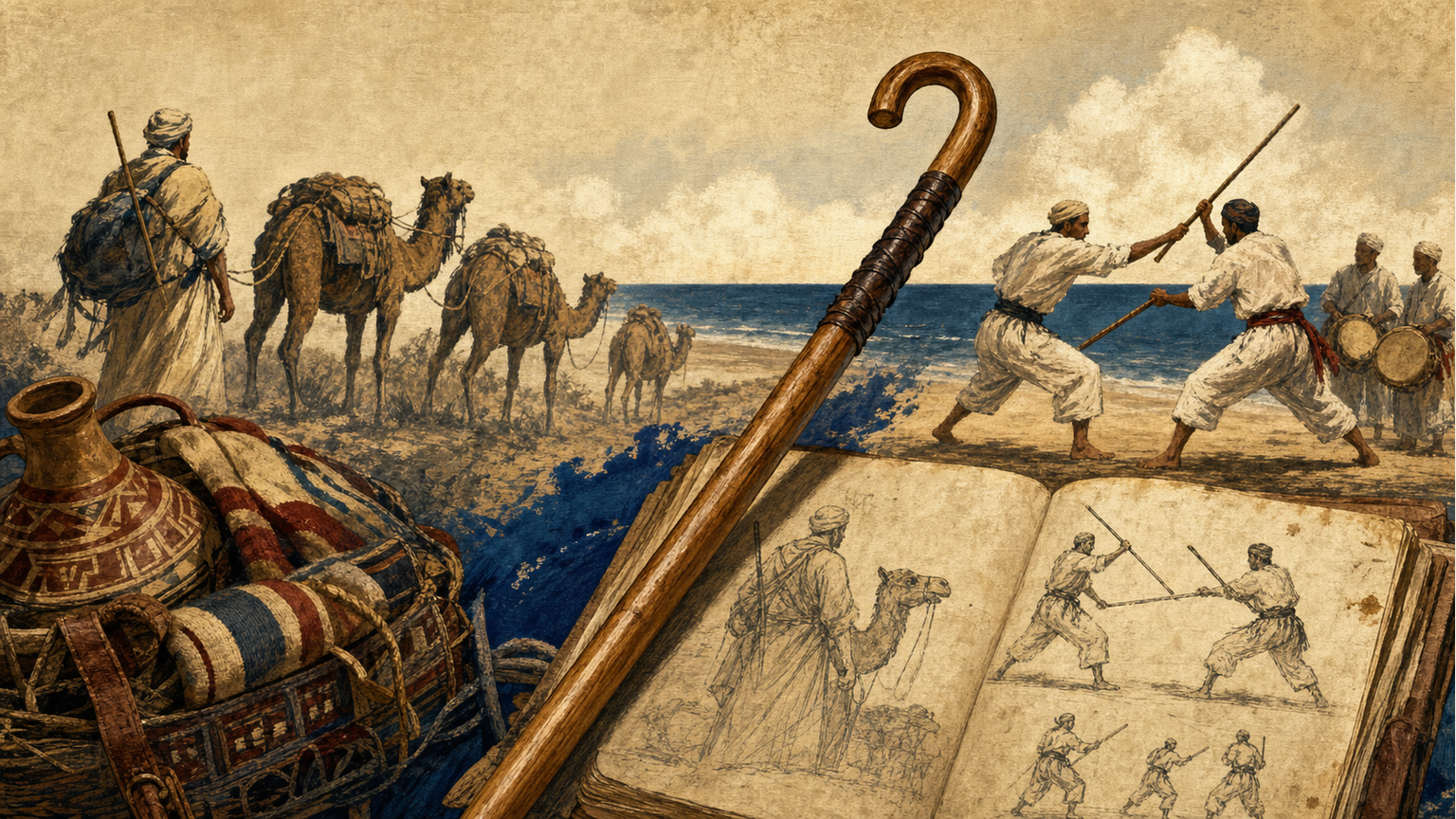
One of the most debated theories in the historiography of Canarian traditions is the claim that Juego del Palo originated from the daily work of camel drivers, who supposedly developed stick techniques while handling camels, which then evolved into a game between people. In his 1996 study, José Víctor Morales Magyín analyzes this hypothesis in detail and concludes that it lacks sufficient documentary evidence to be considered valid[1].
Analysis of the Camel Driver Theory
According to Morales Magyín, the camel driver origin theory is mainly based on the work of Jorge Domínguez Naranjo, who argues that the game emerged from the skills camel drivers acquired while controlling camels with a stick[1]. However, Morales points out several methodological weaknesses in this proposal, such as the scarcity of historical sources, selective use of testimonies, and lack of comparison with other documentary evidence[1].
For example, Morales criticizes Domínguez Naranjo for taking references to spears, pikes, and clubs in old chronicles literally, without analyzing whether they refer to the same objects or if their use was comparable to the camel driver’s stick or Juego del Palo[1]. Morales also highlights inconsistent interpretation of iconographic sources, accepting any image of an aboriginal person with a stick as proof, but demanding greater rigor when it comes to other types of sticks[1].
Evidence on the Use of the Camel Driver’s Stick
Morales Magyín’s study compiles ethnographic testimonies and historical sources about the work of camel drivers in the Canary Islands. These sources agree that camel drivers used a short stick or ‘macana’, about 40 to 60 centimeters long, to direct and control the animal, but there is no evidence that this tool gave rise to a game or fencing between people[1]. Furthermore, the docility of the camel, as described by travelers and ethnographers such as Viera y Clavijo and René Verneau, made the habitual use of violence or complex stick techniques unnecessary[1].
Morales also collects contemporary testimonies from camel drivers who state that hitting the camel is not advisable and that the macana is often tied to the wrist, making it impossible to use in two-handed fencing, as is characteristic of Juego del Palo[1].
Absence of Documented Link Between Camel Drivers and Juego del Palo
According to Morales Magyín, there are no written or oral references directly linking the practice of Juego del Palo to the world of camel drivers[1]. Ethnographic sources and testimonies from Juego del Palo masters, such as José Morales, also do not mention the camel driver’s stick as an origin nor refer to Fuerteventura, the island traditionally associated with camels[1].
Conclusion of the Analysis
Morales Magyín concludes that, due to the lack of historical data, the animal’s docility, differences in the tools used, and the absence of camel driver-players, the theory of the camel driver origin of Juego del Palo is unprovable and therefore invalid given the current state of research[1].