

The ‘Book of Nature’ in Canary Islands Golden Age Poetry
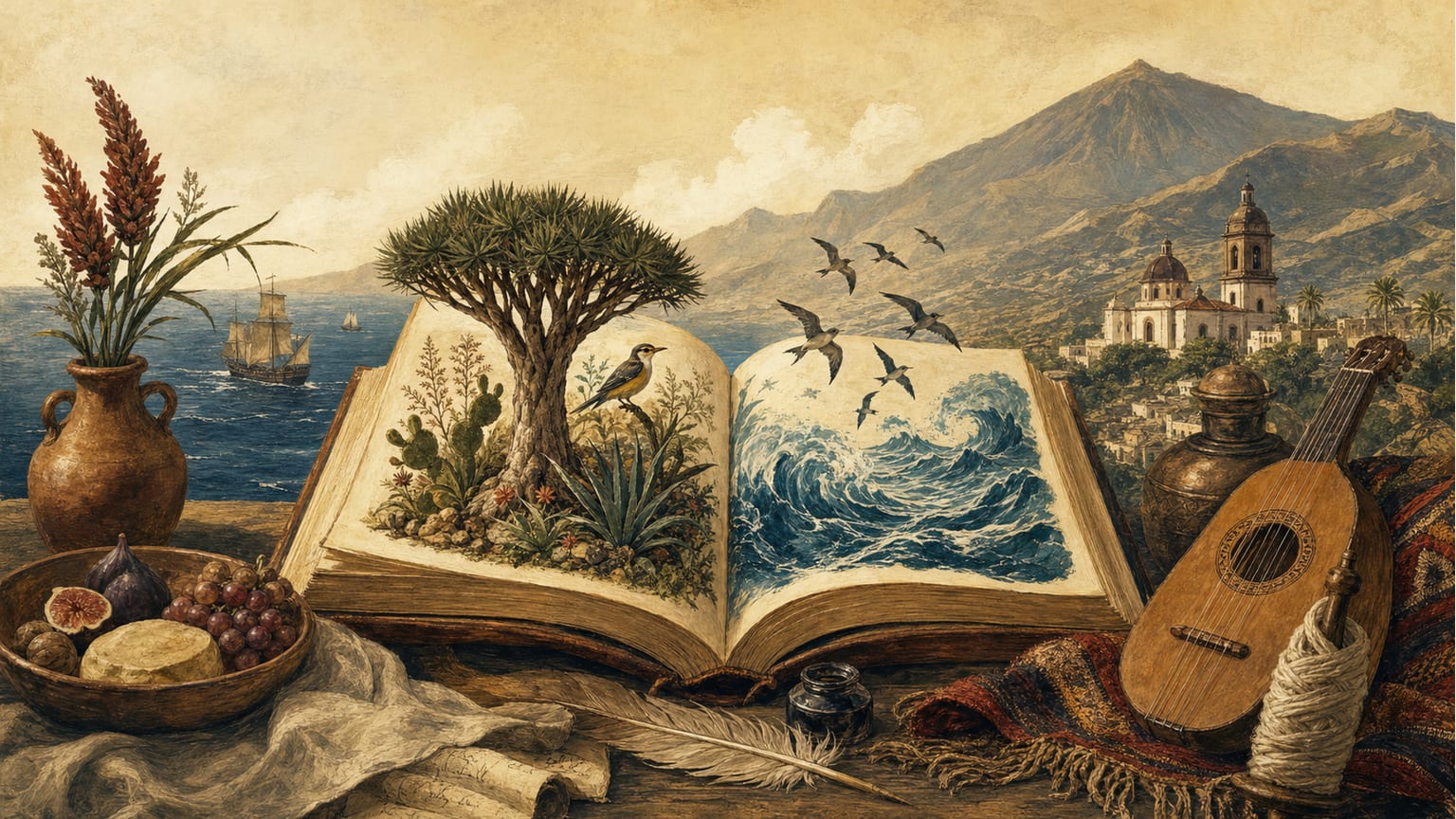
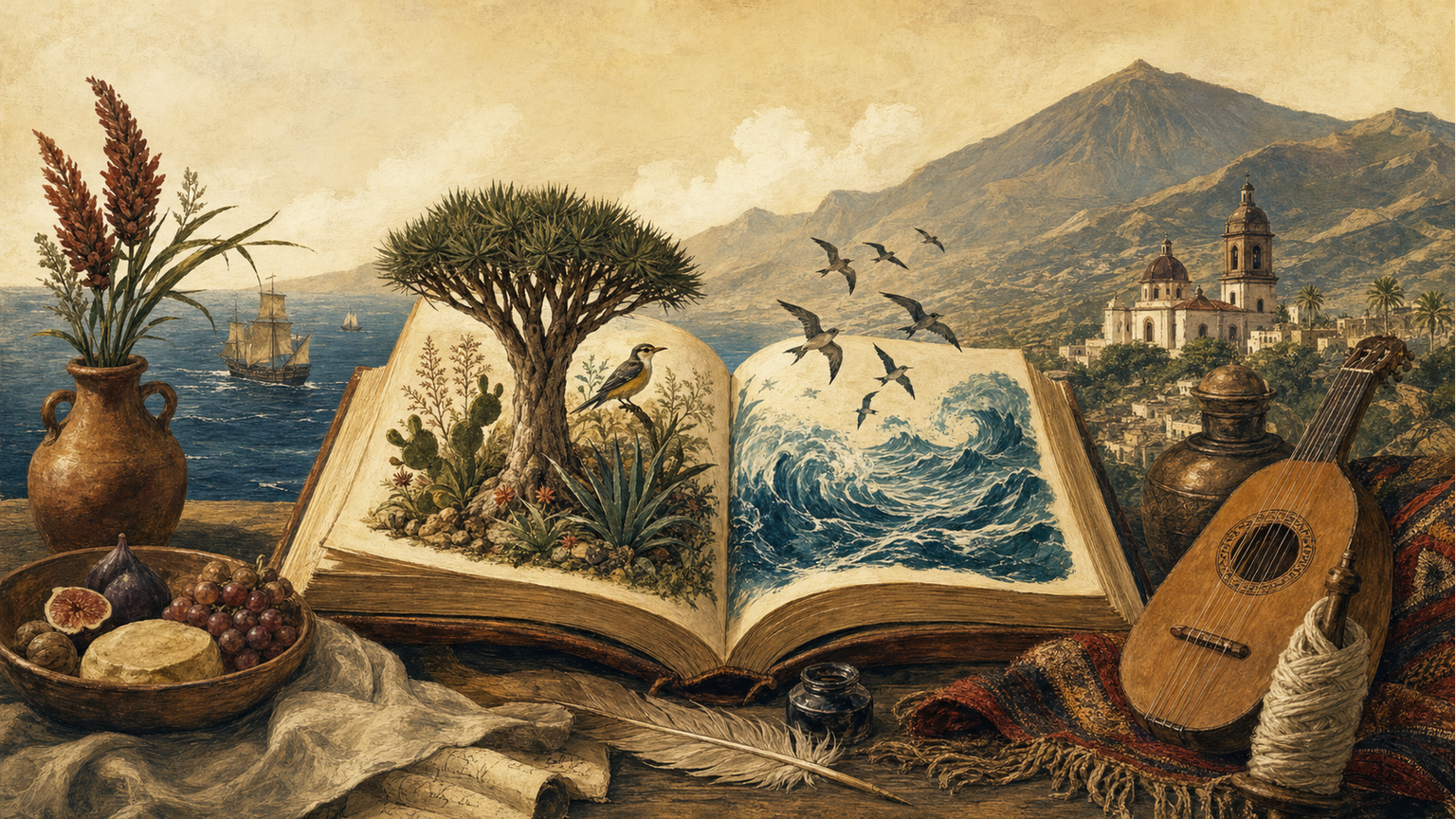
According to Brito Díaz, Carlos, the metaphor of the ‘Book of Nature’ plays a central role in Canarian poetry of the 16th and 17th centuries[1]. This image, rooted in European rhetorical tradition, presents nature as an open text for human interpretation, where every creature and phenomenon is a letter or symbol revealing divine wisdom.
Brito Díaz explains that the belief in two books written by Divinity—the Scriptures and the universe—was widely accepted in medieval and Renaissance thought and is reflected in Canarian literature of the period[1]. The ‘Book of Nature’ is seen as a living text, open to contemplation and study, in contrast to the closed book of the Scriptures. Thus, nature becomes an example of divine faculties, and reading it is a path to knowledge and morality[1].
In Canarian poetry of this era, the image of the world as a book is evident in the tendency to moralize nature, presenting plants, animals, and elements as symbols of virtues or lessons for humanity[1]. According to Brito Díaz, Carlos, this vision is influenced by Counter-Reformation emblematics and didactic tradition, which see nature as a ‘book of living emblems’ with great educational power[1].
The author notes that Canarian Golden Age poetry is marked by a coexistence of old and new, with a dominant religious theme. However, the ‘Book of Nature’ metaphor allows island poets to explore an epistemological and symbolic dimension, where the sensible world is interpreted as an encrypted text, full of hidden meanings to be deciphered by the attentive reader[1].
Brito Díaz cites Canarian authors such as Cairasco de Figueroa, Antonio de Viana, and Fray Andrés de Abreu, who use variations of the world-as-book metaphor in their works, either to exalt divine creation or to invite moral reflection through contemplation of nature[1]. In this context, nature is a text to be ‘read’ and ‘studied’, and its decipherment is both a poetic and philosophical task.
In conclusion, Brito Díaz, Carlos argues that the ‘Book of Nature’ metaphor in Canarian Golden Age poetry not only reflects European influences but also contributes to building a distinct insular literary identity, in which the nature of the Islands becomes a central symbol and argument in poetic discourse[1].