

The Guanche Language: Clues to a Lost Tongue
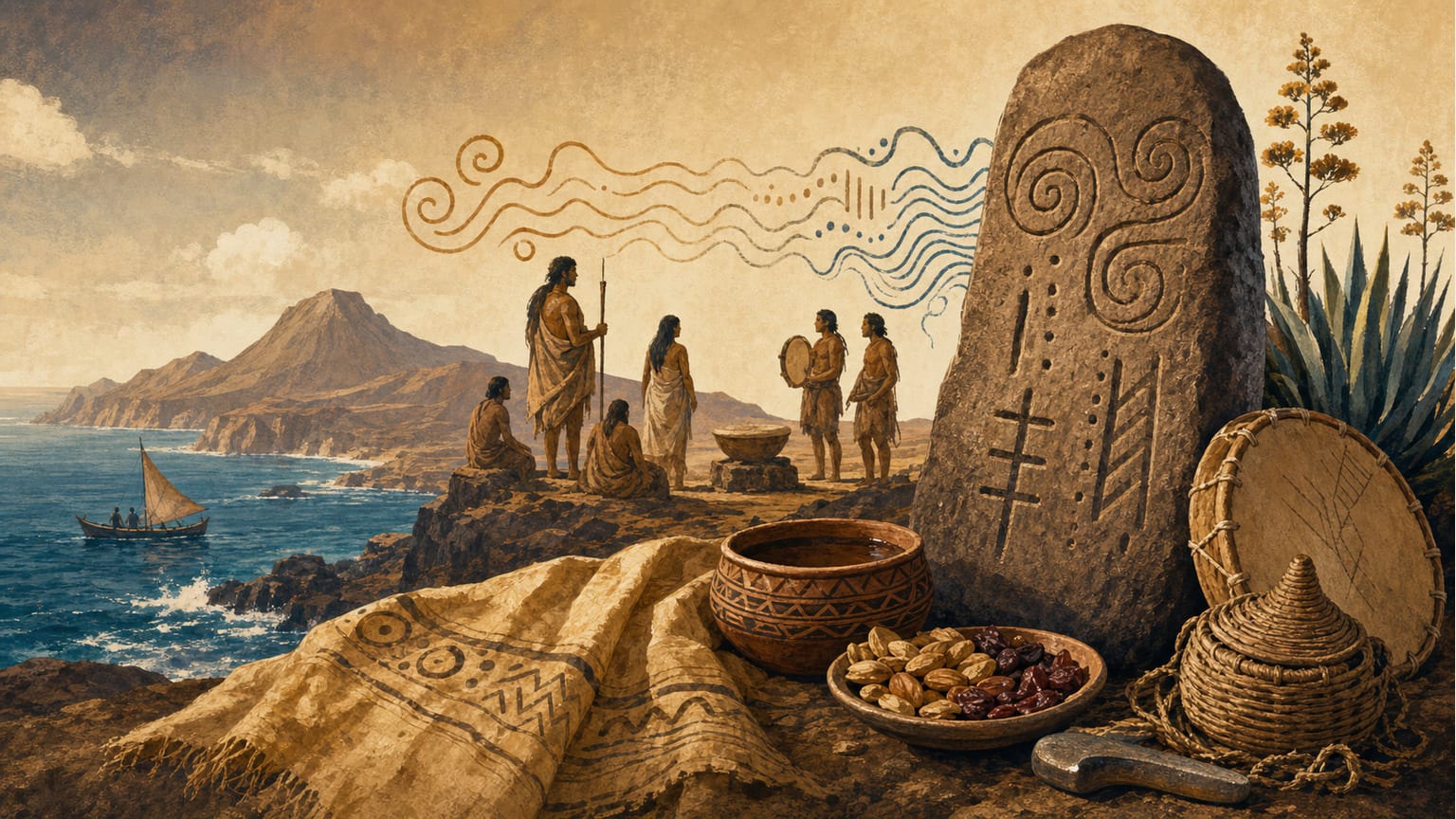
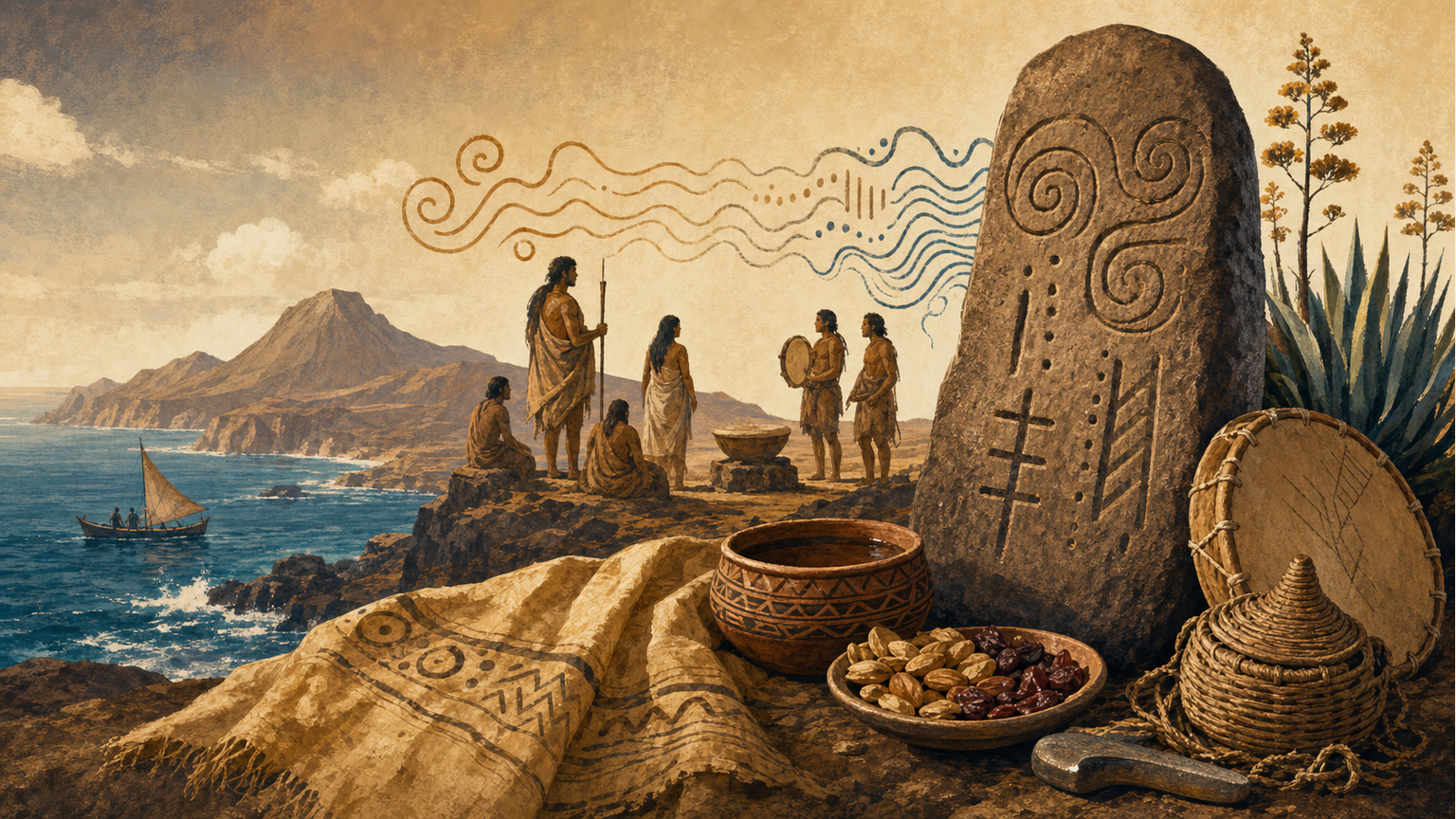
Studying the Guanche language offers a unique window into the origins and identity of the Canary Islands’ first inhabitants. Although no full Guanche language survives today, the fragments preserved by chroniclers and researchers reveal that it was an agglutinative language with clear North African roots[1].
What is an agglutinative language?
Agglutinative languages build complex ideas by joining together simple words or syllables, each representing a basic concept. In Guanche, names and terms were formed by combining these elements, resulting in expressive vocabulary despite the limited number of words that have reached us[1].
North African origins
Analysis of Guanche vocabulary shows a strong connection to North African languages, especially Berber. This is reflected in the frequent use of the sounds “t” and “g” in Guanche words. According to García de la Torre, “t” is often found in feminine names and words related to origin, motherhood, or peace, while “g” (often as “gua”) symbolizes strength, courage, and masculinity. Examples like “Atomatoma” (warrior) and “Guayarmina” (female name) illustrate this pattern[1].
Transatlantic coincidences
A striking phenomenon is the presence of the syllable “gua” in place and personal names in both the Canary Islands and Latin America (such as Guatemala, Paraguay, etc.). While this has intrigued researchers, García de la Torre notes that many such words existed in the Americas before European contact, suggesting either coincidence or complex cultural exchanges yet to be fully understood[1].
Compound words and creativity
Guanche was a language of compound words, a feature it shares with some ancient Central European and Eastern languages. This tendency allowed for the creation of new terms and adaptation to the daily and spiritual life of the islanders.
A living legacy
Although the Guanche language disappeared after the conquest, its legacy lives on in place names and some words still used in Canarian Spanish. The Guanche language remains a key to understanding the past and a living part of Canary Islands identity.