

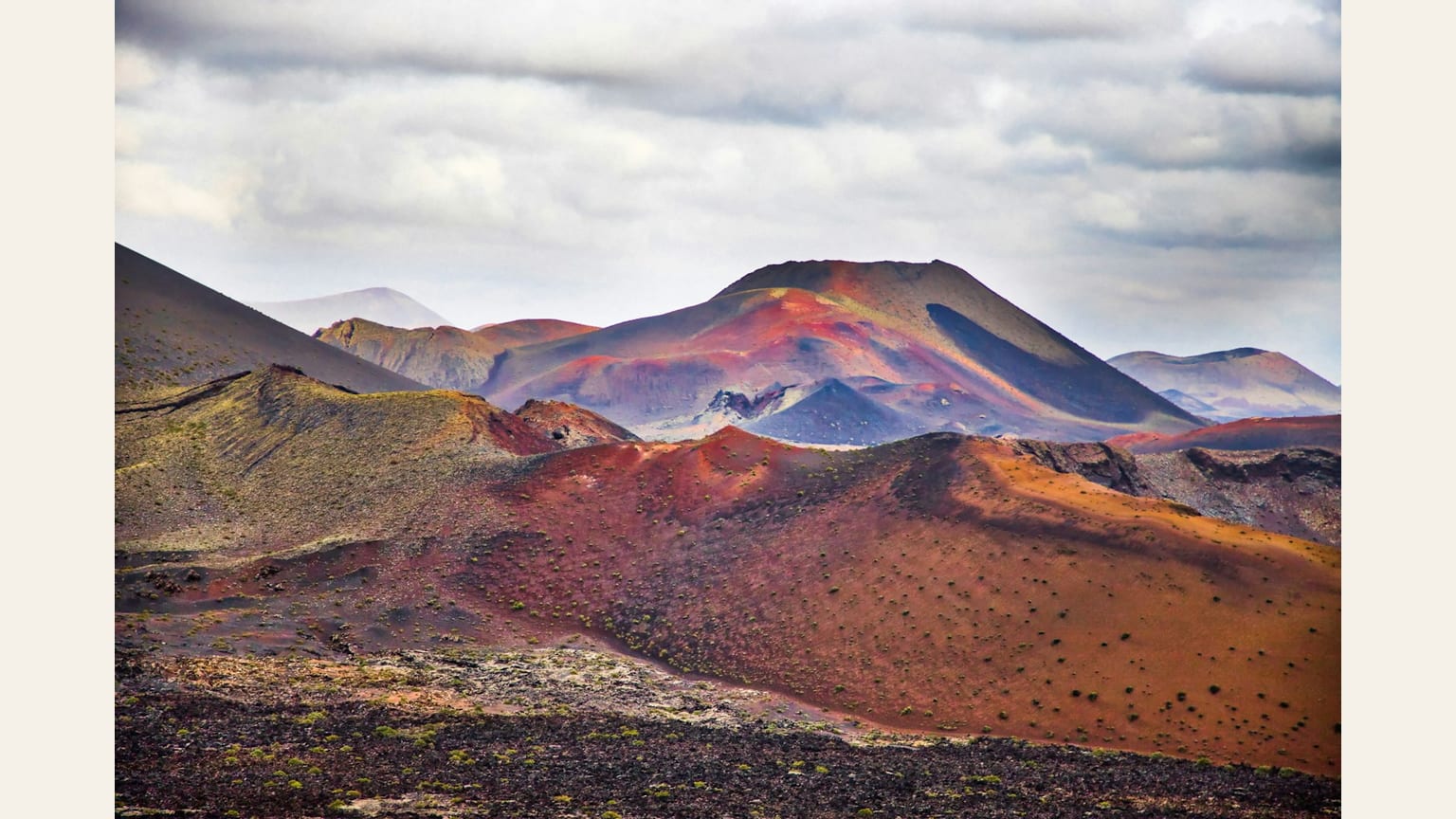
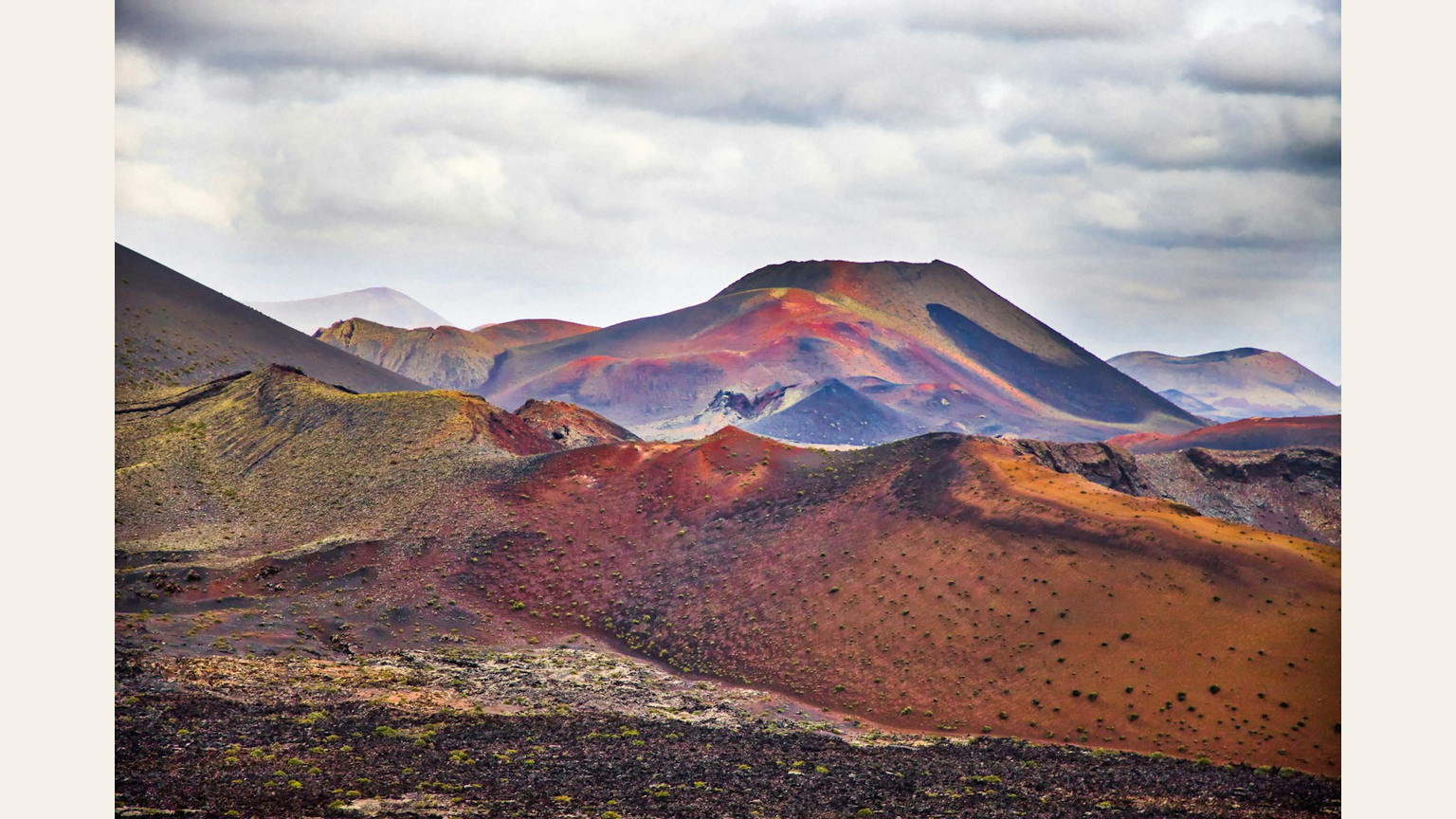
Anyone who has set foot in Timanfaya has seen them: rows of patient animals, lying on the black lava, waiting for someone to climb onto their backs. They seem to belong to another landscape, a postcard desert. And they have a secret that hardly anyone asks them about: they are not camels, but dromedaries. In the Canary Islands, however, they have always been called camels, and that is what they will continue to be called for as long as they remain there.
A working animal from Africa
They arrived from Africa from 1405 onwards and, from the outset, became the islands’ working animal par excellence. Their genetic origins are also linked to those of the dromedaries of Tindouf, in Algeria: a living thread tying Lanzarote to the Sahara. Lanzarote and Fuerteventura, with their flat terrain and almost steppe-like climate, were the islands where they adapted best. The camel was the farmer’s indispensable helper: it pulled the threshing board, drew the plough and worked fields that the volcano had made unyielding. Today, younger generations find it hard to imagine how important these animals were to farming in a land so arid and ravaged by volcanoes.
An animal with a vocabulary of its own
The camel even left its mark on the islands’ speech. A “guelfo” is a calf that is still suckling; a “majalulo” or “majalula” is one that has been weaned but is not yet an adult, a word also used to describe a clumsy person; and “tuchir-fuchir” means to kneel down, said of both camels and people. Little words that recall how closely camels and people once lived together.
A camel with papers
The fact that the Canarian camel is now spoken of as a breed in its own right owes much to scientific work. It all began in 2000, when those in charge of La Lajita park, in Fuerteventura, contacted Professor Javier Cañón Ferreras, of the Complutense University, to study the Majorero camel, which differs somewhat in its morphology from the African camel. That work led to scientific studies —one of them published in 2005 in the FAO’s journal on animal genetic resources— and the Association for the Rural Development of Lanzarote funded the study devoted to its history and current situation. At the end of March 2011, the Canarian camel came to be regarded as a breed in its own right and was entered in Spain’s Official Catalogue of Livestock Breeds. For centuries it interbred with other dromedaries brought from Africa; today, for animal health reasons, the export of African dromedaries is prohibited. Even so, not all dromedaries on the islands can be considered Canarian camels, because imports from the Maghreb also took place during the twentieth century.
A journey that began millions of years ago
There is a lesser-known chapter: the first camel to set foot in Australia came from Tenerife. His name was Harry, he landed at Port Adelaide on 12 October 1840 and was the sole survivor of a voyage that claimed his companions along the way. Years later, most Australian camels would arrive from India, but the first was Canarian. And if we trace the thread further back, the most widely accepted hypothesis places the origin of camels not in Africa, as one might imagine, but in North America, between fifty and sixty million years ago. An extraordinarily long journey, with stops in the Sahara and the Canary Islands, before ending up lying on the lava of Timanfaya.
From farming to tourism
Over time, mechanisation took away their work. Following the gradual abandonment of farming, many of those remaining in Lanzarote are now associated with the camel resting place in Timanfaya National Park. There they carry tourists instead of pulling ploughs: the ride, lasting about twenty minutes along the volcano’s southern slope, evokes the animal’s former agricultural role. A curious form of survival: the animal that helped cultivate the island is still there, reminding visitors of how people used to live.
It is an unforgettable image: on the very lava that a priest saw being born in 1730, an animal that has been on the island for more than six hundred years walks today. An animal that is not a camel, that came from Africa and that, when it is time to kneel down, still does tuchir-fuchir.
References
-
Universidad Complutense de Madrid — Tribuna Complutense (n.º 35, 3 de mayo de 2011): artículo sobre el estudio del profesor Javier Cañón Ferreras acerca del camello canario. Disponible en: ucm.es
-
Universidad de Las Palmas de Gran Canaria (ULPGC): Camellos en Canarias: ganadería tradicional única en Europa. Disponible en: accedacris.ulpgc.es
-
Universidad de Las Palmas de Gran Canaria (ULPGC) — Memoria Digital de Canarias: El Camello en Canarias. Disponible en: mdc.ulpgc.es
-
Gobierno de Canarias — Parque Nacional de Timanfaya: Visitas guiadas (Echadero de los Camellos). Disponible en: gobiernodecanarias.org
-
Burke & Wills Web: Introducing camels into Australia (The first camel in Australia). Disponible en: burkeandwills.net.au