

The Phases of Initiation in Canarian Wrestling According to González Marrero
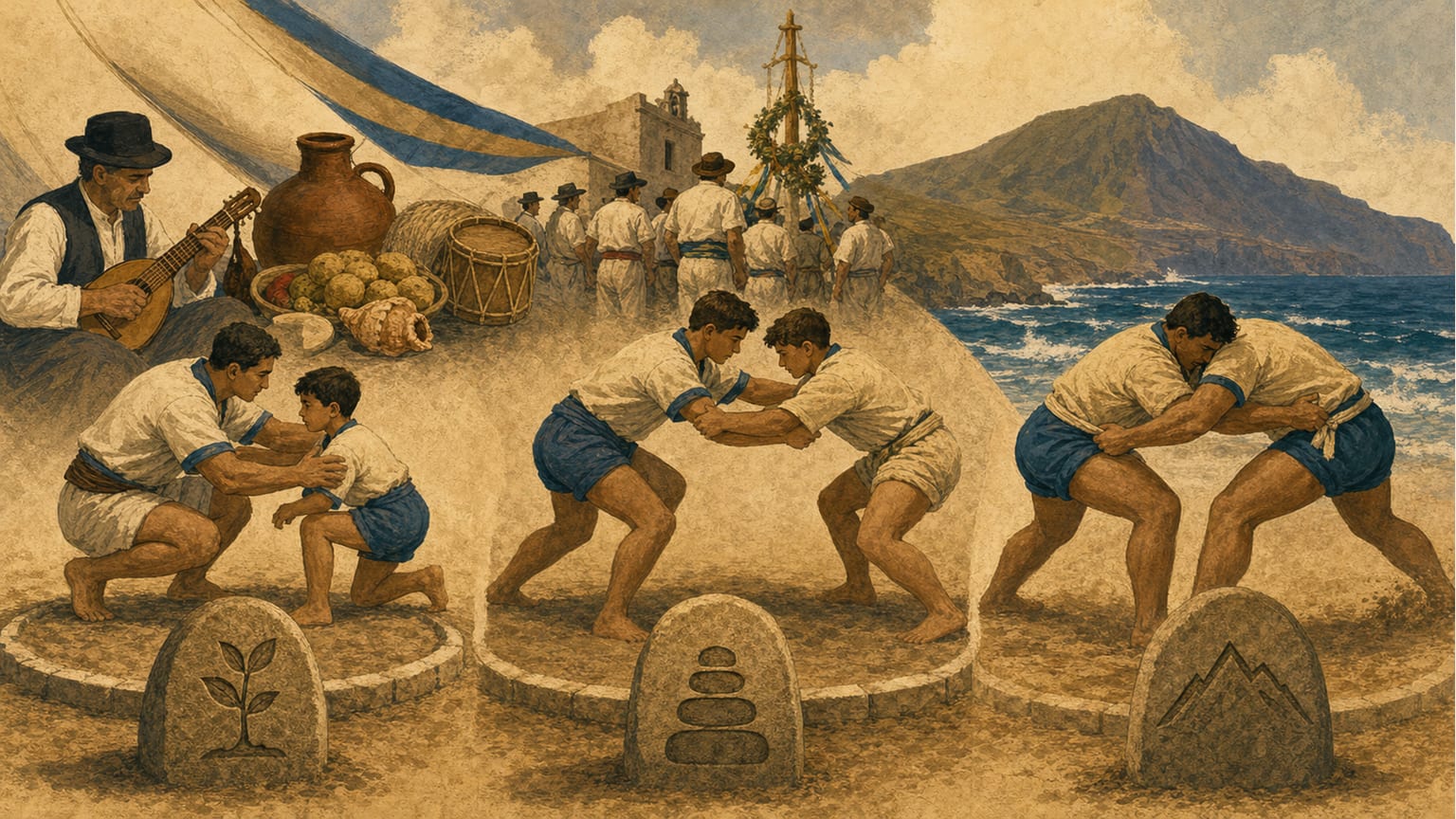
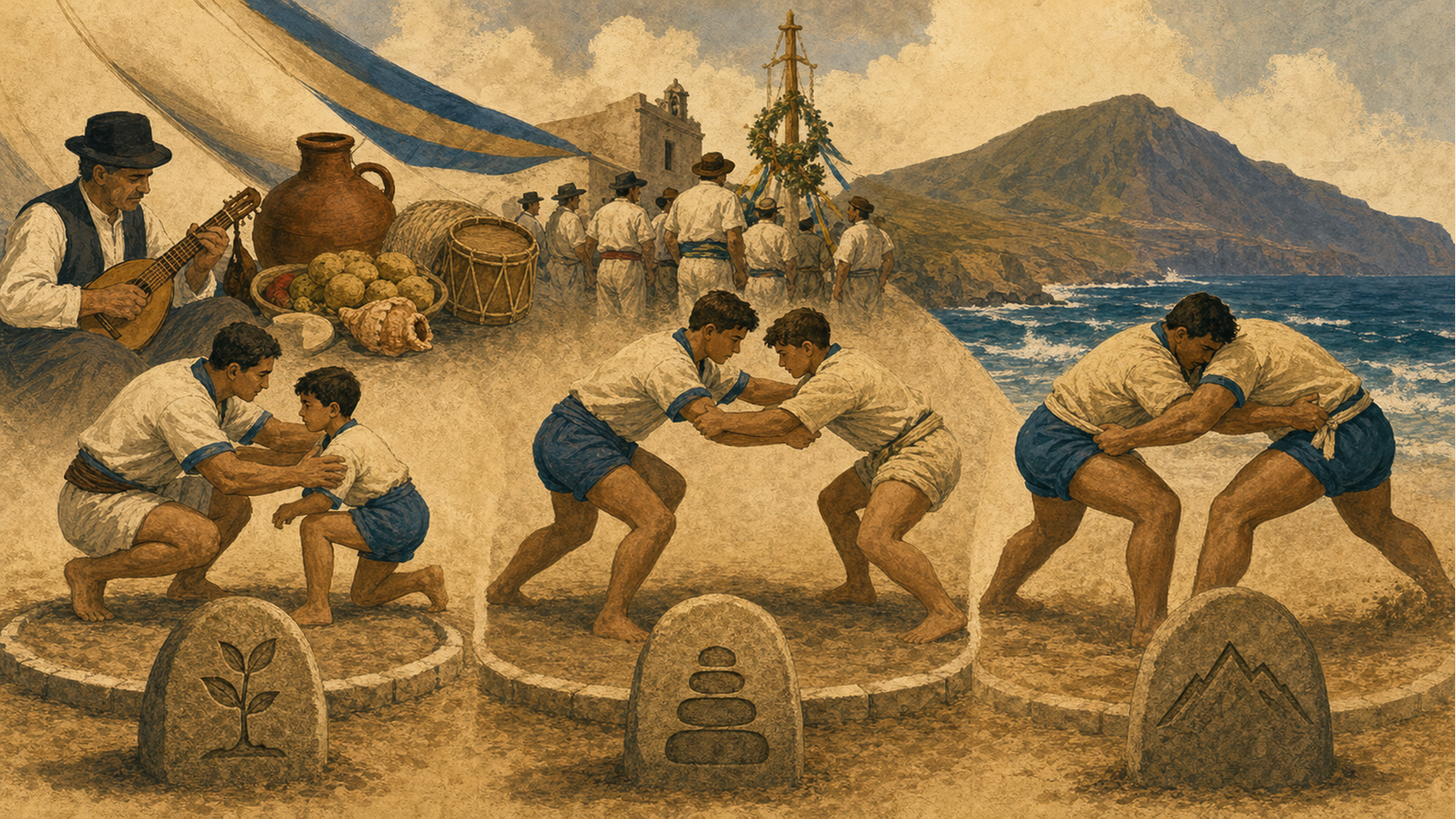
Pedro González Marrero’s work, Iniciación a la lucha canaria, provides a detailed description of the initiation process in this traditional sport, dividing the training of young wrestlers into three main phases: foundation, structural, and consolidation[1].
Foundation Phase
According to González Marrero, the foundation phase generally covers children between 10 and 12 years old. The main goal during this period is to develop basic motor skills that will serve as a basis for the future assimilation of the fundamental technical elements of Canarian Wrestling[1]. Technical work should be “disguised” within playful activities, with games and programmed exercises predominating to help students assimilate basic positions, movements, and falls specific to the sport[1].
In this stage, González Marrero warns against early sports specialization and premature competition, recommending the avoidance of marginalization due to lack of bilateral work and the imposition of fixed schemes that limit creativity and the development of the wrestler’s own style[1].
Structural Phase
The structural phase is situated between the ages of 12 and 14, although it may vary depending on individual characteristics. The goal here is for young wrestlers to assimilate the basic technical elements and be able to execute them correctly[1]. Specific technical work and the introduction to tactical thinking are emphasized, allowing the student to adapt movements to their personal execution style[1].
During this phase, mixed methods are recommended, combining a global presentation of the technique with analytical corrections, and encouraging the combination of simple techniques based on tactical criteria[1].
Consolidation Phase
The consolidation phase covers ages 14 to 18 and aims to perfect the basic elements, achieving a satisfactory level of execution and acquiring knowledge of all aspects that affect Canarian Wrestling[1]. At this stage, wrestlers already have the physical conditions necessary to perform any technique, and emphasis is placed on defense, counterattacks, feints, and decision-making in combat situations[1].
González Marrero stresses the importance of a progressive teaching-learning process adapted to the group’s needs, recommending that the coach act as a coordinator and guide collective reflection to solve problems[1].
Summary Table of the Phases
The author presents a summary table detailing the ages, objectives, physical preparation, technique, tactics, type of exercise, and philosophy for each phase. For example, in the foundation phase, the focus is on playing, in the structural phase on doing things well, and in the consolidation phase on self-improvement[1].
In conclusion, initiation in Canarian Wrestling, according to González Marrero, should be aimed at ensuring that children learn the fundamental rules and enjoy practicing, structuring learning in progressive phases adapted to the physical and psychological development of the young wrestler[1].