

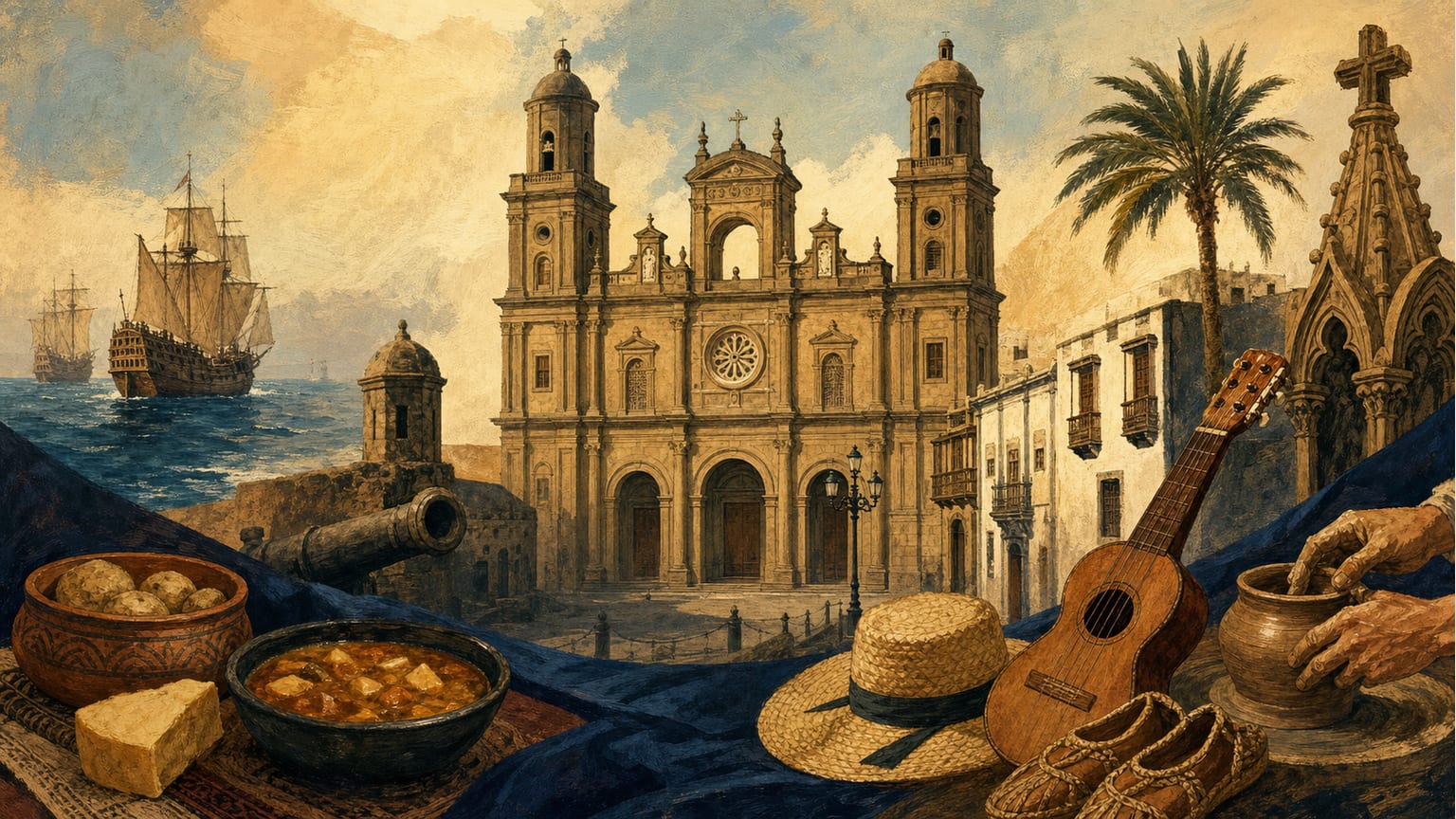
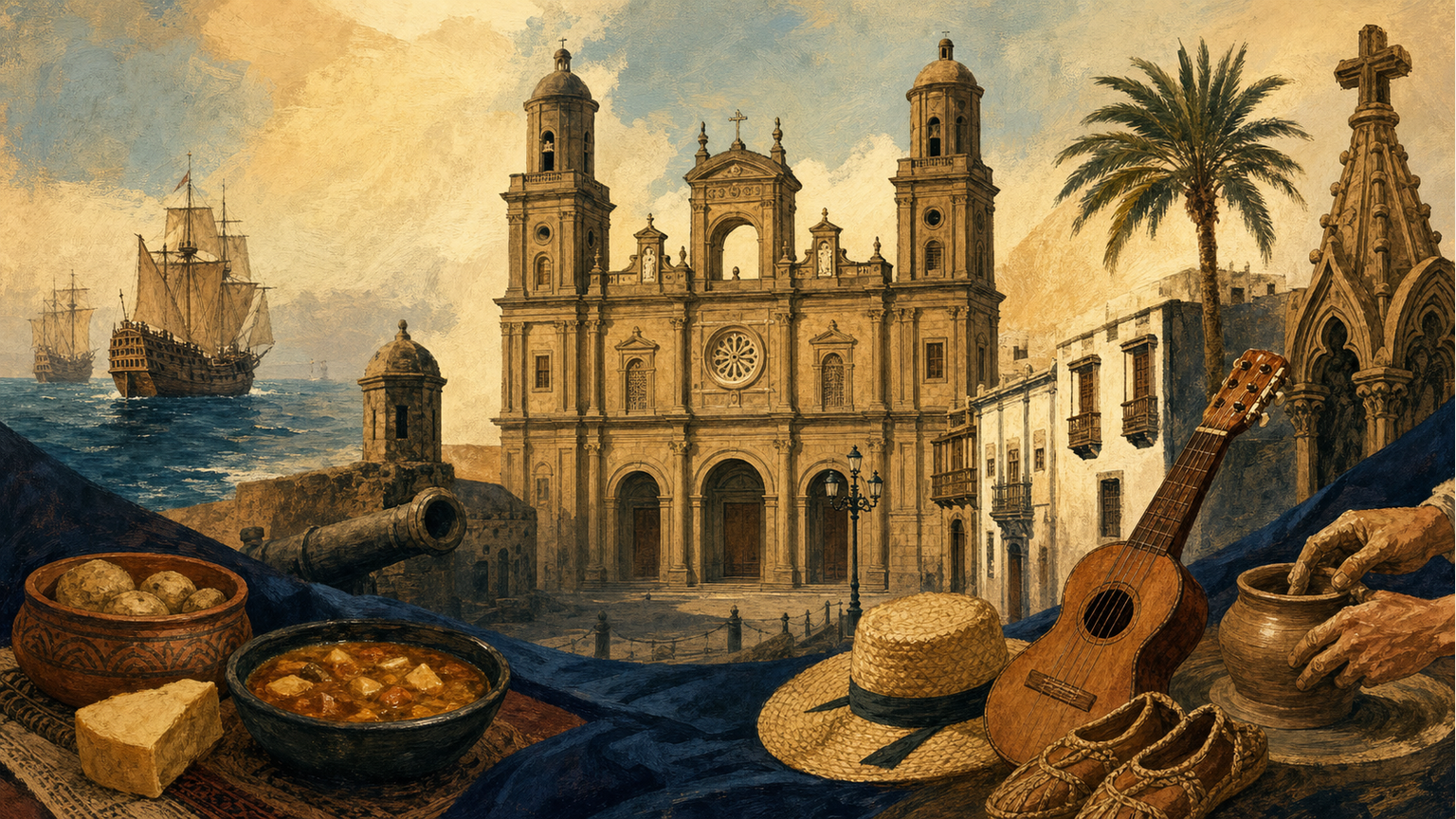
The Cathedral of Las Palmas in Pablo Artiles (1937): A Historical and Artistic Symbol of Gran Canaria
In his 1937 work, Pablo Artiles devotes a detailed section to the Cathedral of Las Palmas, highlighting its historical and artistic importance within Gran Canaria[1]. According to Artiles, the cathedral is a landmark of local tradition, with its bronze bells echoing across the hills and evoking the island’s collective memory: “IDO de la tradición! Por las lomas pendientes cruzan los alegres sonidos de sus campanas de bronce, que cantara el Poeta e inmortalizara Saint-Saens en un poema musical”[1].
Artiles distinguishes between the old cathedral, the chapel of San Antonio Abad, and the new cathedral, noting that the former is significant for its spiritual meaning and the latter for its artistic grandeur: “La vieja caterlra], lioy ernnta de San Antonio Abad, es grande por la significdción espiritual de su historia ; la nueva, por la grandeza del arte que trazara sus líneas”[1].
He attributes the construction of the cathedral to the conquerors and the descendants of the island’s indigenous people, stating that the foundations contain the efforts of the “pure canarians”: “Ideada por los conquistadores, de grandes pensamientos y mayores empresas, pusieron en ella sus manos los hijos de aquellos indígenas que antes habíanlas empleado en lanzar dardos y arrojar piedras en defensa de su terruño amado… Hay, pues, en sus cimientos esfuerzos de ‘puros canarios’”[1].
Artiles’ architectural description highlights the fluted columns that rise like subtle palms supporting the vault, and the celestial light filtering through the stained glass: “Y dentro, surgen las columnas acanaladas —ramos de ilusiones—que se despliegan en cimbreantes palmas sutiles, sosteniendo con el aliento de sus ramas el impulso aéreo de la bóveda… Cuando la luz se filtra por las hermosas cristaleras… un color celeste se expande por los ámbitos perfumados de incienso del espacioso templo”[1].
He also notes the cathedral’s role in historical events, such as the display of the conquest banner: “Cuatrocientas veces se han pregonado tus fastos, Gran Canaria, bajo el sutil tambor de la claraboya de hiz de lu catedral, Cuatrociciilds veces salió de tus arcas el pendón glorioso de la conquista, brochazo de luz blanca y morada, para mostrarse a los isleños, como recuerdo íntimo de nuestros tiempos heroicos”[1].
The cathedral is presented as a synthesis of memories and a symbol of island faith: “Síntesis de recuerdos, arca de los sentires, emotiva forjación del espíritu, alma y aliento de tu pueblo ioh bella catedral canaria!, atalaya siempre despierta de la fe isleña, eres el Escorial glorioso de la Isla, como aquél, rico tesoro de arte, de grandezas y recuerdos…”[1].
Finally, Artiles concludes that the stone columns of the cathedral uphold the heroic greatness of Gran Canaria: “¡Las airosas palmas de tus columnas de piedra sostienen en alto la heroica grandeza de Gran Canaria!”[1].