

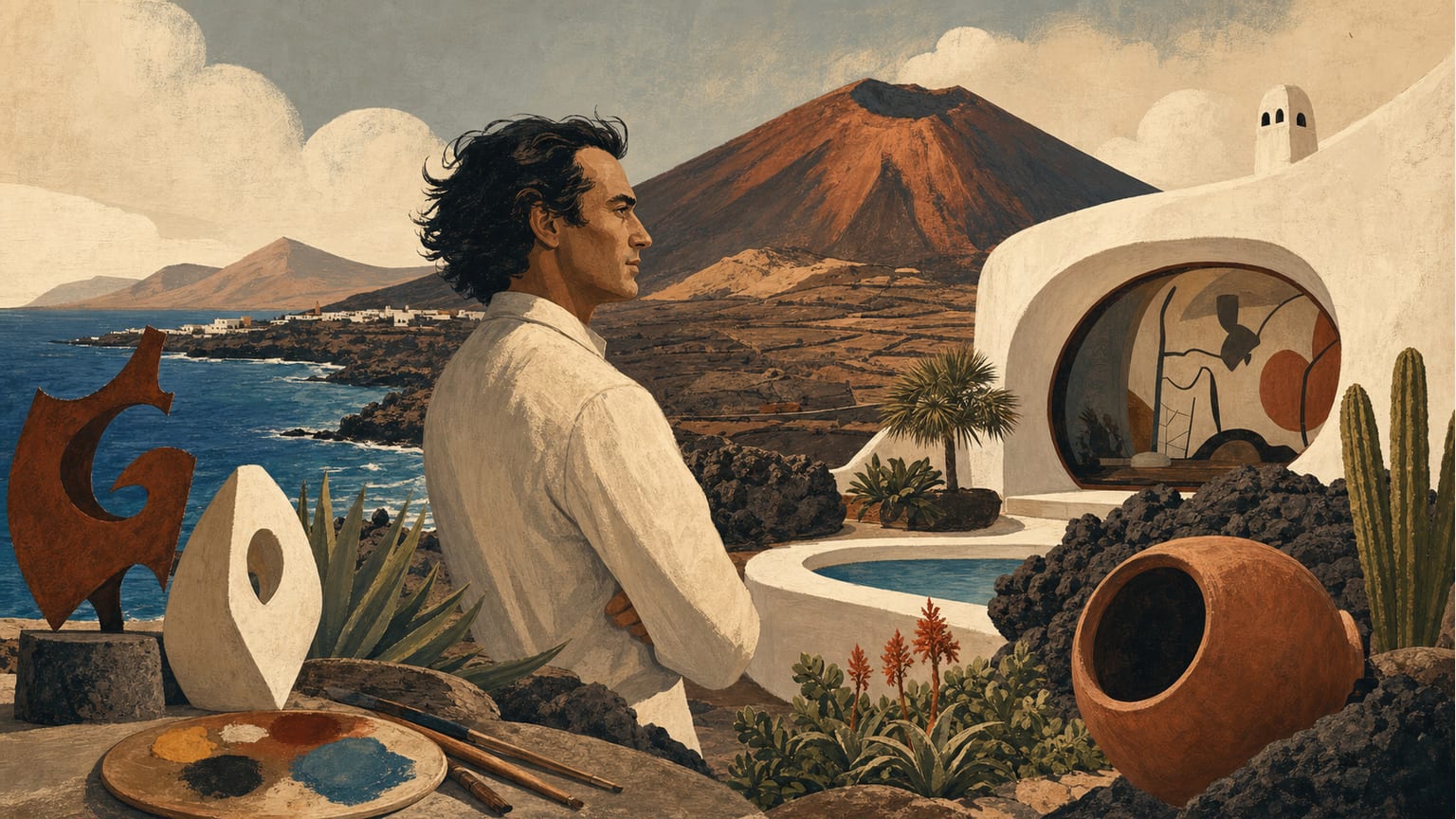
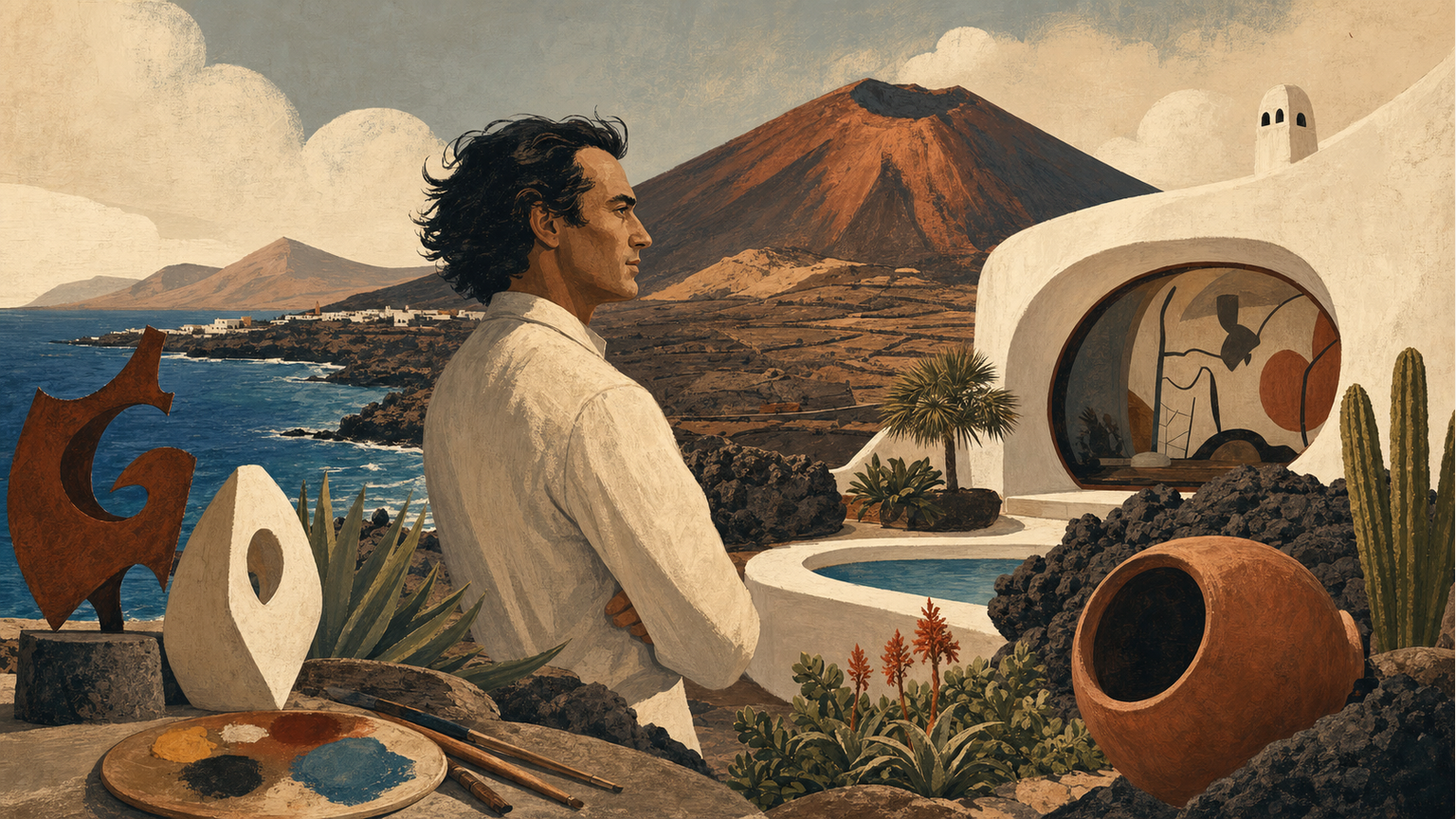
Lanzarote, the island of volcanoes, is not only a natural paradise but also an open-air museum where art and nature coexist in perfect harmony. This unique relationship is largely thanks to the vision and legacy of Lanzarote-born artist César Manrique, who transformed the volcanic landscape into a space of creativity, environmental respect, and singular beauty[1].
Manrique, born in Arrecife, recognized early on that Lanzarote’s identity lay in its volcanic terrain, vibrant colors, and unique light. His artistic philosophy was to integrate art with the landscape, ensuring that tourism development would not destroy the island’s essence. One of his most iconic works is Jameos del Agua, where he converted a volcanic tube into a center for art, culture, and tourism, featuring a natural lake, a turquoise-water pool, and the world’s only auditorium inside a volcanic cave[1].
Another masterpiece is the Mirador del Río, perched on the Famara cliff. Here, visitors enjoy breathtaking views of La Graciosa island, while the building itself blends into the rock, adorned with traditional ceramics and sculptures. The Cactus Garden, also designed by Manrique, houses hundreds of cactus species in a former quarry, demonstrating how architecture can harmonize with local flora.
The César Manrique Foundation, located in the artist’s former home, is a must-see. Built atop a lava flow and five volcanic bubbles, the foundation showcases his life, work, and enduring ecological message, which continues to inspire Lanzarote’s sustainable management[1].
Respect for tradition and local culture is also evident at the Casa-Museo del Campesino, a tribute to rural architecture and life on the island. The International Museum of Contemporary Art (MIAC), housed in the historic Castillo de San José, reflects Manrique’s commitment to modern art in dialogue with history and the landscape.
Thanks to César Manrique’s influence, Lanzarote stands today as an international example of sustainable development, where natural beauty and human creativity enhance one another. Visiting the island reveals how art can protect and elevate the environment, turning every corner into an unforgettable sensory experience[1].