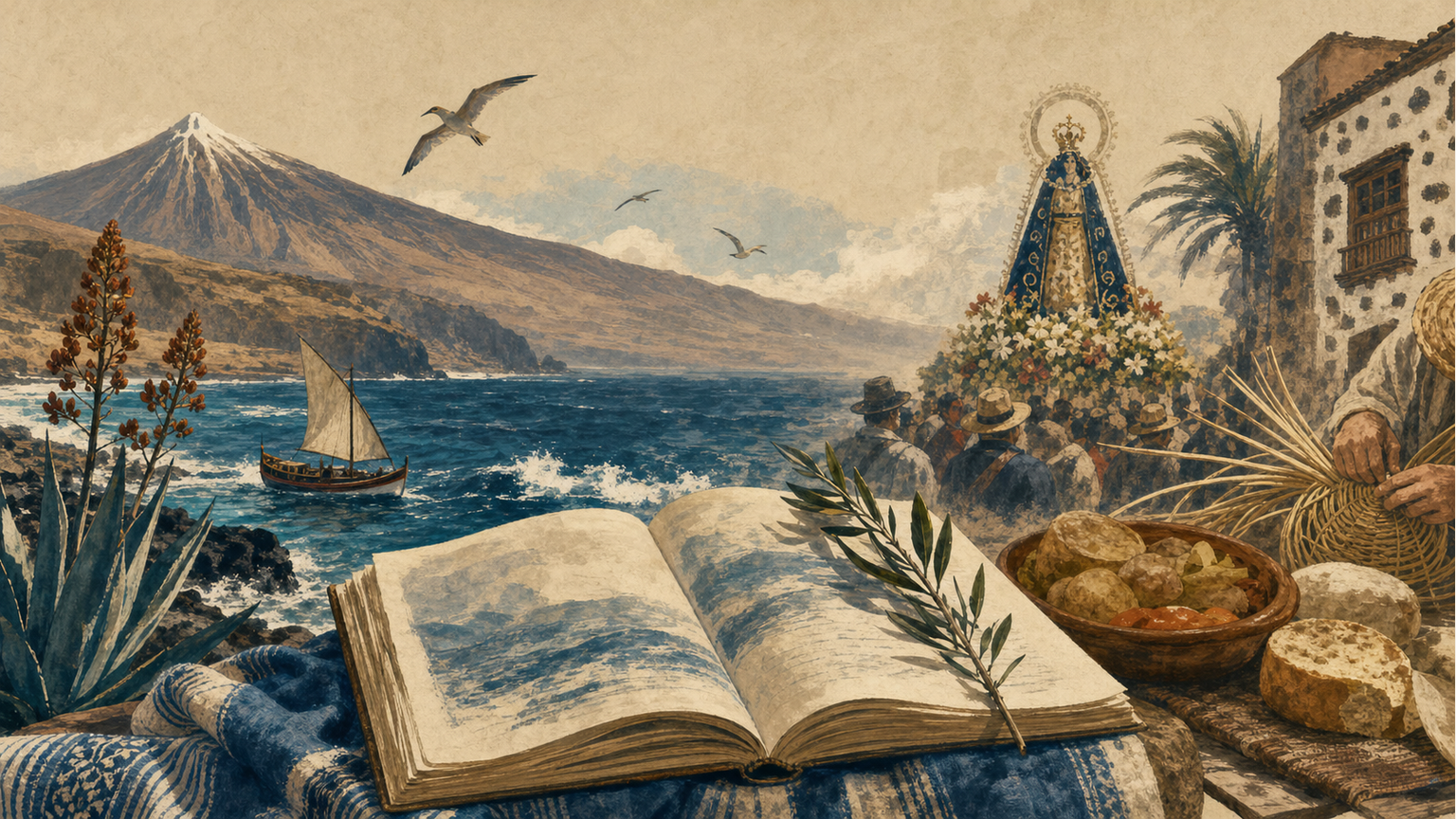

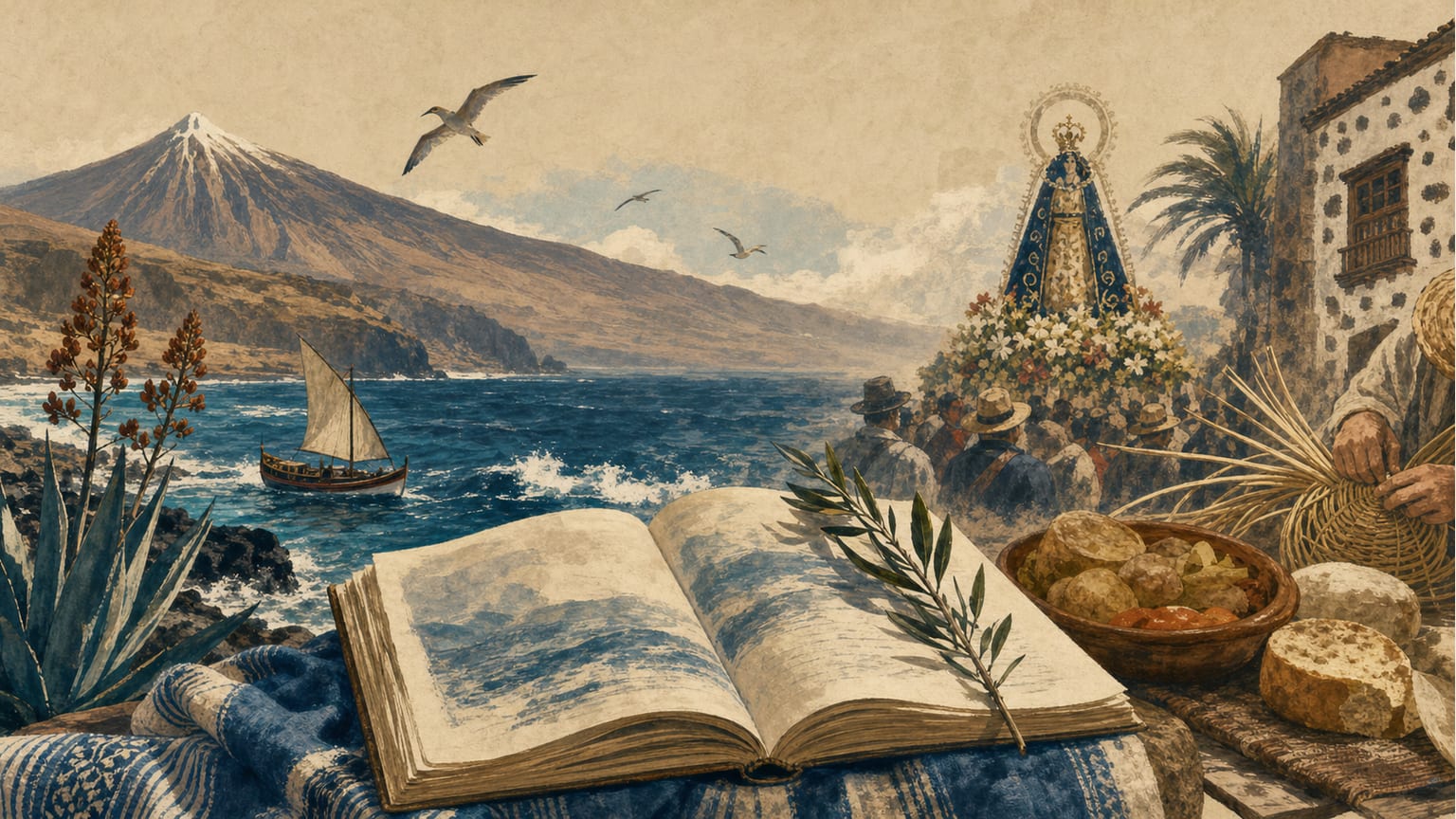

In 1953, Luis Diego Cuscoy published the poem ‘Solveig, latitud de mi isla’, a work that stands out for its evocative depiction of the island of Tenerife and its natural surroundings[1]. The text, published by the Instituto de Estudios Canarios in La Laguna, uses the figure of Solveig as a symbol of an ethereal presence that traverses and experiences the island from an intimate and sensory perspective[1].
One of the central themes of the poem is the relationship between humans and the island landscape. Cuscoy describes Solveig’s arrival on the island through images of wind, sea, and sand: “No sé en qué viento blanco, en qué ala rosa llegaste, tan callada, a mi costado: alguien te trajo hasta la clara orilla y en ella te dejó sobre la arena” (I do not know in what white wind, in what pink wing you arrived, so quietly, at my side: someone brought you to the clear shore and left you on the sand)[1]. This silent and mysterious arrival emphasizes the connection between the protagonist and the natural environment, where the sea and the coast act as elements of transition and transformation.
Throughout the poem, the island is presented as a space of solitude and contemplation. Cuscoy uses images of the insular nature, such as pines, lava, endemic flowers, and trade winds, to build an atmosphere where human presence is both fleeting and deeply marked by the landscape: “TODOS los pinos tienen sus ramas encendidas y el volcán se levanta de su lecho nuboso. Grandes pájaros vuelan sobre el pinar radiante y mis cumbres conocen tu presencia” (All the pines have their branches alight and the volcano rises from its cloudy bed. Large birds fly over the radiant pine forest and my peaks know your presence)[1].
Insular solitude is reinforced in verses describing absence and silence, recurring elements in the work: “NADA más que silencio, eso es: nada más que silencio. Alfabeto estelar en tus ojos y tiempo que se marcha en tu calzado con el polvo amarillo de los valles” (Nothing but silence, that’s it: nothing but silence. Stellar alphabet in your eyes and time that leaves in your shoes with the yellow dust of the valleys)[1]. This silence is presented as an inherent feature of the island, which becomes a space for introspection and waiting.
The sea is a fundamental element in constructing the insular image. Cuscoy describes it as a space of oblivion and distance: ”… pues olvido es el mar, mudanza el viento. VILLAMEDIANA. Pues olvido es el mar, mudanza el viento y tanto viento, tanto mar separa tu isla de mi isla y desampara tanto horizonte a tanto sentimiento” (… for oblivion is the sea, change is the wind. So much wind, so much sea separates your island from mine and abandons so much horizon to so much feeling)[1]. The sea separates and unites, is both boundary and bridge, and defines the experience of insularity.
Tenerife’s nature becomes a protagonist through the description of plant and animal species, such as the blue everlasting, daisies, hawks, and sea eagles. These elements reinforce the uniqueness of Tenerife’s landscape and its influence on the poetic perception of the island[1].
According to the text, the island is also a space of memory and writing, where names and traces are inscribed in water and earth: “PERO estará tu nombre escrito sobre el agua, lo leerán los astros que sigan gravitando por el espacio lleno del grito de mi boca, mi pobre boca llena con tu nombre” (But your name will be written on the water, the stars that continue to gravitate through the space filled with the cry of my mouth, my poor mouth filled with your name, will read it)[1].
In summary, ‘Solveig, latitud de mi isla’ offers a poetic vision of Tenerife in which nature, the sea, and insular solitude intertwine to create a unique image of the island, based on sensory experience and contemplation of the landscape[1].