

Lucha canaria
Grappling sport with deep popular roots, strong identity value and a history running through rural society in Gran Canaria and Tenerife.
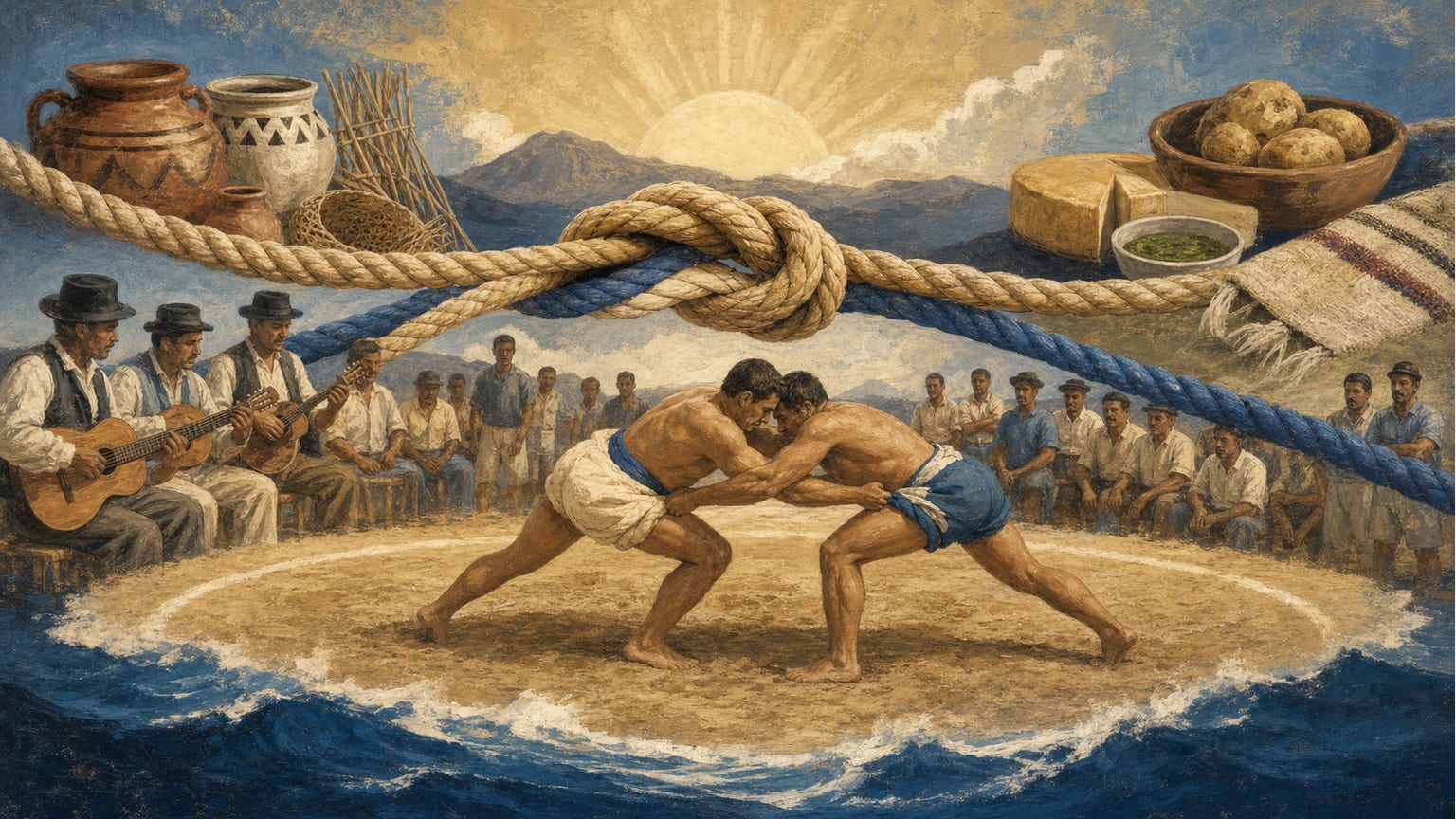
Lucha canaria is a grappling sport with deep popular roots and strong identity value. Its history runs through rural society in Gran Canaria and Tenerife, attempts at inter-island unification and the shaping of rules that balance tradition and modern competition.[1]
History and rules
The studies of Antonio Ayala (1977) and the chronicles of Marrero Hernández (1948) offer a historical view of the championships, figures and federative tensions that marked the development of this practice during the twentieth century.[1][2]
The first Technical Regulations of lucha canaria were the result of intense debates between the island federations, achieving approval in 1960 after years of negotiations on the unification of rules.[1]
Sport and identity
Lucha canaria is not only a competition: it is a practice that articulates historical memory, island belonging and generational transmission. The terreros, schools and championships keep alive a tradition that has moved from rural society to the contemporary sporting scene.[1]
Related reading
The Inter-Island League: Attempts at Unification in Canarian Wrestling (1946-1959)
The Inter-Island League was a key effort to unify Canarian wrestling between islands, facing organizational challenges and insular rivalries according to Ayala, Antonio (1977).
Read more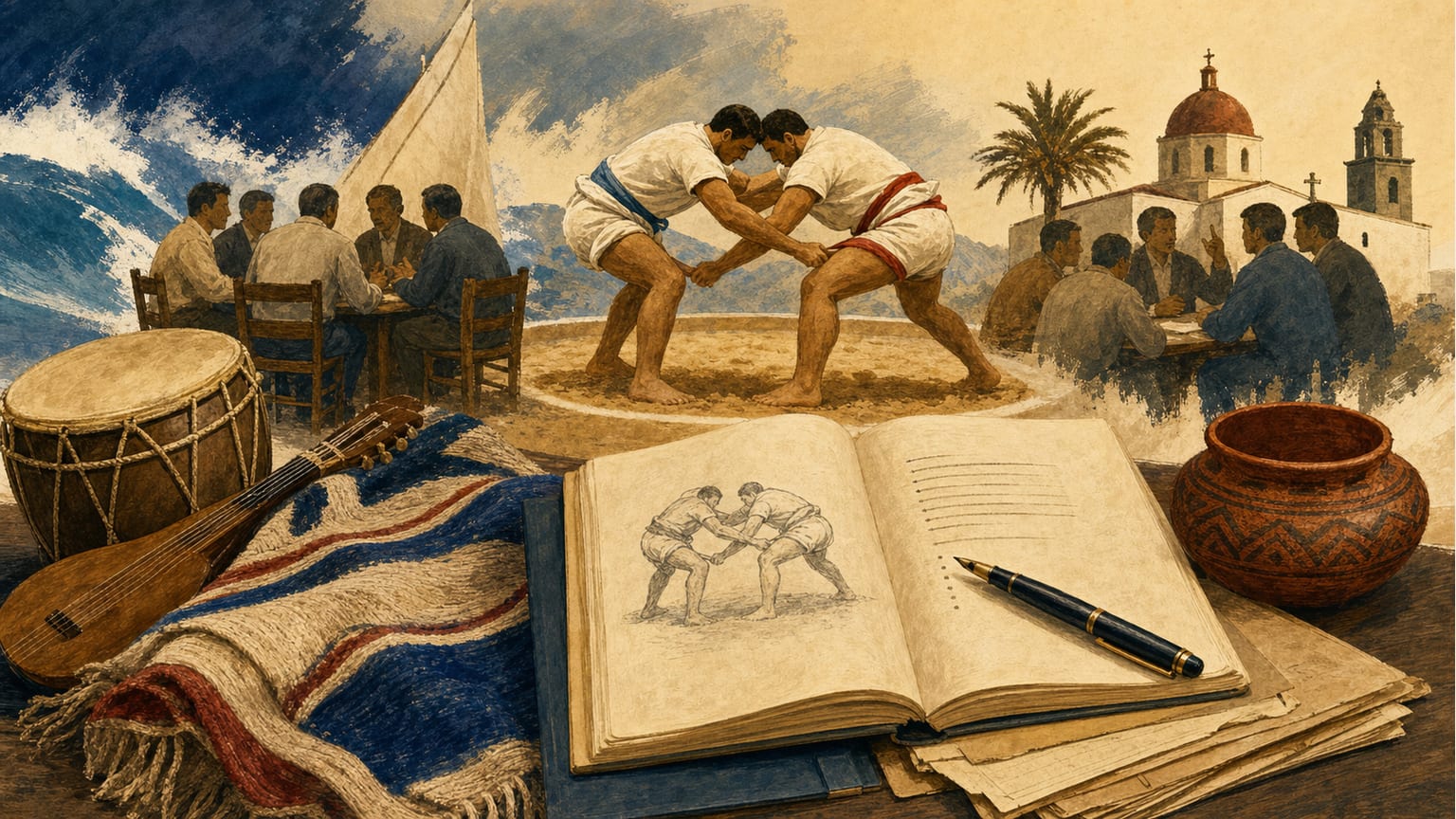
The First Technical Regulations of Canarian Wrestling: Origins and Disputes (1957–1960)
The first Technical Regulations for Canarian wrestling emerged after years of debate and disagreement between island federations, finally being approved in 1960 after complex negotiations over the unification of rules.
Read moreSources used
- View reference
- Marrero Hernández, Luis — De la lucha canaria. Comentarios, impresiones y recuerdos (1948), pp. 101 p. Memoria Digital de Canarias — ULPGCView reference
- Padilla Quintana, Pedro M. — Léxico de la lucha canaria (Gran Canaria) (1991), pp. 161 p. Memoria Digital de Canarias — ULPGCView reference
- Falcón Falcón, José Roque — Decano: los Guanches de Arucas y la lucha canaria (2004), pp. 203 p. Memoria Digital de Canarias — ULPGCView reference
- González Marrero, Pedro — Iniciación a la lucha canaria (1990), pp. 188 p. Memoria Digital de Canarias — ULPGCView reference