

Few foods are as closely tied to the identity of a people as gofio is to the Canary Islands. This flour, made from toasted and ground cereals, has accompanied the islanders from pre-Hispanic times to the present day, surviving conquests, famines and social transformations to become the quintessential culinary symbol of the archipelago.
Pre-Hispanic origins
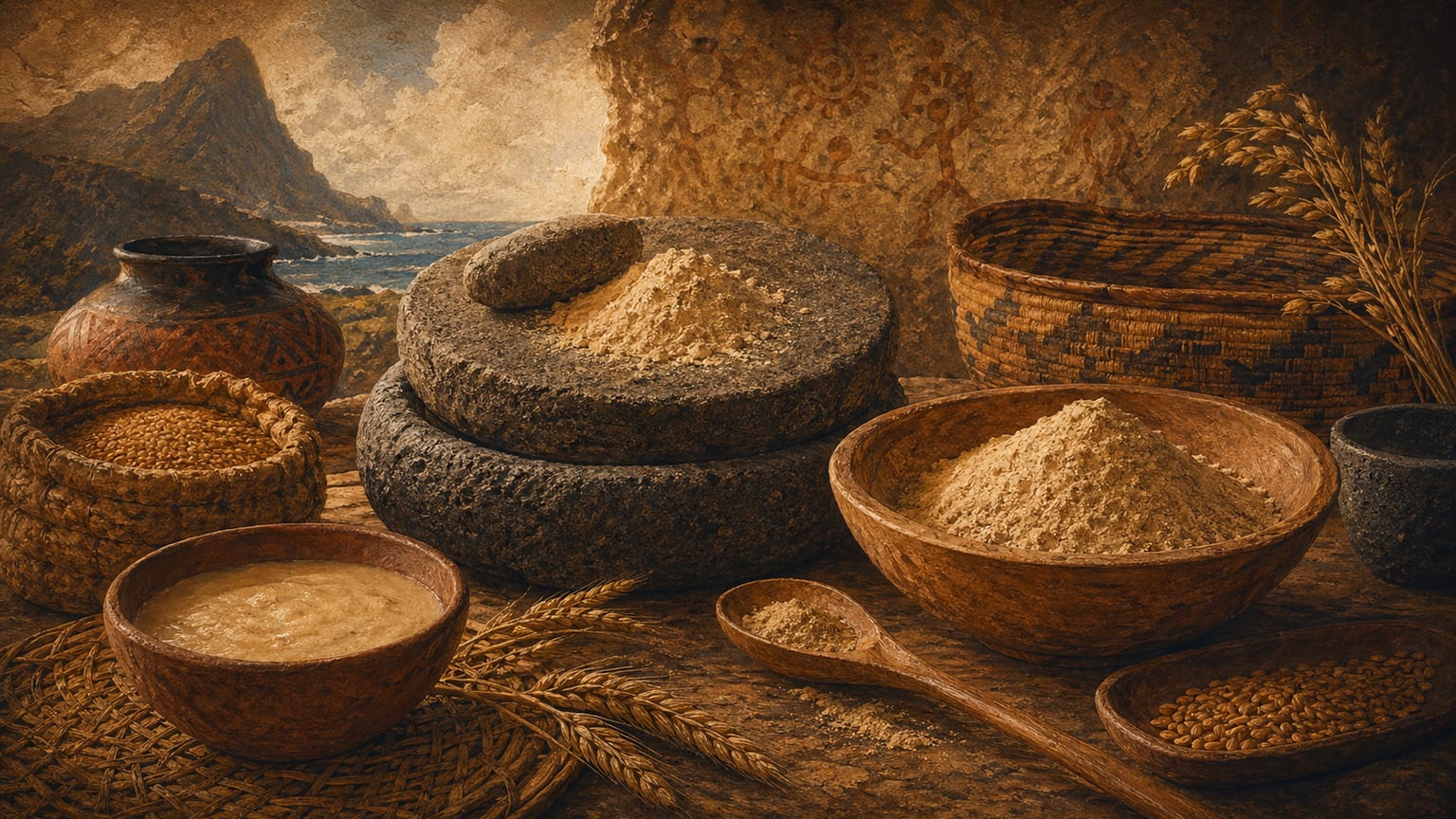
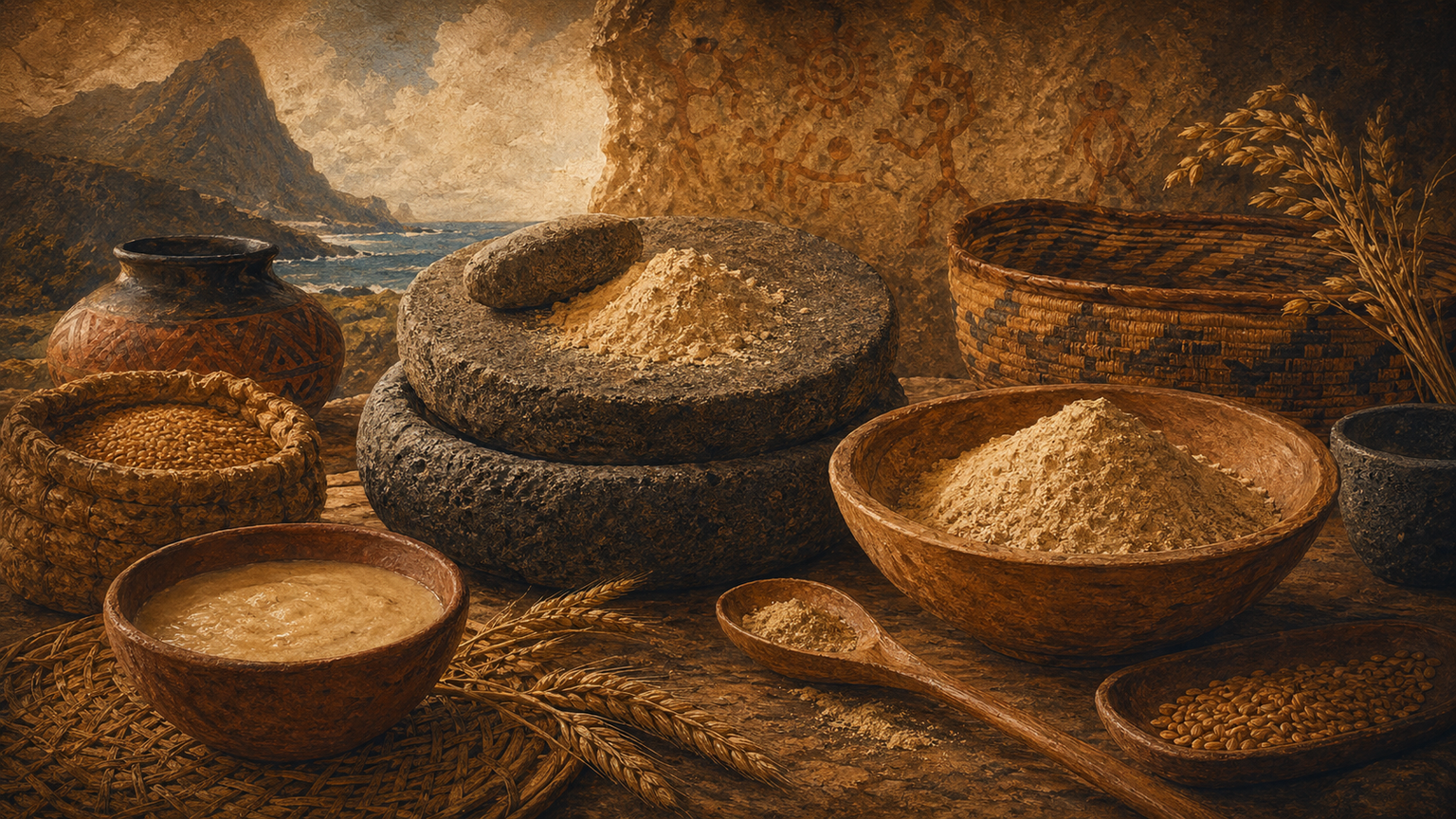
The ancient Canarians arrived on the islands with various seeds and plants to cultivate, including cereals such as wheat and barley, which were toasted and ground to make gofio [1]. To produce it, they crafted hand mill stones, carefully selecting, extracting and shaping the appropriate rock [1]. Gofio held great importance in the aboriginal diet, complementing other foods such as milk, cheese, fish and wild vegetables. In Gran Canaria, more vegetables than meat were consumed, while in Tenerife, La Palma and La Gomera the diet was more balanced [1].
One food, a thousand forms
As Oswaldo Guerra Sanchez recounts in his essay for the Academia Canaria de la Lengua, gofio offers extraordinary culinary versatility: “from the most basic form of the pella made of gofio, water and salt, to which numerous ingredients were added to taste (honey, nuts, ripe banana, liquor…), to the gofio escaldado or escaldon, which made use of nutritious broths, whether fish or meat” [2]. It was also consumed with milk, forming small balls in the bowl, mixed with egg and sugar, or simply accompanying bananas.
Identity and resistance
The word gofio is of Amazigh origin, accompanying the Canarian ancestors since their arrival from North Africa [2]. Its importance goes beyond gastronomy: as Guerra Sanchez writes, during the harsh post-war years, “people from outside, as well as the odd local with pretensions of high birth, scorned our sacred gofio for being food of the poor” [2]. To conceal their consumption of it, they called it by derogatory terms such as “engrudo” (paste) or euphemisms like “harina tostada” (toasted flour). Yet gofio literally saved their lives during those terrible years [2].
The popular expression “more Canarian than gofio” reflects the extent to which this food has become a symbol of identity. In his Lexico de Gran Canaria, Pancho Guerra defined gofio as the “fundamental food of the Canarian people” [2]. Its ancestral origin is not unrelated to its strong identity flavor: it is a basic element in the configuration of the archipelago’s cultural architecture, a bridge between the aboriginal past and the present of the islands [2].