

Frangollo: A Traditional Canarian Dessert and Its Recipe
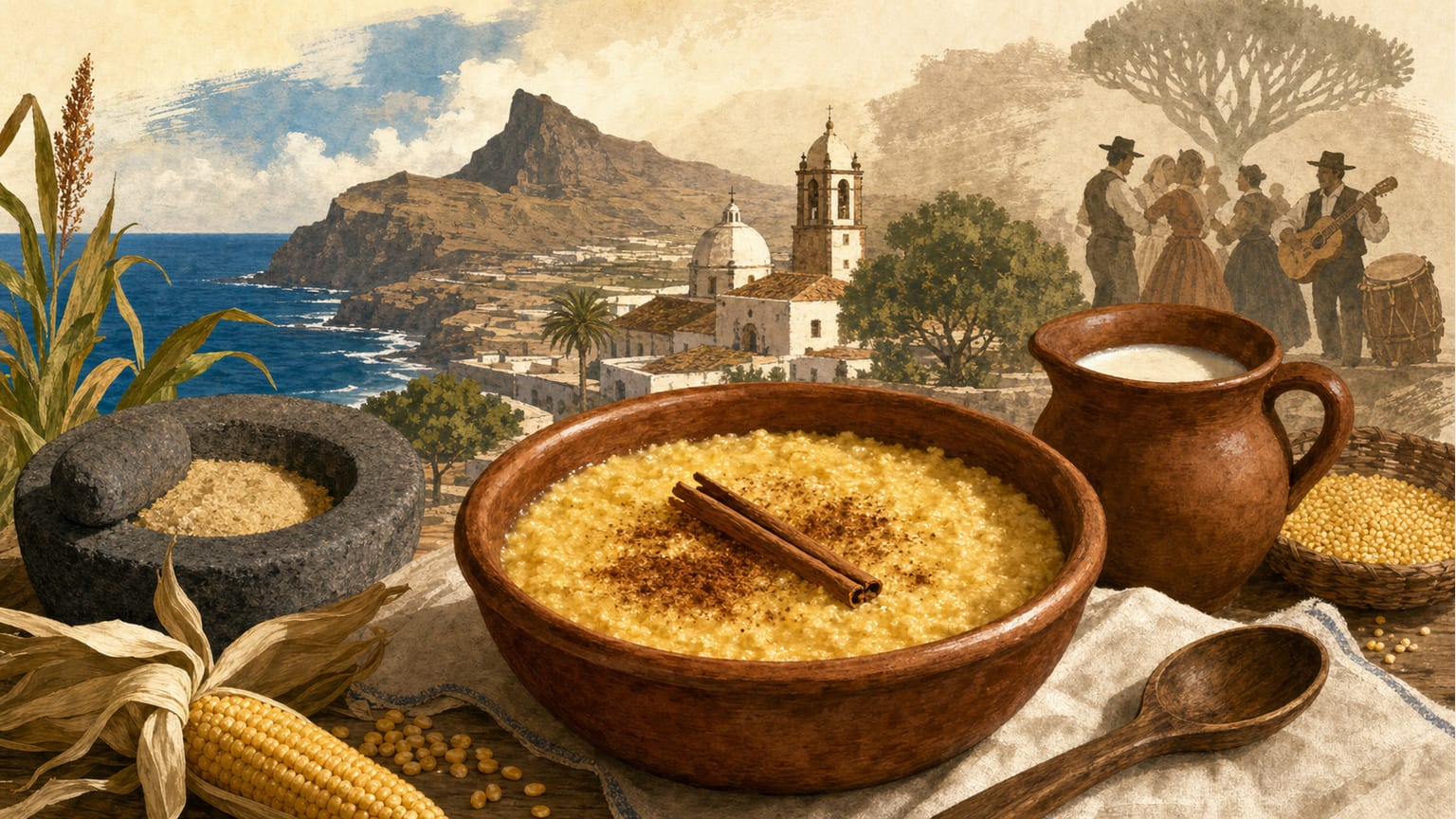
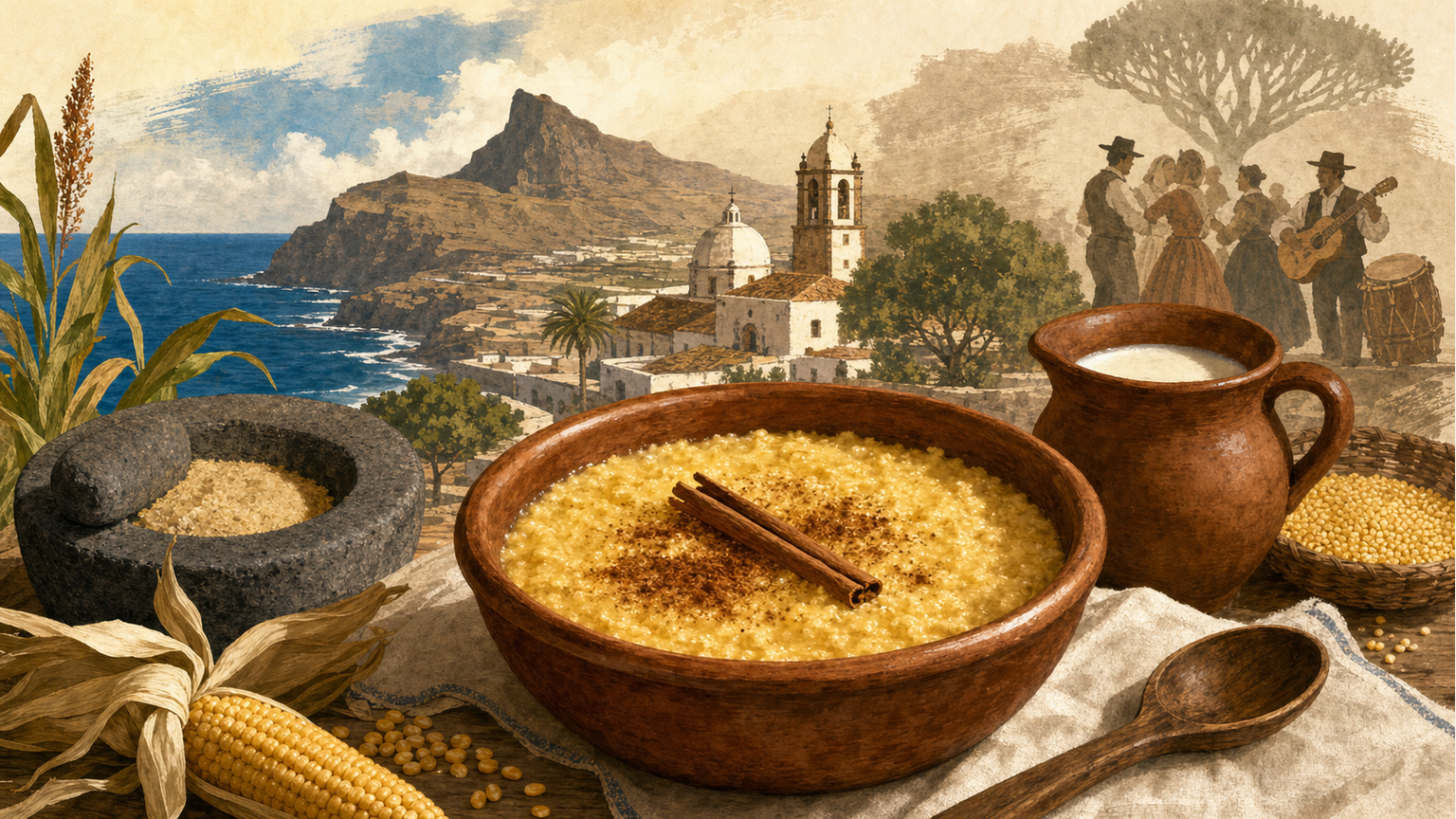
Frangollo stands out as one of the most iconic desserts in the traditional pastry repertoire of Gran Canaria, especially in Las Palmas, where it was historically consumed during the festival of San José[1]. Today, its popularity has declined, but it is still prepared to celebrate Canary Islands Day and is notable for being gluten-free, making it suitable for people with celiac disease[1].
Ingredients and Features
The recipe calls for 300 g of ground corn (frangollo), 1 liter of water, 3 liters of milk, 200 g of sugar, 100 g of raisins, lemon peel, half a stick of cinnamon, 1 tablespoon of aniseed (matalahúva), 1.5 tablespoons of butter, and a pinch of salt[1]. Frangollo is characterized by its simplicity and the use of local ingredients, reflecting the convent pastry tradition of the Canary Islands, where eggs and derived products were common in wealthy households, while poorer families relied on fried desserts[1].
Preparation Process
To make frangollo, the ground corn must be thoroughly washed under running water to remove the husk[1]. In a pot, combine the water and frangollo, stirring with a wooden spoon and adding a pinch of salt. As the water evaporates, gradually add the milk along with the lemon peel and cinnamon, stirring constantly to prevent sticking[1]. Next, add the sugar, aniseed, raisins, and butter. Remove from the heat after the first boil and transfer to a deep tray to cool[1].
Frangollo is served in individual bowls, often accompanied by a small jug of cold milk, honey, or sugar, which is added at the time of serving[1].
Regional Variations
There are several regional versions of frangollo in the Canary Islands. The Santa Lucía de Tirajana version includes almonds and uses only water; the Teide version uses tender corn; and the Yarita version is made with water and a can of condensed milk[1]. These variants highlight the diversity and richness of Canarian cuisine.
Cultural Context
Frangollo exemplifies Canarian convent pastry, known for its abundant use of eggs and local products[1]. While it is no longer a trendy dessert, its role in celebrations and its adaptation to modern dietary needs keep it alive in the collective memory of the Canary Islands.