

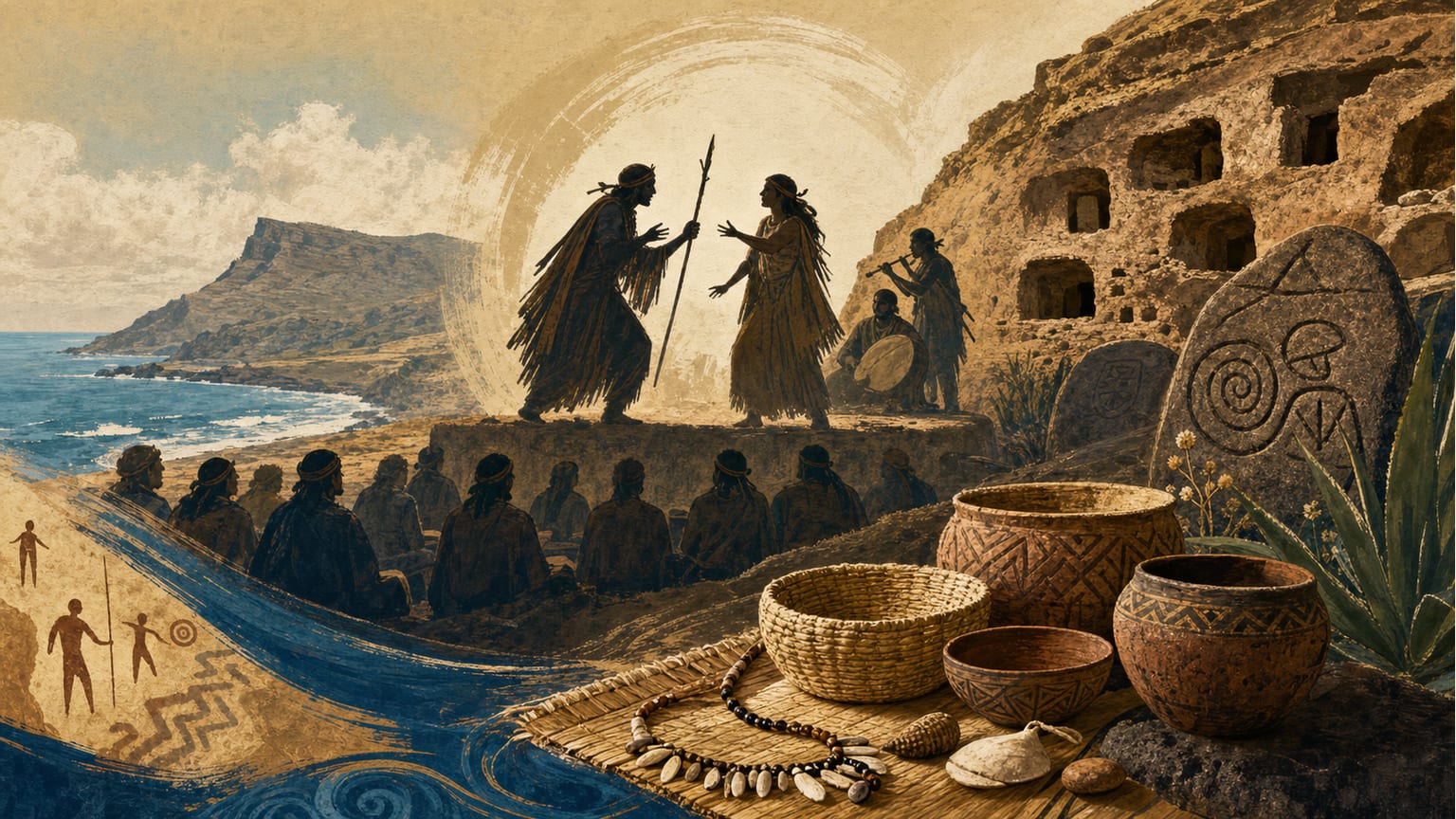
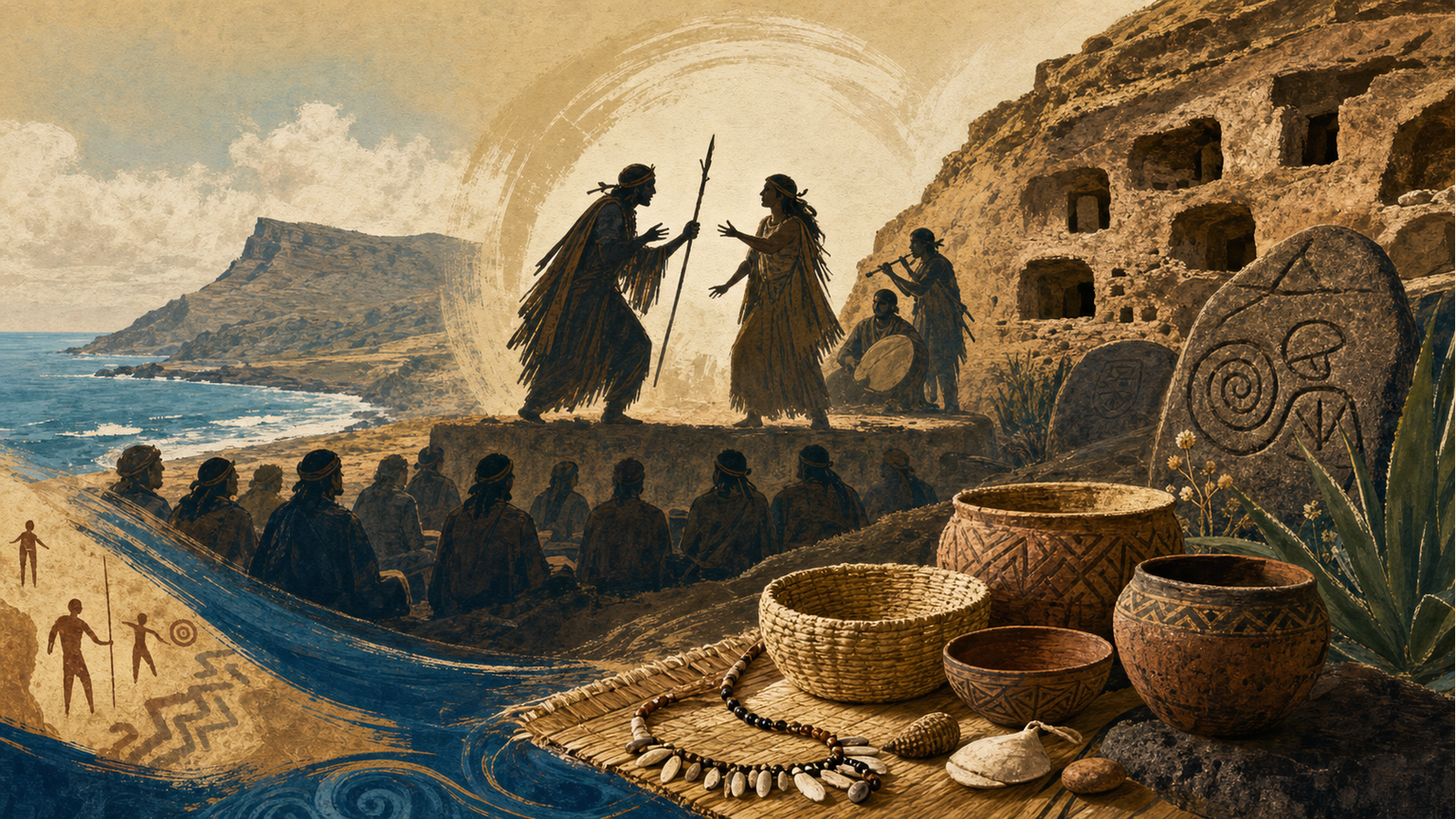
In 1988, the La Guancha Necropolis, located on the coast of Gáldar (El Agujero), became the setting for a unique initiative: the performance of the play “Nariz de Perro (Love Story of the Ancient Canarians)”, written by Pedro Castejón González and organized by the Ajódar Theatre Group[1]. This artistic project stood out for its integration of theatre with local archaeological heritage, using the very site where centuries ago the ancient Canarians left traces of their lives[1].
Founded in 1971 by enthusiasts from Gáldar, the Ajódar Theatre Group was already known for successful productions such as the “Auto de los Reyes Magos”, which involved around 200 people each year on the traditional night of January 5th[1]. With “Nariz de Perro”, however, Ajódar took on the challenge of recreating aboriginal life in the archaeological environment itself, using mime, gestures, and body language as the main tools to narrate the story and pay tribute to their ancestors[1].
The play was presented on Saturday, July 30, 1988, at 9 p.m., with a cast made up of numerous local actors, including Francisco Roza González as Pastor Benarguín and Juan Lorenzo Santana Medina as Nariz de Perro[1]. The cast featured characters such as priests, warriors, harimagüadas, and other members of the aboriginal community, reflecting the social diversity of the era depicted[1].
The performance aimed not only to recreate an aboriginal love story but also to draw attention to the neglected state of the island’s archaeological sites, suggesting that similar initiatives could be extended to other endangered locations[1]. The play also included demonstrations of traditional skills, such as the use of stone and stick, elements that today are part of Canarian native sports[1].
The staging was made possible thanks to the collaboration of various local associations and groups, including the Unión Gáldar Wrestling Club, the Canarian Stick Association, the Cuevas de Facaracas Pottery Workshop, and the Municipal Ballet Academy of Arucas[1]. Artistic direction was provided by Ángel Ruiz Quesada, who maintained an open and participatory attitude throughout the process[1].
The “Nariz de Perro” experience at La Guancha stands as a notable example of how theatre can serve as a tool for the dissemination and appreciation of Canarian archaeological and cultural heritage, involving the community in recovering local historical memory[1].