

Las Romerías
Festive pilgrimages in which locals, traditional costumes, ox-drawn carts and farm produce honour the patron saint of each municipality.
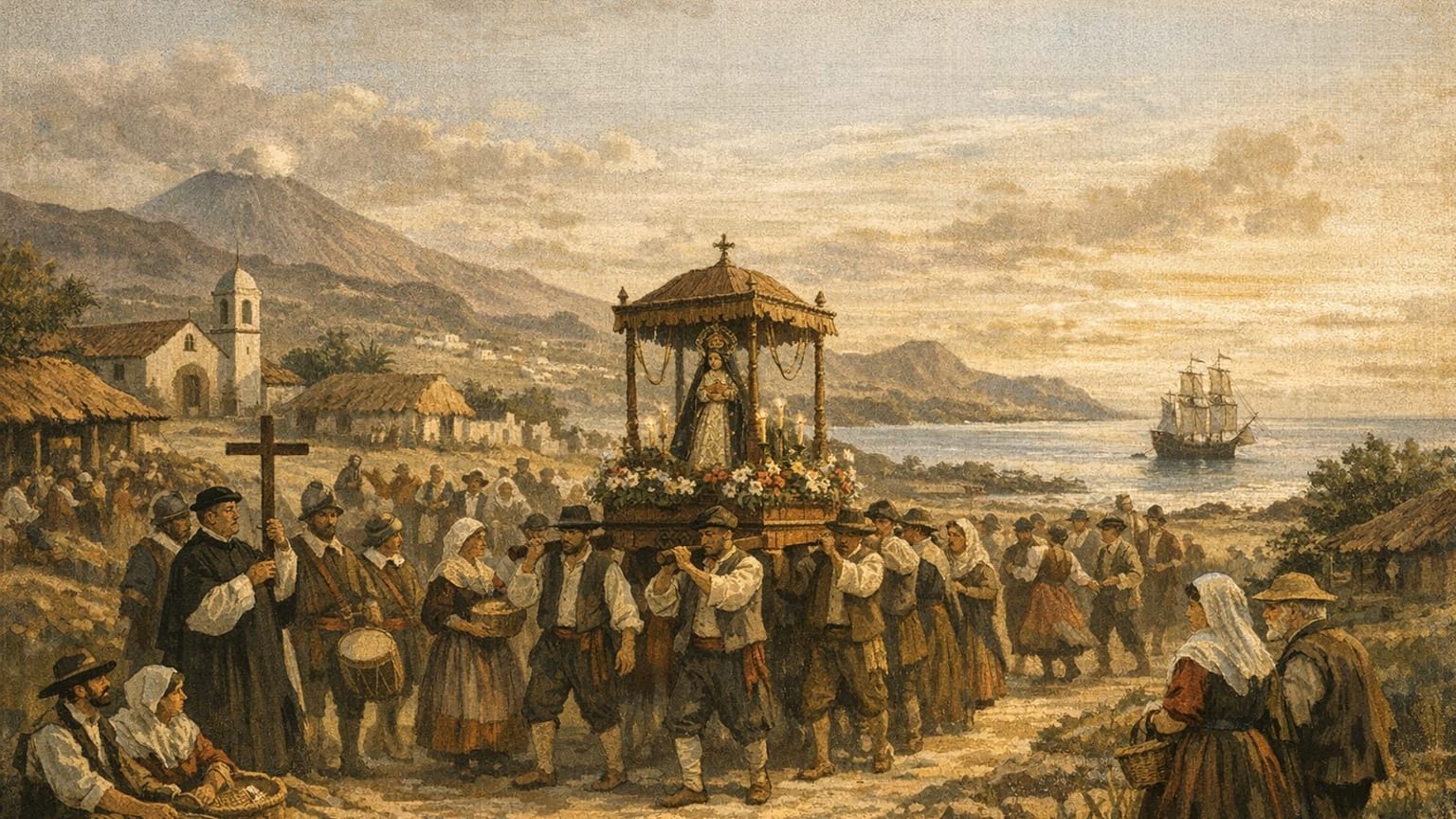
Romerías are popular pilgrimages in which the residents of a municipality, dressed in traditional costumes and accompanied by ox-drawn carts loaded with agricultural products, walk to the hermitage or sanctuary of the patron saint. They blend religious devotion, music, gastronomy and the reaffirmation of local identity on every island.[1][2]
History and authorisation
The celebration of romerías in the Canary Islands has documented antecedents from the seventeenth century, when ecclesiastical and civil authorities regulated these collective pilgrimages. Over time, each municipality set its own date, route and forms of celebration.[1]
Celebration and identity
Romerías bring together devotion to the patron saint, cart parades, tasting of local products and dancing to traditional music. They are one of the most visible expressions of Canarian popular culture and of municipal differentiation within the archipelago.[1][2]
Related reading
Sources used
- Turespaña (Ministerio de Industria y Turismo) — Islas Canarias (2018)View reference
- View reference