

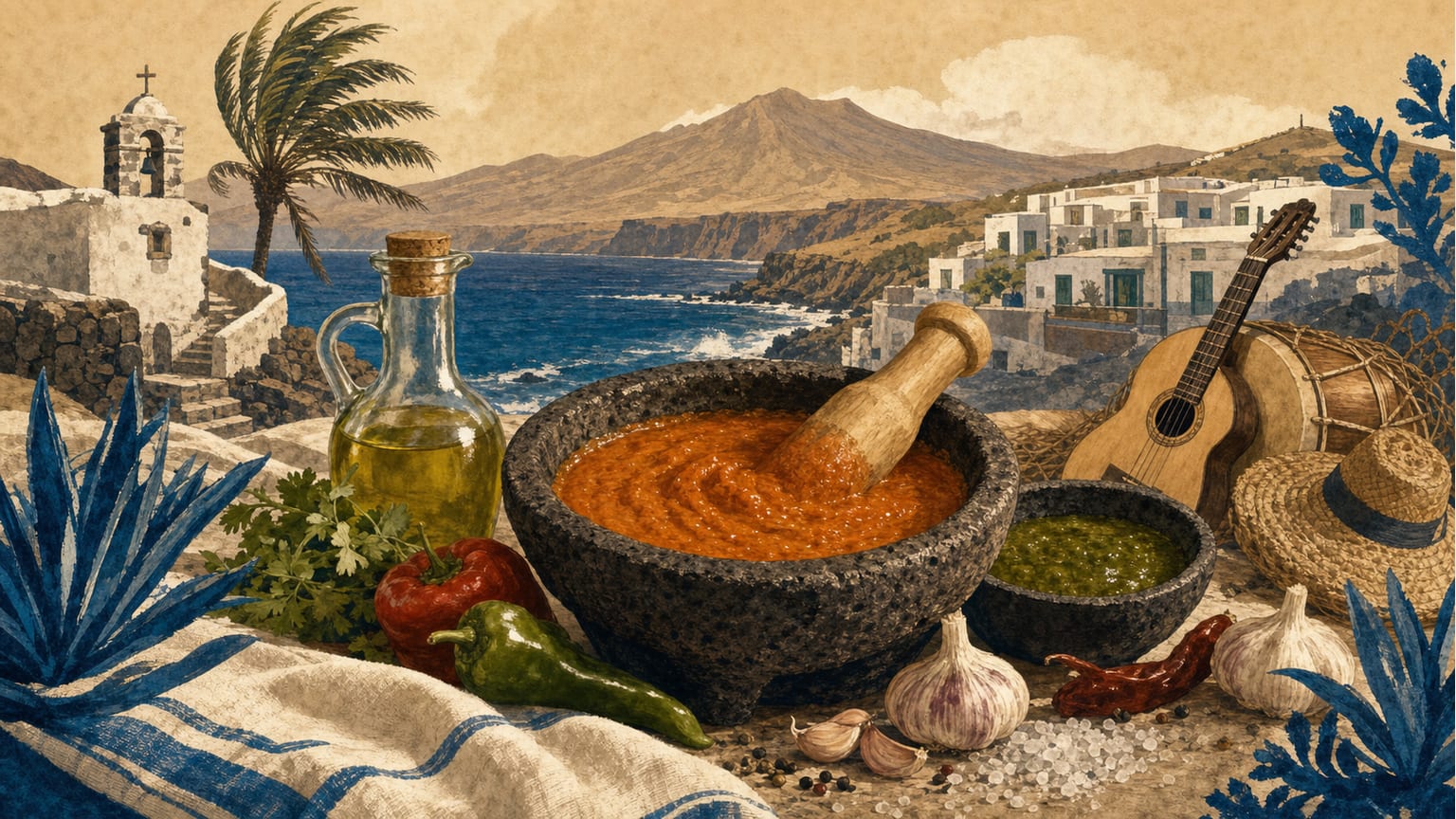
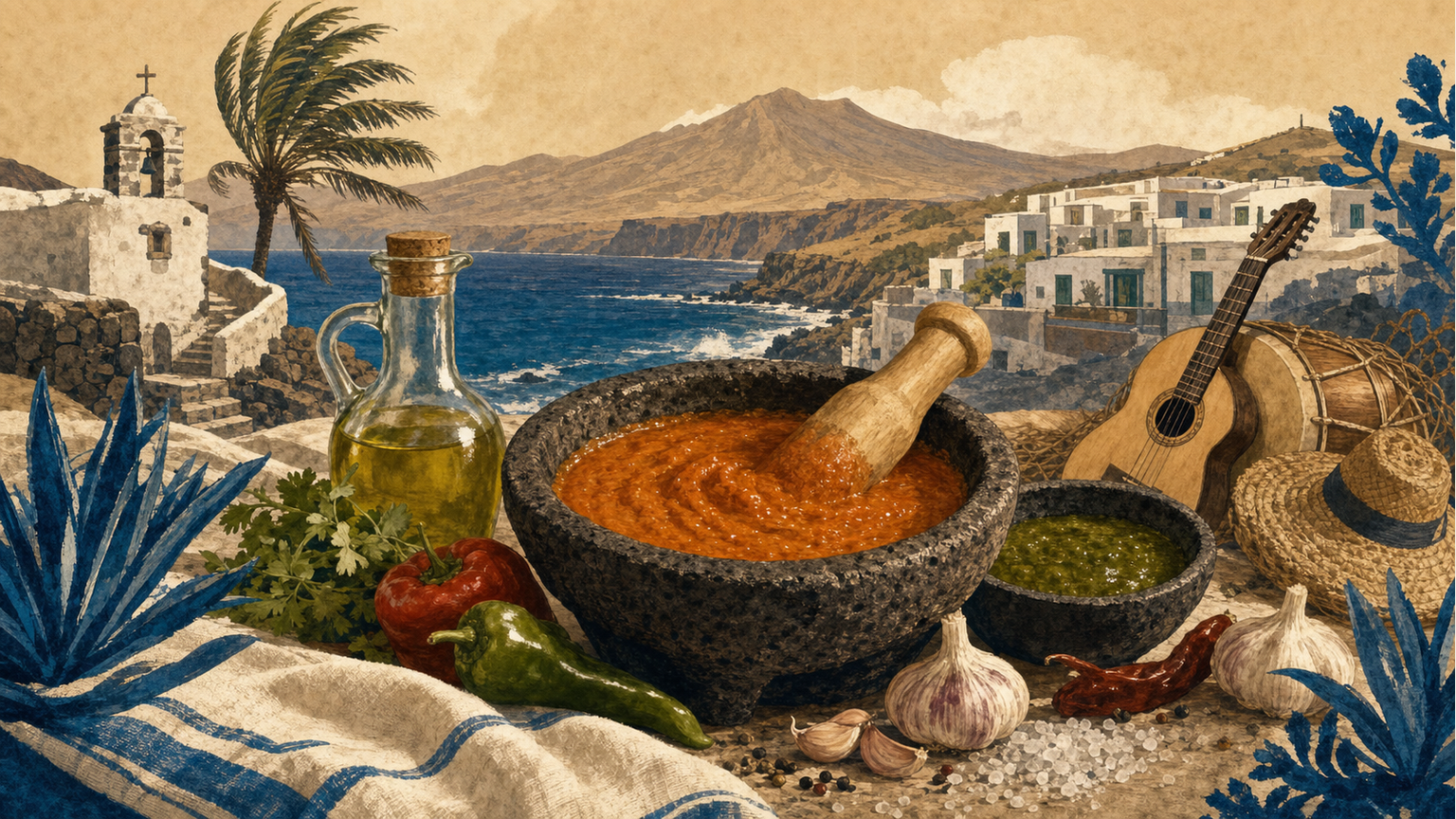
Canarian mojo is a cornerstone of the Canary Islands’ culinary tradition, featured in many typical dishes and enjoyed by both locals and visitors[1]. The cookbook “A la carta. Recetario de cocina canaria, nacional e internacional” (1974), coordinated by Elizabeth Power de López, devotes several pages to the recipes and variations of this essential sauce[1].
Mojo colorado (Red Mojo)
Mojo colorado, or red mojo, is traditionally made with red pepper, cumin, garlic, paprika, oil, vinegar, and water. According to Conchita Suárez de Melián’s recipe, the red pepper is soaked for one hour, then mashed with garlic, cumin, and paprika in a mortar. Once well mashed, the mixture is blended with oil and vinegar, and water is added at the end to soften the sauce[1]. This sauce is commonly served with wrinkled potatoes, fish, and meats.
Another variation, provided by Elizabeth Power de López, uses 2 garlic cloves, half a hot pepper, ground cumin, paprika, salt, and Louit vinegar. The ingredients are mashed in a mortar and mixed well, with water added to achieve the desired consistency. The recipe highlights the importance of adjusting the water to control the sauce’s strength[1].
Mojo verde (Green Mojo)
Mojo verde is another key variant, especially used to accompany fish and potatoes. Its basic recipe includes cumin, garlic, green pepper, parsley, oil, vinegar, salt, and water. The preparation follows the same process as red mojo: the ingredients are mashed in a mortar and blended with oil and vinegar, with water added at the end[1].
A more elaborate version, also included by Power de López, uses a whole head of garlic, cumin, a bunch of parsley, oregano, salt, black pepper, olive oil, vinegar, and breadcrumbs. After mashing the main ingredients, they are mixed with oil, vinegar, and water, and breadcrumbs are added to slightly thicken the sauce. This recipe yields about three cups of sauce, ideal for serving with fish and wrinkled potatoes[1].
Mojo for Sancocho
The cookbook also provides a specific mojo recipe for sancocho, a typical Canarian dish. Dried red pepper, garlic, salt, and cumin are mashed, then bread crumbs, vinegar, oil, and water are added to create a denser texture and intense flavor[1].
Uses and Pairings
Canarian mojo, in its various forms, is an essential accompaniment for dishes such as wrinkled potatoes, sancocho, fish, and meats. The cookbook emphasizes the versatility of these sauces and their central role in the culinary identity of the Canary Islands[1].