

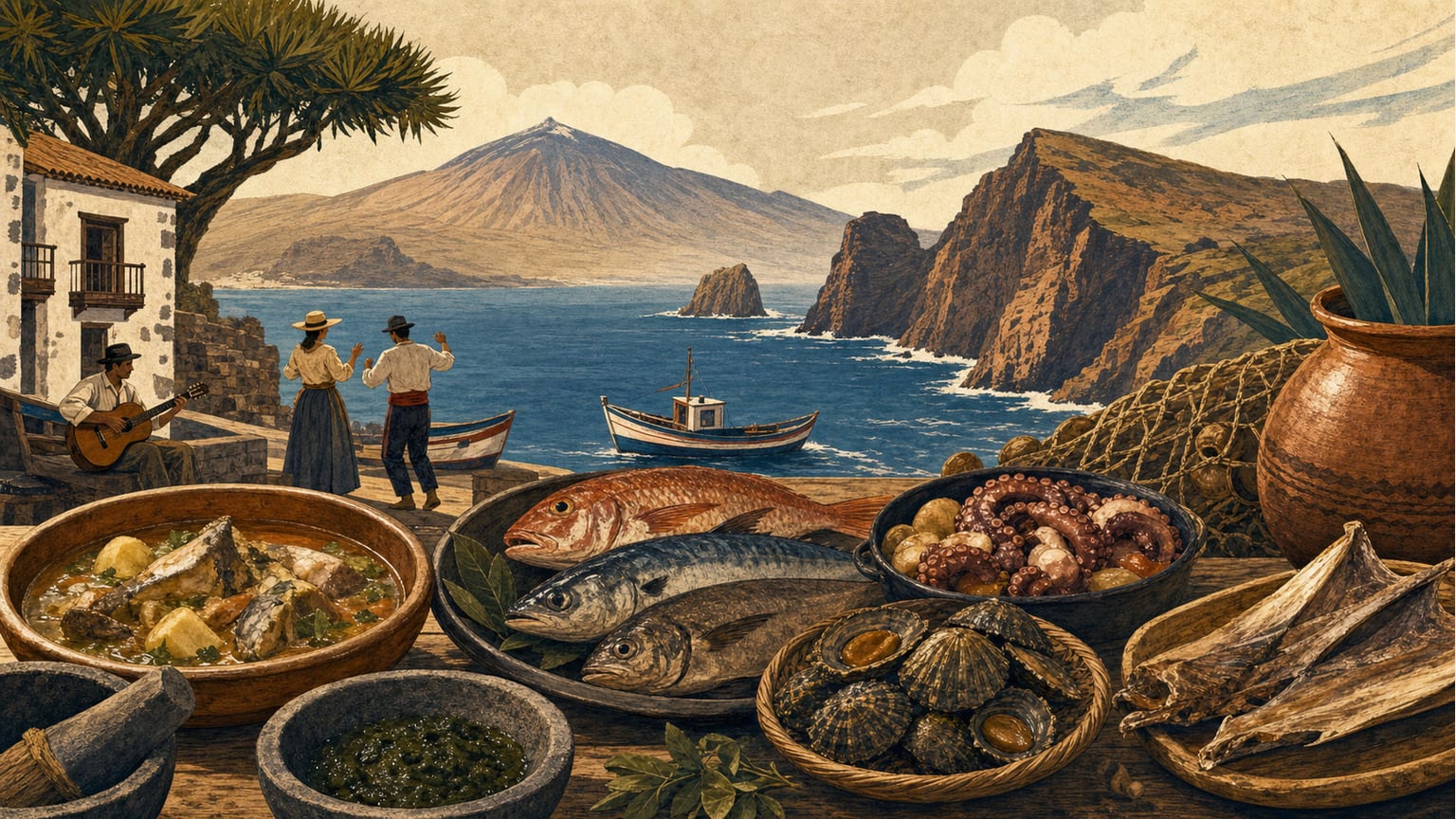
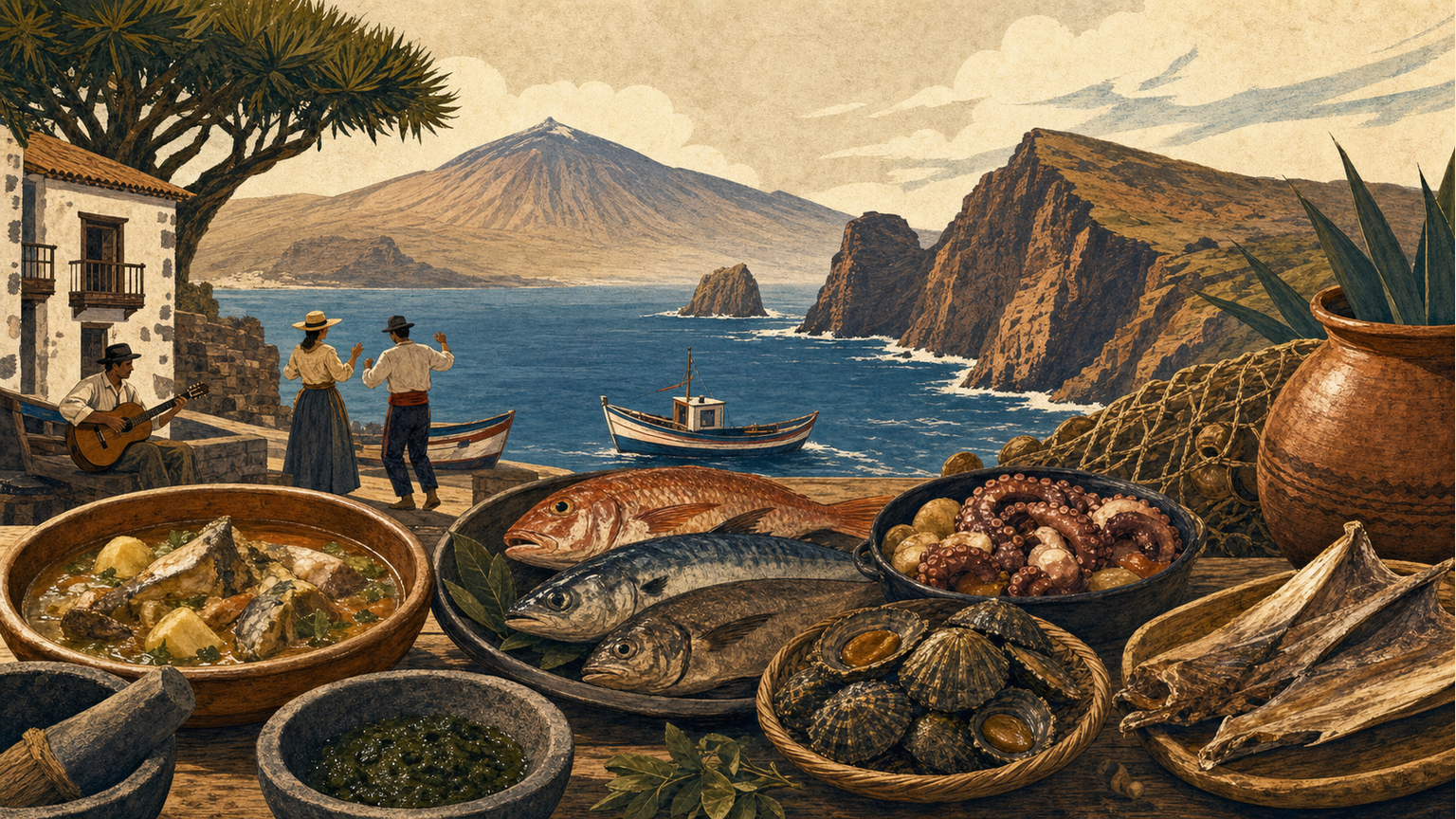
The traditional cuisine of La Gomera, El Hierro, and Tenerife is marked by a remarkable diversity in both the marine species used and the methods of preparation, reflecting the biological richness of their waters and the cultural adaptations of each island[1]. The cookbook “Entre olas. Recetas tradicionales de La Gomera, El Hierro y Tenerife” highlights how the selection of species and culinary techniques differ significantly among the islands, influenced by geographic, ecological, and social factors[1].
For instance, in El Hierro, species such as peto (wahoo), vieja (parrotfish), and rabil (yellowfin tuna) are predominant, followed by limpets, tuna, alfonsiño, and bonito listado, while sardines, sea urchins, or cabrilla are rarely consumed[1]. In La Gomera, limpets, octopus, prawns, cuttlefish, and grouper are common, with shrimp, tollos (dogfish), and baby squid being less frequent[1]. Tenerife, meanwhile, is known for the consumption of shrimp, octopus, cabrilla, and alfonsiño, while species like gallo, barrilote, or bonito listado are not among the most popular recipes[1].
Preparation methods also vary notably. In El Hierro, dishes “a la espalda” (grilled and split open) or in sauce, often accompanied by mojo queso, are common[1]. In La Gomera, grilled and onion-based dishes are prevalent, while in Tenerife, stews, fried dishes, and plates served with potatoes are typical[1]. The distance from the coast also influences the complexity of recipes and the specificity of species used: inland communities tend to have more generic recipes with a wider variety of species, while coastal areas feature more complex dishes using local species[1].
The islands’ submarine topography further conditions the availability of species and, consequently, culinary traditions. La Gomera has an extensive marine platform, while Tenerife and El Hierro have steep descents exceeding 1,000 meters, favoring the presence of tuna and other deep-sea species[1]. However, much of these high-quality products are exported, limiting local consumption[1].
Differences in species and preparation methods reflect not only culinary preferences but also historical and ecological adaptations. For example, the scarcity of certain ingredients due to fishing pressure, climate change, or pollution has led to innovations in recipes, preserving the essence of traditional cooking while adapting to new realities[1].
The “Entre olas” cookbook documents more than 50 traditional recipes, demonstrating how the diversity of species and culinary techniques is a central element of the maritime gastronomic heritage of these islands[1].