

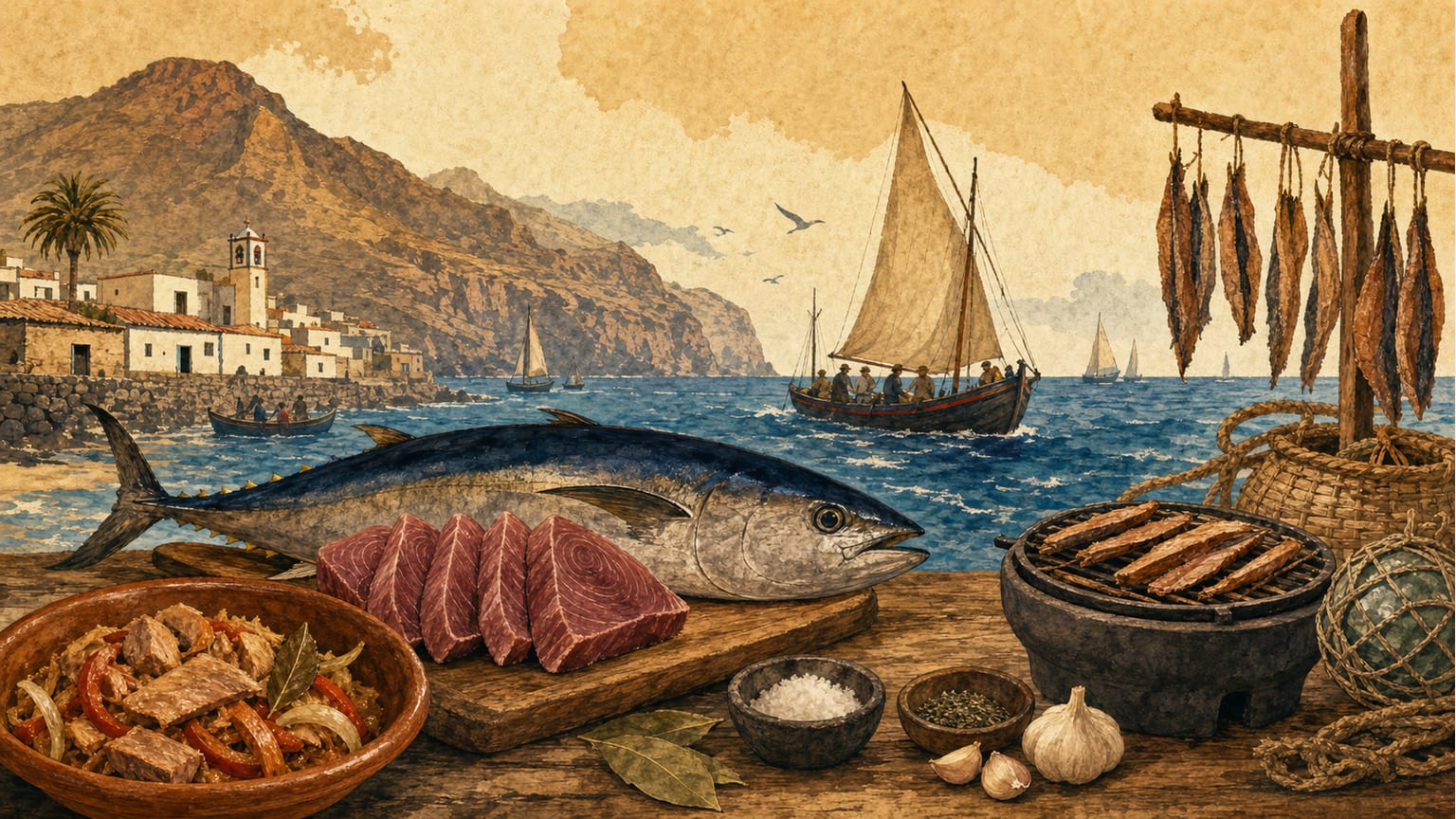
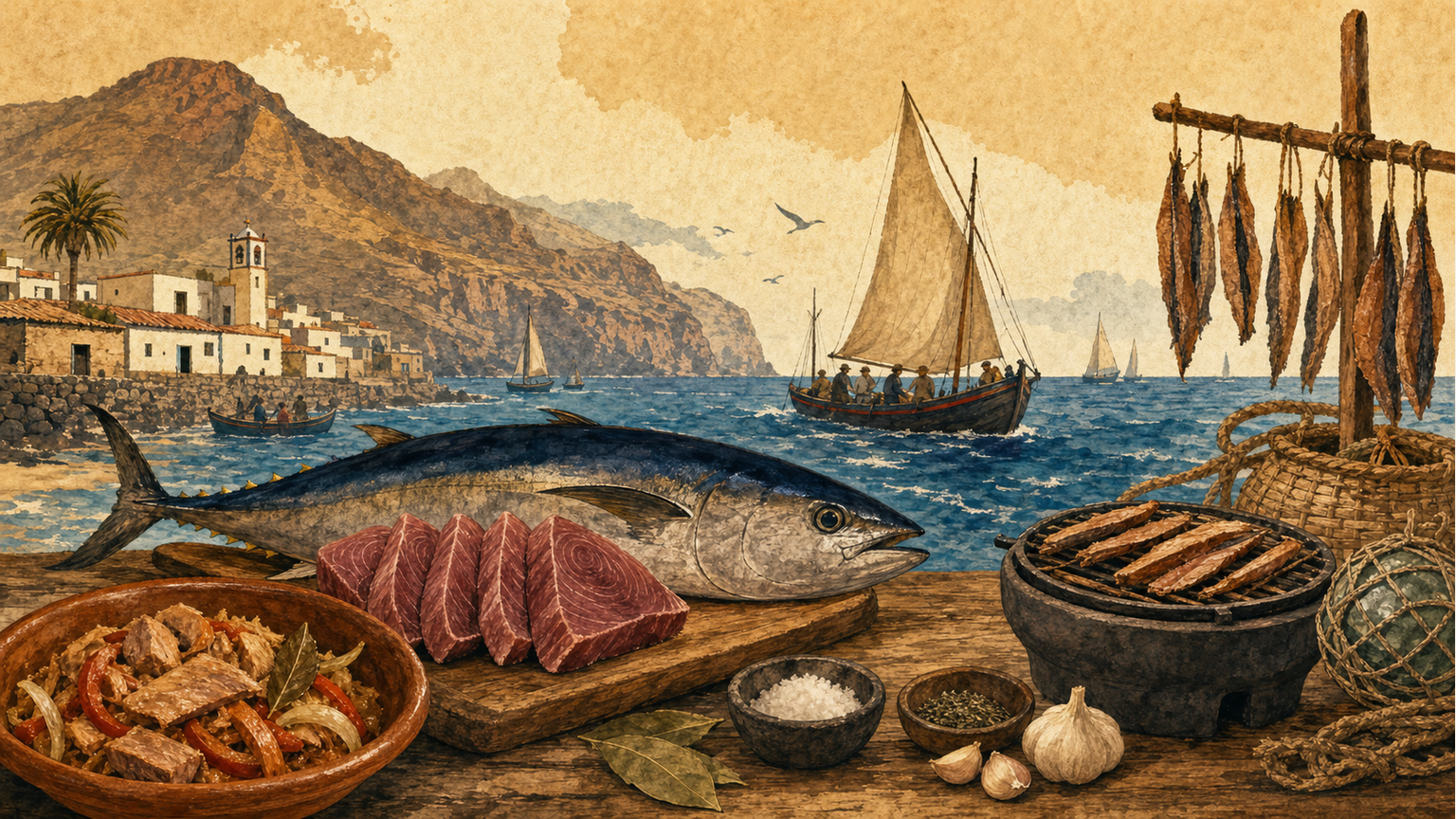
The island of La Gomera, with its history deeply connected to the sea, has developed a rich culinary tradition centered on tuna, one of the most emblematic products of its gastronomy[1]. Since ancient times, fishing and the canning industry have shaped the island’s development, and tuna has played a leading role both in domestic kitchens and local restaurants[1].
Tuna preparation techniques in La Gomera are diverse and reflect adaptation to available resources and local tastes. The cookbook “Entre olas. Recetas tradicionales de La Gomera, El Hierro y Tenerife” highlights dishes such as tuna a la marinera in escabeche, tuna in mojo, boiled tuna in mojo, grilled tuna with majado, marinated tuna, and tuna in oil[1]. These preparations use local ingredients like cumin, oregano, red mojo, and gofio, employing methods ranging from escabeche to grilling and oil preservation[1].
Tuna a la marinera in escabeche, for example, combines the fish with onion, pepper, garlic, cumin, vinegar, and water, resulting in a juicy and aromatic dish served with plenty of sauce[1]. Tuna in mojo involves cooking the fish with oregano and vinegar, then adding a red mojo made with garlic, cumin, pepper, and oil, served with boiled potatoes and kneaded gofio[1].
The tradition of preserving tuna in oil is also maintained. After cooking the fish with garlic, pepper, and oregano, it is stored in glass jars covered with olive oil, allowing later use in salads or as an ingredient in other recipes[1]. These preservation techniques reflect the importance of maximizing marine resources and ensuring food supply during times of scarcity[1].
The cookbook also highlights the evolution of tastes and culinary practices in La Gomera. While leftover stews were common in the past, today there is a preference for quicker preparations such as grilled tuna fillets or tuna in mojo, adapting to changing lifestyles and the influence of tourism and migration[1]. Nevertheless, dishes like stewed octopus or tuna with onions remain present in local gastronomy, both in homes and in the island’s restaurants and bars[1].
The origin of tuna and other seafood is valued by Gomeran residents, who prefer fresh fish from the local fishing guild and fishmongers[1]. This preference supports the sustainability of artisanal fishing and reduces dependence on imports, benefiting the local economy and preserving culinary traditions[1].
In summary, tuna in Gomeran cuisine is not only a staple food but also a symbol of identity and cultural continuity, passed down through generations via family recipes and oral tradition[1].