

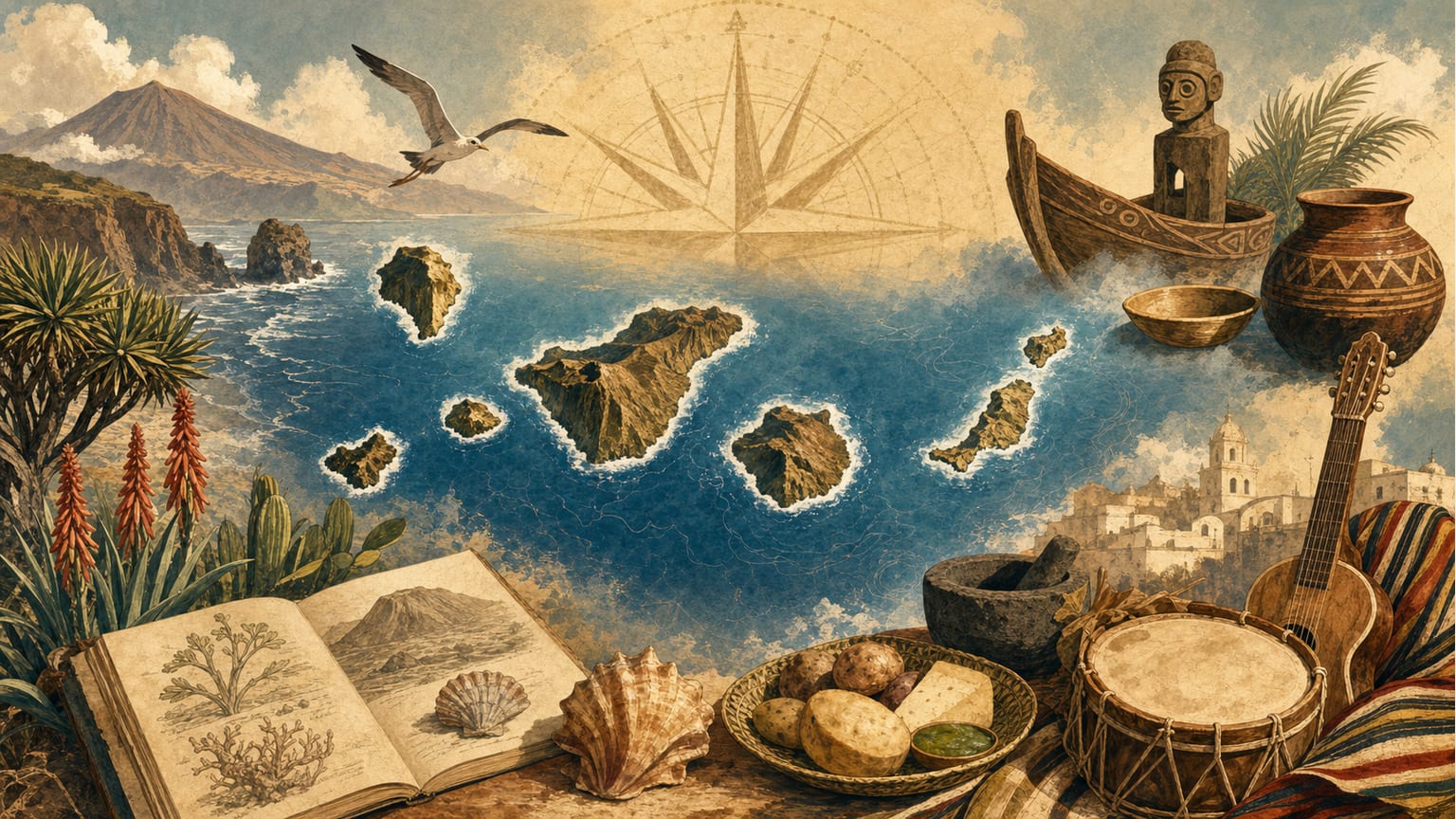
Nesology is a proposed discipline for the comprehensive study of islands from any perspective, including myth, history, literature, art, music, philosophy, and psychology[1]. This science of islands is conceived as a broad field of knowledge, capable of analyzing specific phenomena and problems of the insular world, and is especially relevant for the Canary Islands, where insularity has generated myths, names, and traditions[1].
Among the topics addressed by nesology are phenomena of nesonymy, that is, the ways of naming islands. Names can derive from gods, heroes, myths, animals, products, or flora, such as the Island of Cronos, Island of Achilles, Island of the Hesperides, Island of Goats, Island of Salt, or Island of Pines[1]. The diversity of island names reflects the cultural and symbolic wealth associated with these territories.
Another relevant aspect is polyonymy or synonymy, which studies how the same island can receive different names throughout history. For example, the mythical island of Achilles is called by Pliny sometimes Achillea, other times Leuce, and other times Macaron[1]. Nesology also analyzes metonomasia or name change, as in the case of the Greek island of Delos, which was previously called Adelos (‘The Invisible’) and later became Delos (‘the visible’) after accepting the cult of Apollo[1].
Nesology also deals with the problems of identifying or locating islands mentioned in ancient texts, many of which cannot be identified with certainty today. Examples include the legendary Thule or the mythical Ogygia, whose locations have been the subject of various hypotheses[1].
The study of Islarii, encyclopedic or specific works on islands, is another field of interest. These books, which originated in Antiquity and proliferated from the 14th century onwards in Italy, have contributed to the construction of the Western insular imaginary[1].
Nesogony, or the study of the origins of islands, distinguishes between geological explanations (subsidence, volcanic activity, etc.) and mythical ones (metamorphosis, divine intervention, fallen stars, etc.), showing the diversity of narratives about the formation of islands[1].
Finally, nesology proposes a classification or typology of islands, differentiating between real islands and poetic fictions. The latter can be subdivided into categories such as mythical, legendary, utopian, eschatological, floating, fantastic, phantom, magical, lost, or enchanted islands[1].
For the Canary Islands, nesology enables the analysis of the complex insular nomenclature, which includes current, aboriginal, Latin, and mythical names. This perspective facilitates the understanding of the symbolic and cultural richness of the islands, as well as their role in the Greco-Latin Atlantic imaginary[1].