

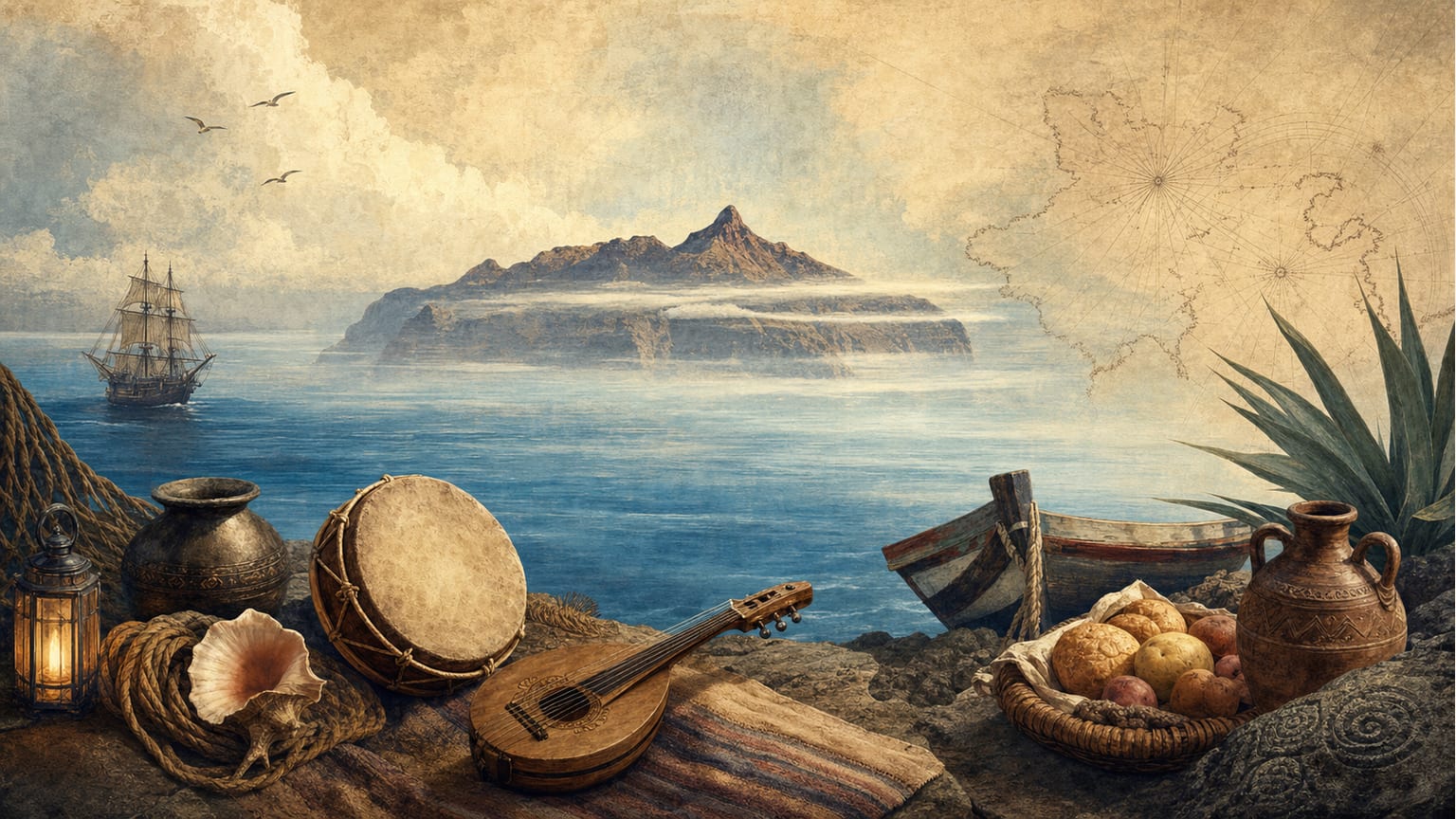
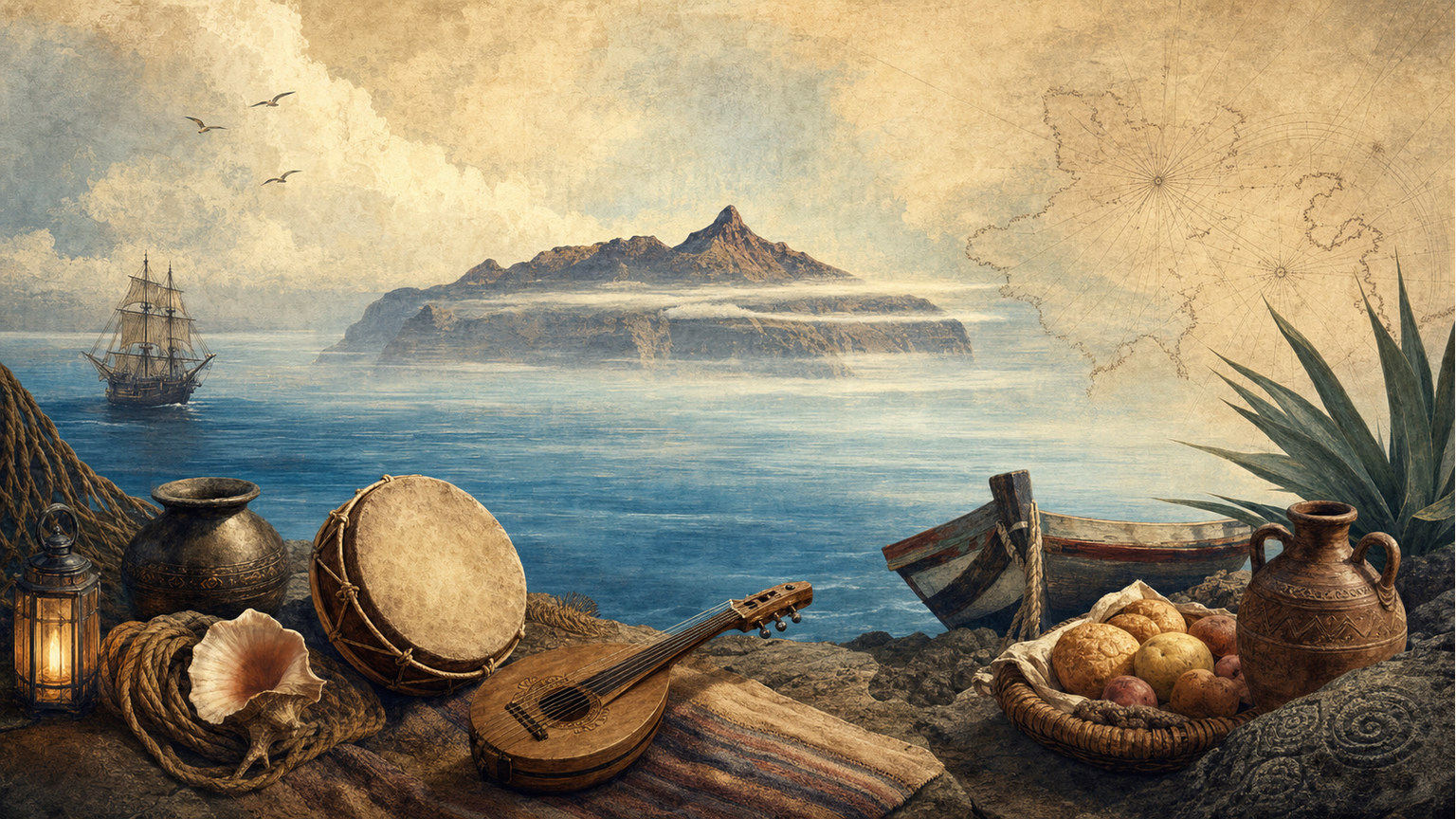
San Borondón is one of the most deeply rooted legends in the collective imagination of the Canary Islands, traditionally considered the archipelago’s eighth island[1]. This mysterious and phantom-like island, which appears and disappears on the horizon, is also known as the Hidden Island, Non Trubada, Enchanted, Lost, Aprositus, or Inaccessible in various cultural traditions[1].
The legend of San Borondón originates from the Irish monk Saint Brendan (486-577), who, according to medieval texts such as the “Navigatio Sancti Brendani”, sailed the Atlantic in search of the Promised Land or Island of Paradise, accompanied by fourteen monks[1]. During his journey, Brendan and his companions encountered numerous islands, including those of rams, birds, and Hell, until finally reaching the longed-for Island of Delights after forty days[1].
The story of Saint Brendan belongs to the Celtic literary genre of the imram, or voyage to islands, characterized by a blend of real and fictional elements. Its influence extends to tales such as those of Saint Amaro and the voyage of Trezenzonio, both related to the search for paradisiacal islands in the Atlantic[1].
San Borondón appears in medieval cartography from the 13th to the 19th centuries. The first explicit association between Saint Brendan and the Canary Islands is found in the Hereford Mappa Mundi (1290), which bears the Latin inscription: “The six Fortunate Islands are the Islands of Saint Brendan”[1]. Furthermore, San Borondón has been identified in various maps as a Lost, Floating, Phantom, Whale, and Paradise island, reflecting the richness and variety of interpretations it has inspired[1].
The legend of San Borondón has inspired numerous writers and artists, both Canarian and international, including Benito Feijóo, W. Irving, Ch. Kingsley, Vicente Blasco Ibáñez, Jorge Luis Borges, Ignacio Aldecoa, Dulce María Loynaz, Pedro Lezcano, and Luis Álvarez Cruz[1]. In painting, the mural “Aparición de la isla de San Borondón” by Juan Ismael (1935) stands out, and in music, the group Los Sabandeños dedicated an album to the island in 1980[1].
Within the Greco-Latin Atlantic imaginary, San Borondón represents a unique case of a mythical island linked to the Canary Islands, enduring through centuries thanks to its presence in literature, cartography, and the arts[1].