

Funerary practices
Mummification, burial and death rites in the aboriginal societies of the Canary Islands, especially in Tenerife and Gran Canaria.
The aboriginal societies of the Canary Islands developed diverse funerary practices that reflect beliefs about death and the afterlife. In Tenerife, the mummification of corpses was a practice documented by chroniclers and studied through bioanthropological remains; in Gran Canaria, collective burials in caves and tumuli such as those of Arteara predominated.[1][2]
Mummification in Tenerife
The Guanches of Tenerife mummified high-ranking deceased through techniques that combined evisceration, desiccation and the application of resins and oils. Bioanthropological studies of Guanche mummies have provided information on diet, pathologies and social status.[1][2]
Arteara necropolis
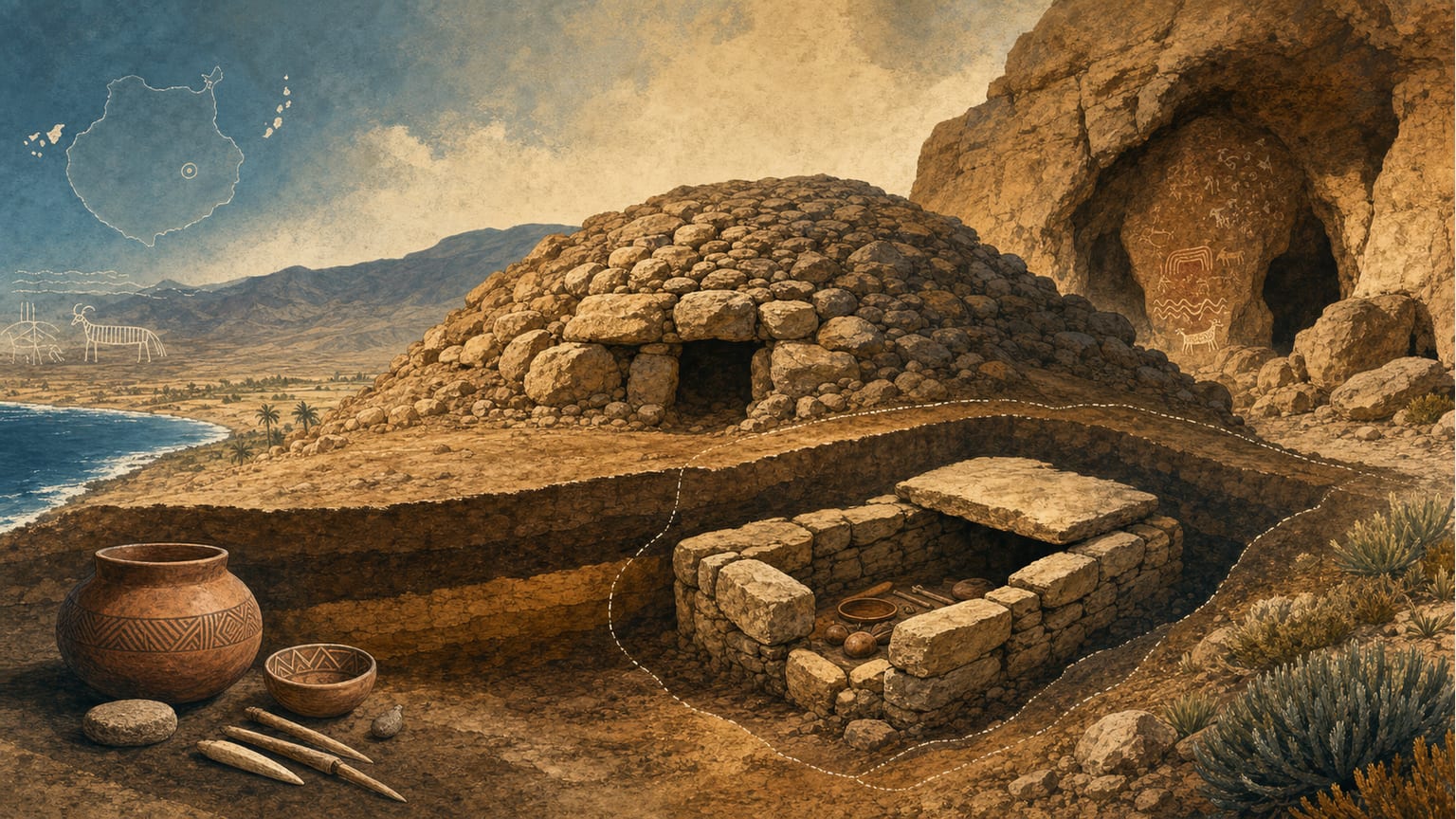
The necropolis of Arteara, in southern Gran Canaria, is one of the most important funerary complexes in the archipelago. Its tumuli and cists document forms of collective burial and offer a window onto the beliefs and social organisation of the island’s pre-Hispanic population.[1]
Related reading
Funerary Architecture in the Arteara Necropolis: Tumuli and Cists
A detailed analysis of the construction and typology of tumuli and cists in the Arteara Necropolis, the largest pre-Hispanic cemetery in the Canary Islands.
Read more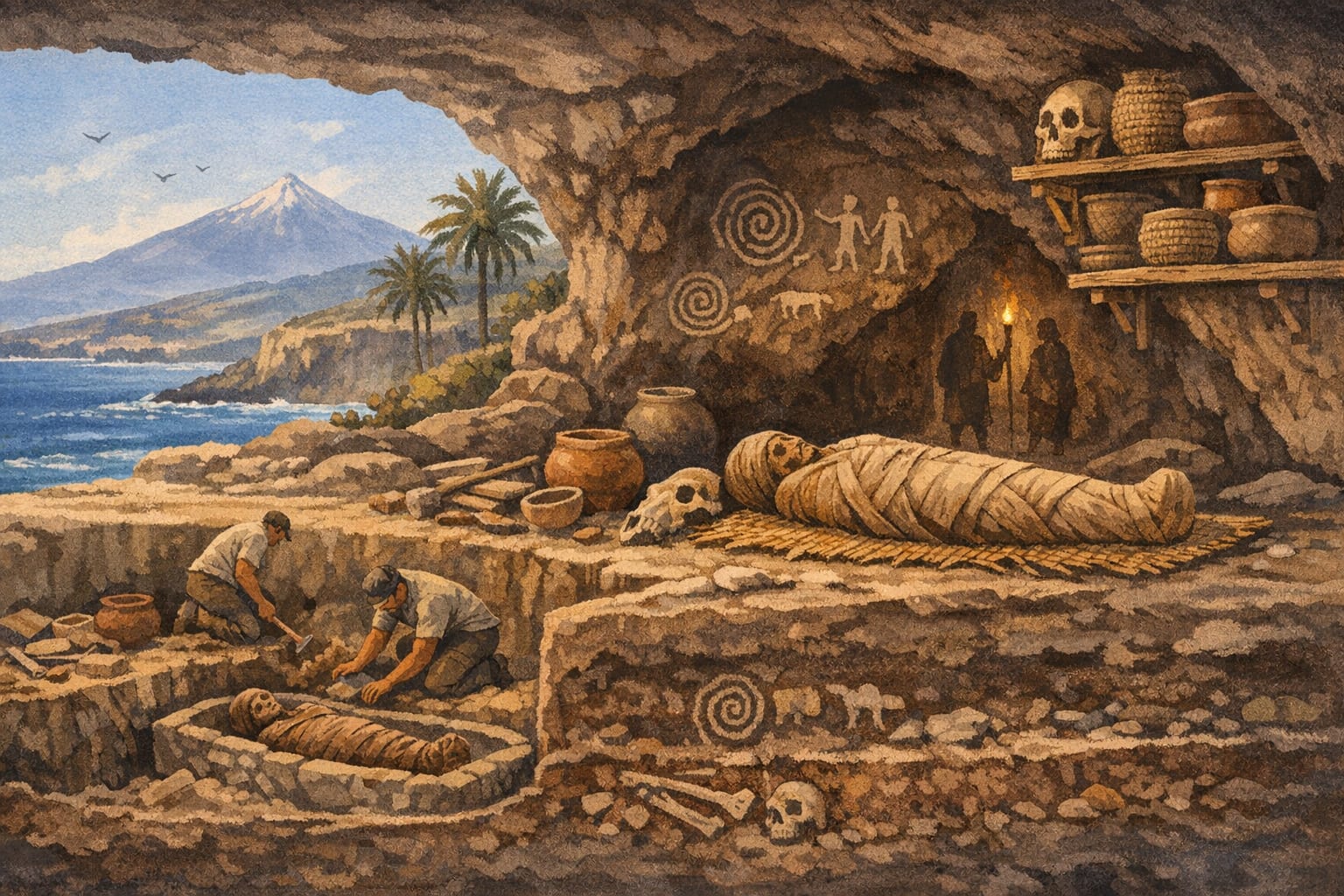
Guanche Mummification: Ancient Funerary Art in Tenerife
The Guanche practice of mummification in Tenerife reveals a complex funerary tradition and a unique cultural legacy. This article explores the techniques, social meaning, and archaeological significance of Guanche mummification.
Read more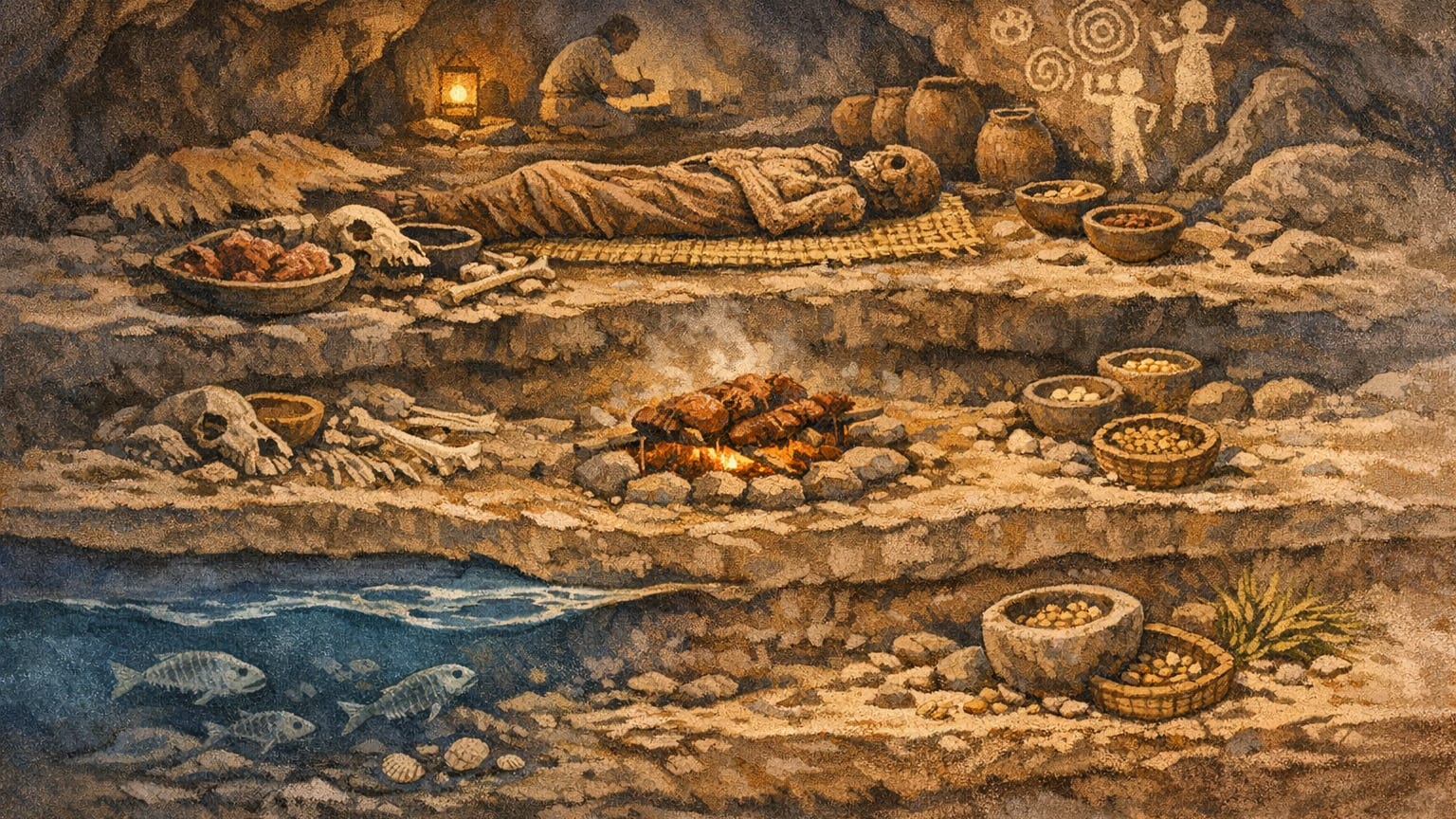
Reconstructing Guanche Diets: Insights from Mummy Analysis
Bioanthropological studies of Guanche mummies reveal a diet rich in meat, with limited plant and marine foods, shedding light on their lifestyle and social structure.
Read moreSources used
- Rafael González Antón, Conrado Rodríguez Martín, Fernando Estévez González — Bioantropología de las Momias Guanches (1992), pp. 51-61 Dialnet (Universidad de La Rioja)View reference
- Schlueter Caballero, Rosa — La necrópolis de Arteara. Síntesis imposible (2009), pp. 80 p. Memoria Digital de Canarias — ULPGCView reference
- Luis Diego Cuscoy — Los Guanches: Vida y cultura del primitivo habitante de Tenerife (1968), pp. 319 Memoria Digital de Canarias — ULPGCView reference