

The Guanche as a Mirror: Invention, Identity, and Raciology in the Canary Islands
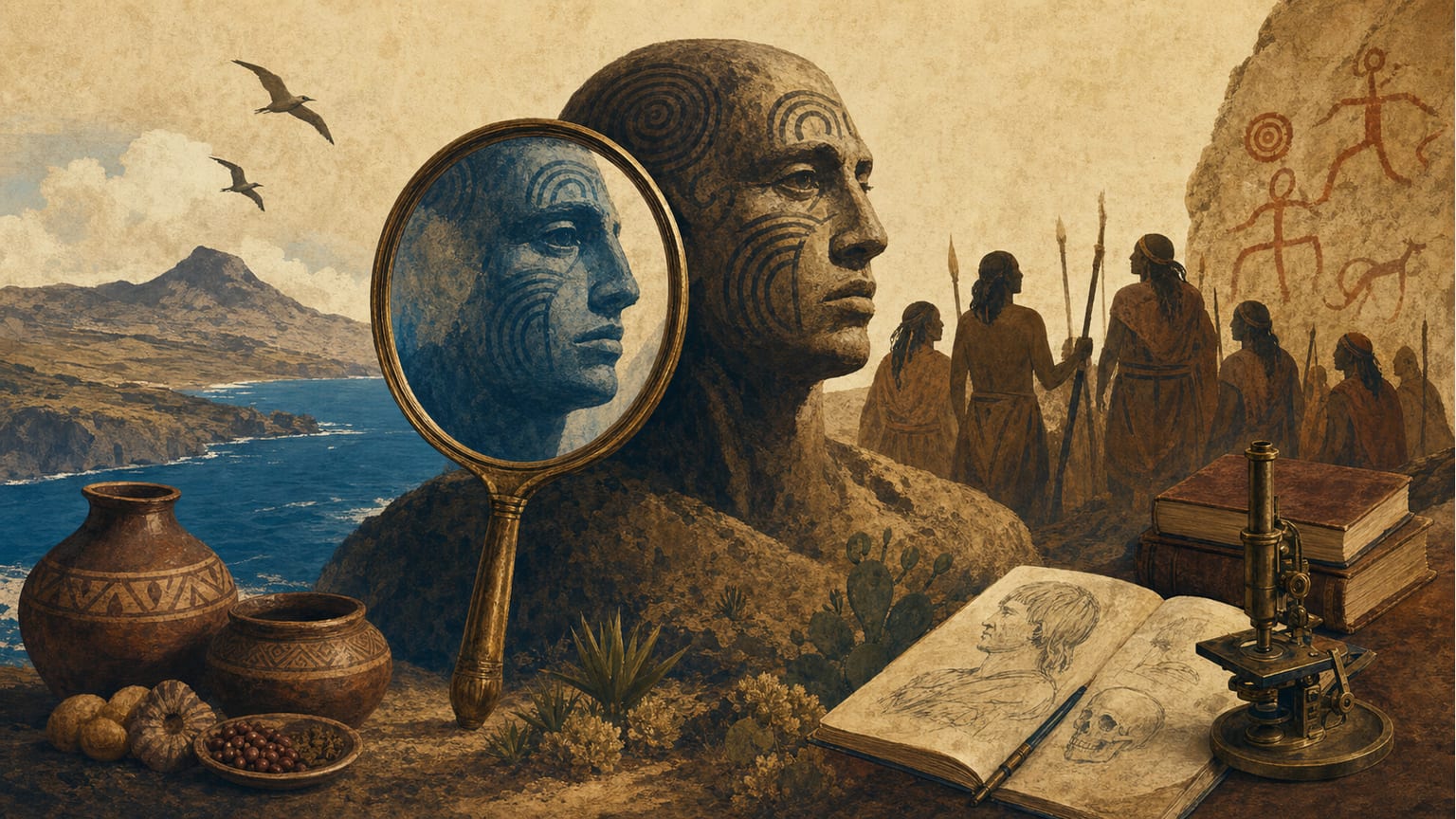
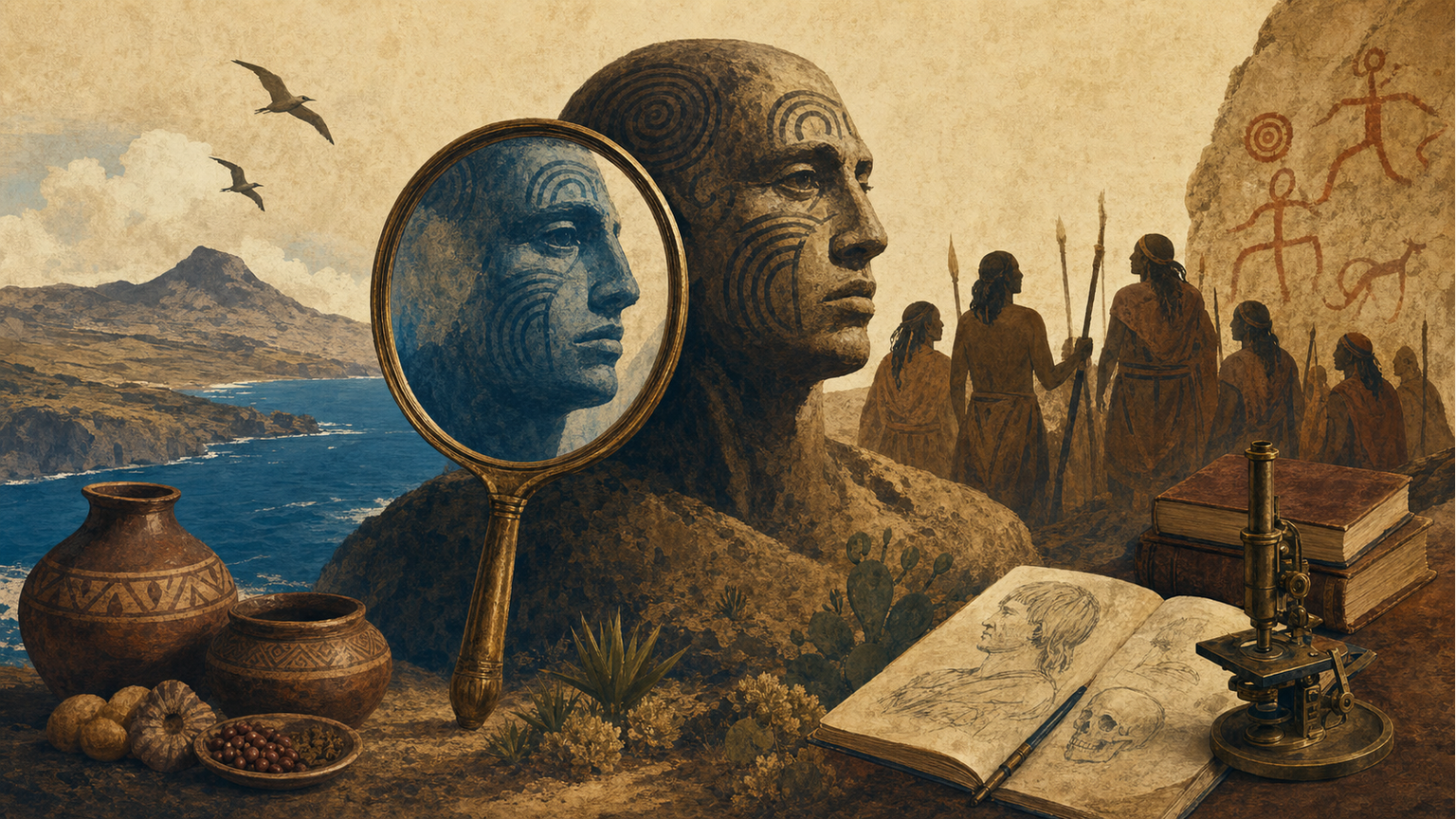
The Guanche is more than an archaeological curiosity; it has become a central figure in the construction of Canarian identity. But how was this image forged, and whose interests did it serve? Fernando Estévez González, in his analysis of the invention of the Guanche, encourages us to critically examine the interplay between science, power, and ideology in shaping this foundational myth[1].
From Indigenous Peoples to Archetype
After the conquest, the ancient Canarians were transformed from “barbarians” into objects of admiration and sympathy, both within and outside the islands. This shift was not accidental: European imperial perspectives, eager to classify and rank “others,” placed the Guanches in a privileged position within 19th-century racial taxonomies. This was not strictly for scientific reasons, but rather for ideological and political motivations, attributing them with nobility, bravery, and a supposed closeness to European ancestors[1].
Raciology and the Search for a Noble Origin
Following Berthelot’s work, Canarian anthropology focused on demonstrating the biological and moral continuity of the Guanches in the modern population. The idea that the Guanches were North African Berbers, white and of European origin, became the cornerstone of Canarian identity. This narrative was far from innocent; it reflected the desire of Creole elites to distance themselves from those whom the West had marked as inferior: Arabs, Indians, and Black people[1].
Science was not neutral in this context. Physical anthropology and raciology legitimized a white, European Canarian identity, while psychology and folklore reinforced positive stereotypes about the Guanche character. Thus, the aboriginal past became a tool for asserting the modernity and dignity of Canarian society.
The Guanche Myth and Nation-Building
Paradoxically, the Guanche as we imagine today never truly existed. It was an invention—a historical and cultural construction that provided the Canarian nation with prestigious, pre-modern ancestors. As Estévez notes, “the history of the Guanches is nothing other than the narcissistic gaze of those who first considered themselves God’s chosen and later… convinced themselves that Nature had forever favored them”[1].
Today, the Guanche legacy remains central in debates about identity in the face of globalization and immigration. Yet, as José Bergamín warned, searching for roots can sometimes be “a subterranean way of going out on a limb.”