

The Meaning of Indigenous Canarian Names: Insights into Indigenous Canarian Society
Discover how Indigenous Canarian personal names reveal the social structure, beliefs, and values of ancient Canary Islanders.
Knowledge pills about the history, culture and nature of the Canary Islands
Discover how Indigenous Canarian personal names reveal the social structure, beliefs, and values of ancient Canary Islanders.
The canary bird, a symbol of the islands, is almost absent from Galdós' National Episodes, reflecting both his relationship with his homeland and his literary caution.
Canarian Spanish bears the deep imprint of Portuguese contact, especially from the 15th to 18th centuries, enriching its vocabulary and distinguishing it from mainland Spanish.
The ancient Tifinagh script has become a powerful symbol of Amazigh cultural identity and plays a key role in the revitalization of the Amazigh language.
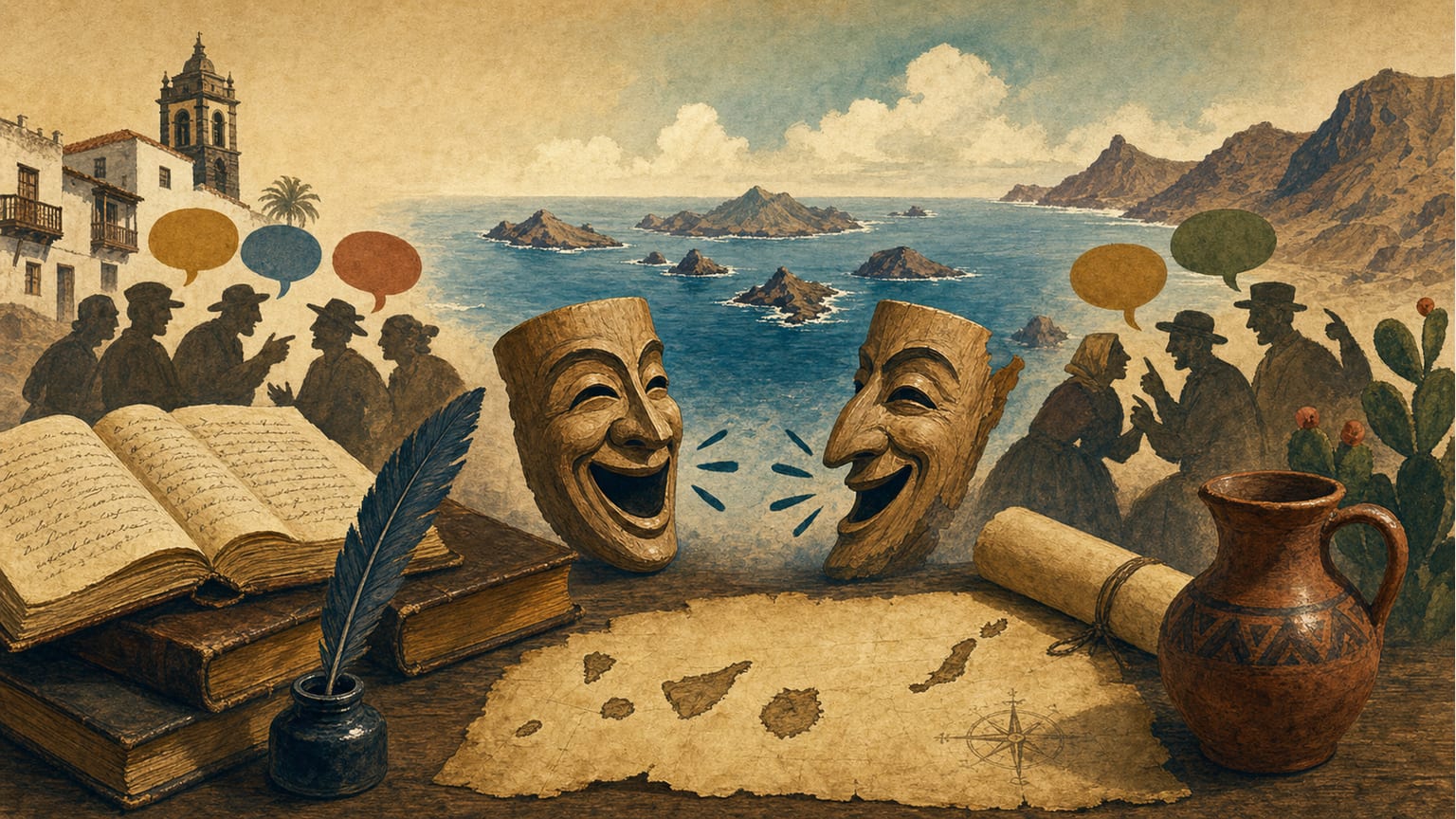
Discover how Canarian mock gentilics, born from local rivalries and humor, have become emblems of identity and tradition across the islands.
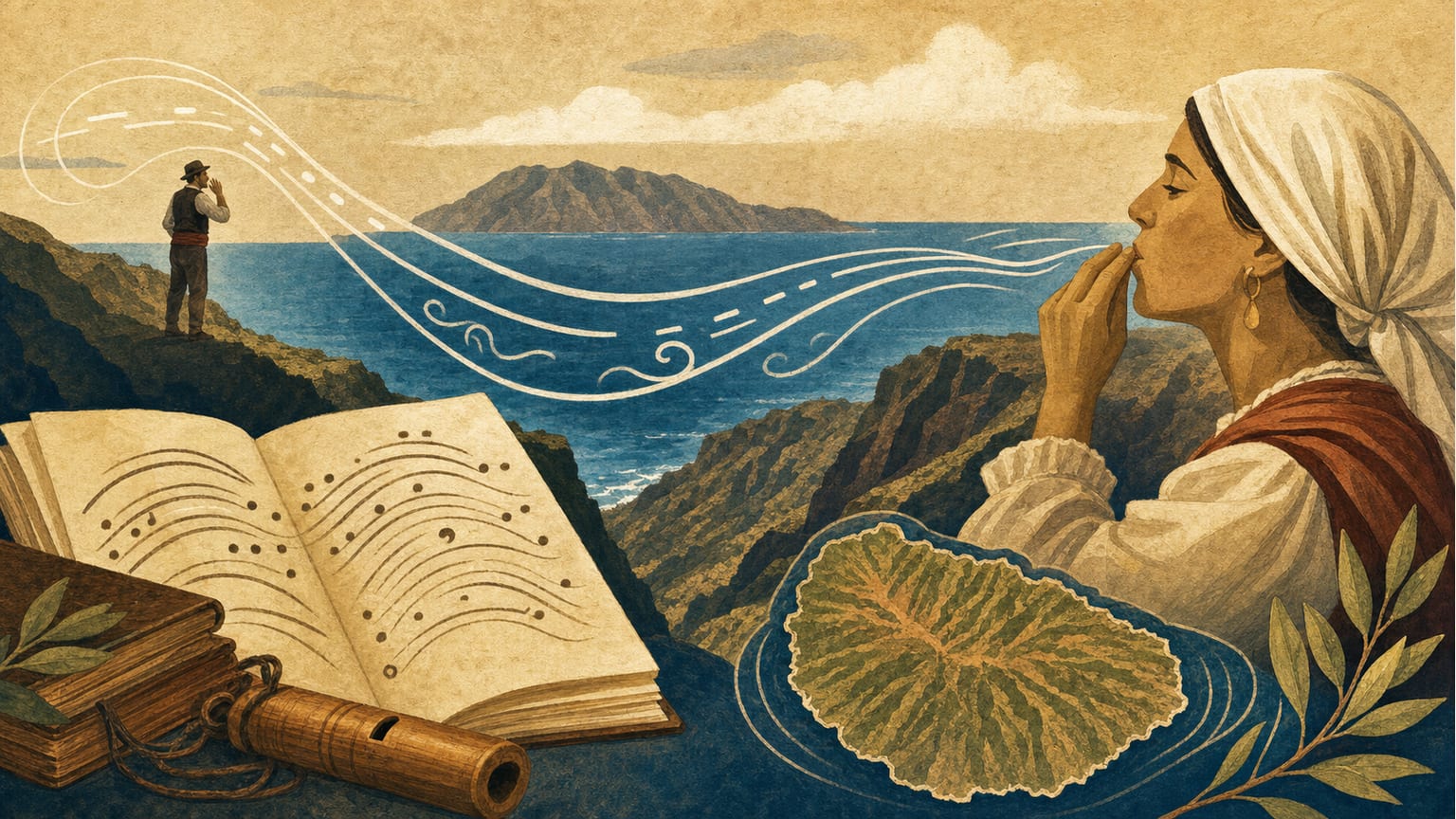
The Gomeran whistle is a unique whistled language still alive in La Gomera, enabling communication across mountains and ravines. Its recognition and teaching make it a linguistic treasure of the Canary Islands.
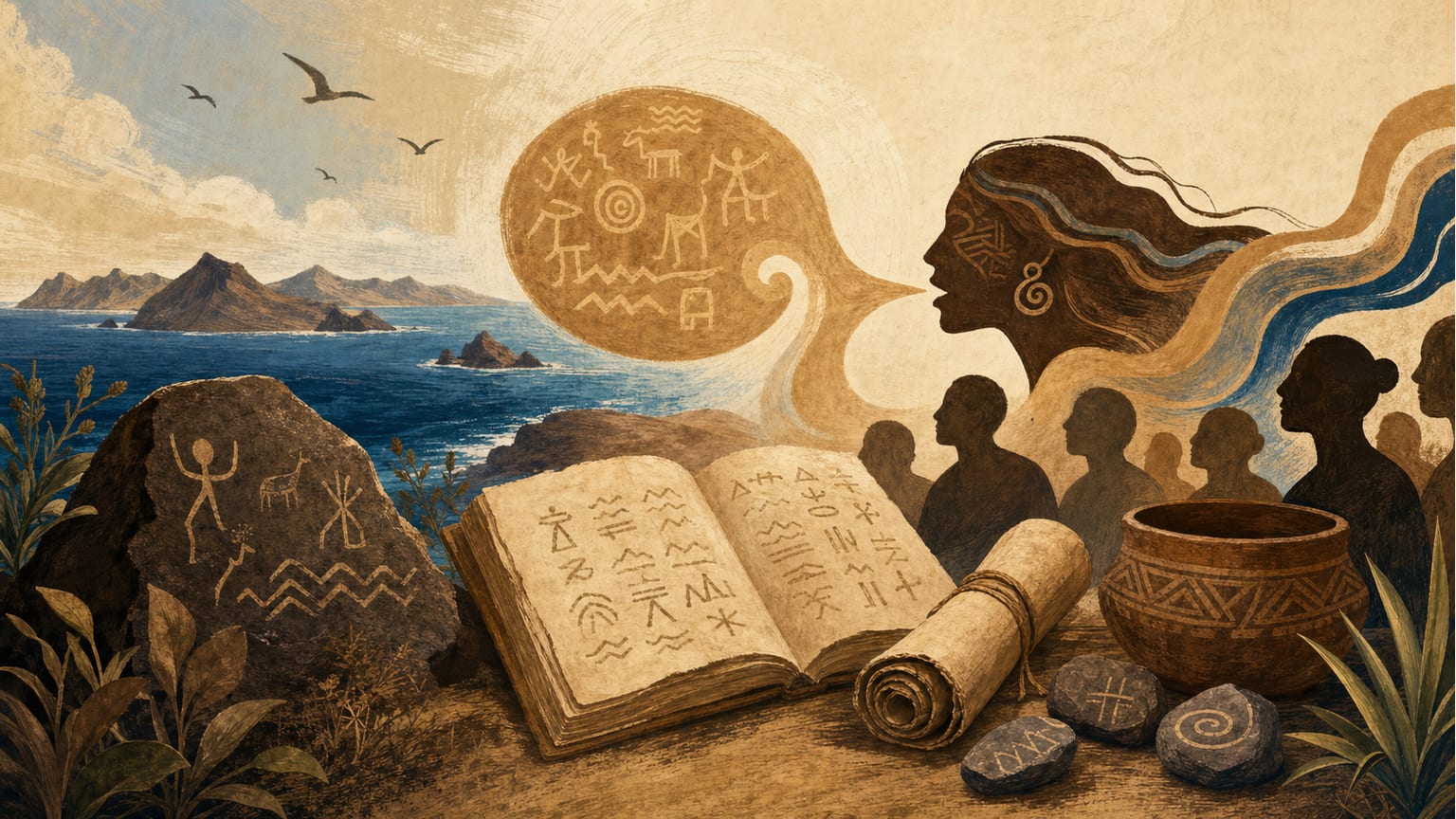
Aboriginal Canarian names have seen a remarkable revival in recent decades, reflecting both a search for identity and the impact of social and political changes in the Canary Islands.
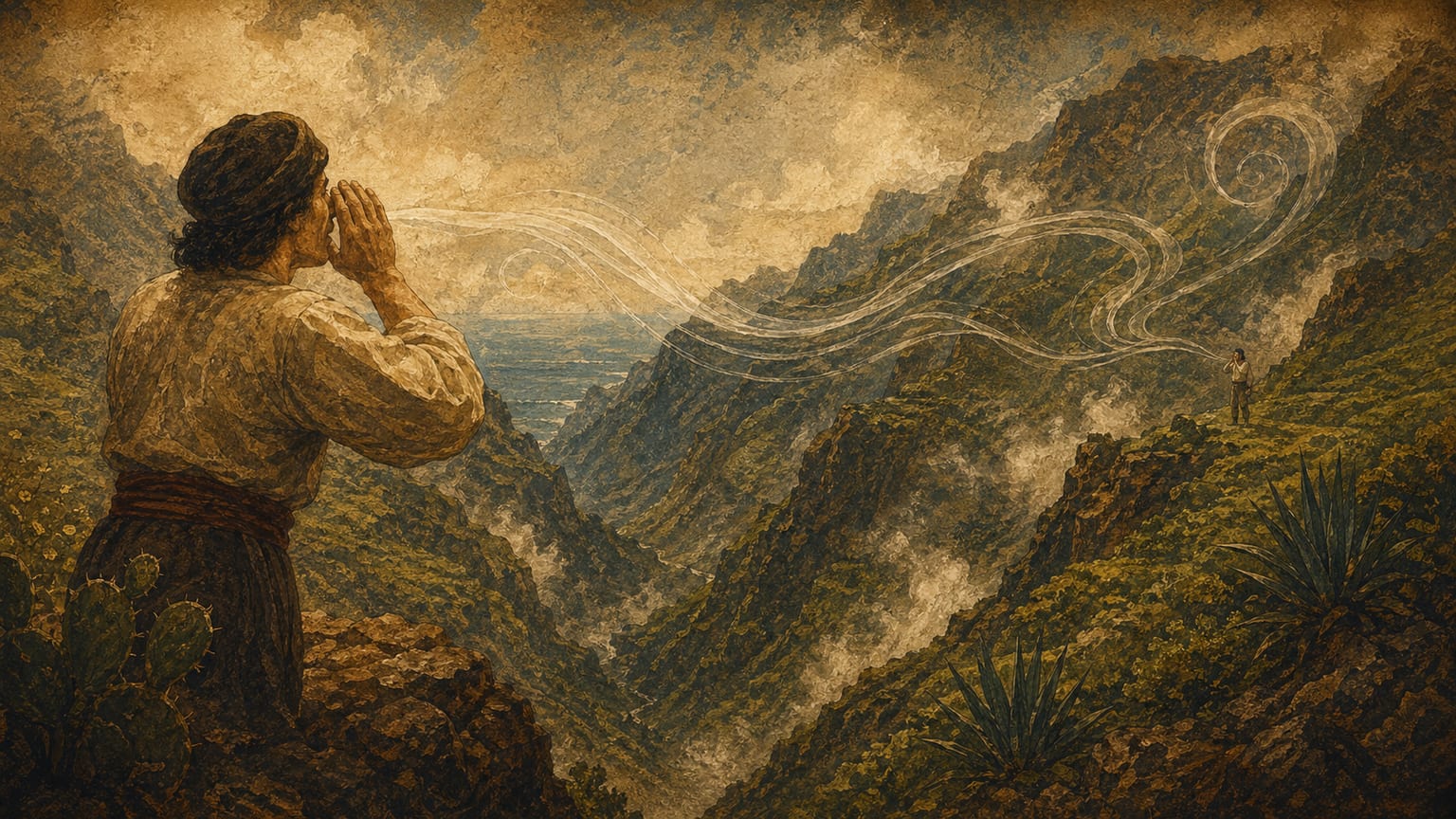
The silbo gomero is a unique whistled communication system that allowed the inhabitants of La Gomera to communicate across the island's deep ravines.
Canarianisms are the words and expressions unique to the Spanish spoken in the Canary Islands, a lexicon reflecting centuries of confluence between aboriginal languages, Castilian, Portuguese and other influences.