

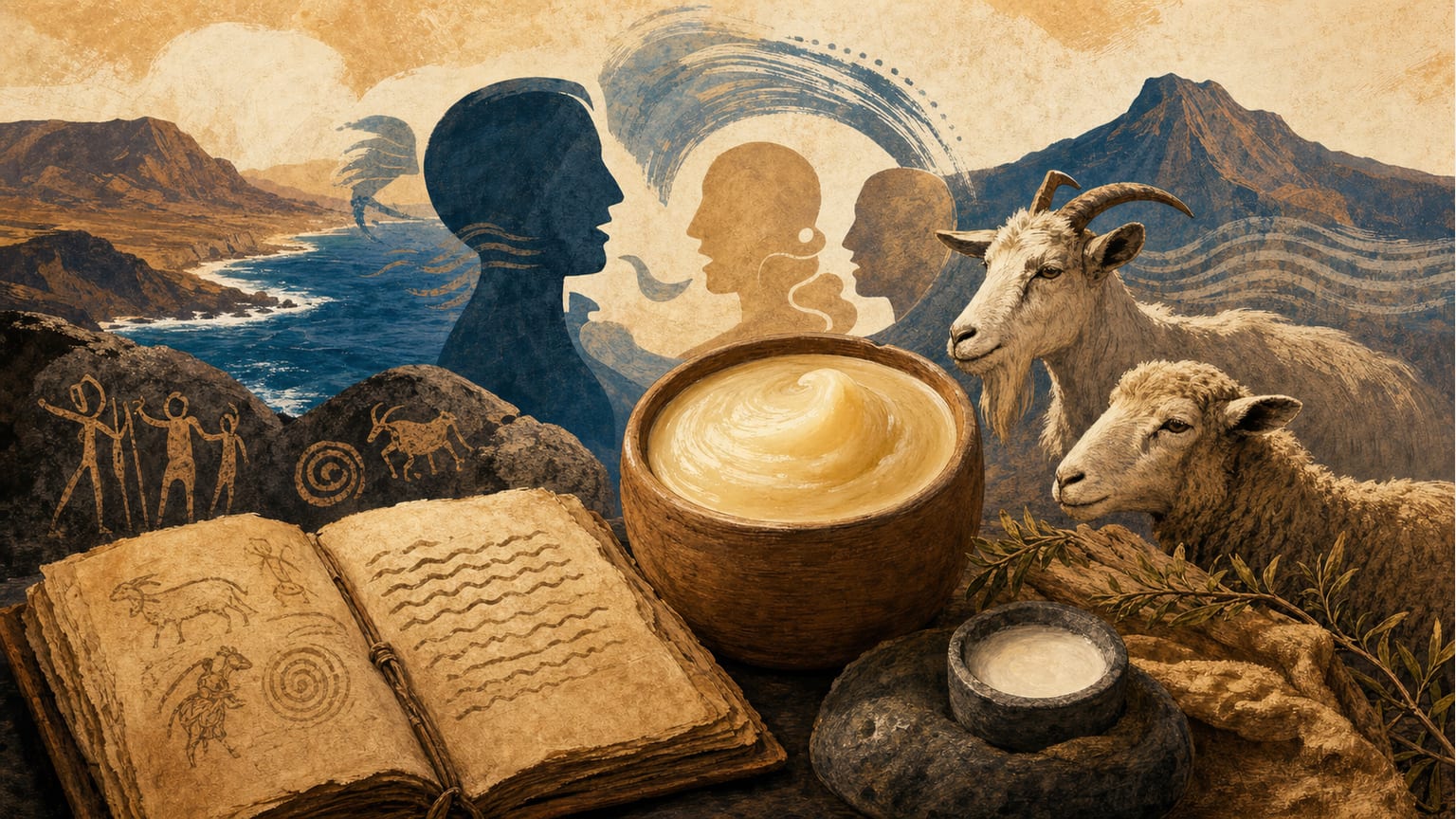
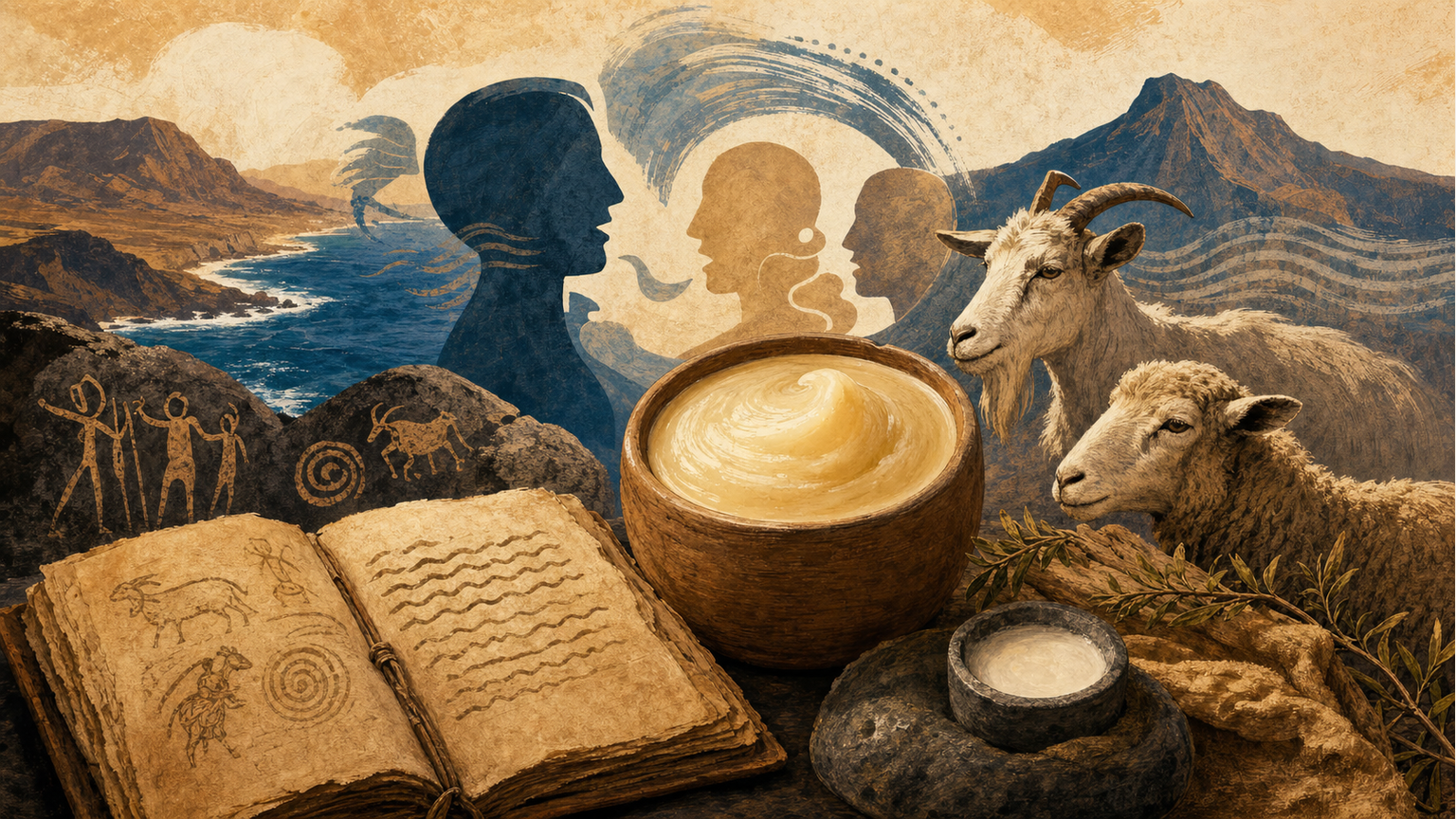
The vocabulary of livestock farming in the Canary Islands offers a fascinating window into the enduring influence of the islands’ aboriginal peoples on local language and culture. Among the most distinctive terms is amolán, which refers to a type of butter made from goat or sheep milk, traditionally used for both healing and nourishment[1].
Though the word amolán still survives in some areas of Lanzarote and Fuerteventura, its usage has declined over time. In the past, however, it was widespread and vital across the archipelago. Scholars such as Elías Zerolo and José Agustín Álvarez Rixo recorded its use in popular speech, always connected to goat’s milk butter, which was considered medicinal—especially when mixed with honey. This mixture was believed to gently cleanse and purify the stomach, and it was commonly used to treat wounds and internal ailments[1].
The preparation of amolán was a careful process, typically carried out during the summer months when the pastures were ripe. Milk was collected over several days and stored in a large jar. Once enough had accumulated, it was churned in a goatskin bag until the whey separated from the butter. The butter was then melted over a fire and salted, resulting in what was known as “manteca de ganado” (livestock butter), highly valued by Canarian families for its medicinal properties. Remarkably, this product was even exported to the Americas, where it was prized as a natural remedy[1].
The origin of the term amolán has intrigued linguists and historians. Early chronicles by L. Torriani and J. Abreu Galindo mention its use among the people of El Hierro, who considered it an essential part of their diet alongside milk (achernen) and meat. The etymology of amolán is thought to be related to Berber words for curdled milk or butter, highlighting the strong connections between Canarian aboriginal culture and North Africa[1].
The presence of amolán in Canarian livestock vocabulary not only reveals the survival of ancient practices but also illustrates the richness and diversity of the islands’ lexicon. Words like amolán are true linguistic fossils, offering insight into the daily life of the ancient Canarians and the cultural evolution of the archipelago. Studying and preserving these terms helps keep alive the memory of a unique intangible heritage within the Spanish-speaking world.