

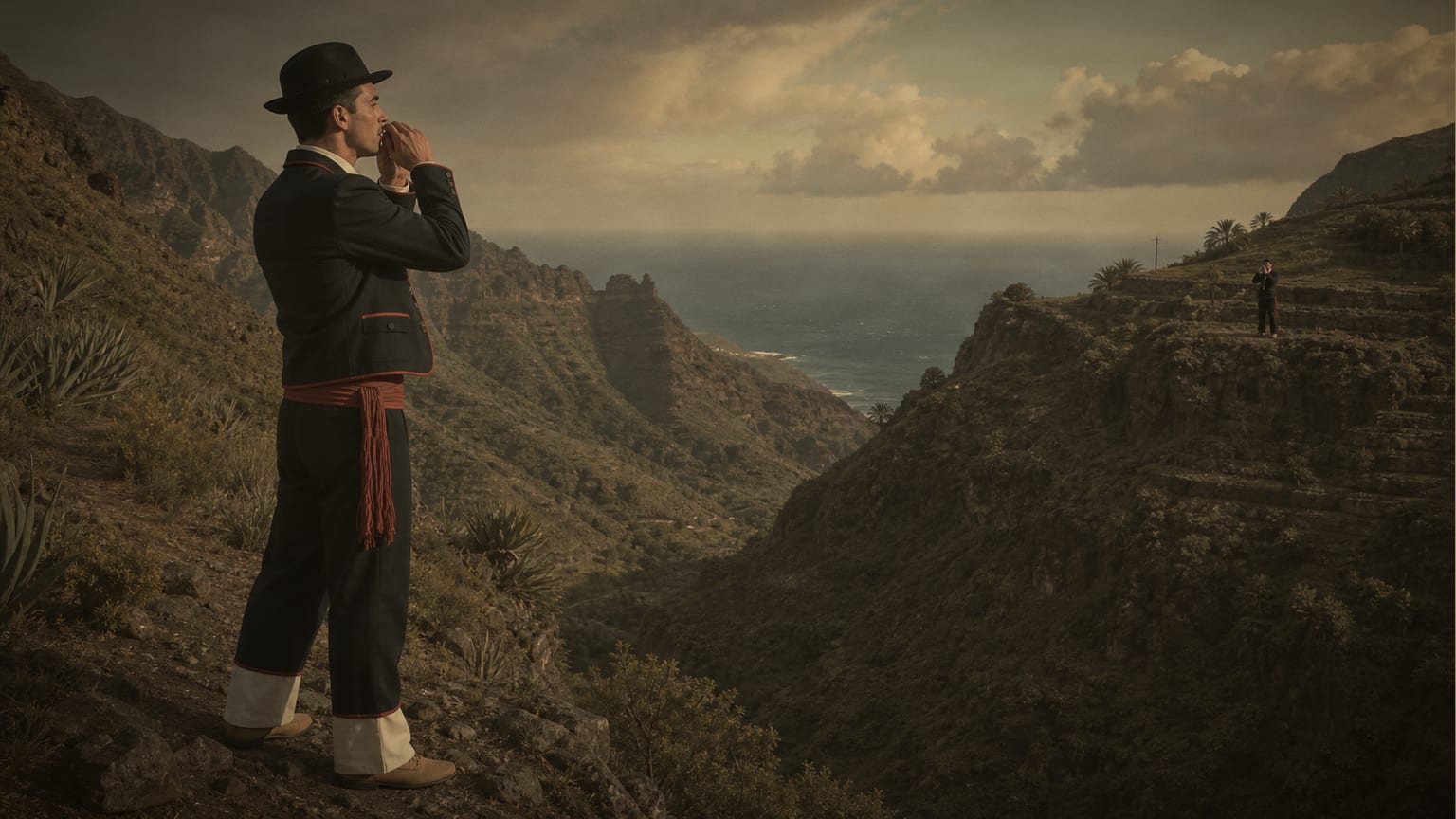
The island that speaks without words – La Gomera
Silbo Gomero is one of the world's most singular linguistic phenomena: a whistled communication system that carries messages across the deep ravines and mountains of La Gomera.
Knowledge pills about the history, culture and nature of the Canary Islands
Silbo Gomero is one of the world's most singular linguistic phenomena: a whistled communication system that carries messages across the deep ravines and mountains of La Gomera.
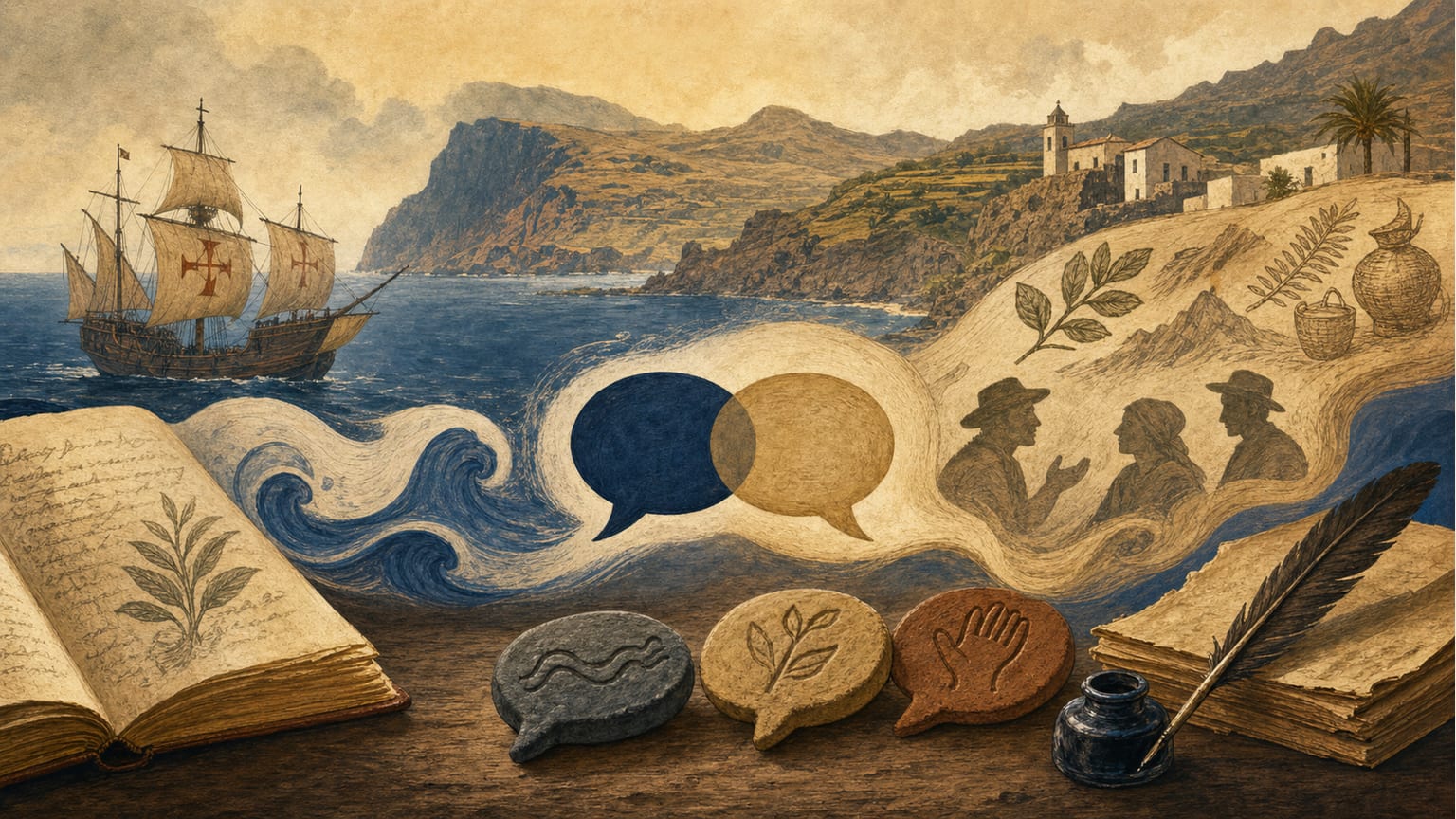
Discover how Portuguese has shaped the traditional vocabulary of La Gomera, with examples like 'igiada', 'hama', and 'hojame'.

The verb 'abacorar' is a linguistic gem of La Gomera, revealing the island's rich and unique vocabulary and its complex etymological roots.

Oral tradition has played a crucial role in preserving traces of the Guanche language, offering a more authentic view than written sources alone.
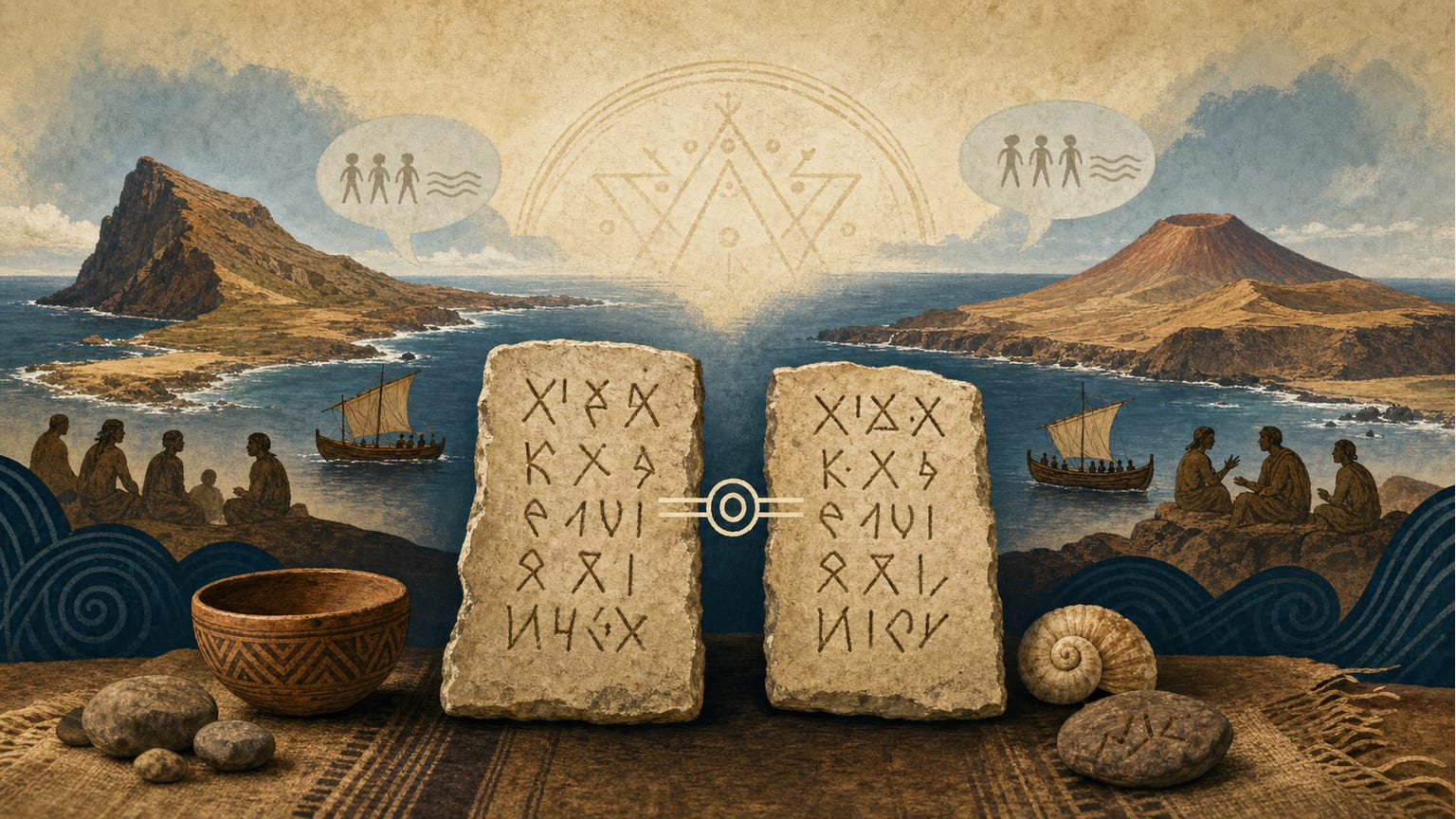
A comparative study of El Hierro and Lanzarote inscriptions reveals a striking homogeneity in the Libyco-Berber alphabet, challenging the idea of multiple scripts in the Canary Islands.

The word amolán, referring to a healing butter made from goat or sheep milk, is a linguistic remnant of the aboriginal Canarian culture and a testament to the richness of the islands' livestock vocabulary.
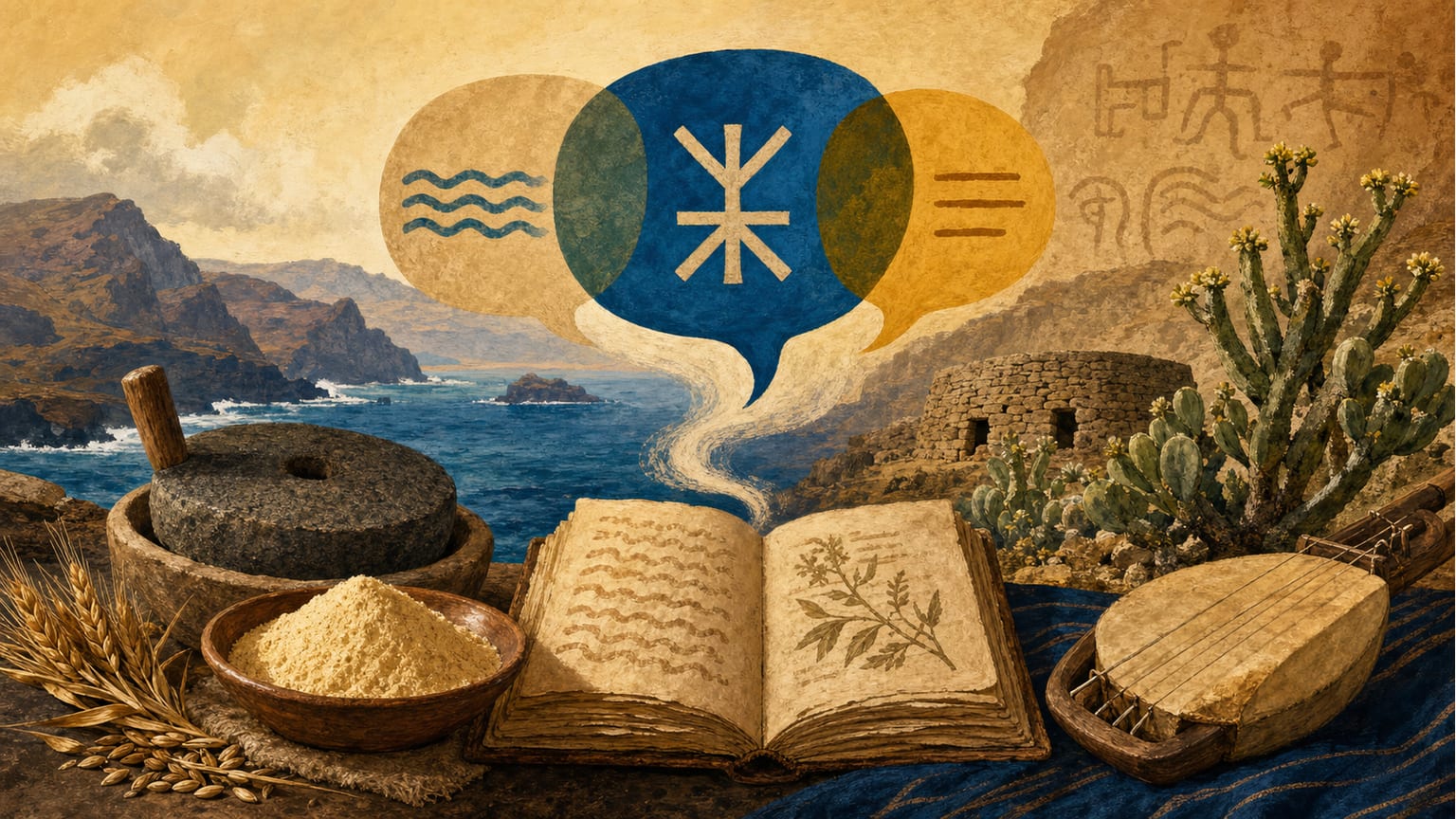
Explore the Amazigh origins of everyday Canarian words like gofio, tabaiba, and tenique, and how these terms have endured through the centuries.

Francisco Navarro Artiles played a key role in documenting and analyzing Canarian vocabulary, helping to preserve the linguistic identity of the Canary Islands.[^homenaje-a-francisco-navarro]

Explore how seseo and other phonetic traits shape the unique identity of Canarian Spanish and connect the islands to the Atlantic world.
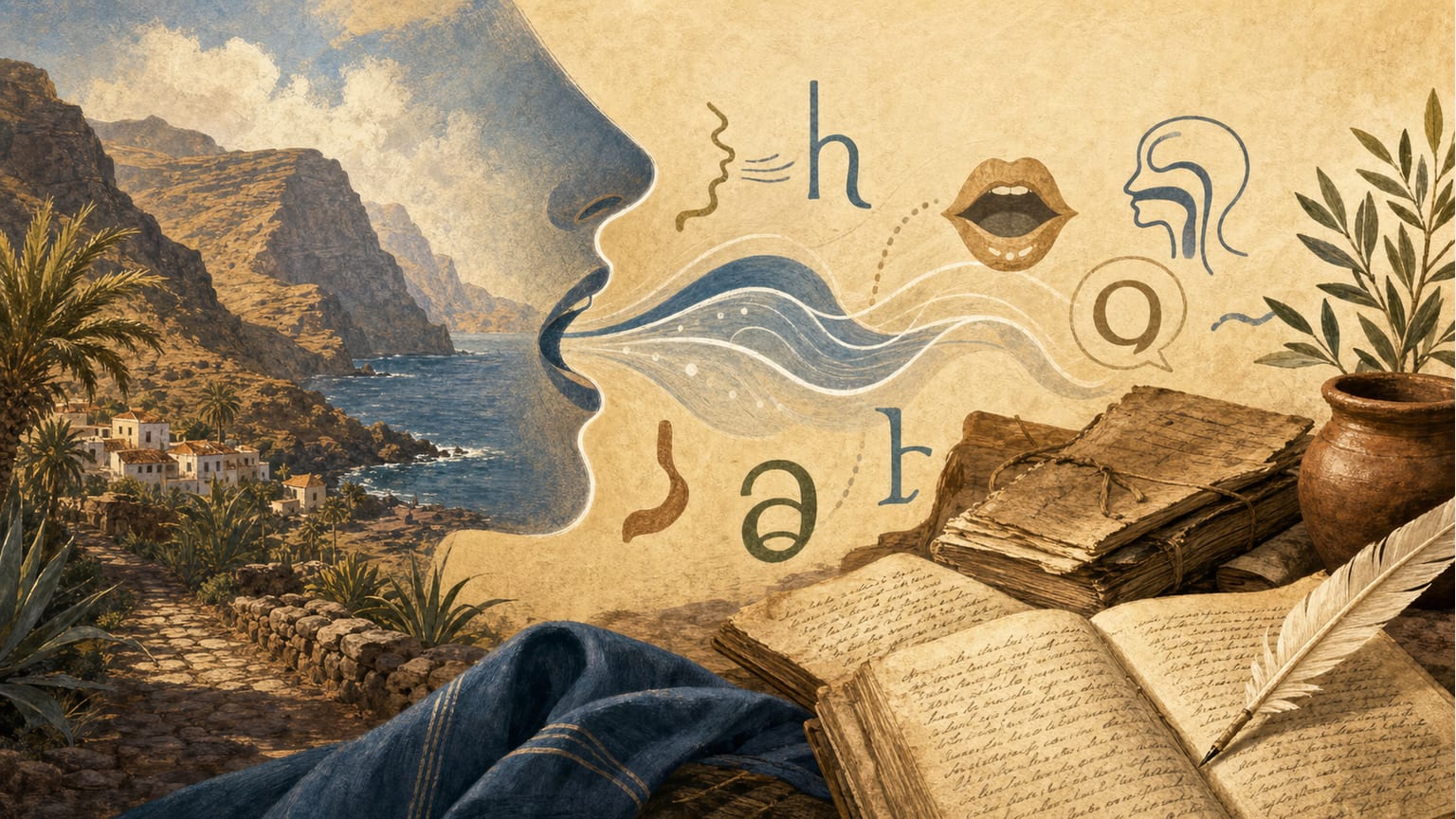
The speech of Valle Gran Rey in La Gomera is marked by unique phonetic traits, such as aspirated 'h', consonant vocalization, and the preservation of archaic forms.
Before modern dialectology, Canarian Spanish was documented through word lists, learned notes, and popular collections. This is how a local research tradition took shape.

Discover how Indigenous Canarian personal names reveal the social structure, beliefs, and values of ancient Canary Islanders.

The canary bird, a symbol of the islands, is almost absent from Galdós' National Episodes, reflecting both his relationship with his homeland and his literary caution.
Canarian Spanish bears the deep imprint of Portuguese contact, especially from the 15th to 18th centuries, enriching its vocabulary and distinguishing it from mainland Spanish.
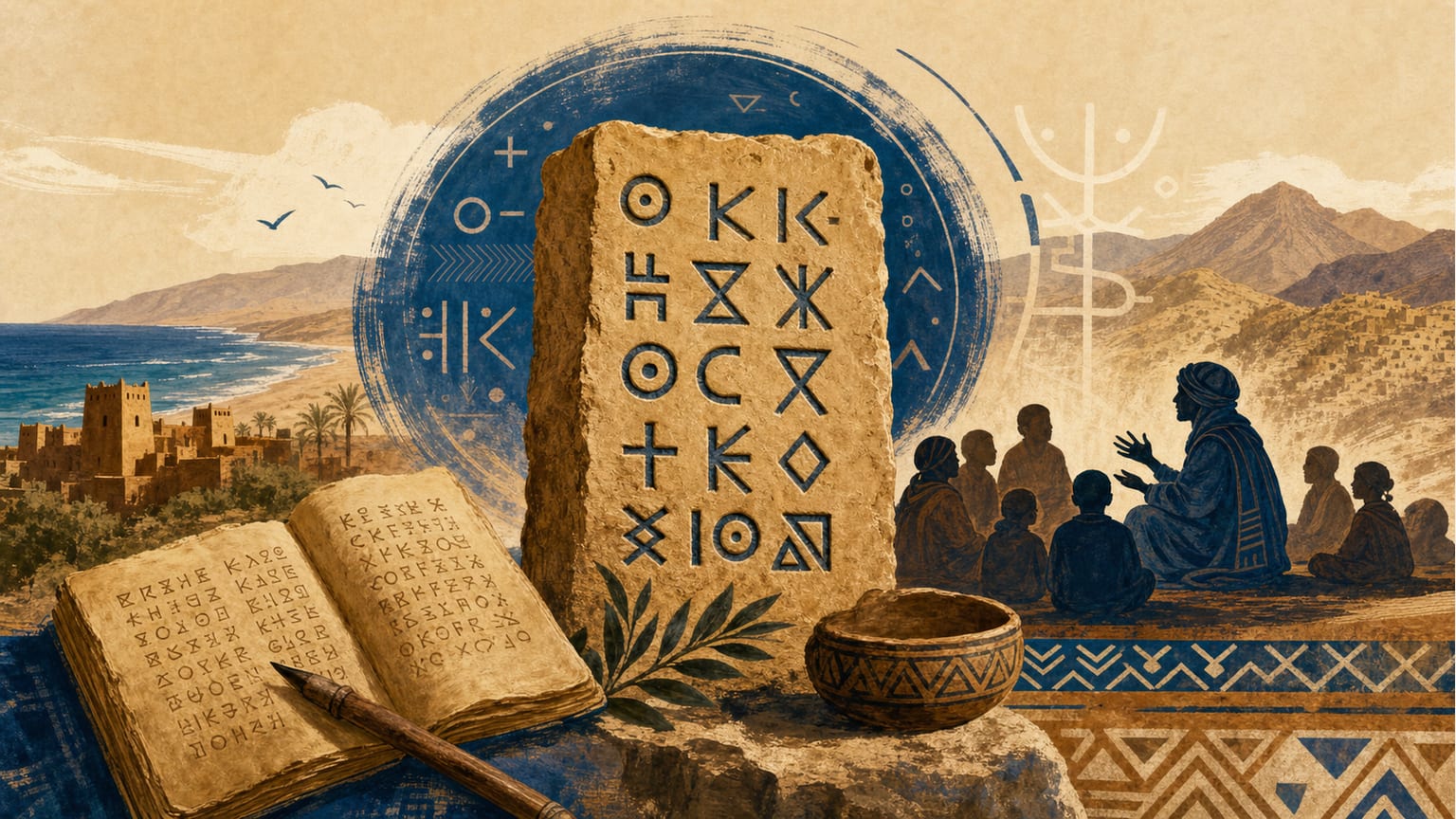
The ancient Tifinagh script has become a powerful symbol of Amazigh cultural identity and plays a key role in the revitalization of the Amazigh language.
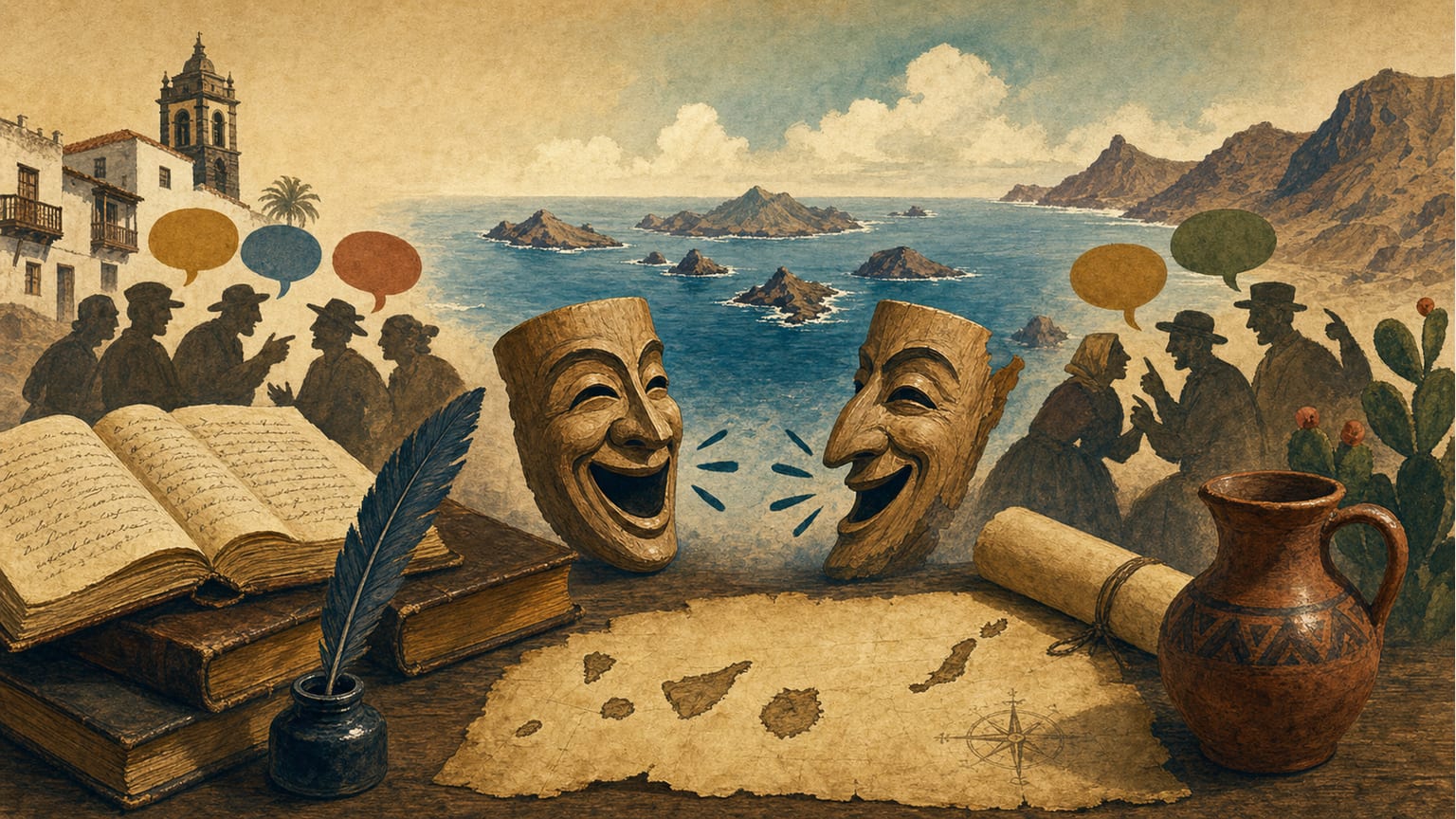
Discover how Canarian mock gentilics, born from local rivalries and humor, have become emblems of identity and tradition across the islands.
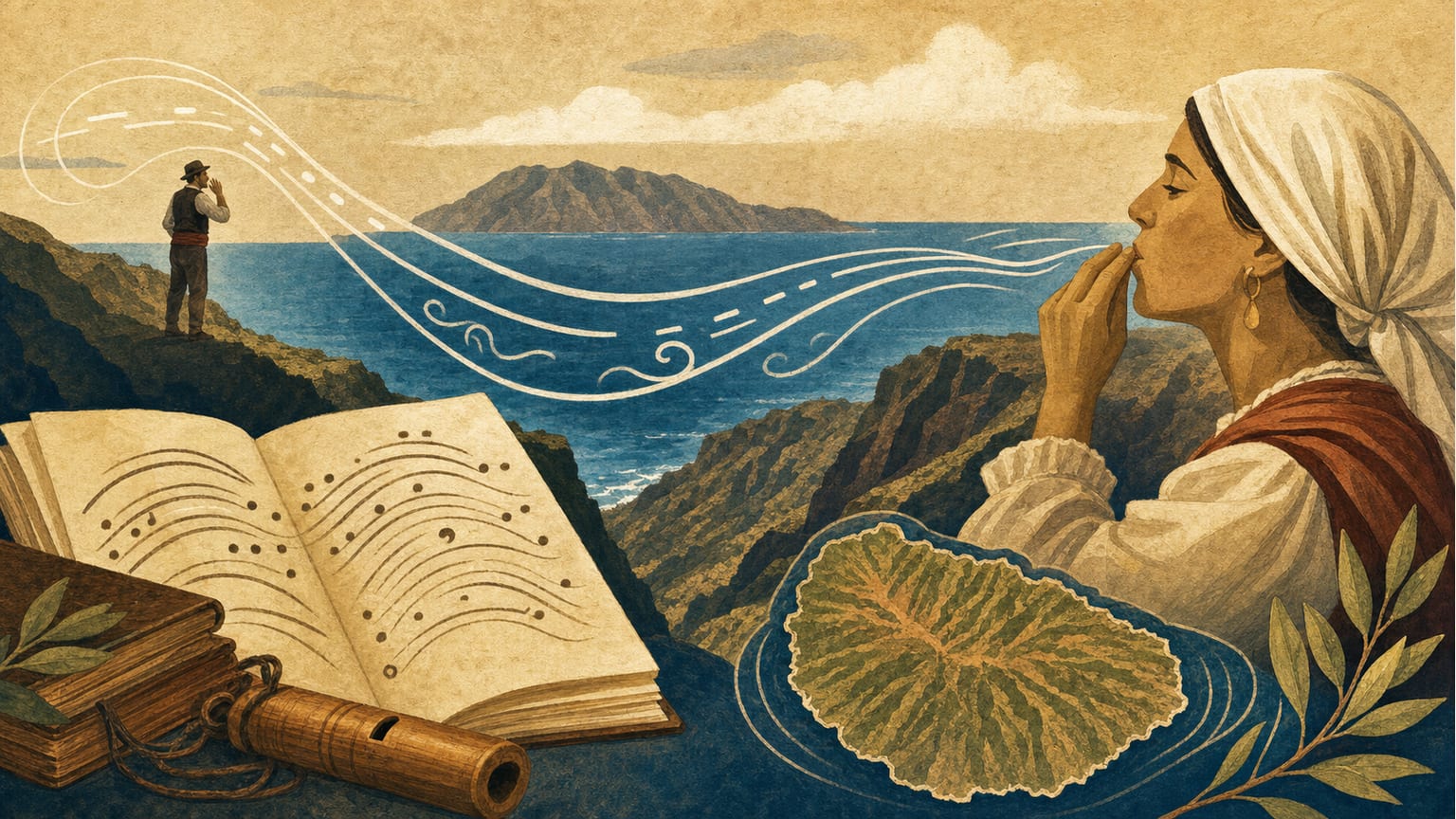
The Gomeran whistle is a unique whistled language still alive in La Gomera, enabling communication across mountains and ravines. Its recognition and teaching make it a linguistic treasure of the Canary Islands.
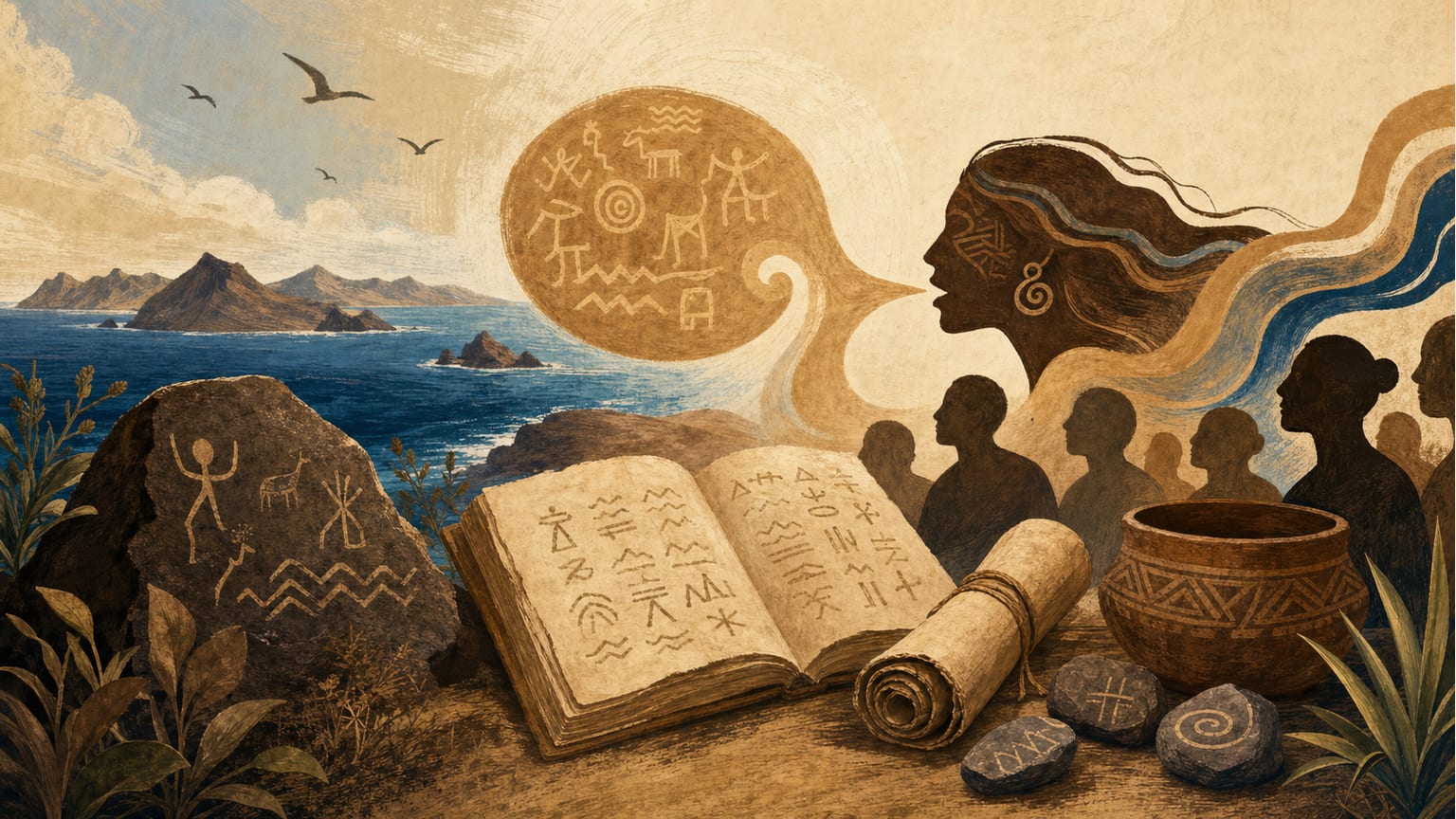
Aboriginal Canarian names have seen a remarkable revival in recent decades, reflecting both a search for identity and the impact of social and political changes in the Canary Islands.
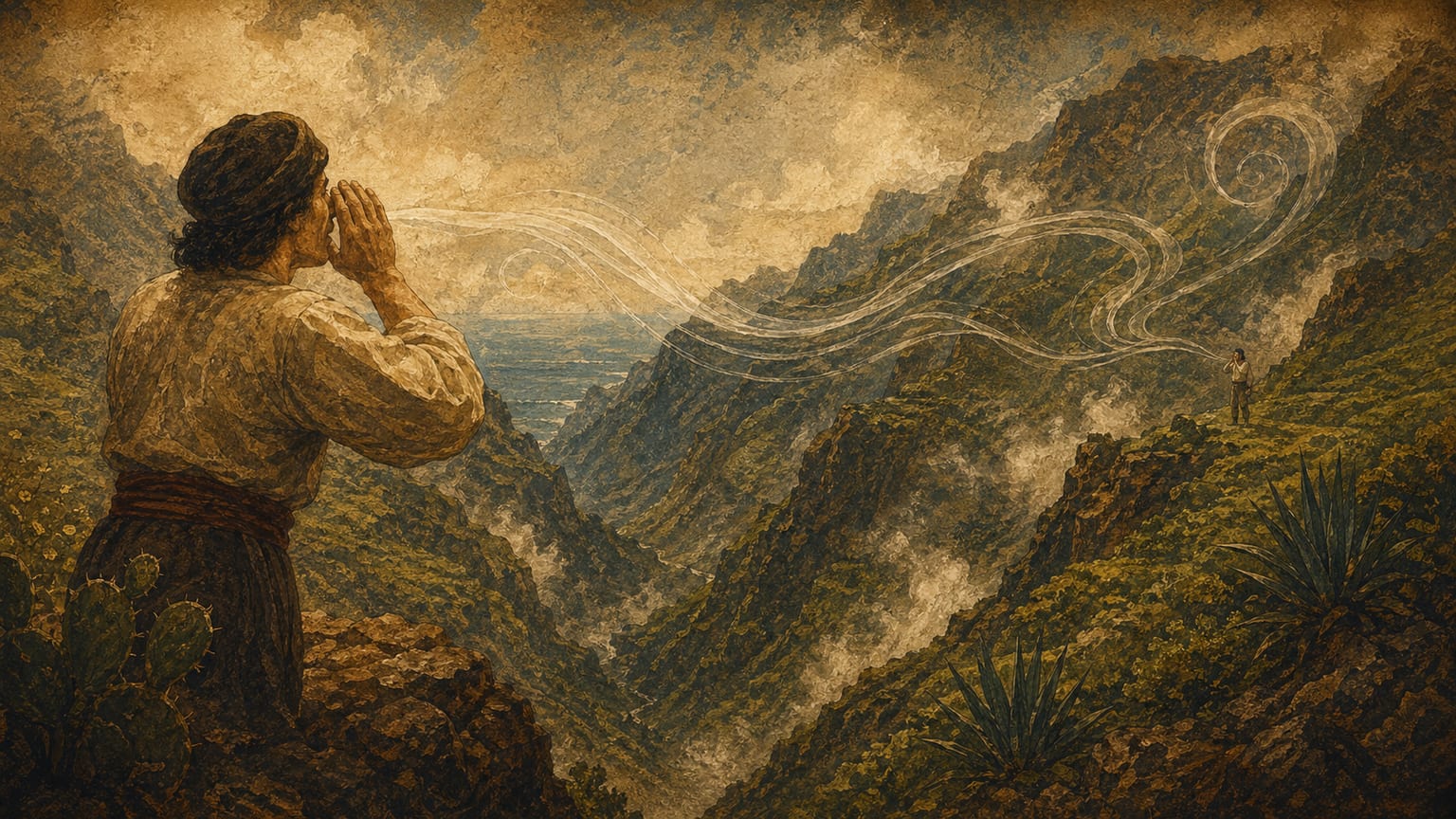
The silbo gomero is a unique whistled communication system that allowed the inhabitants of La Gomera to communicate across the island's deep ravines.

Canarianisms are the words and expressions unique to the Spanish spoken in the Canary Islands, a lexicon reflecting centuries of confluence between aboriginal languages, Castilian, Portuguese and other influences.