

Canarian Mock Gentilics: Humor, Rivalry, and Local Identity
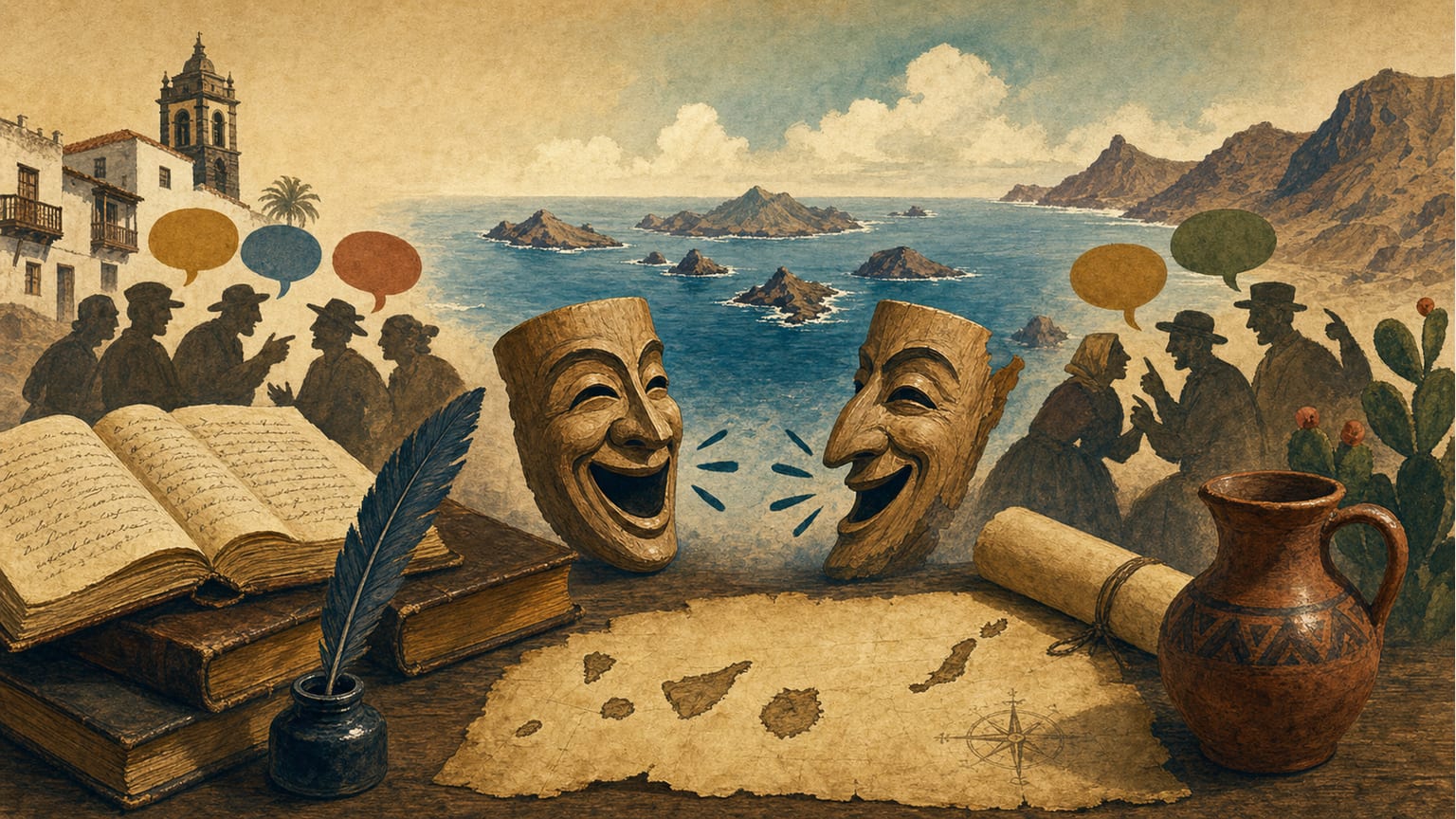
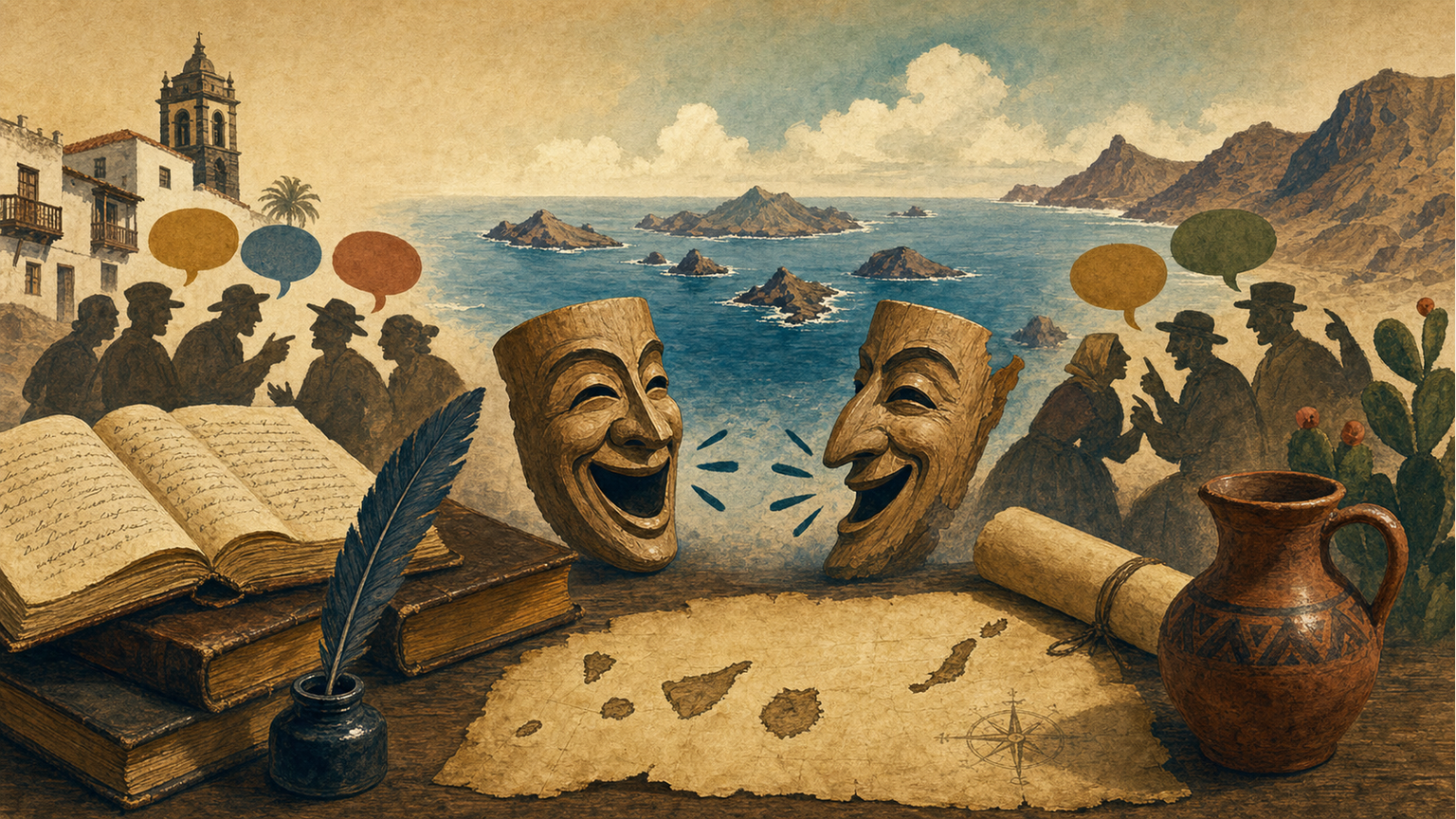
Gentilics—words that denote the origin of people—are not just linguistic labels; in the Canary Islands, they are living markers of history, rivalry, and creativity. Among the most fascinating are the so-called “mock gentilics”: nicknames that originated as jokes or even insults, but have evolved into proud symbols of local identity.[1]
What are mock gentilics?
Unlike standard gentilics (like “Tinerfeño” for Tenerife or “Palmero” for La Palma), mock gentilics arise from popular humor and local rivalry. They often reference economic activities, typical foods, or peculiar traits of a community. For example, “Conejero” (rabbit-eater) for Lanzarote natives (due to the abundance of rabbits), “Chicharrero” for Santa Cruz de Tenerife (from the local fish, chicharro), or “Gofión” for Gran Canaria (from the staple food, gofio).[1]
Humor, rivalry, and creativity
These nicknames often emerge from playful or competitive relationships between neighboring towns. Sometimes, they highlight a local specialty or stereotype—such as “Cebollero” (onion-grower) for Gáldar or “Batatero” (sweet potato-grower) for San Bartolomé in Lanzarote. Others stem from artisanal traditions (like “Tiesto” for pottery makers in Santa Inés, Fuerteventura) or from popular legends and sayings. The intention was often to poke fun at or distinguish the “other.”
From insult to pride
Although many mock gentilics began as derogatory, over time they have been embraced by the communities themselves. “Chicharrero” and “Conejero” are now used with pride and appear in official contexts, festivals, and even as names for folk groups and sports teams—like “Los Gofiones” in Gran Canaria or “Los Cochineros” in Ingenio.[1]
Social and linguistic role
Mock gentilics play a key role in reinforcing local identity and community cohesion. They also enrich the Canarian lexicon, reflecting the islands’ history, economy, and collective psychology. Through these nicknames, humor and rivalry become tradition and cultural heritage.
Why are they disappearing?
Urbanization and social changes since the 1960s have led to the decline of many mock gentilics, which now survive mainly among older generations or in specific local contexts. However, the most emblematic ones endure, demonstrating how communities can reclaim and transform their own humor into a source of pride.
Conclusion
Canarian mock gentilics are more than mere nicknames—they are a testament to the islands’ creativity, history, and spirit. Through them, humor and rivalry are woven into the fabric of tradition, enriching the linguistic and cultural heritage of the Canary Islands.[1]