

Tifinagh Alphabet: A Symbol of Amazigh Cultural Revival
Spoken by around 20 million people from the Canary Islands to Egypt, the Amazigh language boasts a rich and resilient heritage. Central to this legacy is the Tifinagh alphabet—an ancient script that has survived for centuries and now stands as a beacon of identity and renewal for Amazigh communities[1].
Origins and Features of Tifinagh
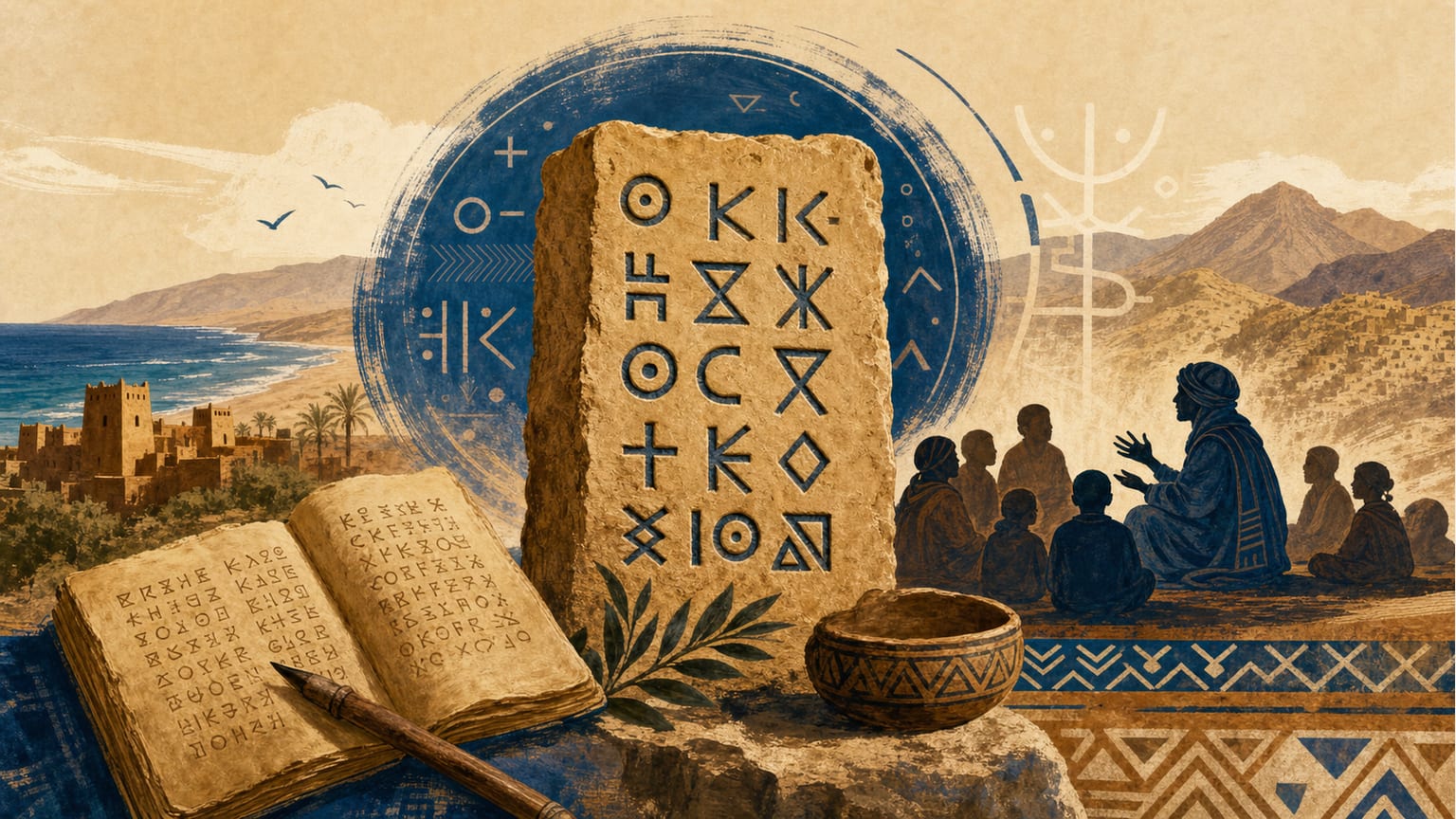
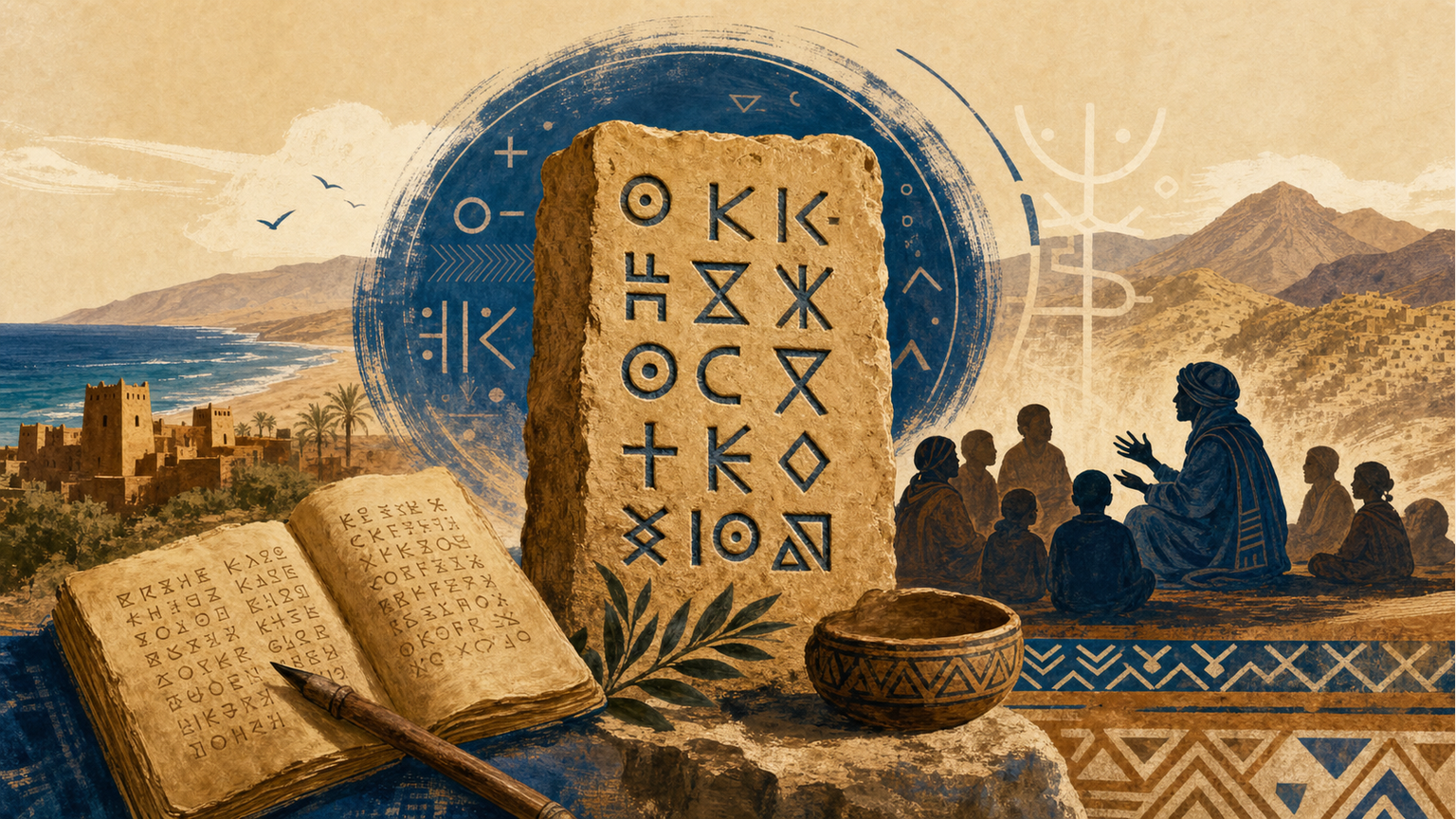
Tifinagh is the only Amazigh script to have endured from antiquity. Likely derived from the Libyan script, it has been preserved primarily by the Tuareg people of the Sahara, who have passed it down through generations. Tifinagh is characterized by its simple geometric shapes and adaptability, making it suitable for both rock inscriptions and contemporary uses.
The Modern Revival of Tifinagh
For centuries, Tifinagh was confined to ritual and private contexts, while Amazigh was more commonly written in Latin or Arabic scripts. In recent decades, however, Tifinagh has experienced a remarkable revival, driven by cultural movements in Morocco and Algeria where Amazigh lacked official status and was marginalized in public life.
The establishment of Morocco’s Royal Institute of Amazigh Culture (IRCAM) marked a turning point. IRCAM has standardized Tifinagh, enriching it with new characters to meet modern linguistic needs and promoting its use in schools. As a result, Tifinagh has transformed from a nearly forgotten symbol into an educational and social tool[1].
Tifinagh in Education and Daily Life
Today, Tifinagh is gradually being introduced into the Moroccan education system, especially at the primary level. Educational materials and children’s books in Amazigh now use both the Latin alphabet and Tifinagh, helping new generations connect with their graphic heritage. Its presence in signage, media, and cultural events further strengthens Amazigh pride and identity.
A Symbol of Cultural Resistance
Tifinagh is more than a writing system; it is a testament to the resilience of a people determined to keep their language and culture alive despite centuries of marginalization. Its revitalization shows how reclaiming ancestral symbols can reinforce collective identity and foster the transmission of knowledge and cultural diversity across North Africa and beyond.