

The Canary Bird in Galdós’ Literature: Symbol and Absence
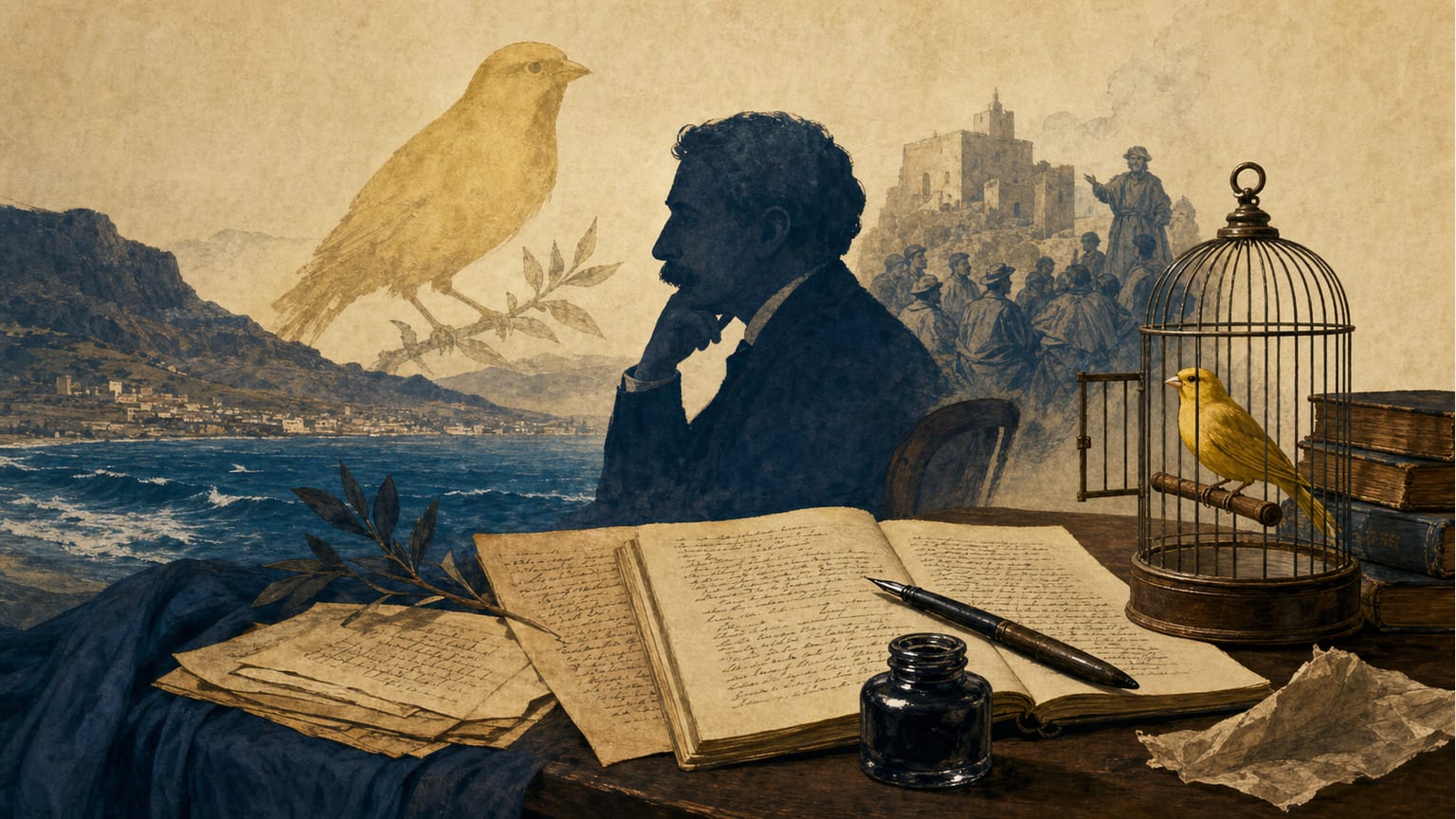
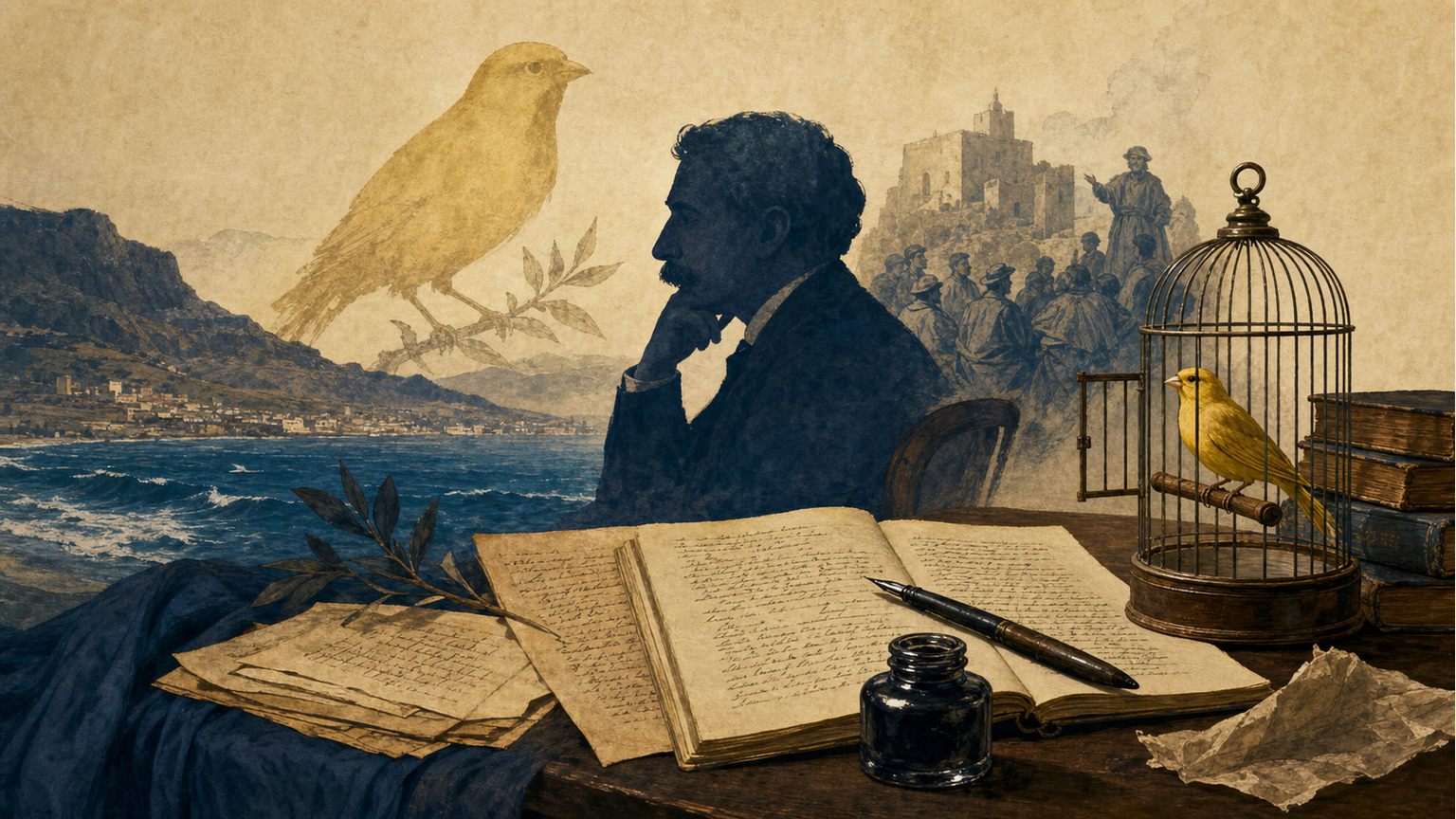
The canary bird, renowned for its melodious song and vibrant plumage, stands as an emblem of the Canary Islands. Yet, it is striking that Benito Pérez Galdós, the islands’ most celebrated writer, scarcely mentions this iconic creature in his monumental series, the National Episodes. This near-omission is itself a literary phenomenon, revealing much about Galdós’ relationship with his native land and his narrative strategy[1].
An Almost Invisible Presence
Across the 46 National Episodes, Galdós shows little inclination toward domestic animals, and even less toward the canary bird. While animals do appear—such as the symbolic rats during the siege of Gerona—the canary bird is referenced only once, in La Revolución de Julio. Here, it is mentioned in a prosaic, almost dismissive way, used to illustrate the limited education expected of women in the 19th century: “girls didn’t need to know more natural history than to distinguish a canary from a donkey”[1].
Why This Absence?
This lack of references cannot be explained by ignorance of the bird in 19th-century Spain; contemporary authors like Pío Baroja mention it freely. Nor does it stem from personal indifference, as Galdós was known to love animals and even had dogs sent from the Canary Islands. Yet, according to those close to him, “there were no birds in his Madrid home, nor any interest in keeping them,” despite the household “living in the Canarian way”[1].
Campos Oramas suggests that Galdós deliberately avoided highlighting the canary bird, perhaps fearing ridicule or stereotypes linked to his island origins. This caution reflects the tension between pride in one’s homeland and the desire for acceptance in Madrid’s literary and social circles.
The Absent Symbol
The canary bird’s absence in Galdós’ work contrasts with its prominence in popular culture and world literature, where it was celebrated by authors like Cairasco de Figueroa and even Shakespeare. In Galdós, the bird is neither a cherished pet nor a symbol of identity, prompting reflection on self-representation and the boundaries of autobiography in fiction.
Ultimately, the canary bird in the National Episodes is more significant for its absence than its presence. This omission, far from accidental, reveals the complexities of identity and self-image in Galdós’ writing, showing how even the most obvious symbols can be the most elusive in literature.[1]