

San Borondón
The phantom island of the Atlantic, present in cartography and literature since the tradition of Saint Brendan.
The legend of San Borondón tells of an island that appears and disappears on the Atlantic horizon, to the west of La Palma and La Gomera. Recorded on European maps since medieval times, it has been sighted on numerous occasions across the centuries. Its name comes from Saint Brendan, the Irish monk who, according to tradition, sailed the seas in search of Paradise. No one has ever been able to reach it.[1]
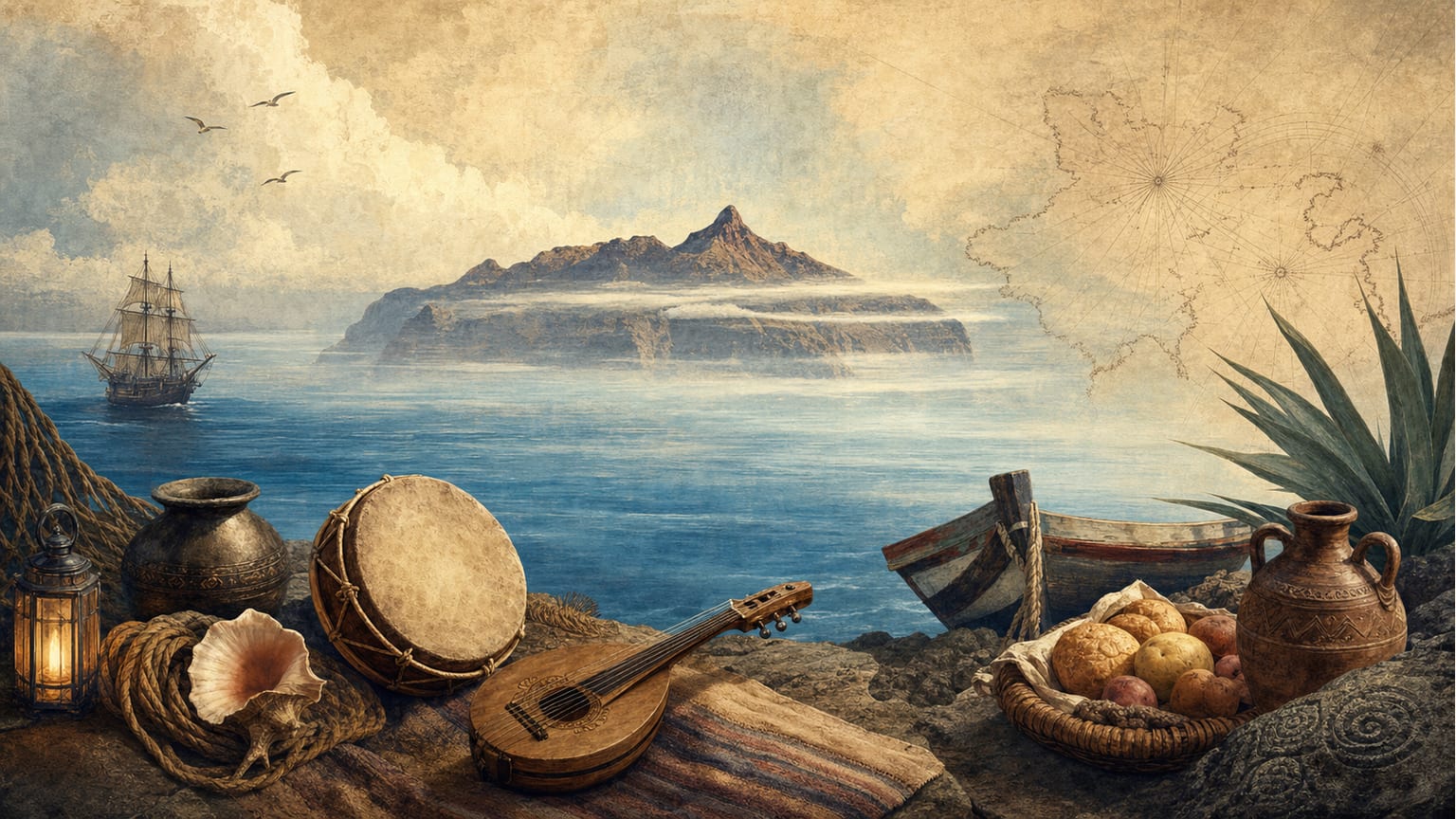
The tradition of Saint Brendan
The origin of the legend lies in the Irish monk Saint Brendan (486-577), protagonist of the Navigatio Sancti Brendani. During his voyage he travelled through marvellous islands and finally reached the Promised Land. The tale belongs to the Celtic genre of the imram, or voyage to islands, in which real and fictional elements mingle.[1]
Cartography and culture
San Borondón appears on European maps between the 13th and 19th centuries, identified as the Lost, Floating, Phantom, Whale or Paradise island. The Hereford Mappa Mundi (1290) states that the six Fortunate Islands are the Islands of Saint Brendan. The legend inspired writers, painters and musicians across the ages.[1]
Related reading
San Borondón: The Phantom Island of the Canary Islands in Atlantic Tradition
San Borondón, the island that appears and disappears, holds a unique place in Canarian and Atlantic imagination. This article explores its origins, development, and the literary and cartographic sources linking it to the Canary Islands.
Read more
The Isles of the Blest: Myth and Reality in Canary Islands History
Discover how the myth of the Isles of the Blest shaped the identity and perception of the Canary Islands from ancient Greek literature to modern times.
Read moreSources used
- Marcos Martínez Hernández — Islas míticas en relación con Canarias (2010), pp. 139-158 Dialnet (Universidad de La Rioja)View reference